What Energy Transformation Is a Toaster
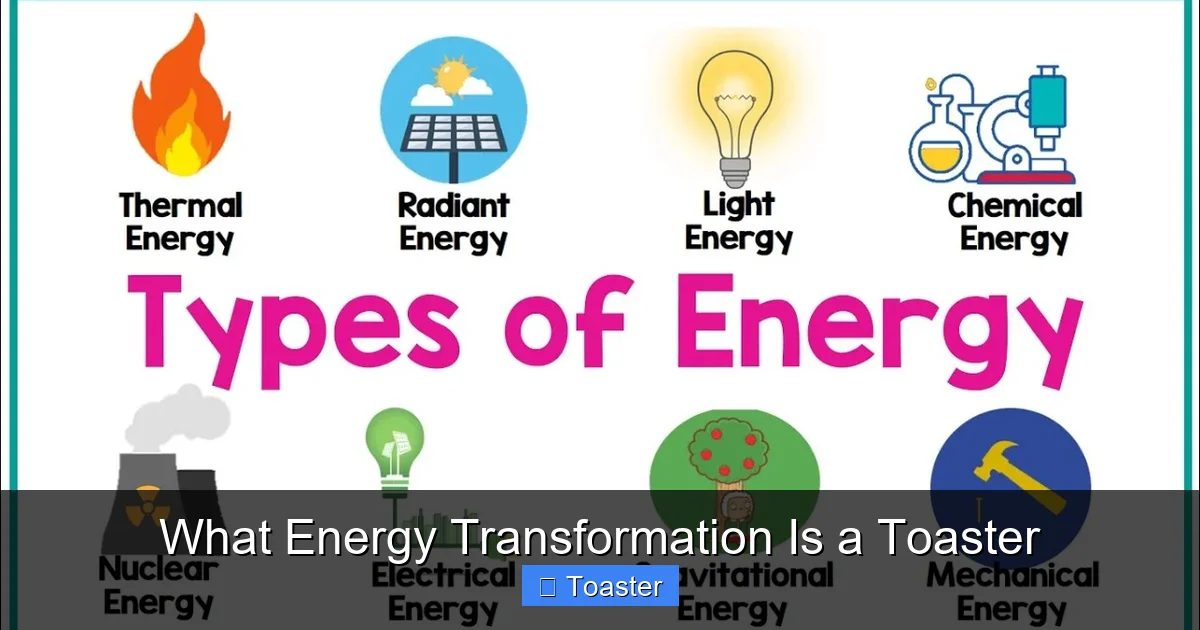
A toaster transforms electrical energy into thermal energy (heat) to brown and cook bread slices, using electromagnetic coils and radiant heating elements. This process involves controlled resistance to generate warmth, ensuring even browning without burning.
This is a comprehensive guide about What Energy Transformation Is A Toaster.
Key Takeaways
- Electrical to Thermal Conversion: Toasters convert 110-120V AC power into heat via resistive heating elements, similar to how an air fryer or toaster oven works.
- Radiant Heat Transfer: The heat radiates directly onto the bread, with some models also use infrared for efficiency (like toaster ovens).
- Timer & Safety: Mechanical or digital timers regulate cooking time, while springs or sensors prevent overheating.
- No Chemical Reactions: Unlike microwaves, toasters don’t use water molecules; they rely purely on dry heat conduction.
- Efficiency Tips: Darker settings increase heat intensity, but may risk burning—experiment with lower settings first!
- Energy Use: A toaver uses ~800–1200 watts, comparable to a hair dryer (see pressure cookers for context).
—
### MAIN CONTENT
#### Introduction: How Does a Toaster Work?
Ever wonder why your toaster turns bread golden brown without melting plastic? It’s all about energy transformation! At its core, a toaster is a marvel of simple physics—turning electrical energy into heat to cook food safely. Think of it like a mini oven, but designed for speed and precision. Whether you’re making breakfast sandwiches or artisanal bagels, understanding this process helps you use your toaster better—and troubleshoot issues faster.
In this guide, we’ll break down:
– The science behind toasting (no PhD required!).
– How different types of toasters handle energy conversion.
– Pro tips to maximize efficiency and avoid common mistakes.
#### The Physics Behind Energy Transformation
Toasters operate on basic principles:
##### 1. Electrical Energy Input
When you plug in a toaster, it receives 120V alternating current (AC) from your outlet. This voltage flows through the toaster’s internal wiring to two key components:
– Resistive heating elements (usually nichrome wire).
– Magnetic coils (in older models) or electronic controllers (modern ones).
Fun Fact: The same principle powers space heaters and electric kettles—just scaled differently!
##### 2. Joule Heating Effect
As current passes through the nichrome wire, electrons collide with atoms, generating heat. This is called Joule heating. The wire gets so hot that it glows red (~700–900°C), radiating warmth onto the bread.
##### 3. Radiant vs. Conductive Heat
– Radiant heat: Directly warms the bread’s surface (like sunlight).
– Conductive heat: Some heat travels through the bread’s layers (think of a countertop air fryer, which uses both methods).
#### Types of Toasters & Their Energy Use
Not all toasters are created equal:
##### Pop-Up Toasters
– Most common type (e.g., Cuisinart, Breville).
– Uses single or dual heating elements (two wires per slot).
– Energy consumption: ~800–1200 watts.
##### Bread Machines
– Combine toasting with dough kneading.
– Often have multiple heat zones (baking + warming).
– More efficient than using separate appliances!
##### Smart Toasters
– Wi-Fi-enabled models adjust heat based on bread type (e.g., baguettes vs. sourdough).
– Cut energy waste by optimizing temperature dynamically.
#### Safety & Efficiency Tips
To keep your toasting adventures safe and eco-friendly:
##### Avoid Overloading
– Don’t fill slots beyond capacity—bread blocks airflow, causing uneven heating.
##### Clean Regularly
– Crust buildup insulates heating elements, reducing efficiency. Wipe out after each use.
##### Use Darker Settings Wisely
– Higher settings = more heat, but can burn bread quickly. Start with medium and adjust.
##### Energy-Saving Hacks
– Toast only what you need (e.g., one slice at a time if possible).
– Unplug when not in use (standby mode still draws minimal power).
#### Common Misconceptions Debunked
– Myth: Toasters use microwaves.
Reality: They rely on dry heat, unlike microwave ovens that excite water molecules.
– Myth: All toasts the same way.
Reality: Bagels need longer than white bread due to density differences!
#### Comparing Toasters to Other Appliances
Toasters share energy traits with:
– Toaster ovens: Broader heat range for larger items.
– Air fryers: Both use convection (heated air circulation), but toasters lack fans.
– Pressure cookers: High-energy bursts (but for liquids, not solids).
#### Conclusion: Why Understanding Energy Matters
Next time you press “toast,” remember: you’re harnessing centuries-old physics to create breakfast magic. By grasping how energy transforms in a toaster, you can:
– Choose the right model for your needs.
– Troubleshoot issues (e.g., burnt toast = element wear-out).
– Use energy wisely, saving money and extending appliance life.
So, whether you’re a home chef or just curious, now you know the science behind those crispy, golden slices! 🍞🔥
—
### FAQs
What kind of energy does a toaster use?
Toasters primarily use electrical energy converted into thermal energy (heat) via resistive heating elements. No chemical reactions or microwaves are involved.
How much energy does a toaster consume?
A typical toaster uses 800–1200 watts for 2–4 minutes. Smart models may cut usage by 10–20% with adaptive controls.
Why do some toasters pop up automatically?
The mechanism relies on springs or motors triggered by a timer. When heat reaches a preset level, the springs release the bread tray.
Can I toast frozen bread in a toaster?
Yes! But extend the setting slightly (e.g., 2–3 extra minutes) to account for ice melting. Avoid overpacking slots.
Are toasters safe for gluten-free bread?
Absolutely! Gluten-free bread often has higher moisture content, so reduce heat/time to prevent sogginess.
How long should a toaster last?
With care, a well-maintained toaster lasts 5–10 years. Replace worn-out elements (common cause of malfunctions).
Frequently Asked Questions
What is What Energy Transformation Is A Toaster?
What Energy Transformation Is A Toaster is an important topic with many practical applications.