Top 1 Best Woods For End Grain Cutting Boards You Should Know About
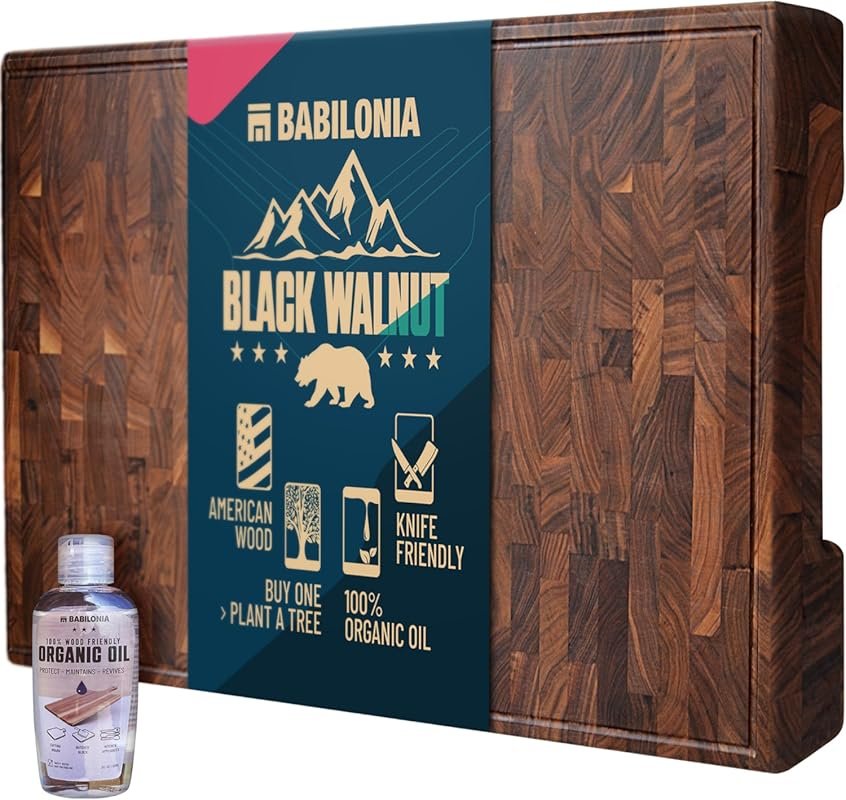
Choosing the best woods for end grain cutting boards can make a big difference in how your board feels, looks, and lasts. The right wood is gentle on knives, tough enough for daily use, and stable enough to handle moisture without warping too fast. In this roundup, I’m keeping things simple and practical so you can pick a board that fits real kitchen life.
Quick Product Comparison
| Product | Image | Check Price |
|---|---|---|
| 1. American Black Walnut Cutting Board | |
Check Price |
Our Top 1 Best Woods For End Grain Cutting Boards Reviews – Expert Tested & Recommended
1. American Black Walnut Extra-Thick Hardwood Cutting Board with Juice Groove and Handles
This black walnut cutting board is a strong pick if you want a board that feels solid right away. The extra-thick build and juice groove make it a smart fit for everyday prep, carving, and serving.
Key Features That Stand Out
✓ 1.7-inch thickness for better stability during chopping
✓ Made from American black walnut, a favorite among the best woods for end grain cutting boards
✓ Built with handles for easier lifting and serving
✓ Juice groove helps catch liquid from meats and juicy produce
✓ Works as a cutting board and serving tray in one
Why We Recommend It
Walnut is one of those woods that just feels right in the kitchen. It is kind to knives, looks rich, and has the kind of weight that helps the board stay put while you work. If you want a board that feels more premium than basic bamboo or soft pine, this is a very safe place to start.
Best For
This is best for home cooks who want a durable board for daily prep and serving. It also suits anyone who likes the look of dark hardwood and wants a board that feels balanced on the counter.
Pros and Cons
Pros:
- Thick, sturdy feel that helps with control
- Walnut is one of the most knife-friendly hardwoods
- Juice groove is useful for meats and fruit
- Handles make it easier to move and carry
Cons:
- Heavier than smaller boards
- Needs hand washing only
- Premium hardwood boards usually cost more
Customer Reviews
Customer Review: “The board feels very solid and looks great on the counter. I like the thickness, and it has held up well with daily use.”
Customer Review: “Nice weight, smooth finish, and the juice groove actually helps. It is easy to clean as long as you follow the hand-wash rule.”
Complete Buying Guide for Best Woods For End Grain Cutting Boards
Essential Factors We Consider
When shopping for the best woods for end grain cutting boards, I look for a few simple things first. The wood should be hard enough to resist deep cuts, but not so hard that it is rough on your knives. Walnut, maple, and cherry are popular because they balance strength, looks, and knife care very well. If you also want help keeping the board steady, you may want to read about the best non slip rubber feet for cutting board setups too.
Budget Planning
It helps to think about how you cook before you spend. A thick hardwood board usually costs more, but it can last a long time if you care for it well. If you are building or repairing a board, using the best food safe wood glue for cutting board projects can also protect your investment. For serving and presentation, some people also like to pair their boards with ideas from beautiful platters and boards for casual spreads.
Final Thoughts
In the end, the best wood is the one that fits your kitchen habits. If you want a board that looks beautiful, feels stable, and treats your knives well, walnut is a strong choice. End grain boards take a little more care, but they often reward you with a better cutting feel and a longer life.
Frequently Asked Questions
Q: What wood is best for end grain cutting boards?
A: Walnut, maple, and cherry are among the best choices. They are durable, attractive, and gentle on knives.
Q: Is walnut better than maple for cutting boards?
A: Walnut is darker and often feels a bit softer on knives, while maple is lighter and very tough. Both are excellent, so it mostly comes down to look and personal preference.
Q: Are end grain cutting boards worth it?
A: Yes, if you cook often. End grain boards can hide knife marks better and feel nicer to cut on, but they usually cost more and need regular oiling.
Q: How do I keep a wooden cutting board from slipping?
A: Use a damp towel underneath or add rubber feet. If you want a more permanent fix, check out guides on non slip rubber feet for cutting board options.
Q: Can I put an end grain cutting board in the dishwasher?
A: No. Heat and water can damage the wood. Hand wash it with mild soap and dry it right away.
If you want a board that looks good, lasts well, and feels nice to use, the best woods for end grain cutting boards usually start with walnut, maple, and cherry. For most people, a thick walnut board is the easiest win because it balances style, strength, and everyday comfort. If you are ready to upgrade your prep space, start with the board above and choose the wood that matches how you cook.
Ready to find the right one? Check the current price, compare the feel of different hardwoods, and pick the board that will make prep work easier every day.