What Is a Good Toaster Oven to Buy
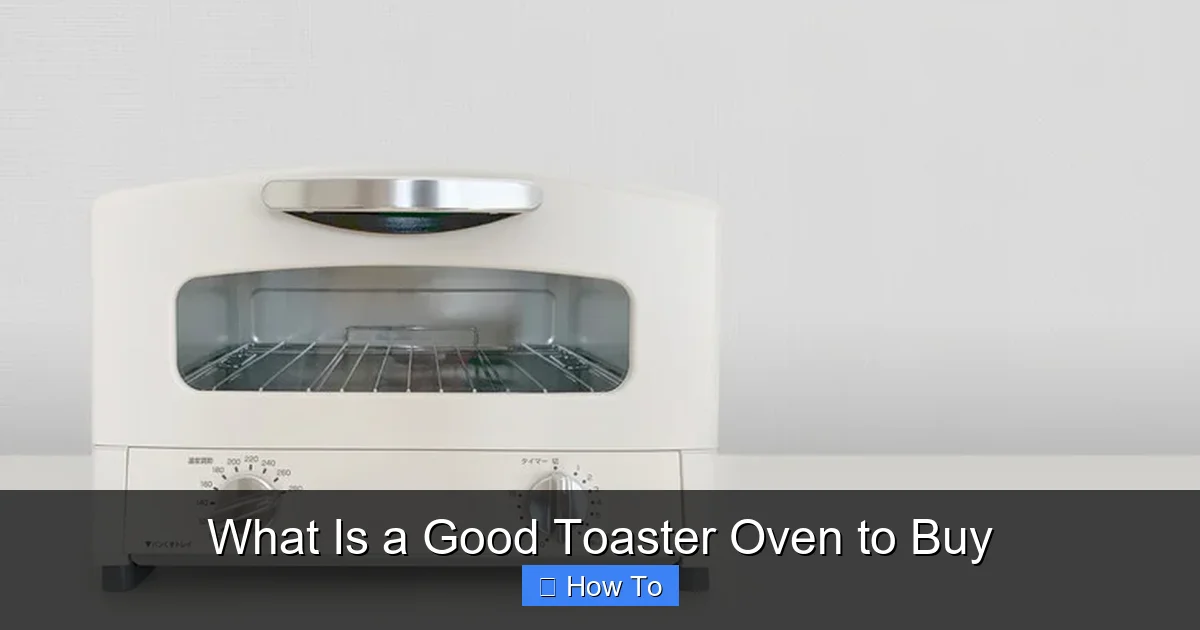
Finding a good toaster oven to buy depends on your cooking habits, kitchen space, and budget. Focus on essential features like convection cooking, preset functions, and easy-to-clean interiors. Top brands like Breville, Cuisinart, and Ninja offer reliable models across different price points.
Shopping for a good toaster oven to buy can feel overwhelming with so many models on the market. You want something that toasts evenly, bakes well, and maybe even air fries — all without taking over your countertop. The right choice depends on how you cook, what you cook, and how much you want to spend. This guide breaks down everything you need to know to make a confident decision.
Think of a toaster oven as a mini kitchen workhorse. It can replace your toaster, supplement your main oven, and even handle full meals. But not all models are created equal. Some burn toast while leaving centers cold. Others take forever to preheat. The best ones deliver consistent results, intuitive controls, and durability that lasts years. Let’s walk through how to find yours.
Key Takeaways
- Match size to your counter space: Measure your available area before shopping to ensure a proper fit.
- Prioritize convection heating: Convection fans cook food faster and more evenly than standard models.
- Check preset cooking functions: Look for settings like bake, broil, toast, air fry, and reheat for versatility.
- Consider interior capacity: Ensure it fits your typical dishes, like a 12-inch pizza or 6-slice toast.
- Evaluate ease of cleaning: Non-stick interiors and removable crumb trays save maintenance time.
- Set a realistic budget: Quality models range from $80 for basic units to $300+ for premium smart ovens.
- Read verified customer reviews: Real-world feedback reveals reliability issues specs alone can’t show.
📑 Table of Contents
Understanding Your Cooking Needs
Before comparing specs, ask yourself what you’ll actually use it for. Do you just want perfect toast and bagels? Or do you plan to roast vegetables, bake cookies, and air fry chicken wings? Your answer shapes every other decision.
Daily Use vs. Occasional Tasks
If you’ll use it daily for breakfast and quick dinners, invest in a model with fast preheat, even browning, and durable controls. For occasional use — like reheating pizza or toasting nuts — a basic compact unit works fine. Frequent bakers should prioritize temperature accuracy and convection performance.
Household Size Matters
Solo cooks can manage with a 4-slice capacity. Families of four or more need at least 6-slice capacity or room for a 9×13-inch pan. Measure your largest bakeware and check interior dimensions. A toaster oven good for family meals needs real estate inside.
Counter Space Reality Check
Measure your available countertop depth, width, and height clearance. Allow 4 inches behind and above for ventilation. Some models are tall but narrow; others are wide and low. Pick a shape that fits your layout. Don’t forget door swing direction — some drop down, others swing sideways.
Key Features That Define Quality
Specs on the box don’t tell the whole story. Focus on features that impact daily performance and longevity.
Convection Heating Is Non-Negotiable
A built-in fan circulates hot air for faster, more even cooking. It reduces hot spots, cuts cooking time by 20–30%, and improves browning. Almost every good toaster oven to buy today includes convection. Skip models without it unless budget is extremely tight.
Preset Cooking Programs Save Guesswork
Look for one-touch settings: toast (with shade control), bake, broil, pizza, cookies, reheat, and air fry. Smart presets adjust time and temperature automatically. Some premium models even have dehydrate, proof, and slow cook. More presets mean less manual tweaking.
Temperature Range and Accuracy
Quality units span 150°F to 450°F or higher. Testers find cheaper models often run 25–50°F off the set temperature. Digital controls with precise increments (5°F steps) outperform analog dials. If you bake, accuracy matters — especially for delicate items like custards or macarons.
Interior Design and Materials
Non-stick coating makes cleanup easy but can degrade over time. Stainless steel interiors are more durable and don’t off-gas. Removable crumb trays and slide-out racks are must-haves. Curved corners reduce food traps. A toaster oven with thoughtful interior design saves you scrubbing time.
Door Design and Visibility
Double-pane glass doors retain heat better and stay cooler outside. Large windows let you monitor food without opening the door — which drops temperature. Some doors stay open at 90 degrees for easy access; others auto-close. Test the hinge feel in person if possible.
Types of Toaster Ovens Explained
Not all toaster ovens are the same category. Knowing the differences helps you compare apples to apples.
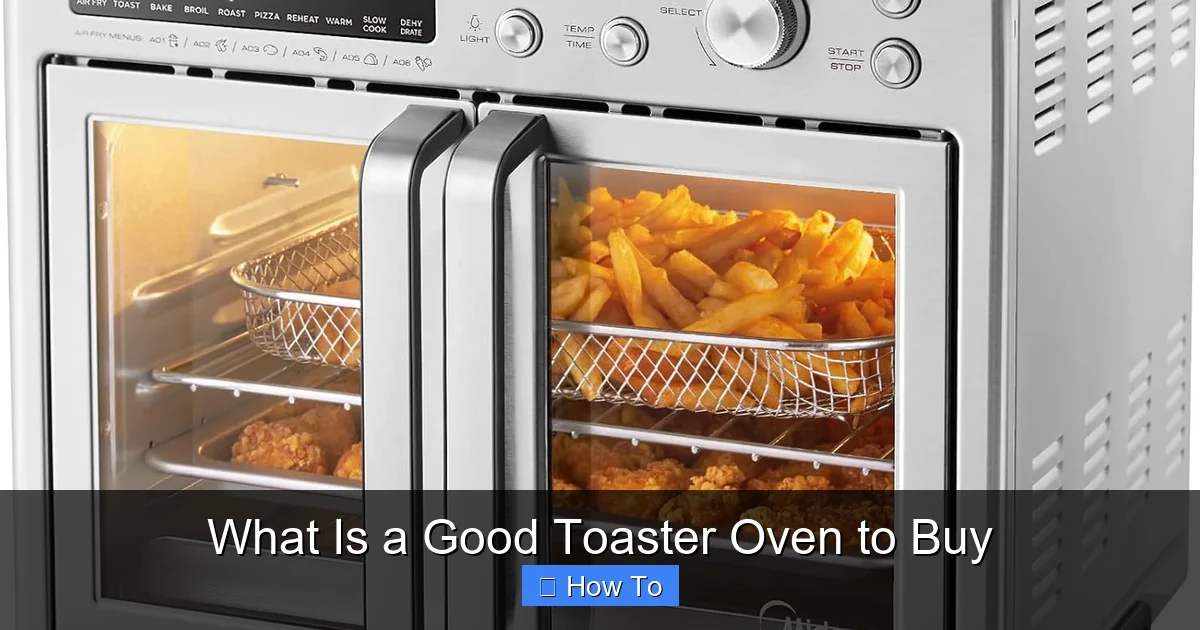
Visual guide about What Is a Good Toaster Oven to Buy
Image source: m.media-amazon.com
Standard Toaster Ovens
Basic models with heating elements top and bottom. Good for toast, bagels, and simple reheating. Usually lack convection. Best for tight budgets and minimal needs. Expect 4–6 slice capacity.
Convection Toaster Ovens
Add a fan for air circulation. Cook faster and more evenly. Handle baking, roasting, and crisping well. The sweet spot for most home cooks. Prices start around $100.
Air Fryer Toaster Ovens
Combine convection with high-velocity airflow for crispy results using little oil. Often include a mesh basket or tray. Replace standalone air fryers. Larger footprint. Ideal if you want fried texture without deep frying. Learn more about what a convection toaster oven is used for and how air fry modes differ.
Smart Toaster Ovens
Wi-Fi or Bluetooth enabled with app control, recipe libraries, and automatic cooking programs. Some have internal cameras and food recognition. Premium pricing ($250+). Best for tech-savvy cooks who want guided cooking.
Commercial-Grade / Pro Models
Heavy-duty construction, higher wattage (1800W+), precise calibration. Built for daily heavy use. Overkill for most homes but great for serious bakers or small food businesses.
Top Brands and What They’re Known For
Brand reputation correlates with build quality, support, and consistency. Here’s how the major players stack up.
Visual guide about What Is a Good Toaster Oven to Buy
Image source: m.media-amazon.com
Breville: Precision Engineering
Breville sets the benchmark for performance. Their Smart Oven Air Fryer Pro and Compact Smart Oven deliver exceptional temperature stability, intuitive LCD interfaces, and 13+ cooking functions. Pricey ($250–$400) but built to last. Excellent customer service.
Cuisinart: Reliable Workhorses
Cuisinart balances price and performance. The TOA-60 and TOA-70 air fryer toaster ovens are cult favorites — spacious, powerful, and consistent. Simpler controls than Breville but very dependable. Mid-range pricing ($150–$250).
Ninja: Innovation and Value
Ninja’s Foodi and Digital Countertop Ovens pack features at aggressive prices. Strong air fry performance, flexible rack positions, and unique functions like “whole roast.” Great for families wanting versatility under $200.
Panasonic: FlashXpress Speed
Unique double infrared heating (no preheat needed). Extremely fast for toast and small items. Compact. Limited capacity and no convection. Best for speed-focused users with simple needs.
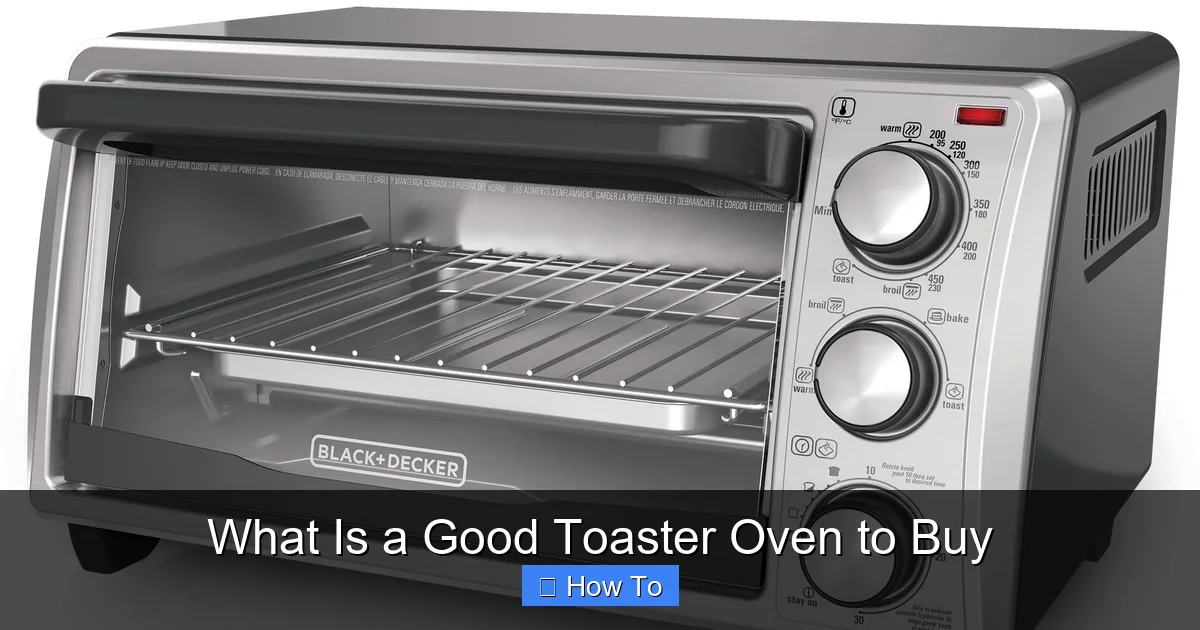
Budget Brands: Hamilton Beach, Black+Decker, Oster
Functional entry-level options ($60–$100). Fine for basic toasting and reheating. Convection models exist but often have uneven airflow. Shorter lifespans. Good backups or starter units.
Budget Tiers: What You Get at Each Price
Price generally tracks with capacity, build quality, feature count, and temperature precision.
Under $80: Basic Functionality
4-slice capacity, analog dials, no convection, thin walls. Toast okay; baking inconsistent. Plastic exteriors. 1–2 year lifespan. Brands: Hamilton Beach, Black+Decker.
$80–$150: Solid Mid-Range
Convection standard. 6-slice capacity. Digital controls. 8–10 presets. Decent insulation. Stainless steel accents. 3–5 year expectancy. Cuisinart TOB-40, Ninja DT201.
$150–$250: High Performance
Air fry capability. 9×13 pan fits. Precision digital controls. 10+ functions. Better door seals. Faster preheat. Breville Mini Smart Oven, Cuisinart TOA-60.
$250+: Premium Smart Ovens
App connectivity. Superb temperature accuracy. Advanced algorithms. Premium materials. 13+ functions. Interior lighting. Multi-stage cooking. Breville Smart Oven Air Fryer Pro, June Oven.
Making the Final Decision
You’ve narrowed your list. Now apply these final filters before purchasing.
Read Reviews Strategically
Ignore 5-star “love it!” and 1-star “arrived broken” reviews. Focus on 3–4 star reviews from verified buyers after 6+ months. Look for patterns: “toast uneven after 8 months,” “knob fell off,” “fan noisy.” These reveal real durability.
Check Warranty and Support
Standard is 1 year. Breville and Cuisinart offer 3-year limited warranties. Responsive support matters — check if the brand has US-based service centers. A longer warranty often signals confidence in build quality.
Buy From Retailers With Good Return Policies
Even well-reviewed units can disappoint in your kitchen. Purchase from stores with 30–90 day no-hassle returns (Costco, Amazon, Target, Bed Bath & Beyond). Keep the box for a few weeks.
Consider Future-Proofing
If you might explore air frying, baking, or meal prep later, buy a model with those functions now. Upgrading later costs more. A versatile good toaster oven to buy grows with your skills.
Don’t Overlook Aesthetics
It lives on your counter. Choose a finish (stainless, black stainless, matte black) that matches your kitchen. Some brands offer color options. You’ll appreciate a cohesive look daily.
Finding the right toaster oven is about matching the tool to your real life — not the fanciest specs. A $120 Cuisinart that you use daily beats a $350 Breville that intimidates you. Prioritize convection, capacity, and cleanup. Read long-term reviews. Buy where returns are easy. Then start enjoying faster, crispier, more versatile cooking from your countertop.
Frequently Asked Questions
What size toaster oven do I need for a family of four?
Look for at least a 6-slice capacity or 0.6 cubic feet interior. This fits a 9×13-inch baking pan, a 12-inch pizza, or a whole chicken — enough for family meals.
Is a convection toaster oven worth the extra cost?
Yes. Convection cooks 20–30% faster, browns more evenly, and improves results for baking, roasting, and air frying. It’s the single most impactful feature for performance.
Can a toaster oven replace a full-size oven?
For 1–2 person households, often yes. It preheats faster, uses less energy, and handles most baking, roasting, and toasting tasks. Large batches or multiple dishes still need a full oven.
What’s the difference between an air fryer toaster oven and a regular convection model?
Air fryer models use higher fan speeds and specialized baskets for crispier results with less oil. They’re optimized for “fried” textures. Regular convection is better for traditional baking.
How long should a good toaster oven last?
Quality models last 5–10 years with daily use. Budget units often fail in 2–3 years. Breville and Cuisinart owners frequently report 8+ year lifespans.
Do I need a smart toaster oven with Wi-Fi?
Only if you value guided recipes, remote monitoring, and automatic cooking programs. They add $100+ to the price. Most cooks get equal results with manual controls on a high-quality non-smart model.