Is Orgreenic Cookware Oven Safe
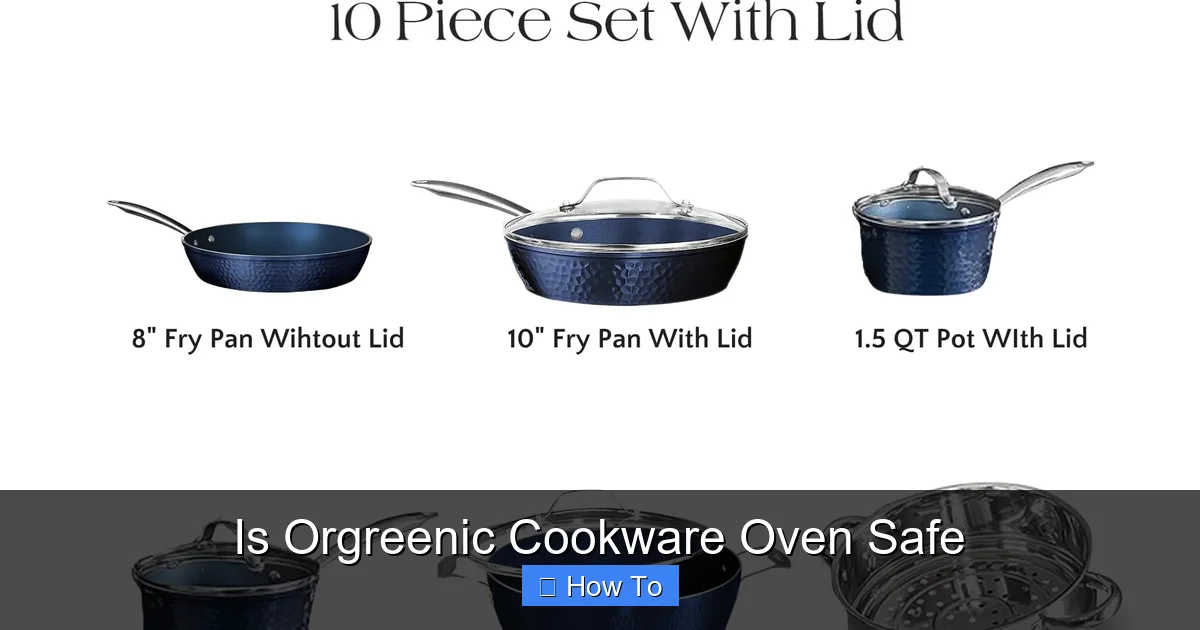
Orgreenic cookware is oven safe up to 450°F, making it ideal for stovetop-to-oven recipes. The ceramic non-stick coating ensures easy food release and quick cleanup, but users should always verify model-specific temperature limits to preserve the coating’s longevity.
Is Orgreenic Cookware Oven Safe
Picture this: you just finished a stovetop frittata, and it needs five more minutes under the oven heat to get that golden, bubbly top. You reach for your favorite Orgreenic pan, then pause. Can it go in the oven? You do not want to ruin a good pan, fill your kitchen with smoke, or create a mess you will be scrubbing for an hour.
If you own Orgreenic cookware—or you are thinking about buying it—you have probably asked yourself: is Orgreenic cookware oven safe? It is a fair question. Ceramic-coated pans are popular because they are nonstick and free of certain harsh chemicals, but not every ceramic pan handles oven heat the same way. Some can take moderate temperatures, while others are strictly stovetop only.
In this guide, I will walk you through what Orgreenic says about oven use, the temperature limits you need to know, and how to protect your cookware so it lasts. Think of me as your friend in the kitchen, sharing what actually works and what to avoid.
Key Takeaways
- Most Orgreenic cookware is oven safe up to approximately 350°F–450°F, depending on the specific product line.
- Always verify the manufacturer’s temperature limit printed on the pan or in the user manual before use.
- Handles and lids often have lower heat tolerances than the pan body, so check them separately.
- Avoid sudden temperature changes to prevent warping or coating damage during oven use.
- Use oven mitts when removing hot cookware, since handles can become dangerously hot.
- Never place cookware under a broiler unless explicitly rated for that high heat.
- Confirm oven safety for older or discontinued lines, as coating formulas vary between versions.
📑 Table of Contents
- What Is Orgreenic Cookware and Why Does Oven Safety Matter?
- Is Orgreenic Cookware Oven Safe? Breaking Down the Claims
- Oven-Safe Temperature Limits for Orgreenic Cookware
- Step-by-Step: Using Orgreenic Cookware in the Oven
- Common Mistakes That Can Damage Orgreenic Cookware in the Oven
- Real Talk: Pros, Cons, and My Honest Verdict
- Conclusion
What Is Orgreenic Cookware and Why Does Oven Safety Matter?
Orgreenic cookware is known for its ceramic nonstick coating. The brand markets itself as a healthier alternative to traditional nonstick pans because the coating does not contain PTFE or PFOA. That sounds great for everyday cooking, but oven safety is a different conversation entirely.
When a pan is oven safe, you can move it from the stovetop to the oven without damaging the coating, the handle, or the lid. This opens up so many possibilities. You can sear chicken on the stove and finish it in the oven. You can bake a frittata, cornbread, or even a small casserole in the same pan you used to sauté vegetables. It means fewer dishes and less cleanup.
However, not all parts of a pan are created equal. The ceramic body might handle heat, but the handle or glass lid might not. That is why asking is Orgreenic cookware oven safe requires looking at the whole piece, not just the cooking surface. I learned this the hard way years ago with a different brand that had a beautiful ceramic body but a handle that warped in the oven.
The Ceramic Coating Difference
Ceramic coatings are made from a silica-based gel that is cured at high temperatures. In general, ceramic can withstand more heat than standard nonstick coatings. But the coating is only one layer. Beneath it is usually aluminum, which conducts heat well. The real question is whether the entire pan—handle included—was built for oven temperatures.
Why Home Cooks Ask About Oven Use
Most of us want one pan that does everything. We do not want to transfer food to a baking dish just because the pan cannot handle 400 degrees. If you are wondering is Orgreenic cookware oven safe, you are likely looking for that kind of versatility. I get it. Fewer dishes mean easier cleanup, and being able to finish a dish in the oven feels like a real kitchen win.
Is Orgreenic Cookware Oven Safe? Breaking Down the Claims
The short answer is yes, Orgreenic cookware is oven safe, but with important limits. Orgreenic does not make every piece the same, and some collections handle heat better than others. You cannot assume every pot or pan in the line can go into a 500-degree oven.

Visual guide about Is Orgreenic Cookware Oven Safe
Image source: cdn.asotvinc.com
What the Manufacturer Says
According to Orgreenic product information, many of their ceramic cookware pieces are oven safe up to a certain temperature. That number often sits between 350 degrees Fahrenheit and 500 degrees Fahrenheit, depending on the specific line. The brand generally does not recommend using its cookware under the broiler.
If you are trying to figure out is Orgreenic cookware oven safe for your specific piece, check the bottom of the pan or the packaging. Some items have an oven-safe symbol stamped right on the metal. If you do not see one, assume a lower limit until you confirm. I always tell friends to keep the manual or at least take a photo of the care instructions when they first unbox a new set.
The Handle Factor
Handles are often the weak link. Some Orgreenic pans have silicone-wrapped handles that feel comfortable on the stovetop but can melt or degrade in high oven heat. Others have stainless steel handles that can take much higher temperatures. If your pan has a silicone handle, the oven-safe limit might be much lower—sometimes only 350 degrees. The pan body might be fine at 450, but the handle is not.
Glass Lids and Oven Safety
Many Orgreenic sets come with glass lids. Glass can usually go in the oven, but the knob on top might be plastic or silicone. If the knob is not rated for oven heat, you should remove the lid before putting the pan in the oven, or leave the lid off entirely. Always check the lid rating separately from the pan body. A cracked lid knob is not worth the risk.
Oven-Safe Temperature Limits for Orgreenic Cookware
Temperature limits matter because exceeding them can damage the ceramic coating or warp the pan. Below is a quick reference to help you remember the general ranges. These are typical limits, but you should always verify with your specific model.
- Standard Orgreenic ceramic pans: Often safe up to 350°F to 400°F
- Collections with stainless steel handles: May be safe up to 500°F
- Silicone-wrapped handles: Usually limited to 350°F or lower
- Glass lids with plastic knobs: Remove before oven use or check knob rating
- Broiler use: Generally not recommended
Temperature Limits by Collection
Orgreenic has released several lines over the years. Some older collections advertised lower oven limits, while newer ones sometimes push closer to 500 degrees. If you bought your pan a few years ago, do not assume it matches the latest product page. Look for any paperwork that came with the set, or search the model number online. I have seen two pans that look almost identical but have completely different oven ratings because they came from different production years.
Broiler Use: Yes or No?
Most Orgreenic cookware is not broiler safe. The broiler in your oven can reach temperatures far above the baking setting, often exceeding 500 degrees and concentrating heat directly on the top of the pan. That kind of intense, direct heat can crack ceramic coatings or damage handles. If a recipe calls for broiling, transfer your food to a metal baking dish instead. It is not worth risking your pan for a few minutes of browning.
Preheating Empty Pans in the Oven
It is tempting to place an empty Orgreenic pan in the oven while it preheats, but I do not recommend it. Ceramic coatings can be sensitive to rapid temperature changes. Putting a cold, empty pan into a hot oven can stress the material. If you need a hot pan, heat it on the stovetop first, then transfer it to a warm oven if the recipe allows.
Step-by-Step: Using Orgreenic Cookware in the Oven
Using Orgreenic cookware in the oven is simple if you follow a few basic steps. Here is how I do it when I want to finish a dish without dirtying another dish.
Before You Put It in the Oven
- Check the bottom of the pan for an oven-safe symbol.
- Confirm the temperature limit for your specific collection.
- Remove any plastic or silicone lid knobs if they are not oven rated.
- Make sure the handle material can handle the oven temperature.
- Do not fill the pan with oil and leave it unattended in a hot oven.
While It’s Baking
- Set a timer so you do not forget the pan is in there.
- Avoid opening the oven door constantly, which causes temperature swings.
- Use wooden, silicone, or plastic utensils if you need to stir something in the oven.
- Keep the oven temperature at or below the pan’s rated limit.
Taking It Out Safely
- Use dry oven mitts. The handle will be hot, even if it looks cool.
- Place the hot pan on a trivet or stovetop, not directly on a cold countertop.
- Let the pan cool naturally before washing it. Do not run cold water over a hot ceramic pan.
If you follow these steps, you can safely answer is Orgreenic cookware oven safe with a confident yes—for the right dish and the right temperature. Last month, I used my Orgreenic skillet to start a shrimp dish on the stove and finish it in the oven at 375 degrees. It turned out perfectly, and I only had one pan to wash.
Common Mistakes That Can Damage Orgreenic Cookware in the Oven
Even oven-safe cookware can fail if you use it the wrong way. I have seen plenty of ceramic pans ruined by simple mistakes. Here are the ones to watch out for.
Ignoring the Temperature Limit
Going just 50 or 100 degrees over the limit might seem harmless, but ceramic coatings can break down over time. Once the coating starts to degrade, you lose the nonstick benefit and the pan becomes harder to clean. Stick to the rated limit every time. If your pan is rated for 400 degrees, do not crank the oven to 450 just to save a few minutes.
Shocking the Ceramic Coating
Thermal shock happens when a hot pan meets a cold surface. If you pull a hot Orgreenic pan out of the oven and set it on a stone countertop or run it under cold water, the coating can crack. Always let it cool gradually. I set mine on a wooden board and walk away for twenty minutes before I even think about washing it.
Forgetting About the Handle
A pan body might be rated for 500 degrees, but a silicone handle might only be safe to 350 degrees. If you ignore the handle rating, you could end up with a melted grip or a handle that falls off. When in doubt, treat the lowest-rated part as the limit for the whole pan.
Using Metal Utensils Before Oven Use
Metal utensils can scratch the ceramic surface. A scratched surface is more likely to flake or wear when exposed to high oven heat. Stick to gentle utensils to keep the coating intact. I keep a silicone spatula right next to my Orgreenic pan so I am never tempted to grab a fork.
Real Talk: Pros, Cons, and My Honest Verdict
So, is Orgreenic cookware oven safe enough for everyday use? Let me give you the honest breakdown.
The Strengths
- Ceramic coating is free of PTFE and PFOA, which appeals to health-conscious cooks.
- Many pieces handle moderate oven temperatures well for finishing dishes.
- Food releases easily, making cleanup simpler than with stainless steel.
- It is lightweight compared to cast iron, so moving it from stove to oven is easy.
The Areas for Improvement
- Oven limits vary by collection, so you have to do a little homework.
- Silicone handles restrict how high you can set the oven temperature.
- Ceramic coatings can wear down faster than traditional nonstick if you are not careful.
- Broiler use is generally off the table.
My Verdict
If you want a pan that can go from stovetop to oven for moderate baking, Orgreenic can work well. Just respect the temperature limits, avoid the broiler, and treat the ceramic coating gently. For high-heat roasting or broiling, I would still reach for cast iron or stainless steel.
In the end, is Orgreenic cookware oven safe? Yes, but only within its limits. Know your pan, check the handle, and you will be able to bake, roast, and finish meals without worry.
Conclusion
Cooking should be enjoyable, not a source of anxiety about whether your pan will survive the oven. Orgreenic cookware offers a ceramic nonstick option that can handle oven use, provided you stay within the recommended temperature range and pay attention to handles and lids.
Before your next oven-baked meal, take a quick look at your pan’s bottom or manual. Confirm the limit, remove any questionable lid knobs, and use oven mitts when you take it out. Those small habits will keep your Orgreenic cookware in good shape for years.
Happy cooking, and enjoy those one-pan meals!
Frequently Asked Questions
Is Orgreenic cookware oven safe for baking dishes?
Yes, Orgreenic cookware is designed to be oven safe up to 450°F, so you can safely transfer baked recipes from stovetop to oven. The non‑stick ceramic coating remains stable and does not release harmful fumes at these temperatures.
Can I use Orgreenic pots in the oven at high temperatures?
Orgreenic cookware is rated for oven use up to 450°F, which covers most roasting and baking needs. For temperatures higher than that, it’s best to avoid oven use to protect the coating.
What is the maximum oven temperature for Orgreenic cookware?
The manufacturer states that Orgreenic is oven safe up to 450°F (232°C). Exceeding this temperature may cause the ceramic surface to degrade over time.
Is Orgreenic cookware safe for broiling in the oven?
While Orgreenic can handle standard oven cooking, broiling at very high heat may exceed its safe temperature range. It’s recommended to use a lower broil setting or avoid broiling altogether.
Do I need special oven settings when using Orgreenic cookware?
No special settings are required; treat Orgreenic like any other oven‑safe pan. Just ensure the oven preheats gradually and avoid sudden temperature changes.
How long can Orgreenic cookware stay in the oven without damage?
Orgreenic is built to withstand typical oven cooking times, generally up to an hour or more at its maximum temperature. Prolonged exposure beyond recommended times may affect the coating’s durability.