What Is the Highest Temperature an Oven Can Go
Ever wondered how hot your oven can really get? Most home ovens top out between 500°F and 550°F, while specialty models push past 700°F for pizza and bread. Knowing the limit helps you choose the right recipes and avoid costly mistakes.
Key Takeaways
- Typical home ovens: Reach 500‑550°F, suitable for most baking and roasting.
- Professional‑grade ovens: Can climb to 700‑800°F, perfect for artisan pizza and bread.
- Convection vs. conventional: Convection ovens often hit slightly higher temps due to better air circulation.
- Safety first: High‑heat cooking demands proper cookware, venting, and fire‑watching.
- Temperature accuracy: Use an oven thermometer; built‑in gauges can be off by 25°F or more.
- Alternative high‑heat tools: Consider a pizza stone, broiler, or specialized toaster oven for occasional ultra‑high temps.
- Energy impact: Higher temperatures use more power; plan cooking times to save electricity.
📑 Table of Contents
- Introduction: Why Oven Temperature Matters
- 1. The Temperature Spectrum of Home Ovens
- 2. How Manufacturers Determine the Max Temperature
- 3. Choosing the Right Oven for High‑Heat Cooking
- 4. Practical Tips for Cooking at the Highest Temperatures
- 5. Energy Use and Cost Considerations
- Conclusion: Know Your Limits, Cook With Confidence
Introduction: Why Oven Temperature Matters
When you set your oven to 350°F, you probably assume it will hold that heat exactly. In reality, ovens vary widely in how hot they can actually get. Knowing what is the highest temperature an oven can go helps you pick the right appliance for pizza night, artisan bread, or crispy roasted vegetables.
In this friendly guide we’ll walk through the temperature ranges of common ovens, explain the science behind those limits, and share practical tips for cooking safely at the highest settings. Think of it as a chat over coffee with a neighbor who just upgraded their kitchen.
1. The Temperature Spectrum of Home Ovens
Standard electric and gas models
Most countertop and built‑in ovens sold for everyday use are designed to top out between 500°F (260°C) and 550°F (288°C). This range is sufficient for:
- Cookies, cakes, and muffins
- Roasting chicken, turkey, or vegetables
- Basic pizza (thin crust, short bake)
Manufacturers set these limits to balance performance, safety, and energy consumption. Going higher would require thicker insulation and more robust heating elements.
High‑heat specialty ovens
If you love Neapolitan‑style pizza or artisan sourdough, you’ll want an oven that can reach 700°F (371°C) to 800°F (427°C). These are often marketed as “pizza ovens,” “brick ovens,” or “convection ovens with a broil boost.”
Typical features include:
- Stone or ceramic baking surfaces that retain and radiate heat
- Powerful gas burners or electric elements that can sustain extreme temps
- Heavy‑duty doors and hinges to contain the heat safely
Convection ovens and temperature boost
Convection ovens circulate hot air with a fan, which can make them feel hotter than a conventional oven at the same setting. Many models offer a “Turbo” or “Max Heat” mode that adds 20‑30°F (11‑16°C) to the maximum temperature.
For example, a 550°F conventional oven might reach 580°F in convection mode, giving you a little extra leeway for crisping without switching to a broiler.
2. How Manufacturers Determine the Max Temperature
Insulation and safety standards
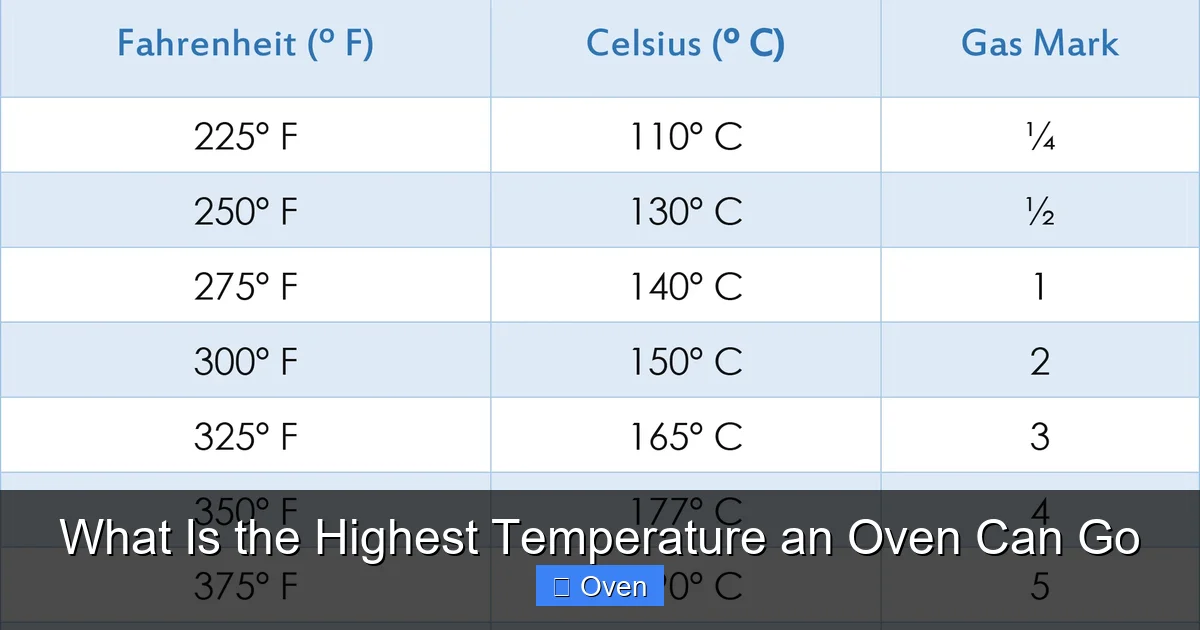
Oven interiors are lined with fiberglass or mineral wool insulation. The thickness and quality of this material dictate how much heat can be retained without the exterior becoming dangerously hot. Safety regulations (like UL and CE) require that external surfaces stay below a certain temperature to prevent burns.
Visual guide about What Is the Highest Temperature an Oven Can Go
Image source: thecookbookpublisher.com
Heating elements and power ratings
Electric ovens use nickel‑chromium coils that can handle up to 2,500 watts in most home units. To push beyond 600°F, manufacturers either increase wattage or use gas burners that can produce a hotter flame.
Thermostat accuracy
Even if an oven can technically heat to 600°F, the built‑in thermostat may only be calibrated to 450°F‑500°F for consumer use. That’s why a simple oven thermometer is a kitchen essential—especially when you’re testing the limits.
3. Choosing the Right Oven for High‑Heat Cooking
What to look for in specs
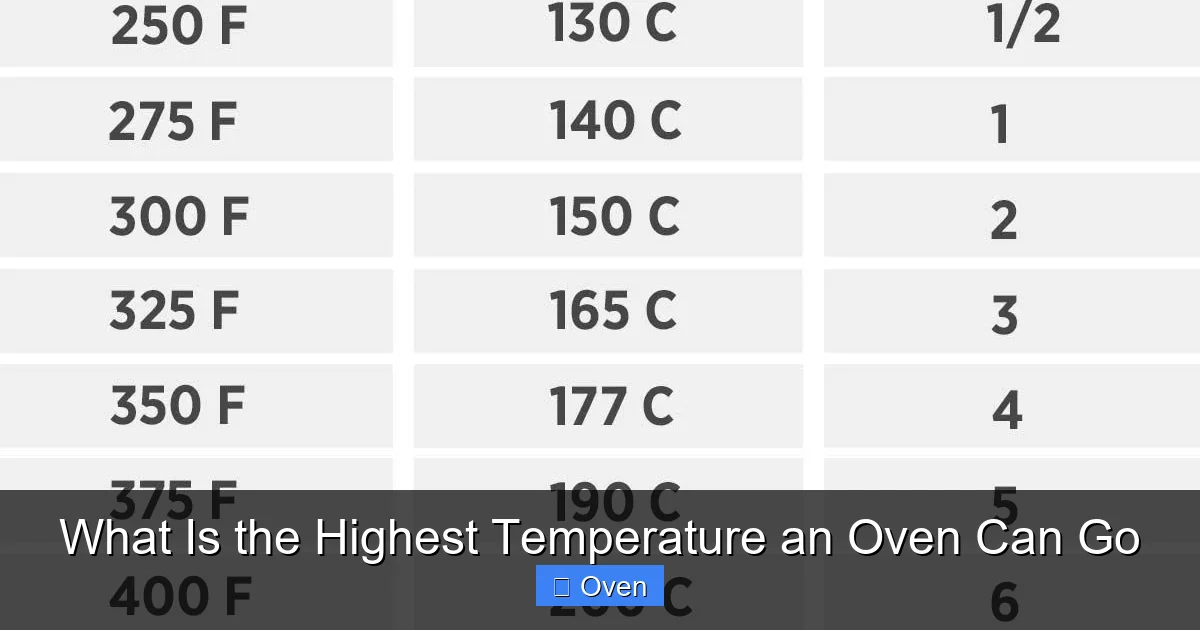
When shopping, check the “Maximum Temperature” line in the spec sheet. Also consider:
Visual guide about What Is the Highest Temperature an Oven Can Go
Image source: i.pinimg.com
- Broiler power: A strong broiler can add an extra 200°F on top of the oven’s max.
- Self‑cleaning mode: High‑temp self‑clean cycles (usually 900°F) indicate the oven can handle extreme heat, though it’s not meant for cooking.
- Construction material: Stainless steel interiors heat quickly but may not retain heat as well as stone or ceramic.
Best ovens for pizza and bread
Brands like Best Over The Range Microwave Convection Oven and dedicated pizza ovens from Ooni or Breville often list a max temperature of 900°F for short bursts. These are ideal if you plan to bake pizza at home regularly.
Alternative high‑heat tools
If you don’t want to replace your whole oven, consider a Best Highest Rated Air Fryer Toaster Oven. Many models have a “Pizza” setting that reaches 475°F‑500°F and a built‑in broiler that can push the surface temperature higher for a few minutes.
4. Practical Tips for Cooking at the Highest Temperatures
Use the right cookware
At 600°F+ you need cookware that can survive the heat without warping. Good choices include:
- Cast iron skillets
- Pizza stones or steel plates
- Heavy‑duty metal baking trays (no thin aluminum foil)
Plastic, silicone, and thin glass should be avoided—they can melt or crack.
Preheat properly
High‑heat cooking demands a thorough preheat. Turn the oven on at the desired temperature and let it run for at least 20‑30 minutes. An oven thermometer will tell you when the interior has truly stabilized.
Watch the clock (and the smoke)
Foods cook very quickly at extreme temps. A pizza can go from perfect to burnt in 90 seconds. Keep a timer handy and stay nearby to prevent smoke buildup.
Ventilation matters
Running your oven at 700°F releases more heat and fumes. Turn on the kitchen exhaust fan and open a window if possible. This also protects your HVAC system from overheating.
Cooling down safely
After reaching the max temperature, let the oven cool with the door slightly ajar. This prevents sudden temperature shifts that could crack the glass door.
5. Energy Use and Cost Considerations
Power consumption spikes
Every 100°F increase can raise electricity usage by roughly 10‑15%. If you bake a pizza at 800°F for 5 minutes, you’ll use about the same energy as a 30‑minute bake at 400°F.
Smart cooking strategies
- Batch bake: Cook several items in one high‑heat session to amortize the energy cost.
- Use residual heat: Turn off the oven a few minutes early; the stored heat will finish the job.
- Combine appliances: Use the broiler for a quick sear after a lower‑temp bake.
Conclusion: Know Your Limits, Cook With Confidence
Understanding what is the highest temperature an oven can go empowers you to pick the right appliance, avoid kitchen mishaps, and achieve restaurant‑quality results at home. Most standard ovens cap at 500‑550°F, but specialty models and convection boosters can push past 700°F for that perfect pizza crust or blistered roasted veggies.
Remember to use proper cookware, preheat thoroughly, and keep an eye on safety. With these tips, you’ll be ready to explore the full heat potential of your oven—and maybe finally master that Neapolitan pizza you’ve been dreaming about.
Frequently Asked Questions
What is the typical maximum temperature for a standard home oven?
Most electric and gas ovens for everyday use max out between 500°F (260°C) and 550°F (288°C). This range handles most baking, roasting, and basic pizza needs.
Can I safely cook at temperatures above 600°F in a regular oven?
Only if the oven’s specifications list a higher max temperature. Pushing a standard oven beyond its rating can damage heating elements, insulation, and may create a fire hazard.
Do convection ovens get hotter than conventional ovens?
Convection ovens don’t necessarily reach higher absolute temperatures, but the fan circulates air so food cooks faster and can achieve a similar crispness at slightly lower settings.
What cookware is best for ultra‑high‑heat baking?
Use cast iron, pizza steel, or heavy‑duty metal baking trays. Avoid thin aluminum foil, plastic, and low‑heat glass dishes, as they can warp or melt.
How can I tell if my oven’s thermostat is accurate?
Place an oven thermometer on the middle rack and compare its reading to the set temperature. A variance of more than 25°F (14°C) means the thermostat may need calibration.
Is there a cheaper alternative to a high‑heat oven for making pizza?
Yes, a high‑quality air fryer toaster oven with a broiler function or a pizza stone in a regular oven can achieve near‑restaurant results without buying a dedicated pizza oven.