Is Curtis Stone Cookware Toxic
The short answer is no, most modern Curtis Stone cookware is not considered toxic when used as directed. Many Curtis Stone pieces use ceramic or other nonstick coatings marketed as free from PTFE, PFOA, PFAS, lead, and cadmium. Still, you should check your exact pan, avoid high heat, and replace it if the coating is scratched, peeling, or flaking.
Is Curtis Stone Cookware Toxic
Maybe you saw a Curtis Stone pan online. Maybe a friend recommended it. Or maybe you already own one and now you are wondering about safety.
That is a smart question. Cookware touches food every day. So it makes sense to ask, Is Curtis Stone Cookware Toxic? The good news is that most modern Curtis Stone cookware is designed for safe home cooking when you use it the right way.
But there is no one-size-fits-all answer. Curtis Stone cookware includes different styles. Some pans are ceramic nonstick. Some use other nonstick coatings. Some pieces may be stainless steel or have stainless steel parts. The best answer depends on the exact pan, the coating, and how you use it.
Key Takeaways
- Most Curtis Stone cookware is safe for normal use: Modern pieces are usually made with coated aluminum, ceramic nonstick, or stainless steel materials.
- Check the exact product line: Safety depends on the pan, coating, age, and care instructions.
- Nonstick safety matters: Many Curtis Stone nonstick pans are marketed as PTFE-free, PFOA-free, and PFAS-free.
- Do not overheat nonstick pans: High heat can damage coatings and affect performance.
- Use gentle tools: Wood, silicone, or nylon utensils help protect the cooking surface.
- Replace damaged pans: Peeling, flaking, deep scratches, or warping are signs it is time for a new pan.
📑 Table of Contents
What Curtis Stone Cookware Is Made Of
Different lines use different materials
Curtis Stone cookware is not just one single product. It is a brand with different cookware sets and pieces. That matters because materials can vary.
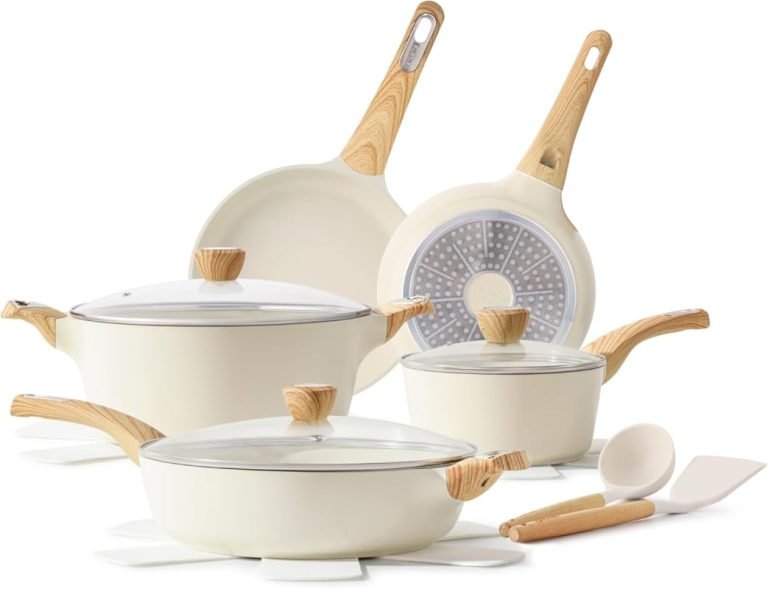
Many Curtis Stone nonstick pans use an aluminum body with a nonstick cooking surface. Aluminum heats fast. It is light. It spreads heat well. But the aluminum is usually covered by a coating, so food does not touch the raw metal.
Some Curtis Stone pieces may also use stainless steel or stainless steel handles. Stainless steel is common in kitchens. It is strong, durable, and easy to clean. If you cook on induction, you will want to check the base of the pan. Not every pan works on induction. If you need induction-ready stainless steel, our guide to best stainless steel cookware for induction cooktop can help you compare options.
Common Curtis Stone cookware materials
- Aluminum: Often used under a nonstick coating for fast, even heating.
- Ceramic nonstick coating: Often marketed as PTFE-free and PFOA-free.
- Stainless steel: Often used for handles, lids, or stainless cookware pieces.
- Silicone or plastic handles: Often used for grip and heat protection.
- Glass lids: Often used so you can watch food cook.
Why the label matters
Always check the product page, box, or manual. Look for words like PTFE-free, PFOA-free, PFAS-free, lead-free, and cadmium-free. These claims can change by product line. They can also change over time.
If you bought your pan years ago, the coating may not match newer models. If you are unsure, contact the brand or seller. A quick check can save you worry.
Is Curtis Stone Cookware Toxic? The Short Answer
What toxic means in cookware
When people ask, Is Curtis Stone Cookware Toxic? they usually mean one thing. They want to know if chemicals can get into food.
Visual guide about Is Curtis Stone Cookware Toxic
Image source: t.pimg.jp
Most modern Curtis Stone nonstick cookware is marketed as safe for normal cooking. Many pieces are made without PTFE, PFOA, PFAS, lead, and cadmium. That is a good sign. But safe does not mean careless use is okay.
A pan can be safe when new and still become a problem later. Damage matters. Heat matters. Cleaning habits matter. A coated pan should not be used if the surface is peeling or flaking.
The coating matters most
The coating is the part that touches your food. So it is the main thing to check. Ceramic nonstick coatings are common in safer-feeling cookware. They are often made without traditional PTFE materials.
Still, ceramic nonstick is not magic. It can wear down. It can lose its slick surface. It can scratch if you use metal tools. It can also break down if you heat it too much.
If your Curtis Stone pan is still smooth, clean, and working well, it is usually fine for normal cooking. If the surface is damaged, stop using it.
Nonstick Coating Safety and Common Concerns
Ceramic nonstick vs PTFE nonstick
Many people worry about PTFE. PTFE is a type of nonstick material used in some cookware. Older nonstick coatings also used PFOA during production. PFOA is no longer used in many modern nonstick products.
Visual guide about Is Curtis Stone Cookware Toxic
Image source: i.pinimg.com
Curtis Stone ceramic nonstick pans are often marketed as PTFE-free and PFOA-free. That means they are not the same as older PTFE-based nonstick pans. For many shoppers, that is a big plus.
But ceramic coatings have limits. They are usually less durable than some premium PTFE coatings. They can wear out faster if you cook on high heat or scrub hard. So even if the coating is safer by design, care still matters.
What happens if you overheat it?
Do not heat an empty nonstick pan for a long time. This is one of the easiest ways to damage a coating. High heat can cause fumes, odors, warping, or coating damage.
For eggs, pancakes, fish, and delicate foods, use low or medium heat. Add a little oil or butter if needed. You do not need a blazing hot pan for nonstick cooking.
If your pan starts to smoke, turn off the heat. Let it cool. Wash it gently after it cools. If the surface looks changed, sticky, or damaged, it may be time to replace it.
Practical cooking examples
For scrambled eggs, use low heat and a silicone spatula. You will get soft eggs and protect the pan. For searing steak, use a stainless steel pan or cast iron instead. Nonstick is not the best tool for very high heat.
For pasta, use a stainless steel pot or a large stockpot. You do not need nonstick for boiling water. This helps your Curtis Stone nonstick pan last longer.
Aluminum, Stainless Steel, and Oven Use
Aluminum under the coating
Aluminum is common in cookware. It heats quickly and evenly. Many coated pans use aluminum because it is light and easy to handle.
Visual guide about Is Curtis Stone Cookware Toxic
Image source: japanfs.org
The main question is whether aluminum touches your food. In most coated Curtis Stone pans, it does not. The coating creates a barrier. That is why coating care is so important.
If the coating chips or peeling starts, do not keep cooking in the pan. The exposed metal can react with food. It can also make the pan harder to clean. Replace it instead.
Stainless steel and nickel
Stainless steel is usually a safe cookware choice. It is strong and does not need a nonstick coating. But it can contain nickel and chromium. Most people do not have a problem with this.
If you have a nickel allergy, stainless steel may bother you. In that case, choose cookware carefully. You may want to avoid long cooking times with acidic foods in stainless steel pans.
Oven and dishwasher limits
Some Curtis Stone pans may be oven safe. But the limit depends on the pan, handle, and lid. A metal handle may handle more heat than a silicone handle. A glass lid may have its own limit.
Always check the manual before putting the pan in the oven. If you are baking at high heat, it helps to know what is the highest temperature an oven can go and compare that with your pan’s rating.
Dishwasher safety also varies. Some pieces may say dishwasher safe. But hand washing is usually better for nonstick coatings. If easy cleanup is your top need, compare it with our guide to best hard anodized dishwasher safe cookware sets.
How to Use Curtis Stone Cookware Safely
Heat, utensils, and cleaning
Using Curtis Stone cookware safely is mostly about simple habits. Keep heat moderate. Use soft tools. Clean gently. Do not shock a hot pan with cold water.
- Use low or medium heat: Nonstick pans do not need very high heat.
- Preheat briefly: Warm the pan for about 30 to 60 seconds.
- Use silicone, wood, or nylon tools: Metal tools can scratch the surface.
- Hand wash when possible: A soft sponge and warm soapy water work well.
- Avoid abrasive scrubbers: Steel wool can damage the coating.
- Let the pan cool first: Do not put a hot pan under cold water.
- Do not use aerosol cooking sprays often: They can leave a sticky film.
Storage tips
Stacking pans can scratch them. If you must stack them, place a soft cloth, paper towel, or pan protector between each one. This small step can make the coating last longer.
Also, do not store food in the pan for long periods. Move leftovers to a glass or plastic container. This keeps the pan clean and helps protect the surface.
Who should be extra careful?
If you have pets, especially birds, be careful with any overheated nonstick cookware. Birds can be very sensitive to fumes. Keep the kitchen well ventilated.
If you have a metal allergy, check the materials in the pan. Stainless steel may contain nickel. Coated aluminum should not expose aluminum to food if the coating is intact.
When to Replace It and Final Verdict
Signs it is time for a new pan
A scratched pan is not always a health emergency. Light surface marks may not mean the pan is toxic. But deep scratches, peeling, or flaking are different.
- The coating is peeling: Stop using the pan.
- The surface is flaking: Replace it.
- Food sticks even with oil: The coating may be worn out.
- The pan is warped: It may heat unevenly.
- You see discoloration that will not clean off: It may be damaged.
- The pan smokes at low heat: This can mean the coating is failing.
Final verdict
So, is Curtis Stone Cookware Toxic? For most people, the answer is no, not when the cookware is new, intact, and used correctly. Modern Curtis Stone nonstick cookware is often made with coatings that are marketed as free from PTFE, PFOA, PFAS, lead, and cadmium.
The real risk comes from misuse. Overheating, metal utensils, harsh scrubbers, and damaged coatings can shorten the life of the pan. They can also make cooking less safe and less enjoyable.
Use low or medium heat. Choose gentle tools. Hand wash when you can. Check the product details for your exact pan. If the surface is damaged, replace it.
Bottom line: Curtis Stone cookware can be a safe choice for everyday cooking. Just treat the coating with care, follow the instructions, and do not keep using a pan that is worn out.
Frequently Asked Questions
Is Curtis Stone cookware toxic?
Most modern Curtis Stone cookware is not considered toxic when used as directed. Many pieces use nonstick coatings marketed as free from PTFE, PFOA, PFAS, lead, and cadmium. Always check your exact product details.
Does Curtis Stone cookware contain Teflon?
Many Curtis Stone nonstick pans are marketed as PTFE-free, which means they do not use traditional Teflon-type PTFE coatings. However, product lines can change, so check the label or manual for your specific pan.
Can scratched Curtis Stone cookware make you sick?
Light scratches may not make a pan toxic, but deep scratches can affect performance. If the coating is peeling, flaking, or coming off into food, stop using the pan and replace it.
Can Curtis Stone pans go in the oven?
Some Curtis Stone pans may be oven safe, but the limit depends on the pan, handle, and lid. Check the product instructions before using any pan in the oven.
Is aluminum in Curtis Stone cookware a concern?
Aluminum is often used in cookware because it heats quickly. In coated Curtis Stone pans, the aluminum is usually covered so food does not touch it directly. If the coating is damaged, replace the pan.
How long does Curtis Stone nonstick cookware last?
With gentle use, Curtis Stone nonstick cookware can last for a few years. Its life depends on heat level, utensils, cleaning, and storage. Replace it when food starts sticking or the coating looks worn.