What Uses Less Electricity Oven or Air Fryer
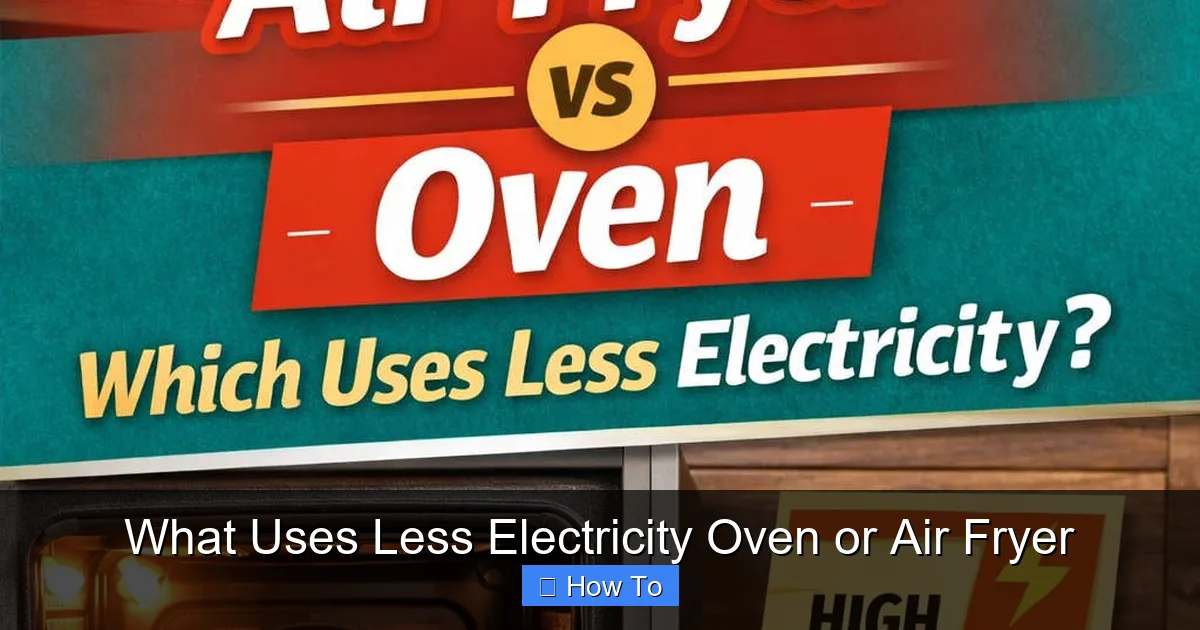
When it comes to cooking appliances, electricity usage matters for both your wallet and the environment. Air fryers typically use significantly less electricity than conventional ovens due to their smaller size and faster cooking times. While ovens might consume 2,000-5,000 watts, air fryers usually operate between 800-1,800 watts, making them a more energy-efficient choice for small meals and snacks. However, the best option depends on your cooking needs, portion sizes, and frequency of use.
Key Takeaways
- Air fryers generally use less electricity: Most air fryers consume 800-1,800 watts while conventional ovens use 2,000-5,000 watts.
- Cooking time affects energy consumption: Air fryers cook food 20-25% faster than ovens, reducing overall electricity usage even further.
- Portion size matters for efficiency: Small meals are more energy-efficient in air fryers, while large family portions may require oven use.
- Cost savings can be significant: Using an air fryer instead of an oven can save $20-40 annually on electricity bills.
- Convection ovens are more efficient: If you have a convection oven, it uses less electricity than conventional ovens but more than air fryers.
- Consider your cooking habits: Frequent small-batch cooking favors air fryers, while occasional large meals work better with ovens.
- Temperature retention impacts usage: Ovens take longer to heat up and cool down, consuming more energy during preheating cycles.
📑 Table of Contents
- Understanding Your Kitchen’s Energy Consumption
- How Much Electricity Do Ovens Actually Use?
- Air Fryer Electricity Consumption Explained
- Direct Comparison: Air Fryer vs Oven Energy Usage
- Real-World Scenarios and Cost Savings
- Maximizing Energy Efficiency in Both Appliances
- Making the Right Choice for Your Kitchen
- Environmental Impact and Long-Term Savings
- Conclusion: Making Informed Cooking Decisions
Understanding Your Kitchen’s Energy Consumption
Every time you flip on your oven or air fryer, you’re making a choice that affects your electricity bill. With energy costs rising and environmental concerns growing, many home cooks want to know: what uses less electricity oven or air fryer? This question isn’t just about saving money – it’s about making smart decisions for sustainable living.
The answer might surprise you. While both appliances serve important cooking functions, their energy consumption patterns differ dramatically. Understanding these differences can help you make informed choices about when to use each appliance. Let’s dive deep into the world of kitchen electricity usage and discover which option is truly more efficient.
How Much Electricity Do Ovens Actually Use?
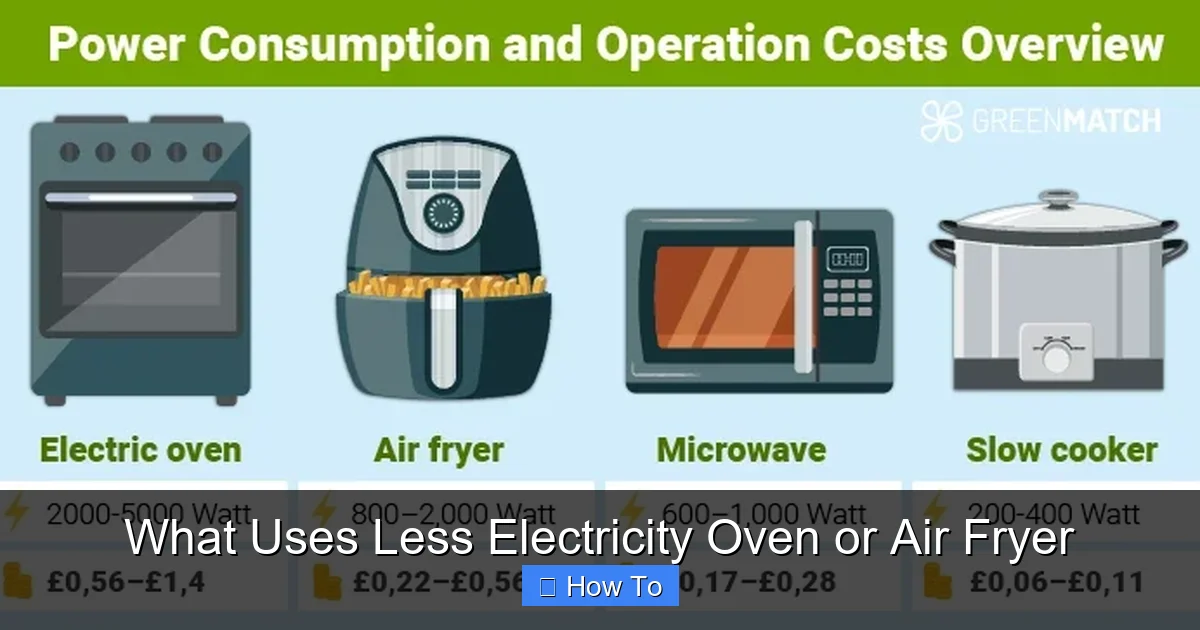
Conventional ovens are workhorses in the kitchen, but they come with a hefty energy price tag. Most standard electric ovens operate between 2,000 and 5,000 watts of power. To put this in perspective, running a 3,000-watt oven for one hour consumes 3 kilowatt-hours (kWh) of electricity.
Visual guide about What Uses Less Electricity Oven or Air Fryer
Image source: homeunderstandable.com
Electric Oven Power Ratings
Small toaster ovens typically use 1,200-1,800 watts, while full-size electric ranges can consume up to 5,000 watts. Gas ovens are more complex to measure since they use gas for heat but still require electricity for ignition and controls – usually around 150-300 watts.
The real energy drain comes from preheating. Most ovens need 10-20 minutes to reach cooking temperature, consuming significant electricity during this phase. Additionally, ovens lose heat each time you open the door, requiring more energy to maintain temperature throughout cooking.
Calculating Oven Energy Costs
At the national average electricity rate of $0.13 per kWh, running a 3,000-watt oven for one hour costs approximately $0.39. However, most baking sessions last 30-60 minutes, meaning each use costs $0.20-$0.39. If you bake several times per week, these costs add up quickly.
For families who cook large portions regularly, the oven’s capacity becomes essential despite higher energy consumption. The key is understanding when the oven’s benefits outweigh its energy costs.
Air Fryer Electricity Consumption Explained
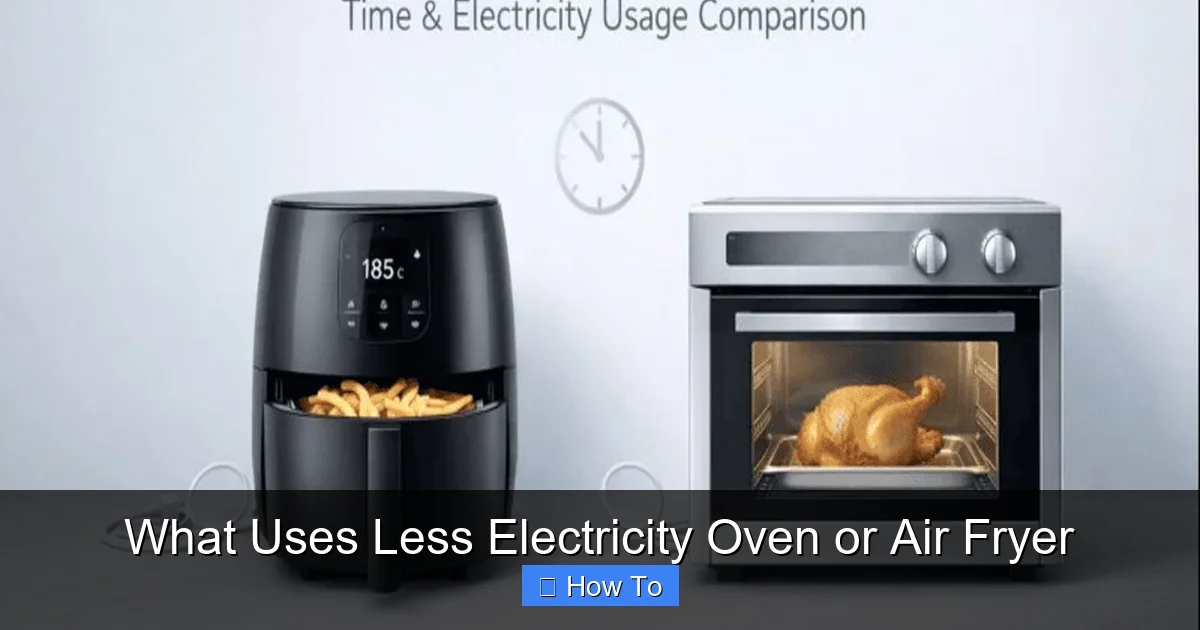
Air fryers emerged as a popular alternative to deep frying, but their energy efficiency makes them attractive for another reason. These countertop appliances typically consume between 800 and 1,800 watts, significantly less than most ovens. More importantly, they cook food faster, compounding the energy savings.
Visual guide about What Uses Less Electricity Oven or Air Fryer
Image source: techtotable.org
Typical Air Fryer Wattage
Most popular air fryer models fall in the 1,200-1,700 watt range. High-end models might reach 1,800 watts, while smaller personal air fryers may use only 800-1,000 watts. This lower wattage translates directly to reduced electricity consumption.
An average air fryer uses about 1,500 watts. Running for 20 minutes (typical cooking time) consumes 0.5 kWh, costing roughly $0.065 at average rates. Compare this to oven cooking that might take 45 minutes and cost $0.22 for the same meal.
The Speed Advantage
Air fryers don’t just use less power – they work faster. The rapid air circulation technology cooks food 20-25% quicker than conventional ovens. This speed advantage means even less electricity consumption overall. Less time running equals less energy used.
Direct Comparison: Air Fryer vs Oven Energy Usage
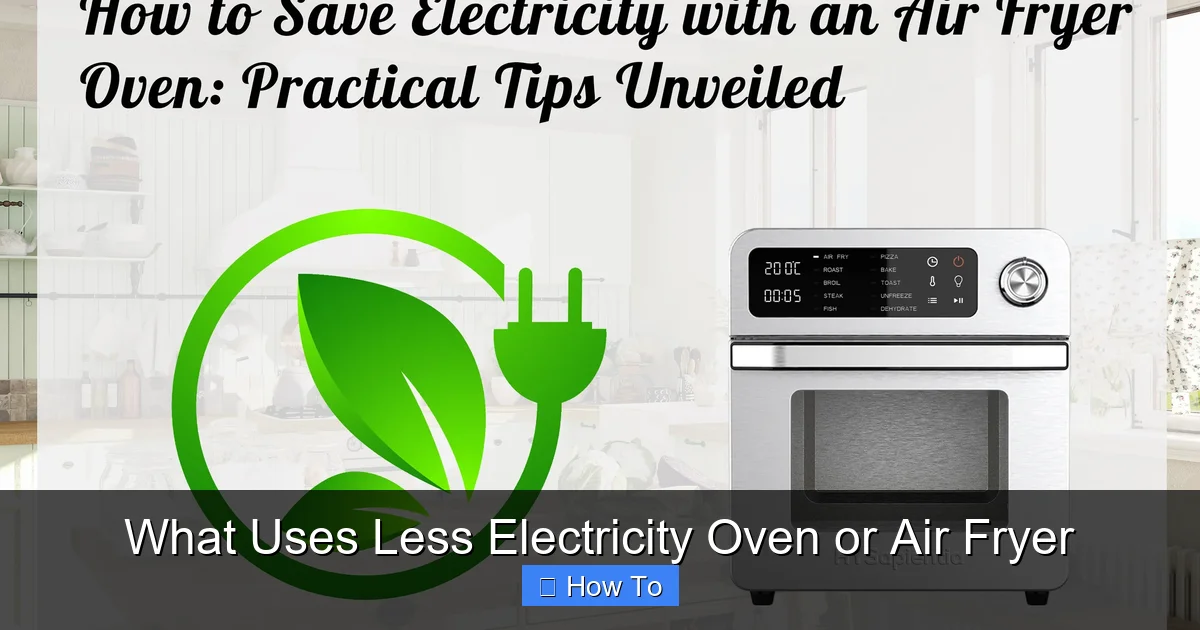
When comparing what uses less electricity oven or air fryer, the numbers clearly favor air fryers for most cooking scenarios. However, understanding the nuances helps you make the best choice for your specific needs.
Visual guide about What Uses Less Electricity Oven or Air Fryer
Image source: hysa.store
Energy Consumption Breakdown
Let’s look at a practical example. Cooking french fries for 20 minutes:
- Air fryer (1,500 watts): 0.5 kWh = $0.065
- Oven (3,000 watts): 1.0 kWh = $0.13
The air fryer uses half the electricity! For smaller items like chicken wings, hamburgers, or baked potatoes, this efficiency gap grows even wider. Large items like whole turkeys or multiple baking sheets still favor ovens despite higher energy costs.
Preheating Considerations
Oven preheating adds hidden energy costs. That 15-minute preheat at 3,000 watts adds another 0.75 kWh ($0.10) to your cooking session. Many recipes can be adapted for air fryers without preheating, eliminating this energy waste entirely.
Some modern ovens offer “eco-mode” or delayed start features to optimize energy usage. These innovations help bridge the gap, but air fryers still maintain their efficiency advantage for appropriate foods.
Real-World Scenarios and Cost Savings
Theoretical comparisons are helpful, but real-world usage tells the true story. Let’s examine how these appliances perform in everyday cooking situations.
Small Meal Efficiency
For couples or individuals cooking small portions, air fryers shine. Chicken breasts, vegetables, and side dishes cook perfectly while consuming minimal electricity. A family of two cooking dinner 4 times per week could save $20-30 annually by choosing air fryer when possible.
Consider frozen appetizers, reheating leftovers, or cooking snacks. These tasks that might heat an entire oven for 15 minutes become quick, efficient air fryer jobs. The energy savings compound over months of regular use.
Large Family Considerations
Families of four or more face different challenges. Cooking multiple servings often requires oven space despite higher energy consumption. In these cases, the question shifts to optimizing oven efficiency rather than avoiding it altogether.
Using multiple oven racks, avoiding unnecessary preheating, and cooking similar temperature items together can reduce oven energy waste. Some families find value in owning both appliances for maximum flexibility.
Maximizing Energy Efficiency in Both Appliances
Whether you use an oven or air fryer, smart practices can minimize electricity consumption. These tips help regardless of your appliance choice.
Air Fryer Optimization Tips
Never overcrowd your air fryer basket – proper air circulation ensures even cooking without extending time. Preheat only when necessary, as many recipes work fine without it. Clean the appliance regularly to maintain peak performance and avoid energy waste from inefficient operation.
Batch cooking works well with air fryers. Prepare multiple portions at once rather than reheating repeatedly. This approach maximizes the appliance’s efficiency while minimizing total cooking time.
Oven Energy-Saving Strategies
Match your cookware to portion size. Using a small baking dish in a large oven wastes energy heating unused space. Keep oven doors closed – each opening drops temperature by 25-50 degrees, requiring significant energy to recover.
Consider residual heat cooking. Turn off the oven 5-10 minutes before food is done, using remaining heat to finish cooking. This simple trick can save 10-15% of cooking energy.
Making the Right Choice for Your Kitchen
Now that we’ve explored what uses less electricity oven or air fryer, it’s time to apply this knowledge practically. Your cooking habits, household size, and lifestyle all influence the best choice.
Choose Air Fryer When:
You frequently cook small portions, reheat leftovers, or prepare individual meals. Air fryers excel at cooking proteins, vegetables, and frozen foods quickly and efficiently. They’re perfect for busy professionals, singles, or couples who want convenience without energy waste.
Air fryers also work well in small kitchens where space is limited. Their compact size and lower energy consumption make them ideal for apartments, dorm rooms, or vacation homes.
Choose Oven When:
You regularly cook large meals, bake multiple items simultaneously, or prepare foods requiring precise temperature control. Ovens remain superior for baking bread, roasting whole chickens, or preparing multi-course meals.
If you already own both appliances, consider using each for its strengths. Many cooks find value in having both options available for different cooking scenarios.
Remember that energy efficiency is just one factor in appliance selection. Cooking performance, capacity, and personal preference matter too. The most energy-efficient appliance is one you’ll actually use consistently.
Environmental Impact and Long-Term Savings
Beyond monthly electricity bills, consider the broader environmental implications of your cooking choices. Air fryers generally have a smaller carbon footprint due to lower energy consumption, especially when replacing less-efficient cooking methods.
Manufacturing and disposal also factor into environmental impact. Air fryers use fewer materials than full ovens, but their shorter lifespan might offset some benefits. Choose quality appliances built to last, regardless of type.
Long-term savings compound over years of ownership. An air fryer costing $100 that saves $30 annually on energy pays for itself in just over three years. After that, it continues generating savings while potentially reducing cooking time and effort.
Many utility companies offer rebates for energy-efficient appliances. Check local programs before purchasing – you might qualify for discounts on qualifying models that further improve the financial equation.
Consider renewable energy options too. Solar panels or green energy providers can make your cooking choices even more environmentally friendly, regardless of appliance type.
Conclusion: Making Informed Cooking Decisions
So what uses less electricity oven or air fryer? For most small-scale cooking applications, air fryers win decisively. Their combination of lower wattage, faster cooking times, and targeted heating makes them the clear energy efficiency champion.
However, ovens retain important advantages for large-scale cooking and specific culinary techniques. The smartest approach combines both appliances strategically, using each where it performs best while minimizing unnecessary energy consumption.
Start by assessing your typical cooking needs. If you’re preparing small meals for one or two people, an air fryer likely offers better value. Larger families might benefit from oven efficiency through batch cooking and multi-rack preparation.
Regardless of your choice, focus on consistent, mindful cooking habits. Turn off appliances when not in use, avoid overcooking, and consider alternative preparation methods. These simple practices often save more energy than appliance upgrades alone.
Your kitchen’s energy efficiency depends on informed choices matched to your actual cooking patterns. Whether you choose oven or air fryer, understanding their electricity usage helps you cook smarter, save money, and reduce environmental impact – one meal at a time.
Frequently Asked Questions
Does an air fryer use less electricity than a conventional oven?
Yes, air fryers typically use significantly less electricity than conventional ovens. Most air fryers operate between 800-1,800 watts while conventional ovens use 2,000-5,000 watts, making air fryers 30-60% more energy efficient for comparable cooking tasks.
How much money can I save using an air fryer instead of an oven?
Switching to an air fryer for appropriate meals can save $20-40 annually on electricity costs. The exact savings depend on your local electricity rates, cooking frequency, and the types of foods you prepare regularly.
Do I need to preheat my air fryer like an oven?
Most air fryer recipes don’t require preheating, unlike ovens. This eliminates the energy waste from preheating cycles, adding to the appliance’s overall efficiency. Always check specific recipe instructions, but preheating is generally unnecessary.
Are convection ovens more energy efficient than air fryers?
Convection ovens are more efficient than conventional ovens but still typically use more electricity than air fryers. Convection ovens use 1,500-3,000 watts and cook faster than conventional ovens, but air fryers maintain their efficiency advantage for most small-portion cooking.
What size air fryer is best for energy efficiency?
Choose an air fryer appropriate for your household size. Oversized air fryers waste energy when cooking small portions, while undersized units require multiple batches. For couples or individuals, 3-5 quart models offer optimal efficiency. Larger families might need 5-7 quart capacities.
Can I cook frozen foods in an air fryer without thawing?
Yes, air fryers excel at cooking frozen foods directly from frozen. This capability eliminates the energy waste of thawing food in advance, making them even more convenient and efficient for quick meal preparation.