How to Convert Oven Cooking to Air Fryer
Swap your oven for an air fryer and slash cooking time by up to 50% while keeping foods wonderfully crisp—no extra oil needed. Just lower the temperature by 25°F, give the basket a good shake halfway, and enjoy perfectly cooked casseroles, roasts, and even desserts in a fraction of the time.
Key Takeaways
- Lower oven temperature: Reduce setpoint by 25°C for accurate results.
- Shorten baking time: Cut cook time by 10-15 minutes.
- Use convection if available: Enhance browning and reduce cooking time.
- Dry surface matters: Pat foods dry before coating for crispiness.
- Preheat briefly: Only preheat for 2-3 minutes max.
- Avoid overcrowding: Leave space for proper air circulation.
- Check internal temperature: Verify doneness with thermometer instead of timing.
📑 Table of Contents
Introduction
Have you ever stared at your oven timer, wondering why dinner is taking so long? You’re not alone. With air fryers becoming the kitchen superstar they are today, many of us are curious about making the switch. The good news? You don’t have to choose between your favorite recipes and your new fancy appliance.
I remember the first time I tried converting my mom’s classic lasagna recipe for my air fryer. Spoiler alert: it didn’t go well. The result was more like charcoal than the golden, bubbly dish I was hoping for. But after some trial and error (and a few kitchen disasters), I’ve become a total convert – literally. Your kitchen can be too, with the right approach.
Converting oven recipes to air fryer isn’t just about swapping temperatures and times. It’s about understanding how this incredible appliance works differently than your traditional oven. Heat circulates around your food in a powerful, focused way that can both speed up cooking and intensify flavors. Once you get the hang of it, you’ll wonder why you ever waited so long for dinner.
Understanding the Key Differences Between Ovens and Air Fryers
Before we dive into conversion charts and timing adjustments, let’s talk about what makes these appliances work so differently. This understanding is crucial for successful conversions.
Visual guide about How to Convert Oven Cooking to Air Fryer
Image source: i.pinimg.com
Heating Methods
Traditional ovens rely on radiant heat that bounces around the enclosed space. Air fryers use rapid air circulation technology – essentially a high-powered fan that moves hot air at incredible speeds around your food. This creates that signature crispy exterior we all love.
The impact: Air fryers cook faster because heat reaches food more efficiently. What takes 30 minutes in an oven might take 15-20 minutes in an air fryer.
Temperature Distribution
In an oven, hot air settles and circulates more slowly. In an air fryer, the rapid airflow means temperature hits your food almost immediately and evenly. However, this concentrated heat can sometimes create hot spots.
The impact: You may need to rotate or shake food halfway through cooking to ensure even results.
Surface Area Considerations
Most air fryers have much smaller cooking baskets than oven racks. This limitation often requires cooking in batches or getting creative with portion sizes.
Why This Matters for Conversions
Understanding these differences helps explain why simple temperature and time conversions don’t always work. It’s not just math – it’s physics!
Basic Conversion Principles and Temperature Adjustments
Now for the practical stuff. Here’s how to approach those conversions with confidence.
The Golden Rule: Temperature Reduction
Always start by reducing your oven temperature by 25-50 degrees Fahrenheit when converting to air fryer. This prevents burning and accounts for the more efficient heat circulation.
For example:
- Oven recipe: 425°F for 25 minutes
- Air fryer adjustment: 375-400°F for 15-20 minutes
- Preheat air fryer to 350°F
- Cook for 15-18 minutes
- Check internal temperature (should reach 165°F)
- Shake basket halfway through cooking
- Use silicone baking mats or small parchment-lined trays that fit your basket
- Reduce temperature by 25°F
- Check early – they cook faster than you think
- Don’t overcrowd the basket
- Pat dry before cooking for better crisping
- Don’t overcrowd – leave space for air circulation
- Shake or flip halfway through cooking
- Use a meat thermometer for safety
- Broccoli: 400°F for 8-10 minutes
- Carrots: 375°F for 12-15 minutes
- Potatoes: 375°F for 15-20 minutes
- Food is patted dry
- It’s spread in a single layer
- Basket isn’t overcrowded
- You’ve preheated the air fryer
- Make sure it’s patted completely dry before cooking
- Don’t add too much oil – air fryers need less
- Cook for a minute or two longer (carefully!)
- Try a higher temperature setting
- Reduce temperature by 25°F next time
- Check 5 minutes earlier than planned
- Shield delicate items with foil if needed
- Move food to a lower rack position if your model allows
- Cook in smaller batches
- Shake or stir more frequently
- Line the basket with parchment paper (perforated for air flow)
- Use a light coating of oil or cooking spray
- Clean the basket regularly – buildup causes sticking
- Don’t use non-stick sprays with additives
Time Reduction Strategy
Reduce cooking time by approximately 20-30% when converting from oven to air fryer. Start checking your food 5 minutes before the estimated time is up – you’d rather catch it early than overcook.
Practical Example: Chicken Breasts
Let’s say you’re making oven-baked chicken breasts that typically cook at 375°F for 25 minutes. Here’s how to adapt:
Testing Your Conversions
I always recommend testing new conversions with a small portion first. Keep notes about timing and results – you’ll build your personal conversion chart over time.
Converting Specific Types of Recipes
Different recipe types require different approaches. Let’s break down the most common categories.
Frozen Foods and Frozen Pizza
These are actually easier to convert! Most frozen foods can be cooked at the same temperature but with reduced time. Check packaging for air fryer instructions, then reduce time by 20-25%.
Pro tip: Preheat your air fryer for 3-5 minutes before adding frozen items to maintain consistent temperature.
Baked Goods and Cookies
This is where things get tricky. Air fryers can work for cookies, muffins, and small cakes, but results vary.
Best practices for baking:
Savory Meats and Proteins
Chicken, fish, and pork work beautifully in air fryers, often with better results than the oven.
Key tips:
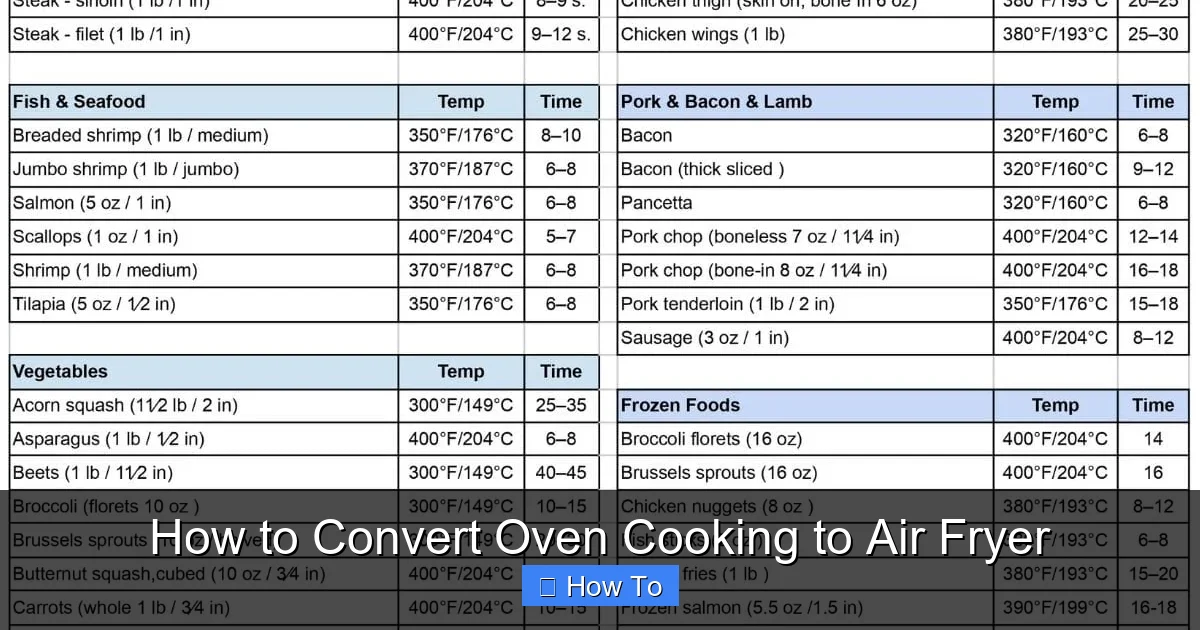
Visual guide about How to Convert Oven Cooking to Air Fryer
Image source: iheartumami.com
Vegetables and Side Dishes
Roasted vegetables are a game-changer in air fryers. They come out crispier on the edges and tender inside.
Perfect vegetable conversions:
Step-by-Step Conversion Process
Ready to try converting your own recipes? Here’s my tested method that works every time.
Step 1: Analyze the Original Recipe
Look at the oven temperature, cooking time, and what you’re making. Ask yourself: Is this something that benefits from crisping? Does it have enough surface area for air circulation?
Step 2: Apply Temperature Reduction
Subtract 25-50°F from the original temperature. For delicate items like fish, use the lower end. For items that need browning like potatoes, use the higher reduction.
Step 3: Calculate Time Adjustment
Reduce the original time by 20-30%. This is just a starting point – always check early.
Step 4: Prepare Your Food Properly
This is where many conversions fail. Make sure:
Step 5: Monitor and Adjust
Check your food 5 minutes before the estimated finish time. Sometimes you’ll need to add a couple more minutes, sometimes you’ll finish early.
Step 6: Document Your Results
Keep a kitchen notebook or phone notes with successful conversions. Note the original recipe, your adjustments, and the final result. It’ll save you time in the future!
Common Conversion Mistakes and How to Avoid Them
Even with the best intentions, it’s easy to make mistakes. Here are the most common ones I’ve encountered and how to sidestep them.
Overcrowding the Basket
This is the #1 mistake I see. When you pack too much food into the basket, air can’t circulate properly. The result? Soggy, unevenly cooked food.
The fix: Cook in batches if necessary. Better to have perfectly cooked food in smaller quantities than mediocre results in a full basket.
Not Preheating
Skipping the preheat step can throw off your entire cooking process. Food added to a cold air fryer will take longer and may not crisp properly.
The solution: Preheat for 3-5 minutes for most foods. This ensures immediate, even cooking starts.
Trusting the Original Timing Too Much
I know it’s tempting to follow the original timing exactly, but resist! Air fryers are faster, and your food can go from perfect to overcooked in minutes.
My strategy: Set a timer for 5 minutes less than expected, then check and add time as needed.
Ignoring the Need to Shake or Flip
That rapid air circulation can create uneven results if you don’t intervene halfway through cooking.
Easy reminder: Set a second timer for the halfway point to ensure you remember to shake or flip your food.
Using the Wrong Size Pieces
If you’re converting a recipe that calls for large chicken breasts, consider cutting them into smaller pieces. Smaller pieces cook more evenly and quickly in an air fryer.
Creating Your Personal Conversion Chart
After converting dozens of recipes, I’ve created my own handy reference guide. Here’s how you can build yours too.
Start with Your Most-Used Recipes
Pick 5-10 recipes you cook regularly and convert them successfully. Document everything: original oven temps/times, your air fryer adjustments, and results.
Sample Conversion Chart Format
Here’s what my personal chart looks like:
| Recipe | Oven Temp/Time | Air Fryer Temp/Time | Notes |
|---|---|---|---|
| Chicken Thighs | 425°F/30 min | 375°F/18 min | Cook skin-side down first |
| Sweet Potato Fries | 450°F/25 min | 400°F/15 min | Shake basket twice |
| Catfish Tenders | 375°F/20 min | 350°F/12 min | Peak crispiness achieved! |
Track Success Rates
As you use your chart, add a success rating (1-5 stars) so you can quickly see which conversions are most reliable.
Share and Compare
Don’t be afraid to swap notes with friends who air fry. Different models may require slight adjustments, and community knowledge is invaluable.
Troubleshooting Common Issues
Even with perfect conversions, you might run into occasional hiccups. Here’s how to solve the most common problems.
My Food Isn’t Crispy Enough
If your food lacks that satisfying crunch, try these fixes:
Food Is Burning on the Outside
Too much heat or too long cooking causes this issue. Solutions:
Uneven Cooking
When some pieces are done and others aren’t, it’s usually an overcrowding issue.
Quick fixes:
li>Arrange pieces strategically in the basket
Food Sticking to the Basket
This happens more often than you’d think. Prevention strategies:
Converting oven recipes to air fryer might seem intimidating at first, but with practice, it becomes second nature. The key is understanding the fundamental differences between these cooking methods and adjusting accordingly. Remember, every air fryer is slightly different, so your perfect conversion might need minor tweaks based on your specific model.
Start with simple, forgiving recipes and work your way up to more complex dishes. Before you know it, you’ll have a collection of converted favorites that cook faster, taste better, and save you money on energy costs.
The next time you pull out a recipe that calls for oven baking, don’t reach for the oven – grab your air fryer instead. With these conversion principles in hand, you’re ready to revolutionize your meal prep and discover a world of quick, healthy, delicious meals.
Frequently Asked Questions
What is the best way to convert a recipe from ځل oven to air fryer?
Start by reducing the cooking temperature by about 25 °F (15 °C) and cutting the time in half. Keep an eye on the food and give it a quick shake or flip halfway through to mimic the even heat distribution of a conventional oven.
How To Convert Oven Cooking To Air Fryer for crispy chicken?
Pat the chicken dry, coat lightly with oil or a dry rub, then place it in a single layer. Cook at 375 °F (190 °C) for 18–22 minutes, turning halfway, until the skin is golden and the internal temperature reaches 165 °F (74 °C).
Can I use the same baking sheet I use in the oven for air fryer cooking?
Yes, but अभिनेता it’s best to choose a sheet with perforations or a slotted design so hot air can circulate freely. Avoid using heavy, non‑perforated pans that may block airflow and reduce crispiness.
How do I adjust cooking time for baked goods when usingim air fryer instead of an oven?
Generally, air fryer times are 25–30 % shorter. Test with a small batch first, then adjust as needed—check for doneness a minute or two before the estimated time to prevent overcooking.
Are there any foods that do not convert well from oven to air fryer?
Large, dense items such as whole roasts or large casseroles may not cook evenly due to the limited space and air circulation. Items that rely on steam, like certain soufflés, also perform better in a conventional oven.
Do I need to preheat my air fryer when converting an oven recipe?
Most modern air fryers benefit from a brief preheat of 3–5 minutes at the target temperature. This helps achieve a uniform crust and ensures the interior cooks at the intended rate, especially for dishes that were originally baked in an oven.