How Is Air Fryer Different Than Convection Oven
Air fryers circulate hot air rapidly, while convection ovens use a fan and larger cavity, offering similar crispness but different capacity and versatility. Learn the key differences to choose the best appliance for your kitchen.
If you’ve ever wondered how is air fryer different than convection oven and which one could actually save you time and money, you’re not alone. In this post we’ll break down the two appliances in plain, friendly language, sprinkle in real‑world examples, and give you clear tips so you can pick the right tool for crispy fries, juicy chicken, and even baked treats.
Key Takeaways
- Point 1: Air fryers use rapid air technology for quick, crispy results; convection ovens rely on a fan and larger interior for even baking.
- Point 2: Capacity varies widely — air fryers are compact, convection ovens can handle big roasts.
- Point 3: Both methods reduce oil use, but air fryers heat up faster.
- Point 4: Energy consumption is generally lower in air fryers for small batches.
- Point 5: Price points differ; air fryers are often cheaper upfront.
- Point 6: Cleaning is simpler with air fryers due to fewer parts.
- Point 7: Choose based on kitchen size, cooking habits, and budget.
📑 Table of Contents
1. The Core Concept: What Each Appliance Does
First things first, let’s get the basics straight. An air fryer is essentially a countertop gadget that mimics deep‑frying without the oil. A convection oven, on the other hand, is a full‑size oven that uses a fan to move hot air around. Both promise “crispy” results, but they do it in different ways. So, how is air fryer different than convection oven? The answer lies in size, speed, and the way heat is delivered.
How Air Fryers Work
Air fryers have a small chamber where a high‑speed fan blows super‑hot air around the food. This creates a thin layer of steam that quickly evaporates, leaving the surface dry and crunchy. Because the chamber is tiny, the air circulates very efficiently, meaning you can get that golden finish in as little as 10‑15 minutes. Think of it as a mini‑convection oven that’s been turbo‑charged for speed.
How Convection Ovens Work
Convection ovens are built into the kitchen and can hold a full-size baking sheet or roasting pan. They also use a fan, but the airflow is gentler and the overall temperature range is broader — from low‑heat baking to high‑heat roasting. Since the cavity is larger, the heat takes a bit longer to reach the food, but the results are often more even, especially for big batches.
2. Size, Capacity, and Kitchen Space
One of the most practical differences is how much food you can fit at once. Air fryers typically hold 2‑5 quarts, enough for a family‑size batch of fries or a small chicken breast. Convection ovens can accommodate 10‑20 quarts or more, letting you roast a whole turkey or bake multiple trays of cookies. If you have a tiny kitchen or live in an apartment, the compact footprint of an air fryer may be a decisive factor.
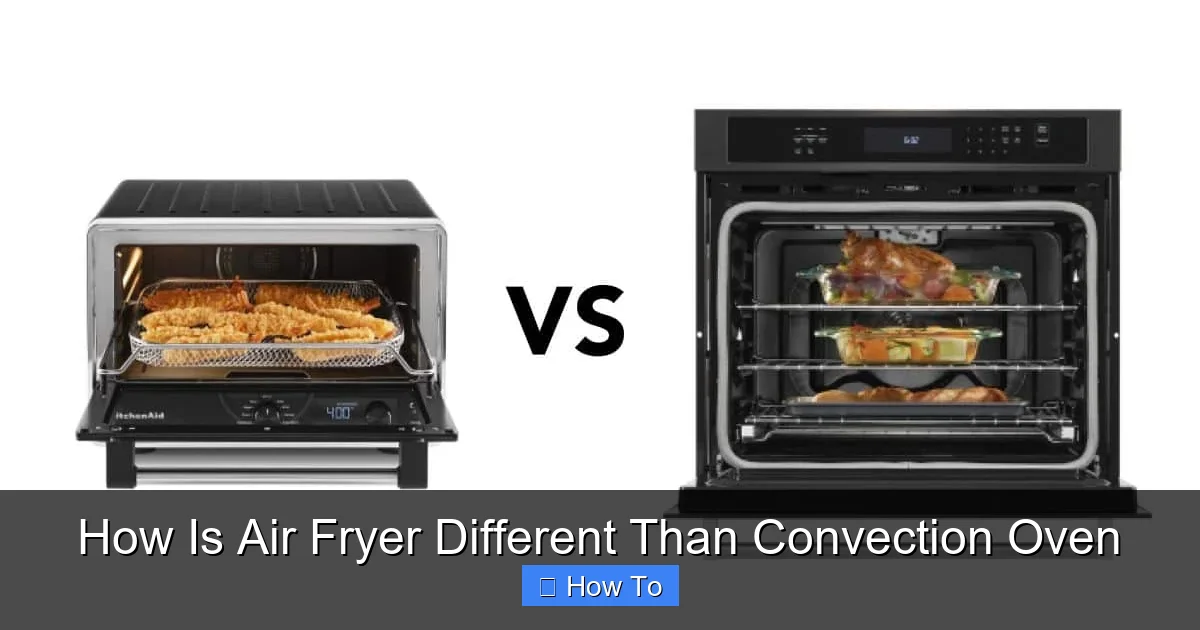
Visual guide about How Is Air Fryer Different Than Convection Oven
Image source: circaairfryer.com
Choosing the Right Capacity for Your Needs
Consider your typical meal size. If you often cook for two people, a 3‑quart air fryer might be perfect. If you frequently host gatherings or love batch‑cooking, a convection oven’s larger interior will save you multiple rounds of cooking. Remember, capacity also influences cooking time — smaller batches cook faster in an air fryer, while larger batches may need the extra space of a convection oven.
3. Cooking Mechanisms Explained
Let’s dive a little deeper into the mechanics. The phrase how is air fryer different than convection oven often pops up when people compare the actual heat transfer process. Air fryers rely on rapid air technology that creates a “hot air vortex.” This vortex circulates around every piece of food, delivering a consistent, high‑temperature environment that quickly removes moisture. Convection ovens, meanwhile, use a fan to distribute heat more evenly but at a slightly lower velocity, which is ideal for delicate baked goods that need a slower rise.

Visual guide about How Is Air Fryer Different Than Convection Oven
Image source: airfryeraid.com
Air Fryer’s Turbo‑Air Flow
The turbo‑air flow in an air fryer creates a crispy exterior while keeping the interior moist. Because the air moves so quickly, the food’s surface reaches the Maillard reaction (that browning process) in minutes. This is why you can achieve a “fried” texture with just a tablespoon of oil, or even none at all.
Convection Oven’s Gentle Circulation
In a convection oven, the fan gently pushes hot air around, which is great for even baking but not as aggressive as an air fryer’s blast. This gentler approach is perfect for breads, pastries, or anything that needs a slow, uniform rise. It also allows you to roast vegetables alongside a chicken without worrying about one side over‑cooking.
4. Health and Nutrition Impact
Many people choose air fryers because they think they’re healthier. And they’re right — how is air fryer different than convection oven also includes the health angle. Since air fryers need far less oil to achieve crispiness, the calorie count can drop dramatically. A typical batch of chicken wings that might require a cup of oil in a deep‑fryer can be cooked with just a spray of oil in an air fryer, cutting hundreds of calories.
Comparing Oil Usage
In practice, an air fryer may use 1‑2 teaspoons of oil for a full batch, while a convection oven might need a light coating of oil for roasting, but you can often skip oil altogether for certain foods. The net effect is that air fryers can reduce overall fat intake, especially for snack‑type foods.
Nutrient Retention
Both methods preserve nutrients better than traditional deep‑frying because they cook food quickly and at lower temperatures. However, the rapid heating in an air fryer can sometimes lock in more moisture, keeping vitamins and minerals from leaching out as much as slower oven roasting might.
5. Energy Consumption and Cost
Another practical angle to how is air fryer different than convection oven is energy use. An air fryer typically draws between 1,200‑1,800 watts and heats up in under a minute. Because it’s smaller, it uses less electricity per cooking session. A convection oven, on the other hand, can be 2,000‑3,000 watts and may take longer to reach temperature, especially for small tasks. Over time, the electricity savings can add up, especially if you’re only cooking quick meals.
Upfront Cost vs. Long‑Term Savings
Air fryers are generally cheaper to purchase — prices range from $50 to $200. Convection ovens, especially built‑in models, can cost $500 or more. If you already have a convection oven, you might not need an air fryer at all. But if you’re looking for a dedicated appliance that’s quick and inexpensive, the air fryer wins on price.
Environmental Footprint
From an environmental perspective, the smaller footprint of an air fryer means less material waste and a lower carbon footprint per cooking session. However, if you already own a convection oven, adding an air fryer may not significantly increase your household’s energy consumption, especially if you use the oven for larger meals.
6. Practical Tips and Everyday Examples
Now that we’ve covered the theory, let’s get practical. Here are some everyday scenarios that illustrate how is air fryer different than convection oven in real life.
Quick Weeknight Dinners
Need dinner on the table in 20 minutes? Toss frozen chicken nuggets into the air fryer, set the timer for 12 minutes, and you’re done. In a convection oven, you’d have to preheat for 10 minutes, then bake for 15‑20 minutes, and you’d still need to watch for browning. The air fryer saves both time and hassle.
Batch Cooking for the Week
If you love meal‑prepping, a convection oven lets you roast a tray of vegetables, a sheet of sweet potatoes, and a protein all at once. An air fryer can handle only a portion of that at a time, so you’d need multiple rounds. However, for crispy snacks like homemade kale chips, the air fryer is unbeatable.
Baking and Desserts
When it comes to baking, a convection oven shines. You can bake a batch of cookies or a small cake evenly. An air fryer can bake mini muffins or banana bread in a tiny pan, but the texture may be denser. Use the air fryer for quick treats, and the convection oven for larger, more delicate baked goods.
Cleaning Up
Air fryer baskets are usually dishwasher‑safe and have fewer crevices, making cleanup a breeze. Convection ovens require wiping down racks and the interior, which can be a bit more tedious. If cleaning speed matters to you, the air fryer again takes the lead.
Conclusion: Which One Fits Your Lifestyle?
So, how is air fryer different than convection oven? In a nutshell, the air fryer is a compact, fast‑heating appliance that excels at crisping small batches with minimal oil. The convection oven is a larger, more versatile workhorse that handles big meals, baking, and roasting with even heat distribution. Your choice depends on kitchen space, typical meal size, budget, and how much you value speed versus capacity.
If you’re a busy professional who loves quick, crunchy snacks, an air fryer might be your new best friend. If you enjoy baking, roasting whole turkeys, or cooking for a crowd, a convection oven (or a traditional oven with a fan) will serve you better. Many households end up using both — air fryer for everyday snacks and quick meals, convection oven for bigger, more elaborate dishes.
At the end of the day, understanding how is air fryer different than convection oven helps you make an informed decision that aligns with your cooking habits and lifestyle. Pick the tool that best matches your needs, and enjoy the crispy, healthier meals that both appliances can deliver.
Frequently Asked Questions
What is How Is Air Fryer Different Than Convection Oven?
How Is Air Fryer Different Than Convection Oven is an important topic with many practical applications.