How Does Air Fryer Differ from Convection Oven

Air fryers and convection ovens both use hot air circulation for crispy results, but air fryers excel in speed and oil efficiency, while convection ovens offer larger capacity and versatility. Choose based on your cooking habits and space.
Key Takeaways
- Air fryers use less oil for crispy food, ideal for low-fat cooking.
- Convection ovens handle bigger batches, perfect for family meals.
- Air fryers cook faster due to compact design and higher airflow.
- Energy use differs—air fryers save power for small meals.
- Convection ovens are more versatile for baking, roasting, and broiling.
- Space matters—air fryers suit small kitchens, ovens need more room.
- Cost and maintenance vary, with air fryers being cheaper and easier to clean.
📑 Table of Contents
- Introduction: The Rise of Air Fryers and Convection Ovens
- How Air Fryers and Convection Ovens Work
- Key Differences in Cooking Performance
- Energy Consumption and Efficiency
- Versatility and Cooking Applications
- Size, Space, and Portability
- Cost and Maintenance Considerations
- Which One Is Right for You?
Introduction: The Rise of Air Fryers and Convection Ovens
In recent years, air fryers and convection ovens have become staples in modern kitchens, both promising crispy, delicious meals with less oil. But if you’re torn between these two appliances, you’re not alone. While they share similarities—like using hot air circulation—there are key differences that can make one a better fit for your cooking style.
Air fryers, with their compact design and rapid cooking, are perfect for quick, single-serving meals. They’re ideal for busy individuals who want to whip up crispy fries or chicken wings in minutes. Convection ovens, on the other hand, are larger and more versatile, offering the ability to bake, roast, and even broil. They’re a favorite for families or those who cook in bulk. Understanding these differences can help you decide which appliance aligns with your needs.
How Air Fryers and Convection Ovens Work
Both air fryers and convection ovens rely on hot air circulation to cook food, but their methods differ.
Air Fryer Mechanics
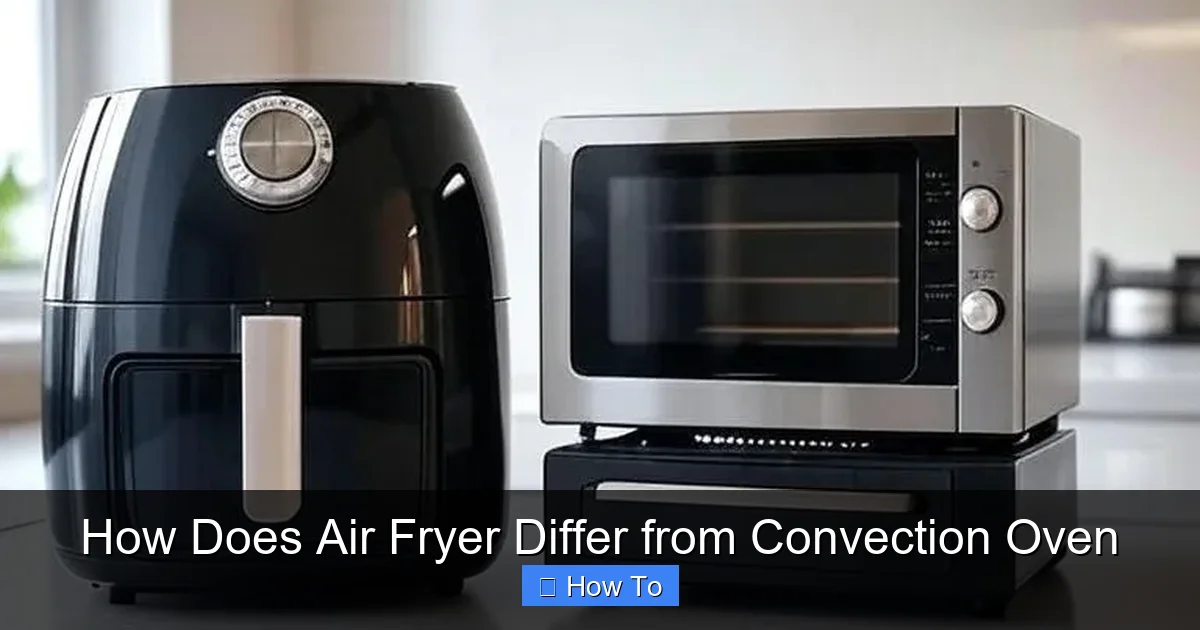
Air fryers use a heating element and a powerful fan to circulate hot air rapidly around the food. The compact design ensures even cooking, and the high-speed airflow creates a crispy exterior without the need for much oil. Most models have a basket or tray that sits inside, allowing for easy flipping and shaking to maintain crispness.
Visual guide about How Does Air Fryer Differ from Convection Oven
Image source: kitchenclue.com
Convection Oven Mechanics
Convection ovens also use a fan to circulate hot air, but they’re larger and more powerful. They often have multiple racks and settings, making them suitable for baking, roasting, and even dehydrating. The even heat distribution ensures consistent results, whether you’re making a cake or roasting vegetables.
Key Differences in Cooking Performance
When it comes to cooking performance, air fryers and convection ovens have distinct advantages. Let’s break down how each appliance performs in terms of speed, oil usage, and food texture.
Visual guide about How Does Air Fryer Differ from Convection Oven
Image source: seriouseats.com
Cooking Speed and Efficiency
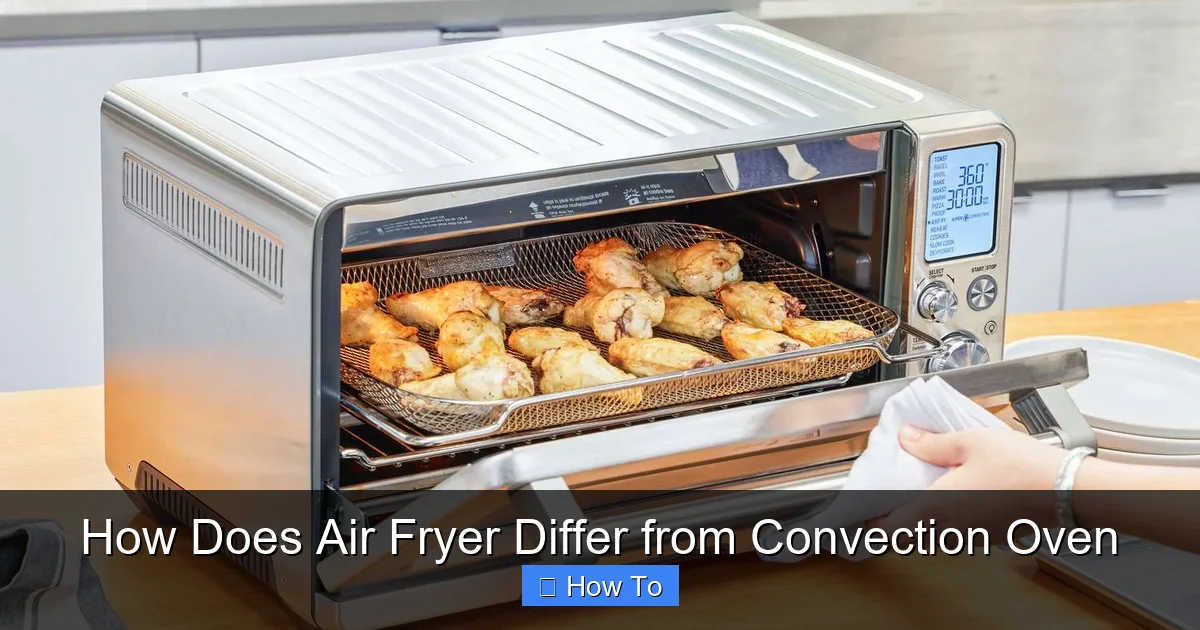
Air fryers are known for their quick cooking times. Because of their smaller size and high-speed airflow, they can cook food up to 30% faster than traditional ovens. For example, a batch of chicken wings might take 20 minutes in an air fryer versus 40 minutes in a convection oven. This makes air fryers a great choice for busy weeknights.
Convection ovens, while slower, are better suited for larger meals. They can handle multiple racks of food at once, making them ideal for family dinners or meal prepping. Their larger capacity means you can cook a whole turkey or a tray of lasagna without needing to split the task.
Oil Usage and Health Benefits
One of the biggest advantages of air fryers is their ability to cook with little to no oil. By using just a light spray of oil, you can achieve a crispy texture similar to deep-frying. This reduces fat and calorie intake, making air fryers a popular choice for health-conscious cooks.
Convection ovens typically require more oil for similar results, especially when roasting or baking. However, they offer more flexibility in cooking methods, such as baking cakes or broiling meats, which air fryers can’t do as effectively.
Energy Consumption and Efficiency
Energy use is another important factor when comparing air fryers and convection ovens. While both appliances are more efficient than traditional ovens, their energy consumption varies based on size and usage.
Visual guide about How Does Air Fryer Differ from Convection Oven
Image source: homeunderstandable.com
Air Fryer Energy Use
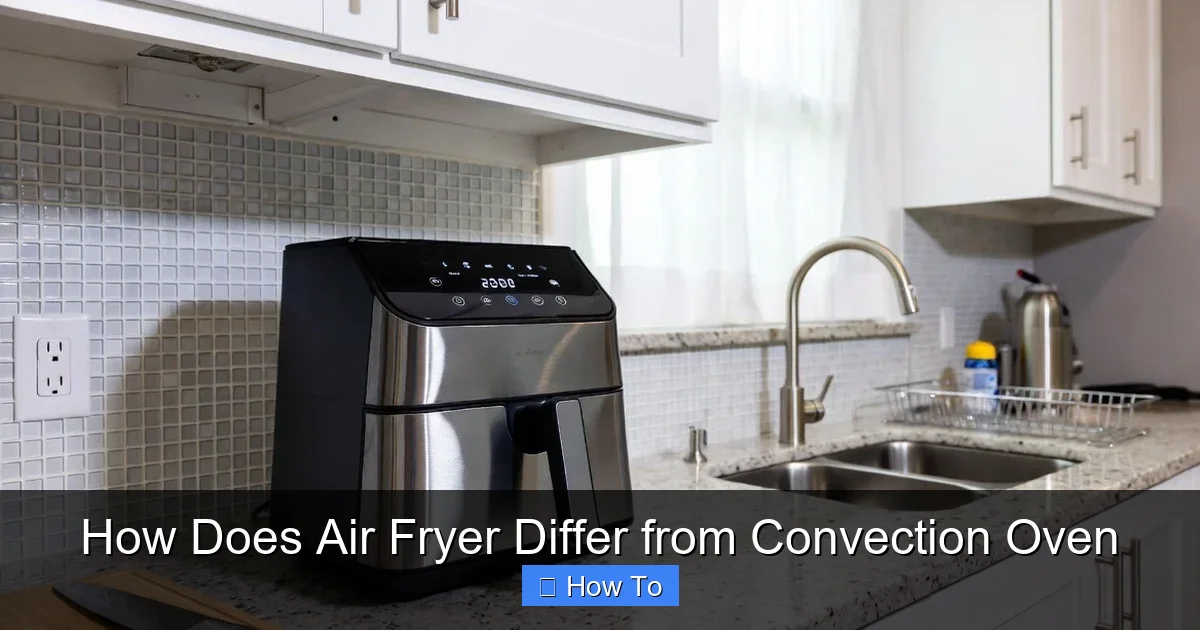
Air fryers generally use less energy because they’re smaller and heat up quickly. A typical air fryer might consume around 1.5 to 2.5 kilowatts per hour, depending on the model and cooking time. This makes them a cost-effective option for small meals or snacks.
Convection Oven Energy Use
Convection ovens, being larger, consume more energy. They can use between 2.5 to 4 kilowatts per hour, especially when running for extended periods. However, their efficiency in cooking multiple items at once can offset some of this energy use, making them a practical choice for larger households.
Versatility and Cooking Applications
While air fryers and convection ovens share some similarities, their versatility in cooking applications sets them apart.
What Can You Cook in an Air Fryer?
Air fryers are best for foods that benefit from a crispy texture, such as:
- Fries and potato wedges
- Chicken wings and drumsticks
- Fish fillets and tofu
- Vegetables like Brussels sprouts and zucchini
They’re also great for reheating leftovers, giving them a fresh, crispy feel without drying them out.
What Can You Cook in a Convection Oven?
Convection ovens offer a wider range of cooking options, including:
- Baking cakes, cookies, and bread
- Roasting meats and vegetables
- Broiling for caramelization
- Dehydrating fruits and jerky
They’re also better suited for recipes that require precise temperature control, such as soufflés or delicate pastries.
Size, Space, and Portability
The physical design of air fryers and convection ovens makes a big difference in how they fit into your kitchen.
Air Fryer Size and Portability
Air fryers are compact and often countertop-friendly. Most models are small enough to fit on a kitchen counter, making them ideal for apartments or small spaces. Some even come with a built-in handle for easy movement.
Convection Oven Size and Placement
Convection ovens are larger and typically require a dedicated spot in your kitchen. They’re often built into cabinetry or placed on the counter, but their size can be a limitation for smaller kitchens. However, their larger capacity makes them a better choice for families or those who cook in bulk.
Cost and Maintenance Considerations
When choosing between an air fryer and a convection oven, cost and maintenance are important factors to consider.
Initial Cost and Long-Term Value
Air fryers are generally more affordable, with prices ranging from $50 to $200. Convection ovens, especially built-in models, can cost $500 or more. However, convection ovens may offer better long-term value for those who cook frequently or need a multi-functional appliance.
Cleaning and Maintenance
Air fryers are easier to clean, with removable baskets and non-stick surfaces. Many models are dishwasher-safe, making cleanup a breeze. Convection ovens, while more complex, often have self-cleaning functions and are designed for durability. However, their larger size can make cleaning more time-consuming.
Which One Is Right for You?
Deciding between an air fryer and a convection oven depends on your cooking habits, kitchen space, and budget. Here’s a quick guide to help you choose:
- Choose an air fryer if: You want quick, oil-efficient cooking for small meals or snacks.
- Choose a convection oven if: You need a versatile appliance for baking, roasting, and larger meals.
If you’re unsure, consider your lifestyle. For example, if you’re a busy professional who wants to cook fast, an air fryer might be your best bet. If you’re a home cook who enjoys preparing meals for a family, a convection oven could be more practical.
Frequently Asked Questions
What is the main difference between an air fryer and a convection oven?
Air fryers use a compact design and high-speed airflow to cook food quickly with little oil, while convection ovens are larger and more versatile, offering a range of cooking functions like baking and roasting.
Can I use an air fryer as a convection oven?
While air fryers can mimic some convection oven functions, they lack the capacity and versatility for tasks like baking large batches or broiling. Convection ovens are better suited for complex recipes.
How do I convert cooking times from a convection oven to an air fryer?
As a general rule, reduce the temperature by 20-25°F and cut the cooking time in half. For example, if a recipe calls for 350°F in a convection oven, set your air fryer to 325°F and cook for about 15-20 minutes.
Is an air fryer more energy-efficient than a convection oven?
Yes, air fryers typically use less energy because they’re smaller and heat up faster. However, convection ovens can be more efficient for large meals due to their capacity.
Can I use an air fryer tray in a convection oven?
Some convection ovens have air fryer settings and compatible trays, but not all models are designed for this. Check your oven’s manual to see if it supports air fryer accessories.
What are the health benefits of using an air fryer?
Air fryers reduce oil usage, which can lower fat and calorie intake. They’re also great for making healthier versions of fried foods without sacrificing taste or texture.