Does an Air Fryer Work Like an Oven
Wondering if an air fryer works like an oven? Our quick guide breaks down the key differences in cooking method, heat distribution, and typical use cases. Find out which appliance delivers faster, crispier results and which is better for larger meals.
Key Takeaways
- Air fryers use a powerful fan to circulate hot air for rapid crisping.
- Ovens rely on radiant heat from elements for even baking.
- Air fryers have a smaller cavity which speeds up cooking times.
- Ovens can accommodate larger dishes like roasts and casseroles.
- Energy consumption differs with air fryers often using less power.
- Both can produce crispy textures but through different heat methods.
📑 Table of Contents
Introduction
Many home cooks ask themselves, does an air fryer work like an oven? The answer is nuanced because both appliances use heat to cook, but they do so in ways that affect texture, speed, and the types of dishes each handles best. In this guide we will explore the inner workings of each device, compare their performance, and help you decide which one belongs in your kitchen.
Whether you are looking to speed up weeknight dinners or to bake a perfect batch of cookies, understanding the strengths and limitations of an air fryer versus an oven will make your cooking more efficient and enjoyable.
If you want to explore whether an air fryer is like an oven, check out our detailed comparison Is Air Fryer Like an Oven.
How an Air Fryer Works
Heating Element and Fan
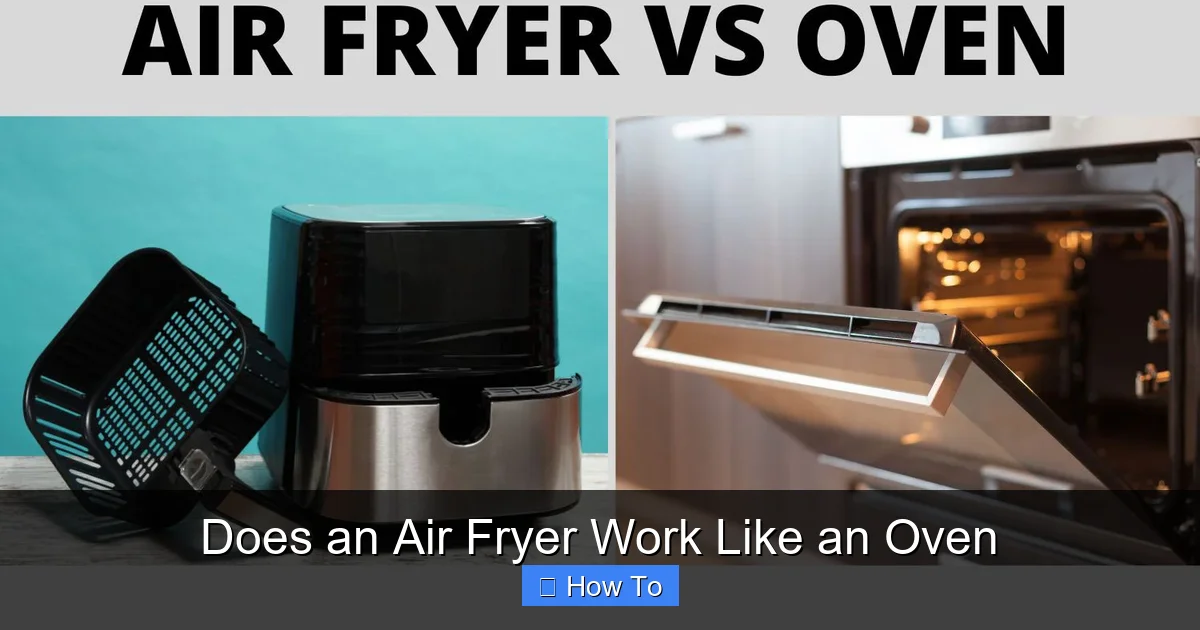
An air fryer combines a compact heating element with a powerful fan. The element, usually located at the top, gets hot quickly and the fan forces that hot air to circulate at high speed around the food. This creates a convection effect that mimics deep frying while using far less oil.
Visual guide about Does an Air Fryer Work Like an Oven
Image source: lianaskitchen.co.uk
Because the cooking chamber is small, the air reaches the desired temperature in seconds. This rapid heat transfer means that foods like chicken wings, French fries, or onion rings can develop a crisp exterior in a fraction of the time required in a traditional oven.
Oil and Moisture Management
One of the main benefits of an air fryer is the ability to achieve a crunchy texture with little or no added oil. The circulating air draws moisture away from the surface, which helps create a golden crust. However, too much airflow can dry out delicate items, so it is often recommended to spray or toss food lightly with oil for even browning.
For best results, shake the basket or stir the food halfway through cooking. This ensures that all sides receive equal exposure to the hot air and prevents uneven cooking.
Preheating and Temperature Control
Most air fryers require a short preheating period, typically one to three minutes, to reach the set temperature. Once hot, the unit maintains the temperature with a cycling on‑off pattern, which can cause slight fluctuations. Using the built‑in timer helps avoid overcooking, and many models offer presets for common foods like fries, fish, or chicken.
Because the basket is small, it is easy to overcrowd it, which can lower the internal temperature and lead to steaming instead of crisping. A good rule of thumb is to fill the basket no more than two‑thirds full for optimal airflow.
Many air fryers also include a keep‑warm function that maintains a low temperature after cooking, which is useful if you are preparing multiple batches. However, prolonged use of keep‑warm can dry out foods, so it is best to transfer cooked items to a warm plate.
How an Oven Works
Conventional and Convection Modes
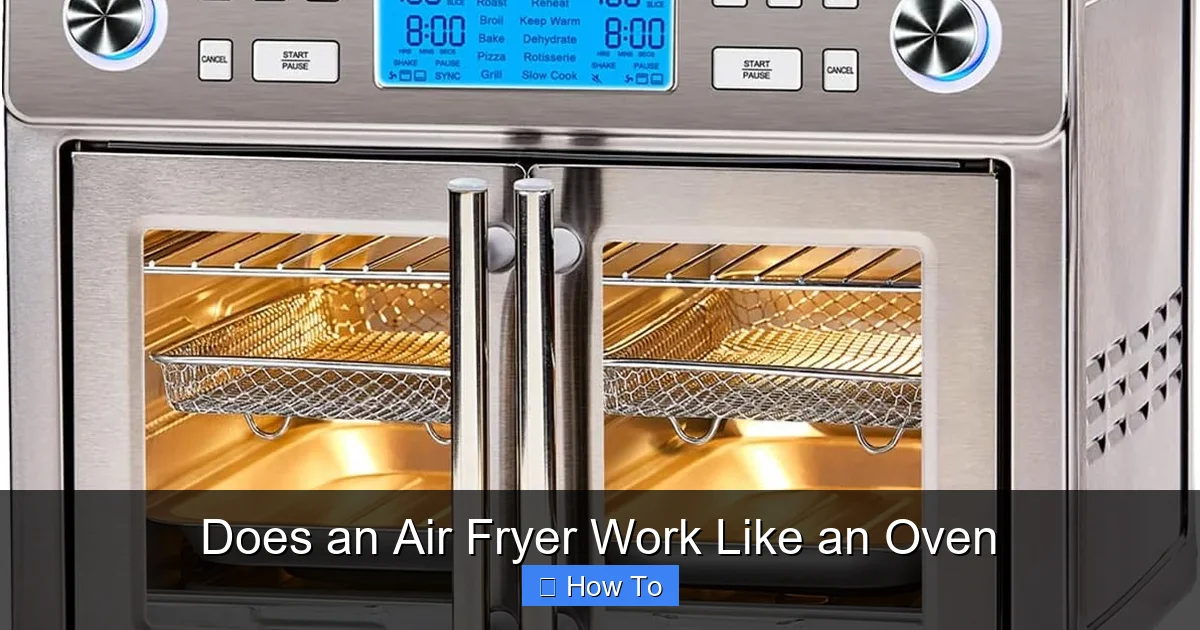
A standard oven uses electric or gas elements that radiate heat. In a conventional oven, heat rises from the bottom element, while a convection oven adds a fan to move the air, similar to an air fryer but on a larger scale. The larger interior allows for multiple racks, making it ideal for baking several items at once.
Visual guide about Does an Air Fryer Work Like an Oven
Image source: m.media-amazon.com
The even distribution of heat is essential for cakes, breads, and casseroles that require a consistent temperature throughout. The oven’s insulated walls help maintain a stable environment, which is crucial for delicate pastries that are sensitive to temperature fluctuations.
Capacity and Heat Retention
Ovens can accommodate large roasts, whole turkeys, and multiple trays of cookies, providing versatility for family meals and holiday feasts. Their thick insulation retains heat well, so opening the door briefly does not cause a dramatic drop in temperature.
In contrast, an air fryer’s small basket can lose heat quickly when opened, which may affect cooking times for some recipes. This is why many air fryer models include a timer and often require you to check food more frequently.
Temperature Ranges and Rack Placement
Home ovens typically offer a temperature range from 150°F to 550°F, allowing for low‑temperature slow cooking as well as high‑heat searing. The ability to use multiple racks means you can bake cookies on one shelf while roasting vegetables on another, maximizing efficiency.
Rack placement influences browning; placing a rack in the center provides even heat, while a lower rack promotes browning on the bottom, and an upper rack can create a caramelized top. Understanding these positions helps you achieve the desired texture for each dish.
Some ovens feature a temperature probe that can be inserted into a roast to monitor internal temperature, ensuring perfect doneness. This feature is especially helpful for larger cuts of meat where visual cues can be unreliable.
Key Differences Between an Air Fryer and an Oven
Size and Capacity
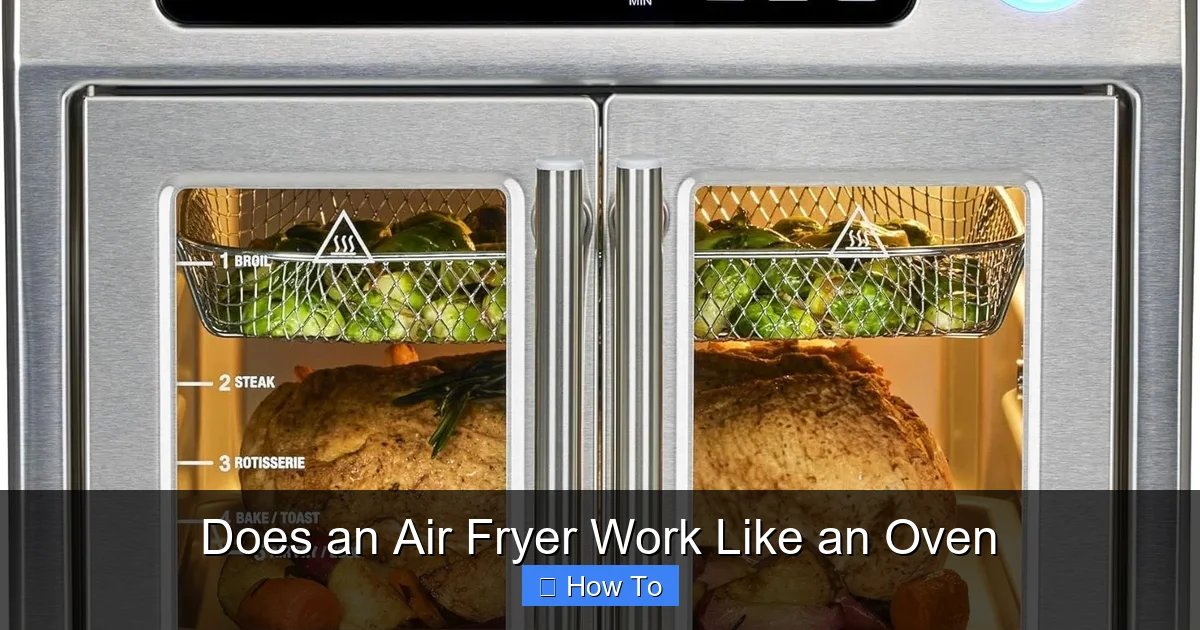
Air fryers typically have a capacity of two to six quarts, which is perfect for single servings or small family portions. Ovens, on the other hand, can hold full‑size roasts, multiple baking sheets, and large casserole dishes, making them the go‑to for big meals.
Visual guide about Does an Air Fryer Work Like an Oven
Image source: m.media-amazon.com
If you often cook for a crowd, an oven provides the necessary space. For quick, single‑portion snacks, an air fryer is more convenient and uses less countertop real estate.
Cooking Time and Speed
Because of its compact design, an air fryer heats up in seconds and can cook many foods in half the time of an oven. For example, frozen fries may be ready in 12 minutes in an air fryer compared to 20–25 minutes in a conventional oven.
However, larger items such as a whole chicken will still take longer in an air fryer than in an oven, and the cooking time can be more sensitive to the size of the piece.
Energy Consumption
Air fryers generally draw between 1,200 and 1,800 watts, while most ovens operate at 2,000 to 3,000 watts. This means an air fryer can be more energy‑efficient for small meals, but the difference narrows when cooking larger quantities.
For a deeper look at how these appliances differ, see How Does Air Fryer Work Vs Oven.
Cleaning and Maintenance
Air fryer baskets are usually dishwasher‑safe or can be washed with warm soapy water, making cleanup quick. The compact size means you can easily store it in a cabinet. Ovens, especially self‑cleaning models, may require a longer cycle, but the larger interior can be wiped down after each use.
Regularly checking and replacing the air fryer’s filter, if present, helps maintain performance. For ovens, cleaning the drip pans and interior walls prevents buildup that can affect flavor.
For stubborn residue, soak the air fryer basket in warm, soapy water for 10‑15 minutes before scrubbing. Avoid using abrasive pads that could scratch the non‑stick coating. In ovens, the self‑cleaning cycle uses high heat to break down spills, but it can be energy‑intensive, so spot‑cleaning after each use is often sufficient.
Safety and Ventilation
Both appliances produce heat and should be used on stable, heat‑resistant surfaces. Air fryers often have a vent on the back or top, so ensure there is enough space for airflow to prevent overheating. Ovens require proper ventilation in the kitchen, especially when using high heat for extended periods.
Using oven mitts and keeping children away from the cooking area are essential safety practices for both devices.
Modern air fryers may include an auto‑shut‑off feature that activates if the unit overheats, providing an extra layer of safety. When using an oven, ensure that the oven door is fully closed and that the surrounding area is free of flammable materials to prevent accidents.
When to Use an Air Fryer vs. an Oven
Situations Favoring an Air Fryer
An air fryer excels at preparing quick snacks like onion rings, chicken nuggets, or a single serving of vegetables. The rapid heat circulation produces a crisp exterior without the need for deep frying, making it ideal for after‑work snacks or small appetizers.
It is also perfect for reheating leftovers, as the hot air can restore a crispy texture to foods that have gone soft in the fridge. Additionally, if you love the crunch of potato chips, pork rinds, or battered fish, an air fryer delivers that texture with a fraction of the oil.
Situations Favoring an Oven
Ovens are the best choice for baking cakes, bread, and cookies, where even heat and steam control are important. The ability to use multiple racks allows you to bake several batches at once, saving time when feeding a group.
Roasting a whole turkey or a large cut of meat is also easier in an oven, since the space accommodates the size and the steady temperature ensures thorough cooking. Convection ovens, in particular, provide consistent airflow throughout the cavity, which helps avoid hot spots and ensures uniform browning.
Recipe Examples
Here are a few ideas to illustrate when each appliance shines. For a quick side dish, try air‑fried broccoli with a drizzle of olive oil and garlic powder; it will be tender‑crisp in about 10 minutes. For a family dinner, use the oven to roast a chicken with potatoes and carrots, allowing the juices to baste the meat as it cooks.
For dessert, an oven is ideal for a chocolate lava cake that needs a precise temperature, while an air fryer can make a single‑serve apple crisp with a crunchy oat topping in under 15 minutes.
For meal prep, you can cook a batch of chicken breasts in the air fryer while simultaneously roasting a tray of sweet potatoes in the oven, saving time and freeing up your stove. This dual‑appliance approach lets you balance quick cooking with longer, slower processes.
Tips for Best Results
When using an air fryer, avoid overcrowding the basket; a single layer allows air to flow freely. Lightly spray or brush food with oil to encourage browning. For ovens, preheat fully before inserting items, and use a thermometer to verify the internal temperature for accuracy.
Rotating pans or shaking the basket halfway through cooking helps ensure even results. If you notice uneven browning, adjust the rack position or use a convection fan to improve airflow.
Another factor to consider is the footprint of each appliance; an air fryer fits on a countertop, while an oven occupies a larger space but can replace multiple small appliances.
Performance Comparison
When comparing taste and texture, air‑fried foods tend to have a drier, crispier exterior, while oven‑baked items often retain a bit more moisture, leading to a softer crumb. The constant airflow in an air fryer can sometimes concentrate seasonings, so it is advisable to toss or spray food lightly with oil for even flavor distribution.
From an energy standpoint, an air fryer uses less electricity for small portions because it reaches temperature faster and runs for a shorter time. For larger meals, an oven may be more efficient because it can cook multiple items simultaneously, reducing the total running time.
To understand why you might choose one over the other, read Why Use an Air Fryer Over an Oven.
Conclusion
In summary, an air fryer does not work exactly like an oven, but each appliance has its own strengths. An air fryer shines when you need fast, crispy results for small portions, while an oven excels at baking, roasting, and handling larger quantities with even heat.
Consider the types of dishes you prepare most often, the number of people you serve, and how much you value speed versus capacity when deciding which appliance to add to your kitchen. With both on hand, you can enjoy the best of both worlds: rapid crisping from the air fryer and even, large‑scale cooking from the oven.
Ultimately, the choice depends on your cooking habits and the variety of meals you enjoy. By understanding the differences, you can use each appliance to its fullest potential and create delicious dishes with confidence.
By mastering both appliances, you can tailor each dish to the tool that performs best, whether that means the rapid airflow of an air fryer or the steady heat of an oven. This flexibility not only improves your cooking outcomes but also makes your kitchen more efficient.
Frequently Asked Questions
Is an air fryer the same as an oven?
No, an air fryer is not the same as an oven. While both use heat to cook, an air fryer circulates hot air with a fan in a small chamber, creating a crispier texture with less oil. An oven relies on radiant heat and can hold larger quantities, making it better for baking and roasting.
Can an air fryer replace an oven?
An air fryer can replace an oven for many quick, small‑batch tasks like fries, wings, or reheating leftovers. However, for large meals, baking multiple items, or dishes that require precise temperature control, an oven remains the better choice.
How much energy does an air fryer use compared to an oven?
Air fryers typically use between 1,200 and 1,800 watts, while most ovens operate at 2,000 to 3,000 watts. This means an air fryer is generally more energy‑efficient for small portions, but the difference narrows when cooking larger quantities.
Can you bake cakes in an air fryer?
You can bake a single‑serve cake in an air fryer, but it requires careful temperature control and a suitable pan. The airflow may cause uneven rising, so it’s not ideal for delicate, large cakes that need consistent heat like those baked in an oven.
What are the main differences in cooking times?
Air fryers heat up quickly and often cook foods in half the time of an oven, especially for small items like fries or chicken wings. Ovens take longer to preheat and cook, but they handle larger portions and multiple trays more efficiently.
Do air fryers use oil?
Air fryers can produce crispy results with little or no oil, thanks to the circulating hot air. However, a light spray or brushing of oil can improve browning and flavor, so a small amount is often recommended for best texture.