Are Oven and Air Fryer Temps the Same
When it comes to cooking temperatures, many people wonder if ovens and air fryers are the same. While they both use heat to cook food, they operate differently due to their design and air circulation. Generally, you can use similar temperatures, but air fryers often cook faster because of concentrated hot air. Understanding how these temperatures work helps you get the best crispy results without burning your food.
Key Takeaways
- Temperature Baseline: Most standard recipes use similar temperatures for both appliances, typically between 350°F and 400°F.
- Cooking Speed Difference: Air fryers cook food much faster due to powerful fans and a compact cooking chamber.
- Conversion is Key: You often don’t need to change the temperature, but you must reduce the cooking time by about 20% to 30%.
- Air Circulation Matters: The rapid air circulation in an air fryer creates a convection effect that ovens lack unless they have a convection fan.
- Size and Capacity: Ovens handle larger batches, while air fryers are best for quick, single-serving or small family meals.
📑 Table of Contents
How Heat Works in an Oven vs. an Air Fryer
To understand if oven and air fryer temps are the same, you first need to look at how each appliance generates and moves heat around your food. A traditional oven relies on heating elements located at the top and bottom of the metal cavity. When you turn the dial or press the button on your oven, these elements glow red and begin to radiate intense heat. This heat then warms up the entire space inside the oven. The hot air rises naturally, but because the oven cavity is large and often still, it can create uneven temperature zones. This means one side of your baking sheet might be hotter than the other, which is why chefs often rotate their pans halfway through the cooking process to ensure everything cooks evenly.
The Role of Convection in Traditional Ovens
Some modern ovens come equipped with a convection fan, which is a small built-in fan designed to circulate the hot air. This fan helps distribute the heat more evenly across the racks, making the cooking process faster and more consistent than a standard thermal oven. However, even with a convection fan, the volume of air inside a standard oven is massive compared to a countertop appliance. It takes longer for the oven to preheat fully, and the heat has to work harder to reach every corner of the food, especially if the racks are crowded or if you are baking on multiple levels. If you are curious about whether your air fryer is essentially a convection oven, you can learn more about how air fryers function as compact convection ovens. This distinction is crucial because it explains why food textures can vary significantly between the two appliances.
How an Air Fryer Heats Food
An air fryer works like a highly concentrated, high-speed convection oven. It features a powerful heating element situated directly above a small, perforated food basket. Right next to or below this element is a high-velocity fan. When you turn the air fryer on, this fan spins at incredibly high speeds, forcing the heated air downward and around the food basket. Because the cooking chamber is small and sealed, the hot air circulates in a tight, rapid vortex. This intense air movement strips away the surface moisture from the food almost instantly, creating a crispy, golden-brown exterior while keeping the inside relatively moist. This rapid heat transfer is the secret behind the air fryer’s ability to mimic deep-frying with a fraction of the oil.
Do You Need to Adjust the Temperature When Switching?
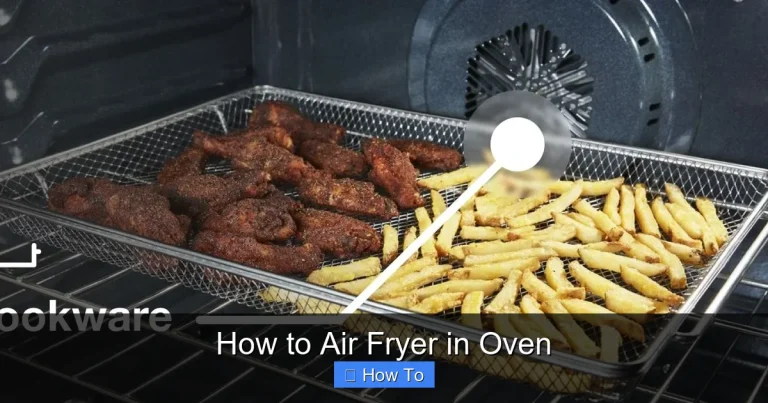
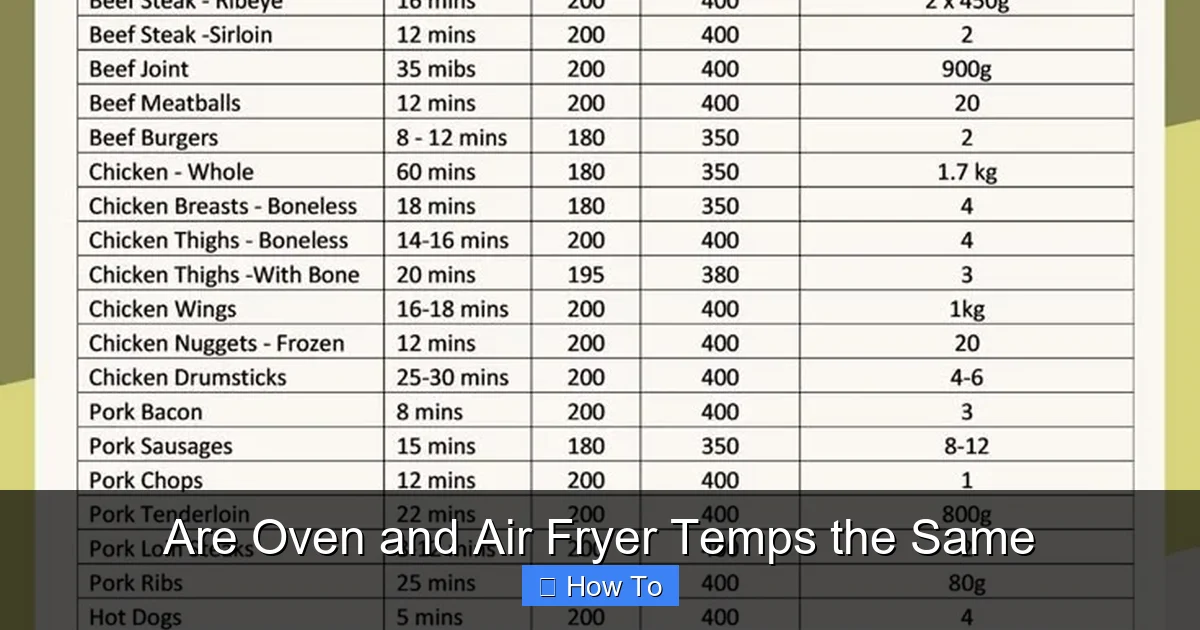
The great news is that, for the vast majority of recipes, you do not need to change the temperature setting when moving a recipe from your oven to your air fryer. If a recipe calls for 375 degrees Fahrenheit in a conventional oven, you can usually set your air fryer to 375 degrees Fahrenheit as well. The thermostats in both appliances are designed to measure and maintain the ambient air temperature inside the cooking chamber. Since the target internal temperature for food safety—such as 165 degrees Fahrenheit for poultry or 160 degrees Fahrenheit for ground meats—remains the same regardless of the appliance, the external cooking temperature remains consistent. This means that, generally speaking, air fryer temps and oven temps are interchangeable for basic cooking tasks. For a deeper dive into how these temperatures compare, you can explore this detailed guide on whether air fryer temperature is the same as an oven.
Visual guide about Are Oven and Air Fryer Temps the Same
Image source: i.pinimg.com
Why Temperature Settings Often Match
The consistency in temperature settings is largely due to standardized food safety guidelines. Chefs and food scientists have established specific temperatures that effectively kill harmful bacteria while preserving flavor and texture. Whether the heat is circulating in a large oven or a compact air fryer basket, the thermodynamic goal is the same: to raise the internal temperature of the food to a safe level. Therefore, you can confidently use the exact same temperature settings for roasting vegetables, baking chicken breasts, or reheating leftovers in both appliances. This compatibility makes transitioning between an oven and an air fryer incredibly straightforward for home cooks.
When You Might Need to Lower the Temp
There are, however, a few exceptions to this rule of thumb. If you are cooking something particularly delicate, like a light batter or a thin piece of fish, the intense, direct heat of an air fryer can cause it to dry out or burn before the inside is fully cooked. In such cases, you might want to lower the air fryer temperature by 25 degrees Fahrenheit to slow down the cooking process. Additionally, some older or budget-friendly air fryer models do not have the most precise temperature sensors and can overshoot the set point by 15 to 20 degrees. If you notice your food browning too quickly, dropping the temperature is a simple way to compensate. Always refer to your user manual to understand how your specific model performs under different settings.
The Impact of Air Circulation on Cooking Time
While the temperature settings stay the same, the cooking time is where the biggest difference lies. This is the most common mistake people make when they first start using an air fryer. They put the food in, set the timer for the exact duration listed in the oven recipe, and end up with burnt, dry, or overcooked food. The rapid, high-speed air circulation in an air fryer cooks food up to 30% faster than a conventional oven. Because the hot air is constantly moving and directly contacting the food, heat transfer is highly efficient. In a large, still oven, the heat has to work much harder to penetrate the food, especially if it is crowded on a baking sheet.
Visual guide about Are Oven and Air Fryer Temps the Same
Image source: i.pinimg.com
Why the Air Fryer is Quicker
To grasp this concept fully, it helps to compare the physics of heat transfer in both appliances. In a conventional oven, heat transfer occurs primarily through radiation and natural convection. The food sits in a relatively static environment, and the heat must slowly diffuse through the surrounding air to reach the surface. In an air fryer, forced convection is the dominant mechanism. The fan actively pushes the hot air against the food at high speeds, which disrupts the boundary layer of cooler, stagnant air that normally forms around cooking food. This disruption allows heat to transfer much faster. If you want to dive deeper into this comparison, you can explore how air fryers cook faster than traditional ovens. This speed advantage is a major benefit for busy weeknights when you need to get a meal on the table quickly.
How to Adjust Cooking Times
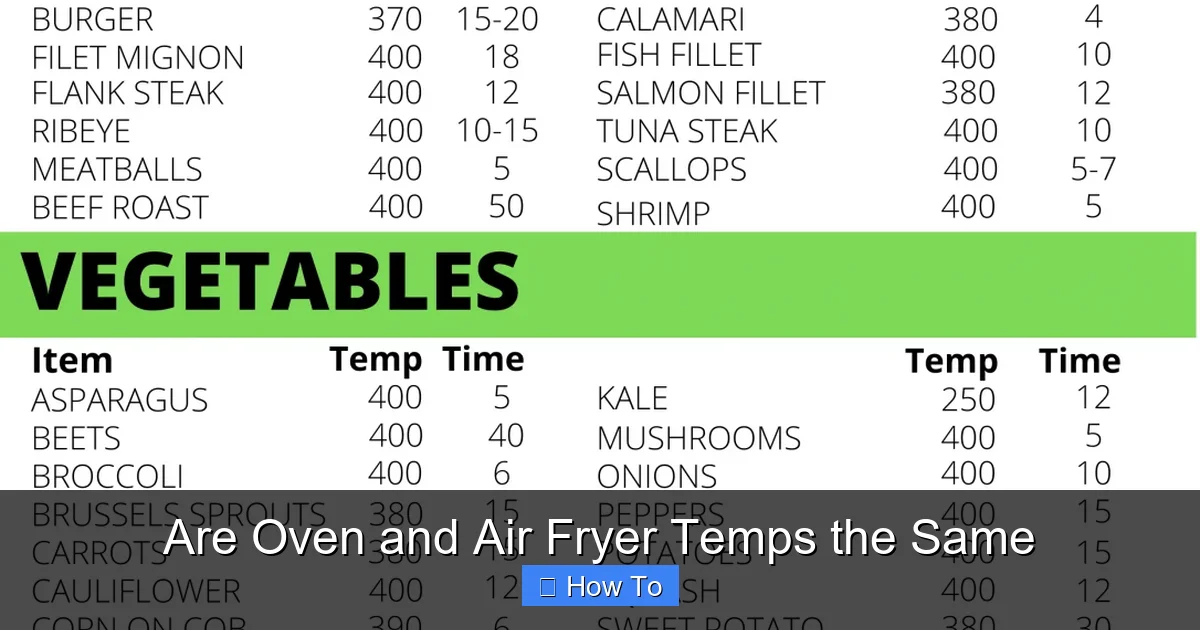
A practical rule of thumb when converting oven recipes to an air fryer is to reduce the cooking time by 20% to 30%. For example, if your oven recipe calls for baking chicken tenders at 400 degrees for 20 minutes, you should set your air fryer to 400 degrees but start checking them at the 14-minute mark. If they need a bit more time, you can easily add a minute or two. For even more precise control, you can shake the basket or flip the food halfway through the cooking cycle. This ensures that all sides get equal exposure to the hot air, resulting in a perfectly even golden-brown crust without any burnt spots.
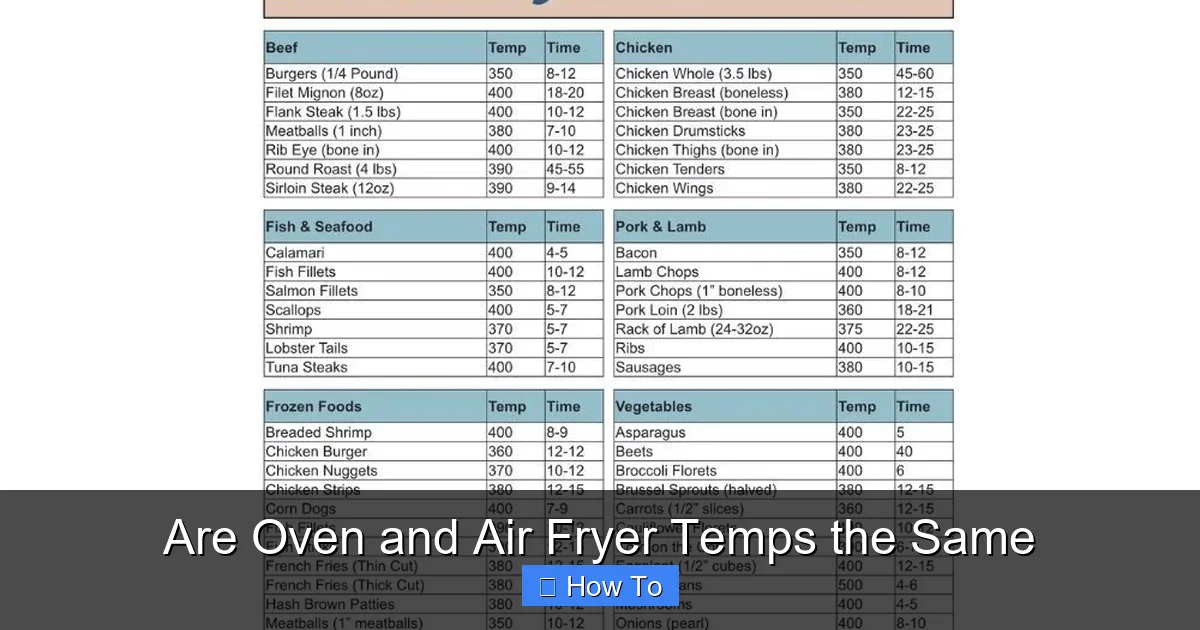
Practical Temperature Conversions for Common Foods
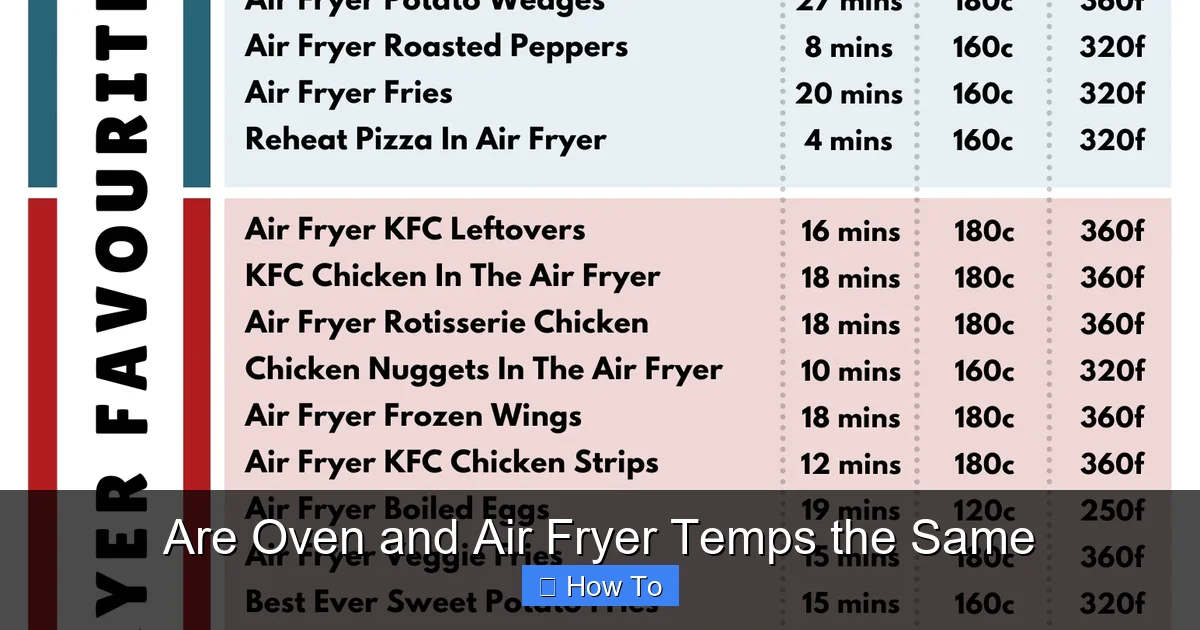
To make your transition even smoother, let us look at how specific everyday foods behave in both appliances. Keep in mind that the thickness of the food, its starting temperature (frozen vs. fresh), and the specific model of your appliances can all influence the final outcome. Always use an instant-read meat thermometer to check the internal temperature of proteins to guarantee food safety and perfect doneness.
Visual guide about Are Oven and Air Fryer Temps the Same
Image source: recipethis.com
Fries and Frozen Foods
Frozen french fries, tater tots, chicken nuggets, and onion rings are some of the best foods for an air fryer. Since these items are already par-cooked or fully cooked during manufacturing, their primary goal in the kitchen is to achieve a crispy texture. Most frozen items cook beautifully at temperatures between 380 degrees and 400 degrees Fahrenheit. In a conventional oven, spreading frozen fries on a baking sheet usually takes 20 to 25 minutes, and you have to flip them halfway to prevent sticking. In the air fryer, the same portion of fries will be perfectly crispy in 12 to 15 minutes without even needing to preheat the basket. The rapid air circulation ensures that every fry gets that satisfying crunch without any extra oil.
Fresh Vegetables
Roasting fresh vegetables like broccoli florets, sliced carrots, Brussels sprouts, or cauliflower requires high heat to caramelize the natural sugars and develop a rich flavor. In the oven, this typically requires a temperature of 400 to 425 degrees Fahrenheit for 20 to 25 minutes. The moisture on the surface of the vegetables needs time to evaporate in the relatively still oven environment. In the air fryer, the intense air movement removes surface moisture incredibly fast, so the vegetables roast to perfection in just 12 to 15 minutes at the same temperature. To ensure they cook evenly, toss them in a light coating of olive oil, salt, and pepper, and make sure they are spread out in a single layer inside the basket.
Chicken and Meats
When cooking chicken breasts, pork chops, or even a small roast, a temperature of 375 degrees Fahrenheit is a reliable baseline. In the oven, a single chicken breast typically takes 20 to 25 minutes to cook through, depending on its thickness. In the air fryer, the hot air hits the meat from all directions simultaneously, reducing the cooking time to about 12 to 18 minutes. Because the air fryer cooks so quickly, it is especially helpful for keeping chicken breasts moist; the rapid cooking seals in the juices before they have a chance to evaporate. Just be careful not to overcrowd the basket, as stacking the meat will trap steam and lead to uneven, soggy results. Always let the meat rest for a few minutes after cooking to allow the juices to redistribute.
Baking and Pastries
While air fryers are famous for crispy foods, they can also be used for small batches of baking. You can bake a small batch of cookies, a single brownie, or even a small cake in an air fryer-safe dish. For baking, the temperature remains the same as your recipe calls for, usually around 325 to 350 degrees Fahrenheit. However, because the air is circulating rapidly, the tops of baked goods might set faster than the insides. It is best to check your baked goods a few minutes earlier than the recipe suggests and use toothpick tests to ensure they are fully cooked through.
Tips for Getting Perfect Results in Both Appliances
Whether you are using a large dual-fuel range or a compact countertop air fryer, a few simple habits can help you master the temperature and timing in both environments. The ultimate goal is to achieve the same delicious texture and flavor, regardless of which appliance you choose to use on any given day. By paying attention to food placement, accessory selection, and resting times, you can elevate your everyday cooking.
Avoid Overcrowding the Basket or Pan
This is arguably the most important rule for both ovens and air fryers, but it is absolutely critical for the air fryer. When you pile food on top of itself or cram too many pieces into the basket, you block the flow of hot air. Instead of crisping up, the food will steam in its own moisture, resulting in a soggy, unevenly cooked meal. Always aim for a single layer with a little bit of space between each piece. If you are cooking for a large family, it is much better to cook in smaller, sequential batches than to try to force everything into the machine at once.
Use the Right Tools and Accessories
In the oven, make good use of wire racks to allow hot air to circulate beneath the food, mimicking a professional kitchen setup. In the air fryer, utilize the perforated baskets and crisper plates that come standard with the appliance. These accessories are designed to let excess fat drip away while allowing hot air to hit the bottom of the food. If you have a recipe that calls for a baking dish, check if the dish is heat-resistant and small enough to fit inside your air fryer basket. Some air fryer models come with silicone liners or parchment paper inserts that make cleanup a breeze without interfering with the airflow.
Let Your Food Rest
Never underestimate the power of resting your food after it comes out of the heat. Allowing meats to rest for 5 to 10 minutes gives the muscle fibers time to relax and reabsorb the juices. If you cut into the meat immediately, all the flavorful juices will run out onto the cutting board, leaving you with a drier meal. For crispy foods like fries or wings, resting them on a wire rack for a couple of minutes helps the exterior stay crisp instead of getting soggy from trapped steam. It is a simple step that makes a massive difference in the final quality of your dish.
Conclusion
In summary, oven and air fryer temperatures are largely the same, but the cooking process is not identical. You can confidently use the same heat settings, but you must adjust the timing to account for the air fryer’s rapid cooking cycle. By understanding how heat and air movement work in each appliance, you can easily convert your favorite recipes and avoid common pitfalls. Practice makes perfect, so start with simple foods like frozen fries or fresh vegetables to build your confidence. Soon, you will be whipping up delicious, crispy meals with ease, knowing exactly how to get the best results from both your oven and your air fryer. Embrace the versatility of these modern kitchen tools, and enjoy the delicious possibilities they bring to your table every single day.
Frequently Asked Questions
Can I use the same temperature for an air fryer as my oven?
Yes, for the most part, you can use the exact same temperature setting for both appliances. Most recipes call for temperatures between 350°F and 400°F, which are standard for both ovens and air fryers. The thermostats in both machines are calibrated to maintain the same ambient heat levels inside the cooking chamber. However, you should always keep an eye on your food because the cooking time will still be different.
Why does my air fryer cook food so much faster than my oven?
Your air fryer cooks food faster because of its compact design and powerful fan system. The fan forces hot air to circulate at high speeds directly over and around the food, which rapidly removes surface moisture. In contrast, a standard oven has a much larger volume of air that moves slowly or remains still, requiring more time for the heat to transfer to the food. This efficient heat transfer can cut cooking times by up to 30%.
Do I need to preheat my air fryer like I preheat my oven?
While preheating is not strictly required for all air fryer recipes, it is highly recommended for certain foods. Preheating for 3 to 5 minutes helps achieve a crispier crust on frozen foods, fresh fries, or battered items. It mimics the effect of putting food into a fully hot oven rather than a cold one. For simple reheating or steaming, you can skip the preheat step to save energy.
What happens if I put too much food in the air fryer basket?
If you overcrowd the air fryer basket, the hot air cannot circulate freely around each piece of food. This trapped moisture will cause the food to steam rather than crisp up, resulting in a soggy and unevenly cooked meal. To get the best texture, always cook food in a single layer with space between the pieces. If you need to cook a large batch, it is best to do it in smaller portions.
Can I use foil or parchment paper in my air fryer?
Yes, you can use both aluminum foil and parchment paper in your air fryer, but you must use them safely. Always ensure that the paper or foil does not block the air intake or the fan at the bottom of the basket, as this can cause overheating or poor cooking results. Parchment paper liners with holes are excellent for maintaining airflow while making cleanup quick and easy. Never use wax paper, as it will melt and create a fire hazard.
Is it safe to use the same recipe for both an oven and an air fryer?
Yes, it is completely safe to use the same recipe for both appliances, as long as you adjust the cooking times accordingly. The food safety guidelines and required internal temperatures remain identical regardless of which appliance you use. The only adjustment you need to make is reducing the cooking time by about 20% to 30% when using the air fryer. Always double-check the doneness of your food with a visual check or a meat thermometer before serving.