Is an Air Fryer a Convection Oven
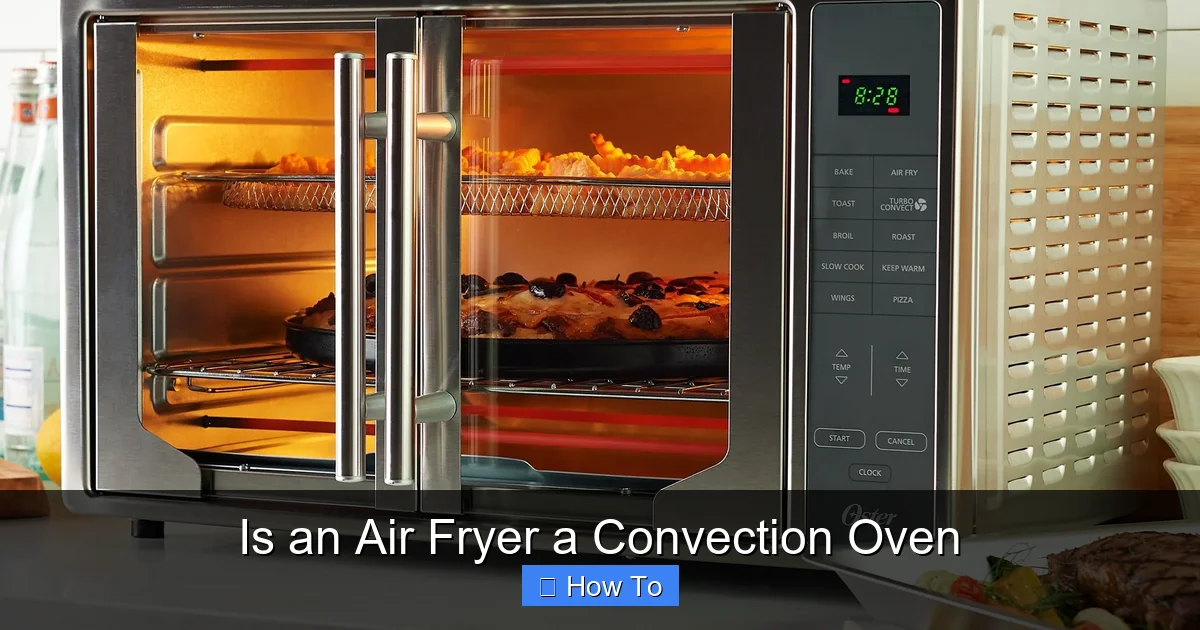
An air fryer uses rapid air circulation similar to a convection oven, but it’s smaller and designed for crispier results with less oil. While both appliances rely on a fan and heating element, key differences in size, airflow, and cooking capacity set them apart. Understanding these distinctions helps you decide which tool fits your kitchen routine.
Key Takeaways
- Air fryers are compact convection ovens: They use a fan to circulate hot air around food, just like a full‑size convection oven, but in a much smaller chamber.
- Convection ovens offer larger capacity: Ideal for baking multiple trays, roasting large cuts of meat, or cooking for a family, whereas air fryers excel at single‑serving or small‑batch meals.
- Airflow speed differs: Air fryers typically move air at higher velocities, creating a quicker, more intense crisp on foods like fries or wings.
- Energy consumption varies: Because they heat a smaller space, air fryers often use less electricity per session than a convection oven heating a large cavity.
- Versatility matters: Convection ovens can bake, broil, roast, and dehydrate on larger pans; air fryers are best for frying, reheating, and quick‑cook tasks.
- Choose based on your cooking habits: If you frequently cook for one or two and love crispy textures, an air fryer is handy; if you need multi‑dish capacity, a convection oven is the better fit.
📑 Table of Contents
- Is an Air Fryer a Convection Oven
- How Air Fryers Work: The Basics of Rapid Air Technology
- How Convection Ovens Work: Traditional Fan-Assisted Baking
- Comparing Air Fryers and Convection Ovens: Size, Capacity, and Design
- Performance Differences: Cooking Speed, Crispiness, and Energy Use
- When to Choose an Air Fryer vs a Convection Oven: Practical Scenarios
- Tips for Getting the Best Results from Each Appliance
- Conclusion
Is an Air Fryer a Convection Oven
When you first see an air fryer on the countertop, its sleek basket and rapid‑cook promise can make you wonder: is an air fryer a convection oven? The short answer is yes—an air fryer is essentially a mini convection oven that uses the same core principle of moving hot air around food to cook it evenly and quickly. However, the devil is in the details: size, airflow speed, and intended use create noticeable differences that affect everyday cooking.
In this guide we’ll break down how each appliance works, compare their strengths and weaknesses, and help you decide which one deserves a permanent spot in your kitchen. We’ll also share practical tips for getting the best results from both, so you can make the most of whichever tool you choose.
How Air Fryers Work: The Basics of Rapid Air Technology
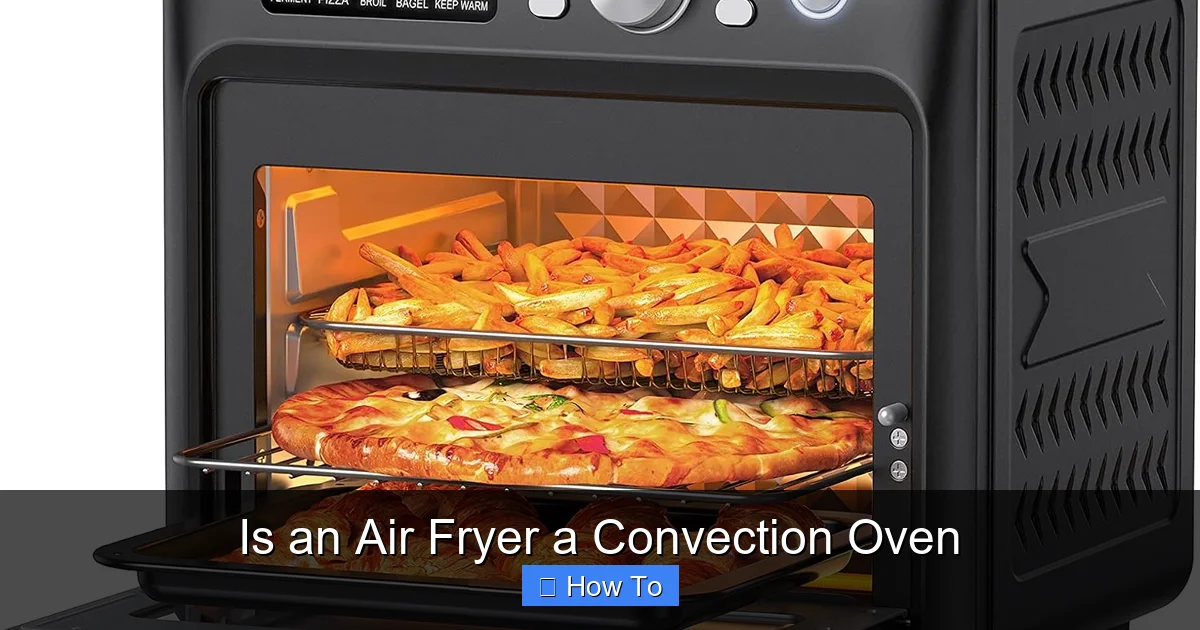
At the heart of every air fryer is a heating element paired with a high‑speed fan. When you set the temperature, the element warms the air inside the cooking chamber, and the fan blows that hot air around the food at speeds often exceeding 3,000 RPM. This rapid circulation creates a convection effect that removes moisture from the surface of the food, leading to a crispy, golden exterior while the interior stays moist.
Visual guide about Is an Air Fryer a Convection Oven
Image source: m.media-amazon.com
Key Components of an Air Fryer
- Heating element: Usually located above the food basket, it provides the primary heat source.
- Fan: A powerful motor drives the airflow, ensuring even temperature distribution.
- Cooking basket or tray: Perforated to let air flow freely around the food.
- Controls: Digital dials or touchpads let you set temperature (typically 180°F–400°F) and time.
Because the cooking chamber is compact—often just a few quarts—the air heats up quickly, and the fan can maintain a steady temperature with minimal lag. This design is why many people ask, is an air fryer a convection oven? The answer lies in the shared technology: both rely on forced hot air, but the scale and airflow dynamics differ.
How Convection Ovens Work: Traditional Fan-Assisted Baking
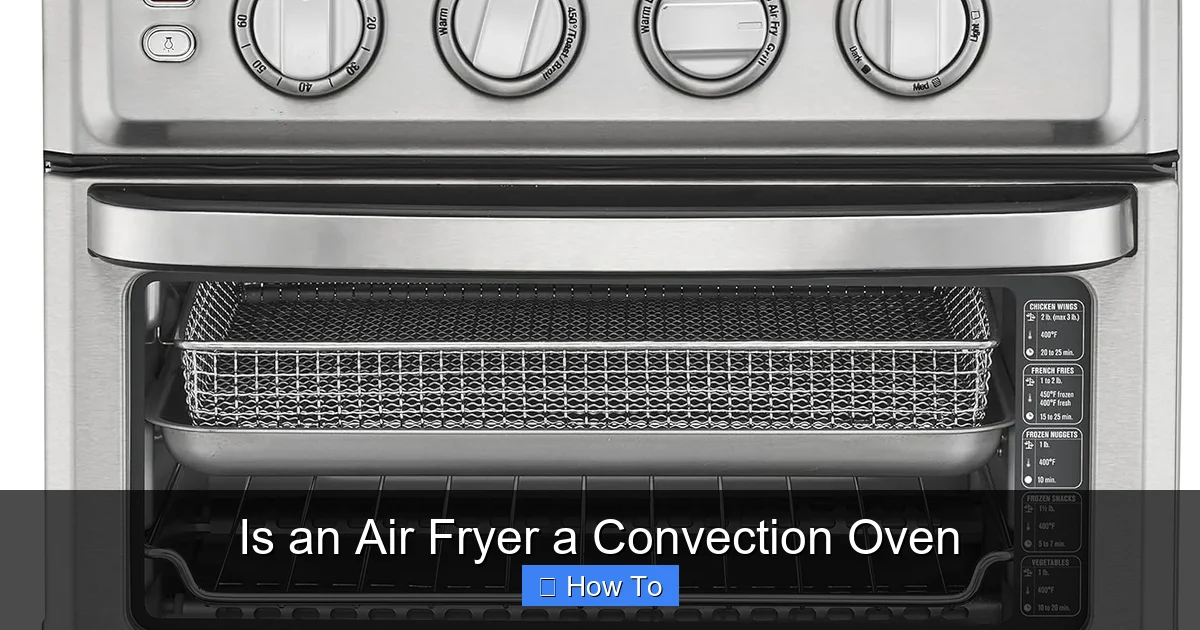
A full‑size convection oven builds on the same principle but on a larger scale. Inside a conventional oven cavity, a heating element (often at the bottom and/or top) warms the air, while a fan mounted on the back wall circulates it. The larger volume means the fan doesn’t need to spin as fast to achieve effective air movement, but the overall airflow is still sufficient to eliminate hot spots and promote even browning.
Visual guide about Is an Air Fryer a Convection Oven
Image source: m.media-amazon.com
What Sets a Convection Oven Apart?
- Larger cavity: Typically 20–30 quarts or more, allowing multiple racks and bigger pans.
- Versatile heating modes: Many models offer bake, broil, roast, and even dehydrate settings.
- Slower fan speed: Because the space is bigger, the fan runs at a lower RPM, which can be gentler on delicate baked goods.
- Preheat time: Larger mass means it takes longer to reach the target temperature, though modern models mitigate this with quick‑preheat features.
When you ask, is an air fryer a convection oven? you’re really comparing a compact, high‑velocity unit to a larger, more versatile appliance. Both move air, but the execution changes the cooking experience.
Comparing Air Fryers and Convection Ovens: Size, Capacity, and Design
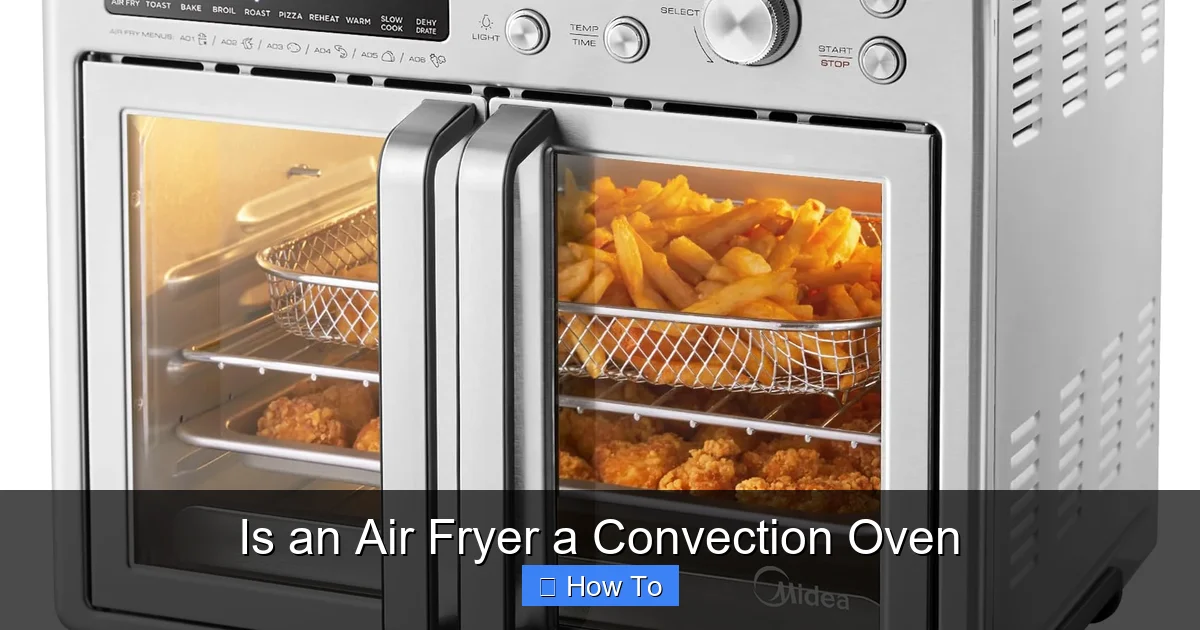
One of the most obvious differences is physical footprint. An air fryer usually sits on the countertop and holds anywhere from 2 to 6 quarts of food. A convection oven, whether built‑in or freestanding, offers 20 quarts or more, often with multiple rack positions.
Visual guide about Is an Air Fryer a Convection Oven
Image source: m.media-amazon.com
Capacity Implications
- Air fryer: Perfect for single servings, snacks, or small batches—think a handful of fries, a couple of chicken wings, or a small batch of roasted vegetables.
- Convection oven: Ideal for family meals, batch baking, or cooking several dishes at once (e.g., a tray of cookies on one rack and a roast on another).
Design and Placement
Air fryers are designed for countertop convenience. Their baskets are removable, making cleanup quick. Convection ovens are usually fixed appliances; cleaning involves wiping down interior surfaces and racks, which can be more involved.
If you’re wondering is an air fryer a convection oven? for the purpose of saving space, the answer is yes—it’s a space‑saving version of the same technology.
Performance Differences: Cooking Speed, Crispiness, and Energy Use
Because of the smaller chamber and higher fan speed, air fryers often finish foods faster than a convection oven set to the same temperature. For example, frozen french fries might take 12–15 minutes in an air fryer versus 18–22 minutes in a convection oven.
Crispiness Factor
The rapid air movement in an air fryer creates a higher convective heat transfer coefficient, which means the surface of the food loses moisture more quickly. This results in a crunchier crust on items like breaded chicken tenders or homemade potato chips. Convection ovens still produce a nice crisp, but the effect is generally milder unless you increase the temperature or extend the time.
Energy Consumption
Heating a smaller volume requires less energy. A typical 1,500‑watt air fryer running for 15 minutes uses about 0.375 kWh. A convection oven of similar wattage might need 20–25 minutes to achieve the same result, consuming roughly 0.5–0.6 kWh. Over many uses, this difference can add up on your electricity bill.
When evaluating is an air fryer a convection oven? from an efficiency standpoint, the air fryer wins for small‑batch, quick‑cook tasks.
When to Choose an Air Fryer vs a Convection Oven: Practical Scenarios
Understanding your cooking habits will help you decide which appliance to reach for. Below are common situations and the tool that tends to shine.
Best for an Air Fryer
- Quick snacks: frozen mozzarella sticks, onion rings, or reheated pizza slices.
- Small‑protein meals: a single salmon fillet, a couple of pork chops, or a small batch of meatballs.
- Reheating leftovers: restores crispiness to fried foods without sogginess.
- Low‑oil cooking: achieving a fried texture with just a teaspoon of oil.
Best for a Convection Oven
- Family meals: roasting a whole chicken, baking a lasagna, or preparing a sheet‑pan dinner with multiple components.
- Baking: cookies, cakes, breads, and pastries benefit from even heat and the ability to use multiple racks.
- Large‑batch roasting: vegetables, potatoes, or trays of meat for meal prep.
- Dehydrating or slow‑cooking: low‑temperature settings for making jerky or dried fruit.
If you frequently ask yourself, is an air fryer a convection oven? while standing in the kitchen, consider the volume and type of food you’re preparing. The answer will often point you toward the right tool.
Tips for Getting the Best Results from Each Appliance
Even the best gadget needs a little know‑how to reach its full potential. Here are practical pointers for both air fryers and convection ovens.
Air Fryer Tips
- Don’t overcrowd the basket: Leave space for air to circulate; shake or flip food halfway through for even browning.
- Lightly coat with oil: A quick spray or toss with a teaspoon of oil helps achieve that golden crunch.
- Preheat when needed: Some models benefit from a 2‑3 minute preheat, especially for baked goods.
- Use accessories wisely: Grill pans, pizza stones, or skewer racks can expand what you can cook.
- Clean after each use: Remove the basket and wipe down the interior to prevent buildup.
Convection Oven Tips
- Reduce temperature by 25°F: Because the fan speeds up cooking, lower the set temperature compared to a conventional recipe.
- Use low‑sided pans: This allows air to flow freely around the food.
- Rotate pans: Even with a fan, turning trays halfway ensures uniform color.
- Avoid covering food with foil: Unless the recipe calls for it, foil can block airflow and reduce crispiness.
- Keep the oven door closed: Every time you open it, you lose heat and disrupt airflow.
By applying these tips, you’ll maximize the strengths of whichever appliance you choose, making the question is an air fryer a convection oven? less about semantics and more about practical, delicious outcomes.
Conclusion
So, is an air fryer a convection oven? Technically, yes—it’s a compact, high‑velocity version of the same convection principle that powers full‑size ovens. Both rely on a fan to move hot air, which eliminates hot spots and promotes even cooking. The differences lie in size, airflow speed, capacity, and the types of dishes they excel at.
If you value speed, crispiness, and energy efficiency for small batches or snacks, an air fryer is a fantastic countertop companion. If you need the flexibility to bake, roast, and dehydrate larger quantities, a convection oven remains the workhorse of the kitchen. Understanding these nuances lets you pick the right tool for each cooking task, ensuring tasty results every time.
Armed with this knowledge, you can confidently decide whether to reach for the air fryer basket or slide a tray into the convection oven, knowing exactly how each appliance works and what it does best.
Frequently Asked Questions
Is an air fryer exactly the same as a convection oven?
No. While both use a fan to circulate hot air, an air fryer is a smaller, higher‑speed version designed for quick crisping, whereas a convection oven offers larger capacity and more versatile cooking modes.
Can I bake a cake in an air fryer?
Yes, many air fryers can bake small cakes or muffins, but you’ll need to reduce the temperature by about 25°F and check for doneness early due to the faster cooking pace.
Which uses less electricity, an air fryer or a convection oven?
Generally, an air fryer uses less electricity per session because it heats a smaller cooking chamber and reaches temperature faster than a full‑size convection oven.
Do I need to preheat an air fryer?
Preheating isn’t always required, but doing so for 2‑3 minutes can improve results for foods that benefit from an immediate burst of heat, such as breaded items or pastries.
What types of food are worse in an air fryer?
Foods that need a lot of space to expand, like large loaves of bread or big casseroles, may not cook evenly in an air fryer’s limited basket.
Can I use aluminum foil in an air fryer?
You can use foil cautiously—place it only on the bottom of the basket, avoid covering the entire surface, and ensure it doesn’t block airflow to prevent uneven cooking or damage to the unit.