What Toaster Oven Should I Buy
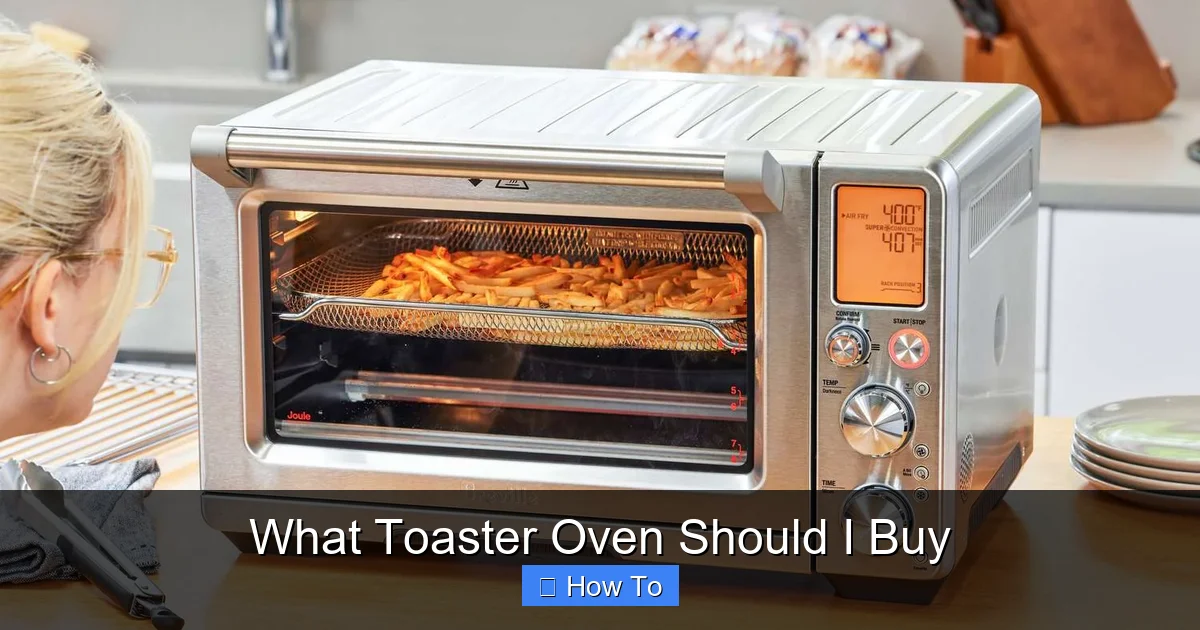
Choosing the right toaster oven depends on your cooking habits, kitchen space, and budget. This guide covers everything from basic models to advanced air fryer combos, helping you compare features like convection cooking, capacity, and ease of cleaning. We highlight top brands and key factors so you can confidently pick the best appliance for your needs.
Standing in the appliance aisle or scrolling through endless online reviews can make anyone wonder, what toaster oven should I buy? It’s a common dilemma. The market is packed with options ranging from tiny $30 basics to $400 smart ovens that practically cook for you. The good news? You don’t need to be a chef to make a smart choice. You just need to know what matters for your kitchen.
Think about how you actually cook. Do you just want golden toast and melted cheese sandwiches? Or do you dream of roasting a whole chicken, baking cookies, and air frying fries without firing up the big oven? Your honest answers will narrow the field fast. This guide walks you through every key decision so you can buy with confidence and start enjoying faster, easier meals.
Key Takeaways
- Match capacity to your household: A 0.5 cubic foot unit suits singles, while families need 1 cubic foot or more for full meals.
- Convection fans cook faster and more evenly: This feature is worth the extra cost if you bake, roast, or reheat often.
- Air fryer toaster ovens replace two appliances: They save counter space and deliver crispy results with less oil.
- Look for intuitive controls and easy-clean interiors: Non-stick coatings and removable crumb trays make daily use hassle-free.
- Top brands like Breville, Cuisinart, and Ninja offer reliable performance: Each has models at different price points for various needs.
- Energy efficiency adds up: A toaster oven uses up to 50% less energy than a full-size oven for small meals.
- Check warranty and return policies: A good warranty signals quality and protects your investment.
📑 Table of Contents
Understanding Your Cooking Needs
Before you compare specs, pause and assess your real-world habits. The best toaster oven for you isn’t the one with the most buttons—it’s the one that fits your daily routine.
Counter Space and Capacity
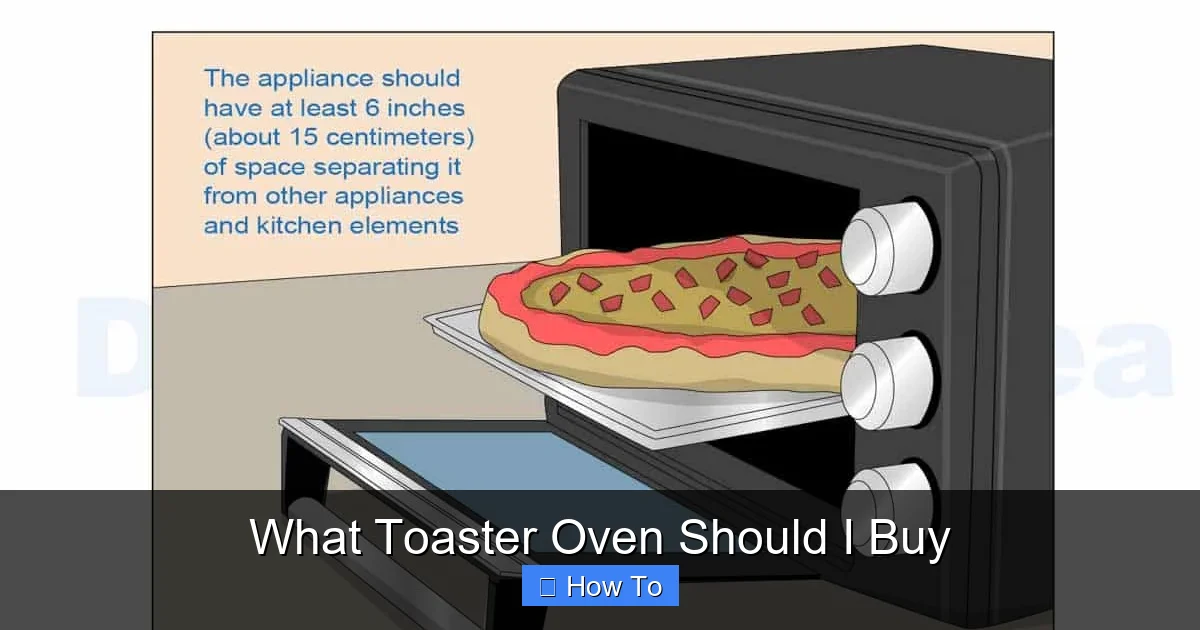
Measure your available counter space first. Leave at least four inches of clearance on all sides for ventilation. If you have a tight kitchen, a compact model (around 0.5 cubic feet) fits a four-slice toast or a 9-inch pizza. For families or meal preppers, look for 1 cubic foot or larger. These can handle a 13-inch pizza, a 9×13 baking pan, or even a small whole chicken. Remember, bigger units are heavier and harder to move.
Cooking Functions You’ll Actually Use
Manufacturers love listing functions: bake, broil, toast, bagel, pizza, cookies, dehydrate, proof, slow cook, and more. Be honest—will you ever dehydrate fruit? If not, skip paying for that feature. Focus on the core three: bake, broil, toast. Convection bake is a game-changer for even browning. An air fry function is huge if you want crispy wings or fries without a separate gadget. Convection toaster ovens circulate hot air for faster, more uniform results.
Budget Considerations
Set a range before you shop. Basic models start around $40–$60. They toast and bake small items fine but lack precision and durability. Mid-range ($100–$200) adds convection, better temperature control, and larger capacity. Premium ($250+) brings smart presets, interior lights, superior insulation, and stainless steel builds. Decide which tier matches your usage. A $50 unit replaced every two years may cost more than a $180 workhorse that lasts a decade.
Types of Toaster Ovens
Not all toaster ovens are created equal. Understanding the main categories helps you filter options fast.
Visual guide about What Toaster Oven Should I Buy
Image source: designingidea.com
Basic Toaster Ovens
These are the classic countertop ovens. They use top and bottom heating elements. They’re affordable, simple, and fine for toast, frozen pizza, and reheating. Temperature accuracy can be hit or miss. They lack a fan, so hot spots are common. Great for dorms, offices, or occasional use.
Convection Toaster Ovens
A built-in fan circulates hot air. This means faster cooking, even browning, and better baking results. Cookies come out uniform; roasts get crispy skin. Most mid-range and premium models include convection. If you bake often, this is non-negotiable. Top-rated toaster ovens almost always feature convection.
Air Fryer Toaster Ovens
These hybrids combine a toaster oven with a high-velocity fan and a mesh basket. They mimic deep frying with a fraction of the oil. They’re larger than basic models but replace a standalone air fryer. Ideal if you want crispy fries, chicken wings, or roasted veggies regularly. Air fryer toaster ovens are the hottest category right now for good reason.
Toaster Oven Grills
Some models emphasize grilling with a top heating element designed for searing. They often include a grill pan. If you love indoor grilling—steaks, burgers, veggies—look for this style. They’re less common but useful for apartment dwellers without outdoor grills.
Key Features to Look For
Once you pick a type, compare these specific features. They separate frustrating appliances from daily joys.
Visual guide about What Toaster Oven Should I Buy
Image source: m.media-amazon.com
Temperature Range and Control
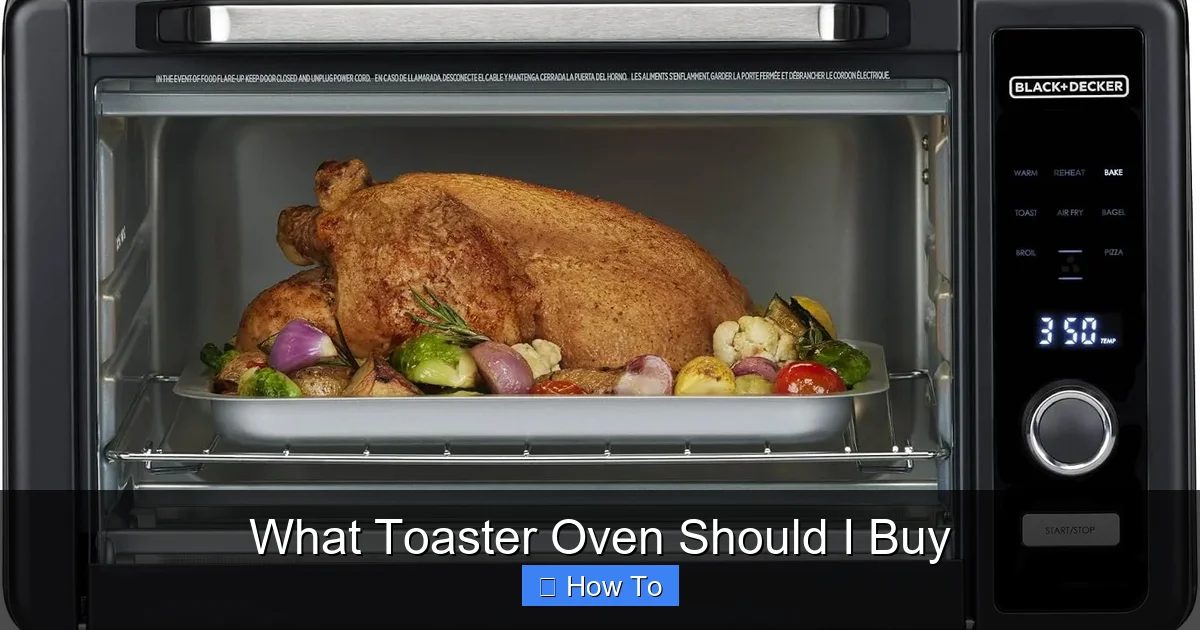
Look for a range of 150°F to 450°F (or higher). Low temps allow proofing dough or dehydrating. High temps enable true air frying and searing. Digital controls with 5-degree increments beat analog dials for precision. Some premium models offer probe thermometers that auto-shutoff when meat hits target temp—handy for roasts.
Interior Size and Rack Positions
Check interior dimensions, not just “6-slice” claims. Measure your favorite bakeware. Multiple rack positions (at least three) let you optimize distance from elements for different foods. A removable rack and included baking pan, broil rack, and air fry basket add value.
Ease of Cleaning
Non-stick interior coatings wipe clean in seconds. Removable crumb trays are essential—front-access trays are easier than rear ones. Some high-end models have a steam-clean function. Avoid units with lots of crevices around the door or control panel; they trap grease.
Safety Features
Auto shut-off when the timer ends or the door opens prevents fires. Cool-touch exteriors matter if kids are around. A sturdy, well-balanced door that doesn’t slam is a quality sign. Look for certifications like UL or ETL.
Top Brands and Models to Consider
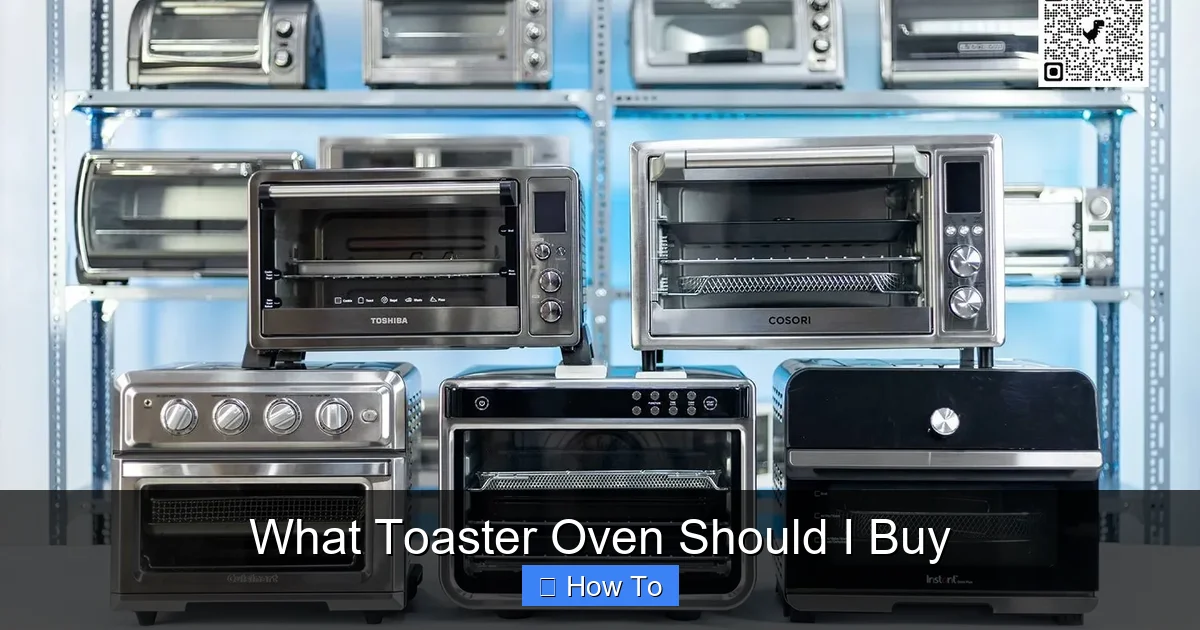
Brand reputation correlates with support, parts availability, and build quality. Here are the leaders.
Visual guide about What Toaster Oven Should I Buy
Image source: cdn.shouldit.com
Breville
The gold standard. Their Smart Oven Air Fryer Pro and Compact Smart Oven are pricey ($300–$400) but deliver unmatched evenness, smart algorithms, and durability. The Element iQ system adjusts power across five quartz elements for perfect results. If budget allows, this is the “buy once” choice.
Cuisinart
Offers excellent value. The Chef’s Convection Toaster Oven (TOB-260N1) is a cult favorite—large, powerful, and around $200. Their Air Fryer Toaster Oven (TOA-60) adds air frying for under $200. Reliable, widely available, and easy to service.
Ninja
Innovative and versatile. The Foodi Digital Air Fry Oven flips up for storage, saving 50% counter space. It air fries, roasts, bakes, and dehydrates. Around $230. Great for small kitchens. The DT201 model adds a built-in thermometer.
Cosori
Budget-friendly with modern features. The CO130-AO 12-in-1 Air Fryer Toaster Oven costs ~$120 and includes a rotisserie kit. Great specs for the price. App control on some models. Good entry point for air frying.
Oster
Dependable workhorses. The Digital French Door Oven (TSSTTVFDDG) has a unique dual-door design—open one or both. Large capacity, convection, and around $180. Solid pick for families wanting easy access.
Energy Efficiency and Cost Savings
A toaster oven isn’t just convenient—it can lower your utility bills.
Toaster Oven vs. Full-Size Oven
A standard electric oven draws 2,000–5,000 watts. A toaster oven uses 1,200–1,800 watts. Because it’s smaller, it preheats in 3–5 minutes versus 10–15. For a single tray of cookies or a chicken breast, you use up to 50% less energy. Toaster ovens are energy efficient for small to medium meals.
Long-Term Savings
If you shift just three meals a week from the big oven to a toaster oven, you save roughly 150–200 kWh per year. At average rates, that’s $20–$30 annually. Over a 10-year lifespan, that’s $200–$300—enough to offset a mid-range model’s cost premium. Plus, you keep your kitchen cooler in summer.
Where to Buy and What to Avoid
Smart shopping saves headaches.
Retailers with Good Return Policies
Buy from stores with 30–90 day returns: Costco, Amazon, Best Buy, Home Depot, Williams Sonoma. Costco’s lifetime return on electronics (via manufacturer) is unbeatable. Read return windows before ordering. Keep the box for at least a month.
Common Pitfalls
Don’t chase the cheapest model—thin metal walls lose heat, making cooking uneven. Avoid units with only two rack positions; they limit versatility. Skip proprietary accessories you can’t replace. Check reviews for door hinge failures or peeling coatings after six months. If a deal looks too good, it probably is.
Making Your Final Decision
By now you have a framework. Let’s simplify the final choice with a quick checklist:
- Solo or couple, mostly toast and reheat: Basic 4-slice, $50–$80.
- Family, frequent baking/roasting: Convection 0.8+ cu ft, $150–$220.
- Want air frying + toaster oven in one: Air fryer toaster oven, $120–$250.
- Serious home cook, precision matters: Breville Smart Oven, $300+.
- Tiny kitchen, need storage: Ninja flip-up model.
Match your top two priorities to the right tier. Read three recent reviews of your shortlisted models—focus on reliability complaints. Then buy from a retailer with easy returns. You’ll know within a week if it’s a keeper.
Still torn between a standalone air fryer and a combo unit? Compare air fryer vs toaster oven to see which fits your cooking style better. And if you’re wondering whether a toaster oven can truly replace your big oven for many tasks, check out this comparison.
Your perfect toaster oven is out there. Armed with this knowledge, you’ll skip the guesswork and start enjoying faster, tastier meals sooner. Happy cooking!
Frequently Asked Questions
What size toaster oven do I need for a family of four?
Look for at least 1 cubic foot capacity. This fits a 13-inch pizza, a 9×13 casserole, or a 4-pound chicken. Models labeled “6-slice” or “family size” usually meet this.
Is a convection toaster oven worth the extra money?
Yes, if you bake, roast, or reheat often. The fan cuts cooking time by 20–30% and eliminates hot spots. For occasional toast only, basic is fine.
Can an air fryer toaster oven replace my microwave?
Not entirely. It reheats food with better texture but takes longer. Keep the microwave for speed; use the toaster oven for quality.
How long should a good toaster oven last?
5–10 years with daily use. Premium brands like Breville often exceed 10 years. Clean the crumb tray weekly and avoid abrasive cleaners to extend life.
Are toaster ovens safe to leave plugged in?
Yes, if they have auto shut-off and you keep the area clear. Unplug if away for extended periods. Never operate under cabinets without proper clearance.
What’s the difference between air fry and convection bake?
Air fry uses a faster fan and a perforated basket for maximum crisp. Convection bake uses a gentler fan for even rising and browning. Air fry is essentially super-charged convection.