What to Look for in a Toaster Oven
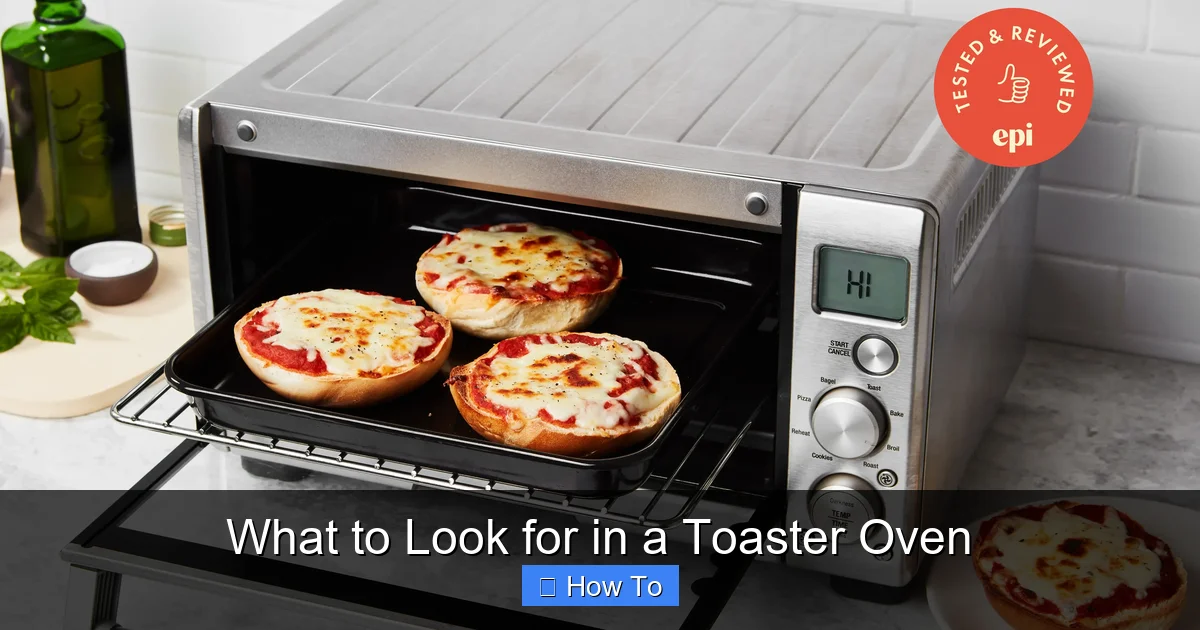
When deciding what to look for in a toaster oven, start with your counter space, cooking needs, and heat control. A safe, easy-to-clean model with even heating will serve you better than a large unit filled with features you will not use.
What to Look for in a Toaster Oven
A toaster oven is one of the most useful small appliances in a kitchen. It can toast bread, warm leftovers, bake small batches, and crisp food without heating the full range. It also saves space and often heats food faster than a large oven.
Yet a model that is too small, uneven, or hard to clean can become a nuisance. Before you compare styles, know what you will cook and where the appliance will sit. This guide explains what to look for in a toaster oven, with clear tips on size, heat, safety, and value.
Key Takeaways
- Measure first: Check the width, height, depth, door swing, and needed ventilation before buying.
- Match the size: Choose enough interior space for your usual food, from two slices of toast to a small pizza.
- Seek even heat: Look for reliable controls, adjustable racks, and stable heating elements.
- Choose useful modes: Pick functions that fit your needs, such as bake, broil, reheat, air fry, or keep warm.
- Prioritize safety: Look for auto shutoff, cool-touch walls, a stable base, and a secure door latch.
- Plan for cleanup: A removable crumb tray and wipeable interior can save time each week.
- Compare total value: Check the warranty, build quality, energy use, and long-term cost, not just the price.
📑 Table of Contents
1. Size and Capacity Come First
Measure the counter space
Start with the space on your counter. Measure the width, height, and depth of the area. Also check how far the door opens and whether the cord reaches a wall outlet.
- Width: Leave a little room on each side for easy use.
- Height: Make sure the top has room below cabinets.
- Depth: Check that the front does not block drawers or cabinets.
- Clearance: Follow the maker’s guide for space at the back and sides.
Do not buy only by the number of slices. Two-slice models can toast bread well, but they cannot fit much else. A six-slice model is a good middle choice for many homes. Larger models may hold a 12-inch pizza, a small casserole, or a tray of vegetables.
Look inside the oven as well. A tall interior is useful for a roast chicken or a tall baking pan. A shallow interior may work better for sandwiches, bagels, and frozen snacks.
Choose useful rack positions
Multiple rack positions give you more control. A high rack works well for toasting. A lower rack can help heat thicker foods. A middle rack may suit baking and reheating.
Some models include a second rack. This can help cook more food at once. It can also make baking more even. If you often cook for a family, this feature may be worth the extra space.
2. Heat Control and Cooking Performance Matter
Look for steady temperature control
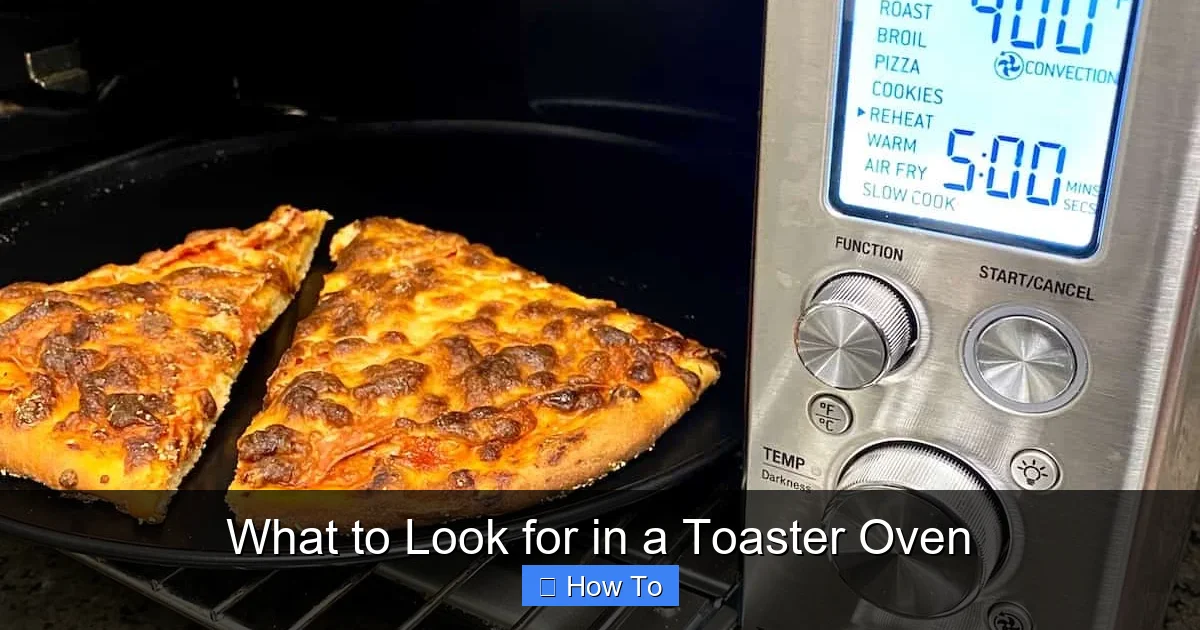
A good toaster oven should heat food evenly. Check the temperature range. Many models run from about 150 to 450 degrees Fahrenheit. A lower setting is useful for warming and gentle cooking. A higher setting helps with browning and crisp food.
Visual guide about What to Look for in a Toaster Oven
Image source: storables.com
The controls should be easy to read and set. A dial is simple and quick. A digital model may offer precise times and temperatures. Either choice can work well. The key is that the heat stays steady while the oven runs.
Read buyer reviews for comments about hot spots. These are places that get too hot. They can burn the bottom of food. Even heating is one of the most important things to look for in a toaster oven.
Compare standard, quartz, and convection heat
Many toaster ovens use metal heating elements. They are common and usually reliable. Some models use quartz elements. These can heat up fast and may react quickly when the heat is changed. Quartz heat is not always needed, but it can add speed and control.
A convection fan moves hot air around the food. This can help food cook faster and more evenly. It also works well for roasting vegetables, crisping breaded foods, and reheating leftovers. Learn more about what a convection toaster oven is used for before choosing this style.
Check for a broil setting as well. Broiling uses strong top heat. It can brown cheese, crisp the top of casseroles, and cook thin cuts of meat. If you want one appliance for many tasks, broiling is a useful feature.
Before buying, look for a fast preheat time. A quick preheat saves energy and keeps you from waiting too long. It also helps when you want warm food soon.
3. Pick the Features You Will Actually Use
Start with the basic cooking modes
The best model depends on your daily needs. A basic toaster oven may offer toast, bake, and broil. That is enough for many people. It can make sandwiches, warm pizza, bake muffins, and cook frozen foods.
Visual guide about What to Look for in a Toaster Oven
Image source: m.media-amazon.com
A reheat mode can help preserve texture. This is useful for fries, chicken, and breaded snacks. A keep-warm setting is handy when you cook more than one item. You can finish the meal without drying the first dishes.
Some models offer a dehydrate setting. This can dry fruit, herbs, or jerky. Others include a proof setting for bread dough. These features can be useful, but only if you plan to use them.
Consider an air-fryer model
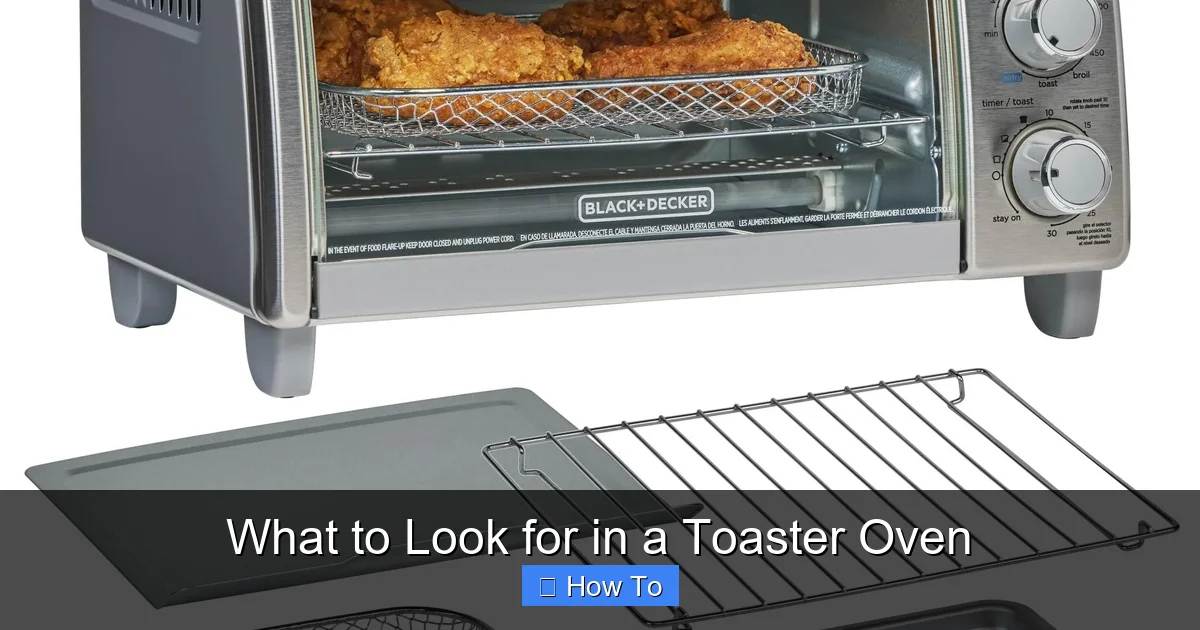
Many modern models also include air-fry settings. They use a fan and high heat to make food crisp with little oil. This can work well for fries, chicken wings, and vegetables.
An air-fryer basket may fit better than a flat rack. It lets hot air move around the food. It also keeps small pieces from falling through. However, the basket takes up storage space. It must also be removed for some jobs.
Preset buttons can save time. They may offer settings for frozen snacks, potatoes, or cookies. Still, presets are not always perfect. Check whether the oven also offers manual time and temperature controls. Manual controls give you more room to adjust a recipe.
Think about the meals you make most often. If you bake small batches, choose a model with a true bake setting. If you reheat often, choose one with even airflow. If you mainly want toast, focus on heat control and rack position. You do not need every extra feature.
For more ideas, see what you can use a toaster oven for before making your final choice.
4. Safety, Build Quality, and Placement Are Important
Look for built-in safety features
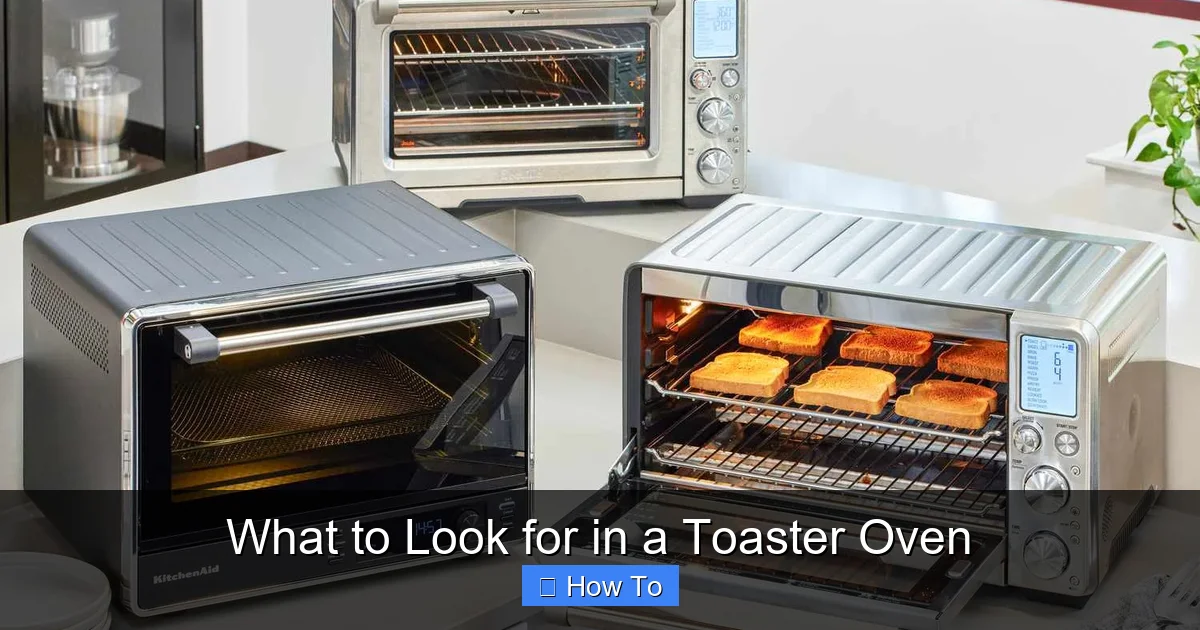
A toaster oven gets very hot. Choose a model with cool-touch outer walls. Check that the handle stays firm and does not heat up too much. The base should sit flat and feel stable.
Visual guide about What to Look for in a Toaster Oven
Image source: seriouseats.com
An automatic shutoff is a major safety feature. It turns the oven off when the set time ends. A clear timer is also helpful. Some models include a light that shows when the oven is running.
The door should open and close with ease. It must stay in place while you add or remove food. A secure latch helps prevent spills. Check that the door gives enough room for a hot baking tray.
A sturdy frame is also worth noting. Metal bodies often handle heat better than thin plastic. A glass door lets you watch food as it cooks. It may also show hot spots or uneven browning.
Place the oven where it can breathe
Do not place the oven against a wall or under a cabinet. The back and sides need space for heat to escape. Keep it away from curtains, paper bags, and other flammable items.
Read the maker’s safety guide before choosing a spot. You can also learn where to put a toaster oven in the kitchen for more placement ideas.
Use a proper wall outlet. Do not use an extension cord or power strip. The oven may draw more power than these items can safely handle. Keep the cord away from hot surfaces and the edge of the counter.
If children or pets are nearby, add a safety plan. Teach children that the oven and trays are hot. Do not leave food uncooked in an open door. Store small trays and racks where they cannot fall.
5. Cleanability and Long-Term Value Count
Choose an easy-to-clean design
Grease and crumbs build up fast in a toaster oven. A removable bottom crumb tray is one of the best features. It lets you clean the oven without tilting it. A tray that slides out from the front is even easier.
Check the interior coating. A smooth, nonstick surface wipes clean with less effort. Avoid rough surfaces that catch grease. The racks should lift out with ease as well.
If you choose an air-fryer model, check the basket. It should come apart without tools. Removable trays and pans should be safe for the dishwasher, if the maker allows it.
Learn how to clean an air-fryer toaster oven before buying. This helps you understand which parts need regular care. It also helps you avoid a model with hard-to-reach areas.
Compare price, warranty, and build quality
Toaster ovens come in many price ranges. A basic model may cost little and handle simple jobs. A larger model may include convection, air frying, and digital controls. A premium model may offer better build quality and more precise heat.
Do not pay extra for features you will not use. A large oven may cost more and take up more space. It may also use more energy. Choose the smallest model that fits your usual meals.
Check the warranty before buying. A longer warranty can show that the maker stands behind the product. Look for clear care instructions and available spare parts. These can help the oven last for years.
Read both positive and negative reviews. Look for comments about heating, durability, noise, and cleanup. A model with many complaints about uneven heat is not a good choice, even if it is cheap.
Also consider energy use. A toaster oven uses less energy than a full-size oven for many small meals. This can help when you cook during hot weather or make food for one or two people.
- Best value: The right size, steady heat, and useful controls.
- Best for small spaces: A compact model with strong toast and bake settings.
- Best for families: A larger model with two rack positions.
- Best for health-conscious cooking: A convection or air-fryer model with a removable basket.
- Best for daily use: A safe, simple model that cleans in minutes.
Conclusion: Make the Choice With Confidence
What to look for in a toaster oven comes down to fit, heat, safety, and ease. Measure your counter first. Then choose a size that can handle your usual meals without taking over your kitchen.
Next, focus on even heating and controls you can use with ease. Add only the features that match your cooking habits. A convection fan or air-fryer basket may be useful, but basic bake and broil settings may be enough.
A strong toaster oven should also be safe, stable, and simple to clean. Check the warranty and read real buyer reviews before paying. The best choice is not always the largest or most expensive one. It is the model that fits your space and makes your everyday cooking easier.
Frequently Asked Questions
How big should a toaster oven be?
Choose a size that fits your counter and your most common foods. A two-slice model works for bread, while a six-slice model can handle more meals and small dishes.
Is a convection toaster oven worth it?
Yes, if you cook often or want food to crisp more evenly. The fan moves hot air around the food and can cut cooking time, but it may cost more than a basic model.
What is the best heating type for a toaster oven?
Standard metal elements are reliable and common. Quartz elements can heat up quickly, while convection systems add moving air for more even cooking. The best choice depends on your cooking needs and budget.
Should I choose dial or digital controls?
Dial controls are simple and quick to use. Digital controls offer precise times and temperatures. Either type can work well if the oven heats evenly and is easy to clean.
Can a toaster oven replace a microwave?
Not fully. A toaster oven is better for crisping and browning, but a microwave is usually faster for thawing and reheating liquids. Many kitchens benefit from having both.
How much space is needed around a toaster oven?
Leave room at the back, sides, and top as stated in the user guide. Keep it away from cabinets, curtains, and other flammable items so heat can escape safely.