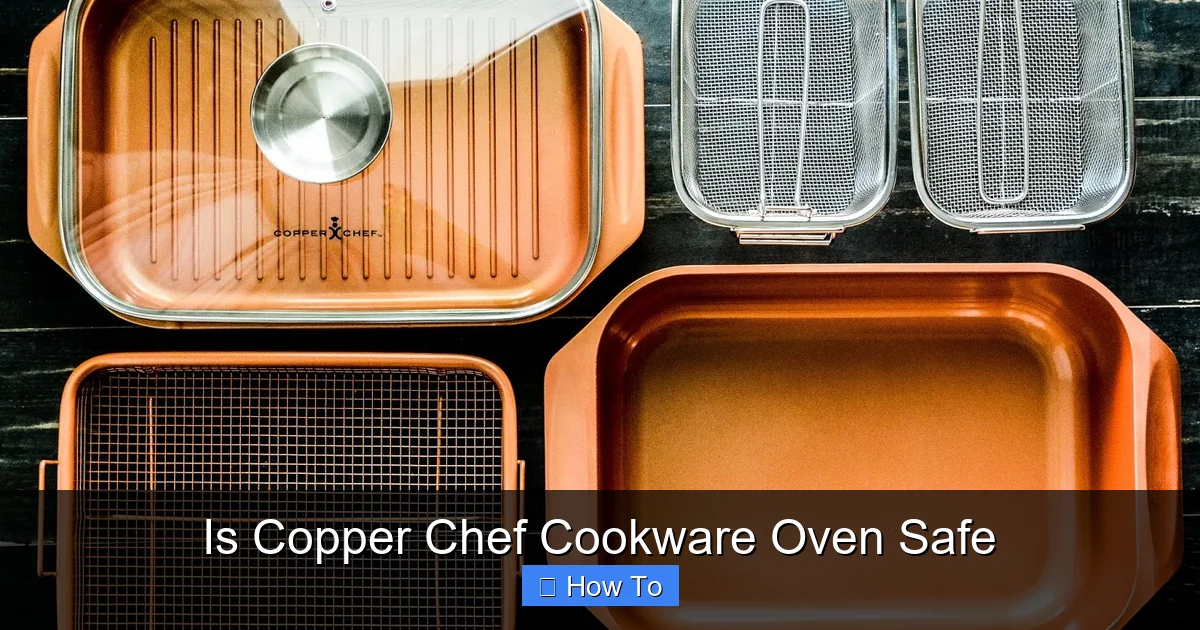
Is Copper Chef Cookware Oven Safe
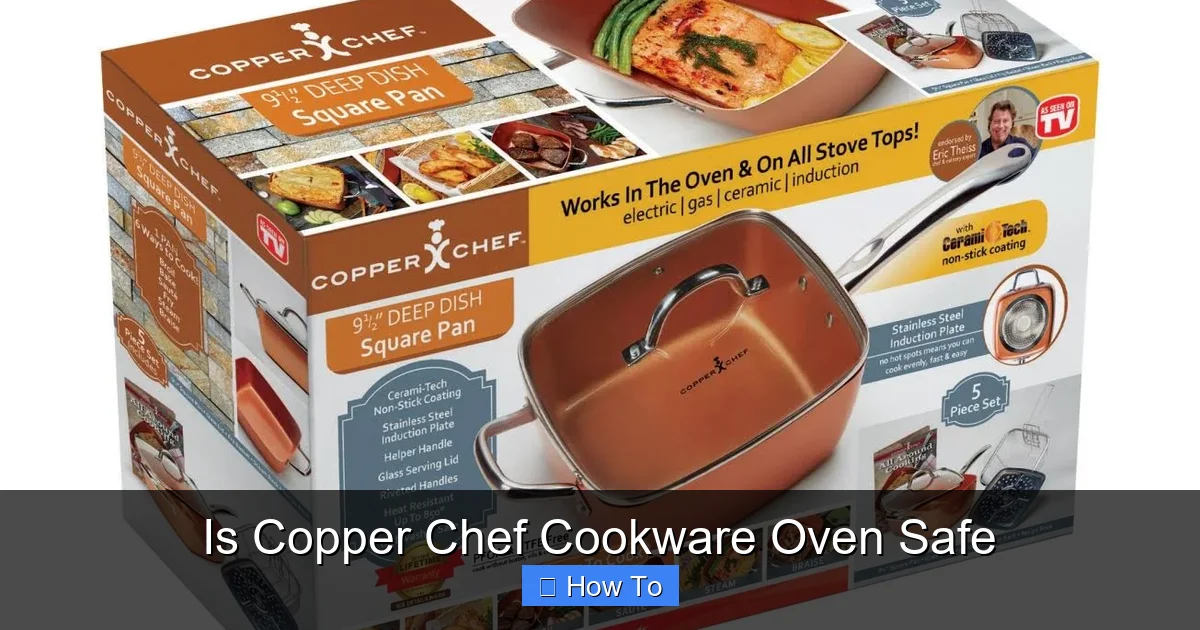
Copper Chef cookware is generally oven-safe up to 350-400°F, but it’s crucial to verify the specific model’s guidelines. Avoid overheating and never use metal utensils to maintain the nonstick coating. Always preheat the pan gradually and remove it carefully to prevent damage.
Key Takeaways
- Temperature Limits: Copper Chef cookware is typically safe up to 350-400°F, but check your specific set’s instructions for exact limits.
- Model-Specific Guidelines: Manufacturing variations mean you must always confirm oven safety for your particular Copper Chef model.
- Nonstick Coating Care: Never use metal utensils or abrasive tools to preserve the nonstick surface during oven use.
- Preheating Tips: Warm the pan gradually on low heat before increasing to avoid thermal shock or warping.
- Manual Consultation: Always refer to the product manual for precise oven-safe temperature ranges and care instructions.
- Alternative Materials: Consider upgrading to stainless steel or cast iron for higher-temperature baking or roasting needs.
- Cleaning Post-Use: Allow the pan to cool completely before washing to prevent damage from sudden temperature changes.
📑 Table of Contents
- Understanding Copper Chef Cookware Construction
- Oven Temperature Limits: What You Need to Know
- Checking Your Specific Copper Chef Model
- Best Practices for Oven Use
- Common Mistakes and How to Avoid Them
- Comparing Copper Chef to Other Oven-Safe Cookware
- Final Recommendations for Safe Oven Use
- Conclusion
Understanding Copper Chef Cookware Construction
Copper Chef cookware has gained popularity in recent years due to its unique blend of functionality and affordability. At first glance, these pans might look like traditional copper cookware, but they’re actually constructed differently. Rather than using pure copper, which is highly conductive but not oven-safe, Copper Chef pans feature a multi-layered design.
Layer Construction Explained
The typical Copper Chef pan consists of several layers of material:
- Outer layer: Usually aluminum or stainless steel for durability
- Middle layers: Often aluminum for heat distribution
- Inner layer: Nonstick coating for food release
This construction provides excellent heat conductivity while maintaining oven safety. The aluminum core ensures even heating, while the outer layers protect the nonstick surface from direct contact with heat sources.
Why This Design Matters for Oven Safety
The layered construction addresses two critical issues:
- Heat resistance: The outer layers can withstand typical oven temperatures
- Nonstick longevity: The coating is protected from extreme heat damage
However, not all Copper Chef sets are created equal. Some newer models may have different constructions, making it essential to check your specific product details.
Oven Temperature Limits: What You Need to Know
Visual guide about Is Copper Chef Cookware Oven Safe
Image source: m.media-amazon.com
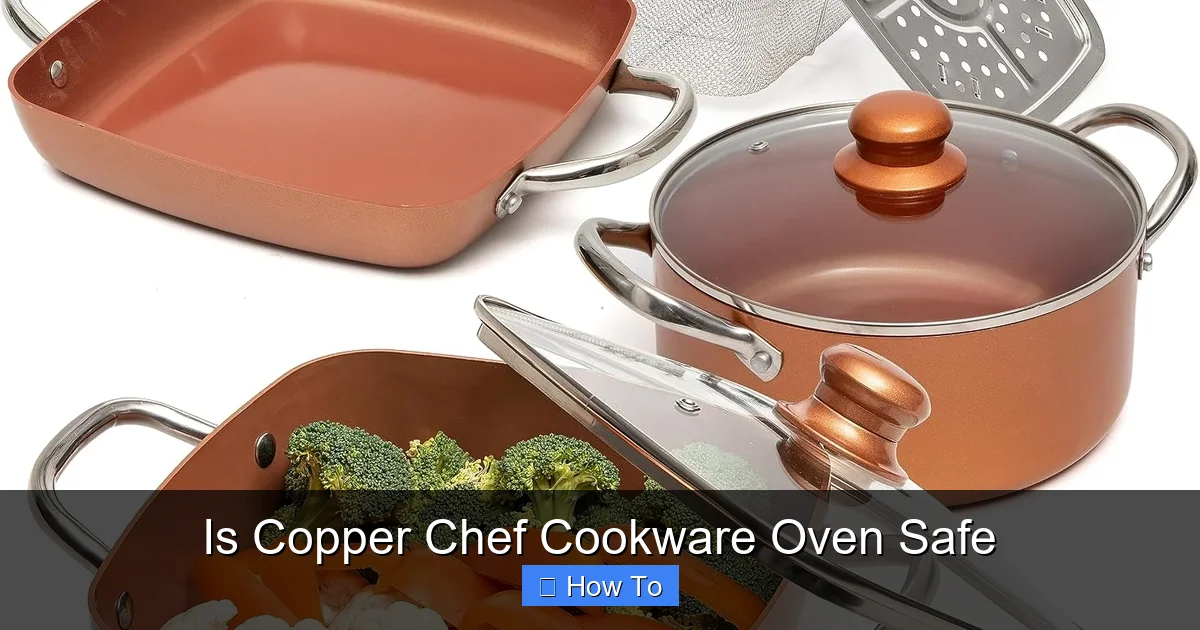
Understanding temperature limitations is crucial when using Copper Chef cookware in the oven. While many sources suggest these pans are oven-safe, the exact temperature range varies by model.
Typical Temperature Ranges
Most Copper Chef cookware is rated for oven use up to:
- Standard models: 350-400°F (175-200°C)
- Heavy-bottomed versions: Up to 450°F (230°C)
- Deluxe or premium lines: Some may reach 500°F (260°C)
These temperatures should be sufficient for most baking, roasting, and finishing dishes. However, for high-temperature searing or broiling, you might need more robust cookware.
Why Temperature Matters
Exceeding recommended temperatures can cause several problems:
- Coating degradation: The nonstick surface may break down
- Warping: The pan’s shape can become distorted
- Poor heat distribution: Hot spots may develop
It’s also worth noting that some Copper Chef pans have oven-safe lids, while others do not. Always check whether both the pan and lid are suitable for oven use.
Checking Your Specific Copper Chef Model
Visual guide about Is Copper Chef Cookware Oven Safe
Image source: m.media-amazon.com
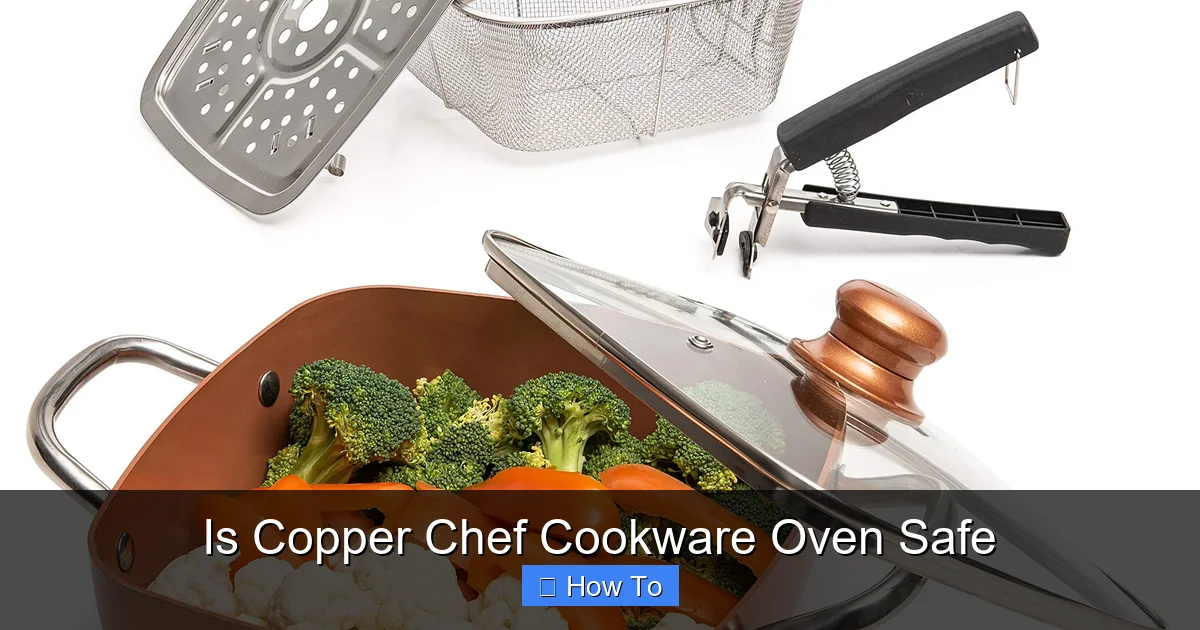
Since Copper Chef offers various product lines, the oven-safe status can differ between models. Here’s how to determine if your specific set is oven-safe:
Examine the Packaging and Documentation
When you first purchased your Copper Chef cookware, you likely received:
- User manual: Contains detailed oven-safe information
- Product packaging: Often displays oven-safe symbols
- Website specifications: Available on the Copper Chef website
Look for symbols like an oven icon or text stating “oven-safe up to [temperature].” These indicators provide clear guidance for your specific model.
Manufacturer Website Resources
Copper Chef’s official website typically provides detailed product specifications. You can:
- Search by model number
- Download product manuals
- Contact customer support for clarification
If you’ve misplaced your documentation, reaching out to Copper Chef directly is the most reliable way to confirm your pan’s oven safety.
Physical Inspection Tips
Some visual cues can help determine oven safety:
- Lid handles: Metal handles are often oven-safe; plastic or wooden ones are not
- Base material: Thicker, heavier bases typically indicate better oven suitability
- Coating quality: Premium nonstick coatings generally handle higher temperatures better
However, physical inspection alone isn’t always reliable. When in doubt, consult the manufacturer’s guidelines.
Best Practices for Oven Use
Visual guide about Is Copper Chef Cookware Oven Safe
Image source: kitchenprofy.com
Even if your Copper Chef cookware is oven-safe, following proper techniques will extend its lifespan and ensure safe use.
Preheating Guidelines
Proper preheating is crucial for oven-safe cookware:
- Gradual heating: Start at 200°F and gradually increase temperature
- Avoid sudden temperature changes: Don’t place a cold pan directly into a hot oven
- Preheat for 5-7 minutes: Allow the pan to reach equilibrium before adding food
Sudden temperature changes can cause thermal shock, potentially damaging the pan or causing it to warp.
Utensil Selection
When using Copper Chef cookware in the oven:
- Use silicone, wood, or plastic utensils: These won’t scratch the nonstick coating
- Never use metal tools: Forks, spoons, or metal spatulas can damage the surface
- Check utensil heat resistance: Ensure oven-safe handles on your tools
This is especially important when removing dishes from the oven, as metal tools can easily scratch the coating.
Temperature Monitoring
Even within safe temperature ranges, monitoring is key:
- Use an oven thermometer: Ovens can vary by 25°F or more from the set temperature
- Check periodically: Every 15-20 minutes for long cooking times
- Avoid broilers: These intense heat sources are typically too hot for Copper Chef pans
For precise baking or roasting, consider using a separate, more heat-resistant pan for high-temperature applications.
Common Mistakes and How to Avoid Them
Many users inadvertently damage their Copper Chef cookware through common mistakes. Understanding these pitfalls can help preserve your investment.
Overheating the Pan
One of the most frequent errors is using Copper Chef pans at temperatures exceeding their limits. Signs of overheating include:
- Sizzling sounds without food: Indicates the pan is too hot
- Smoke or burning smell: Immediate sign to reduce heat
- Discoloration: Brown or black spots on the coating
If you notice these signs, remove the pan from heat immediately and allow it to cool completely before use.
Improper Cleaning Techniques
Cleaning Copper Chef cookware incorrectly can lead to premature wear:
- Avoid abrasive cleaners: Steel wool or harsh scrubbers damage coatings
- Use warm, soapy water: Hand wash with mild detergent
- Don’t soak overnight: Prolonged water exposure can harm the nonstick surface
For stubborn residues, try soaking in warm, soapy water for 10-15 minutes rather than leaving pans to sit overnight.
Mixing with Other Cookware Types
Using Copper Chef pans alongside other materials requires caution:
- Don’t stack hot pans: Different materials expand at varying rates
- Use protective pads: Between pans when storing
- Separate from cast iron: Can scratch nonstick surfaces
This is particularly important when storing cookware, as different materials can react with each other when heated.
Comparing Copper Chef to Other Oven-Safe Cookware
To better understand Copper Chef’s position in the oven-safe market, let’s compare it with other popular options.
Traditional Copper vs. Copper Chef
Pure copper cookware has distinct advantages and disadvantages:
- Advantages: Excellent heat conductivity, attractive appearance
- Disadvantages: Not oven-safe, requires careful maintenance, expensive
Copper Chef offers similar benefits with improved safety and affordability, though it doesn’t match copper’s pure heat conductivity.
Stainless Steel Alternatives
For high-temperature cooking, stainless steel is often preferred:
- Advantages: Extremely heat-resistant, durable, oven-safe to high temperatures
- Disadvantages: Requires seasoning or specialized nonstick coatings for food release
If you frequently cook at high temperatures, investing in some stainless steel pieces might complement your Copper Chef collection.
Nonstick Cookware Comparison
Other nonstick brands offer varying levels of oven safety:
- Anolon: Generally oven-safe to 450°F
- All-Clad HA: Nonstick coating safe to 425°F
- T-fal: Varies by model, typically 350-400°F
Copper Chef falls within the standard range for nonstick cookware, making it competitive in terms of oven safety.
Final Recommendations for Safe Oven Use
After examining all aspects of Copper Chef cookware and oven safety, here are my final recommendations:
When to Use Copper Chef in the Oven
Copper Chef pans work well for:
- Baking delicate items: Muffins, cookies, and pastries
- Finishing dishes: Melting cheese or warming prepared foods
- Low to medium-temperature cooking: Casseroles and light roasting
These applications benefit from the pan’s even heating and nonstick properties without requiring extreme temperatures.
When to Choose Alternative Cookware
Consider other options for:
- High-temperature searing: Use cast iron or stainless steel
- Broiling: Choose broiler-safe pans specifically designed for this purpose
- Heavy roasting: Invest in Dutch ovens or roasting pans rated for higher temperatures
Having a variety of cookware types ensures you can handle any cooking task safely and effectively.
Maintenance Tips for Longevity
To maximize your Copper Chef cookware’s lifespan:
- Follow temperature guidelines: Never assume higher temperatures are safe
- Clean promptly: Address spills immediately to prevent burning
- Store properly: Keep lids and pans separate to avoid scratches
- Replace when needed: Watch for coating wear and replace before it becomes dangerous
Regular maintenance extends the life of your cookware and ensures safe performance in the kitchen.
Conclusion
In conclusion, Copper Chef cookware is generally oven-safe when used according to manufacturer guidelines. The multi-layered construction provides a good balance between heat resistance and nonstick protection. However, the exact temperature limits depend on your specific model, so always consult your documentation.
By following best practices—gradual preheating, using appropriate utensils, and avoiding overheating—you can safely use Copper Chef pans in the oven for a variety of cooking tasks. Remember that while these pans offer convenience and affordability, they may not be the best choice for very high-temperature cooking applications.
For those seeking maximum oven versatility, pairing Copper Chef pieces with specialized cookware for high-heat tasks ensures you can tackle any recipe with confidence and safety. The key is knowing your tools and using them appropriately for the best results in your kitchen.
Frequently Asked Questions
Can I use Copper Chef cookware in a toaster oven?
Yes, Copper Chef cookware is generally safe for toaster ovens, but you should verify your specific model’s temperature limits. Toaster ovens typically operate at lower temperatures than standard ovens, making Copper Chef pans suitable for most toaster oven tasks. Always check for oven-safe symbols on your cookware and monitor temperatures during use.
What’s the maximum temperature for Copper Chef cookware in the oven?
Most Copper Chef cookware is rated safe up to 350-400°F (175-200°C), though some premium models may handle up to 450°F (230°C). Exceeding these temperatures can damage the nonstick coating and potentially warp the pan. Always consult your product manual for exact specifications, as different models may have varying temperature tolerances.
Is Copper Chef cookware safe for baking and roasting?
Yes, Copper Chef cookware is suitable for baking and roasting within the recommended temperature range. The even heat distribution makes it excellent for cookies, pastries, and light roasting. However, avoid high-heat roasting tasks that require temperatures above 400°F, as this may compromise the nonstick coating’s integrity over time.
Can I use metal utensils with Copper Chef pans in the oven?
No, you should never use metal utensils with Copper Chef cookware, whether in the oven or on the stovetop. Metal tools can scratch and damage the nonstick coating, creating sharp edges that pose safety risks. Always use silicone, wood, or heat-resistant plastic utensils when cooking with Copper Chef pans.
Is Copper Chef cookware safe for convection ovens?
Copper Chef cookware can generally be used in convection ovens, but you should verify your specific model’s temperature limits. Convection ovens typically run at similar temperatures to standard ovens but with enhanced air circulation. The key is to follow manufacturer guidelines and avoid temperatures that exceed the recommended range for your particular Copper Chef pieces.
Should I avoid using Copper Chef pans for acidic foods in the oven?
While Copper Chef’s nonstick coating is designed to resist acidic foods, it’s best to avoid extended oven cooking with highly acidic ingredients. Tomatoes, citrus, and vinegar-based dishes can potentially degrade the nonstick surface over time, especially at higher temperatures. For acidic recipes, consider using stainless steel or enameled cast iron instead.