Are Air Fryer and Oven the Same
Air fryers and ovens are not the same appliances at all. While air fryers use rapid convection heating to crisp food fast, traditional ovens bake at lower temperatures over longer periods. This article breaks down how they differ, their strengths, and helps you decide which one to buy for your kitchen.
Ever wondered if your air fryer and regular oven are actually the same machine? The short answer is no — despite some similarities on paper, these two kitchen heroes work quite differently. If you’ve been shopping for a new appliance and feel overwhelmed by the options, this article will clear things up. We’ll dive deep into how each device works, compare their performance, and show you exactly when to reach for one instead of the other. Whether you’re looking to save time in the kitchen or want healthier meals without sacrificing flavor, understanding the real differences will help you make the best choice for your household.
Think of it this way: an oven is like going to a restaurant where chefs have done the hard work for you. They follow precise recipes, use professional-grade temperature control, and spend hours perfecting every dish. An air fryer, on the other hand, is more like taking that restaurant experience home with you. It mimics some of the crispy results using clever engineering, but you still do most of the cooking. So while there might be overlap in what we call them “the same,” functionally and philosophically, they belong to different worlds. Let’s break it down together.
Key Takeaways
-
-li Different heating methods: Air fryers rely on rapid convection while ovens use radiant and convective heat.
-li Speed matters: Air fryers cook much faster than conventional ovens.
-li Temperature control: Ovens offer precise temperature ranges, whereas air fryers operate closer to oven settings.
-li Space efficiency: Air fryers are compact and can share counter space with other appliances.
-li Versatility: Modern hybrid models combine both functions for maximum flexibility.
-li Health benefits: Air fryers reduce oil usage compared to traditional frying.
-li Cost considerations: Basic air fryers are cheaper upfront; premium dual-function units cost more.
📑 Table of Contents
Understanding Air Fryers
An air fryer is essentially a miniature convection oven designed specifically for quick, high-speed cooking. Unlike a traditional oven that relies on hot air circulating slowly throughout a large chamber, air fryers blast food with extremely hot air at speeds up to 400°F. This creates a microwave-like effect called the Maillard reaction, giving foods that signature golden-brown crust without needing a pool of oil.
How Air Fryers Actually Work
The secret ingredient in air fryers is forced circulation technology. At the bottom sits a powerful fan that pushes hot air upward at incredible velocity. This continuous blast replaces the slow, gentle heating of a standard oven. Think of it like standing next to a campfire versus sitting near a warm hearth — the first provides intense, immediate warmth. The air circulates rapidly, bouncing off cold surfaces and heating everything evenly around the food.
For example, when you air fry chicken wings, the hot air surrounds each wing simultaneously, creating a crunchier exterior in minutes. Compare this to baking wings in an oven at 300°F for an hour — much longer, less crispy result. The rapid heat transfer is why air fryers excel at achieving restaurant-style results in home kitchens.
Benefits of Choosing an Air Fryer Over a Traditional Oven
If you’re juggling busy weeknights or trying to cut back on calories, an air fryer offers compelling advantages. First, cooking time is dramatically shorter. A steak that might sit in an oven for 45 minutes could be perfectly cooked in an air fryer in 20-25 minutes. Second, energy efficiency comes into play since you don’t need to preheat a massive chamber for extended periods. Third, versatility has never been greater — many modern models can roast, bake, fry, reheat, and even grill all in one appliance.
A practical tip: if you love crispy roasted vegetables, garlic bread, or frozen fries, an air fryer might be worth the investment. But remember, for things requiring precise low-heat baking like cakes or breads, stick with a dedicated oven until you find a model with great convection capabilities.
Traditional Ovens Explained
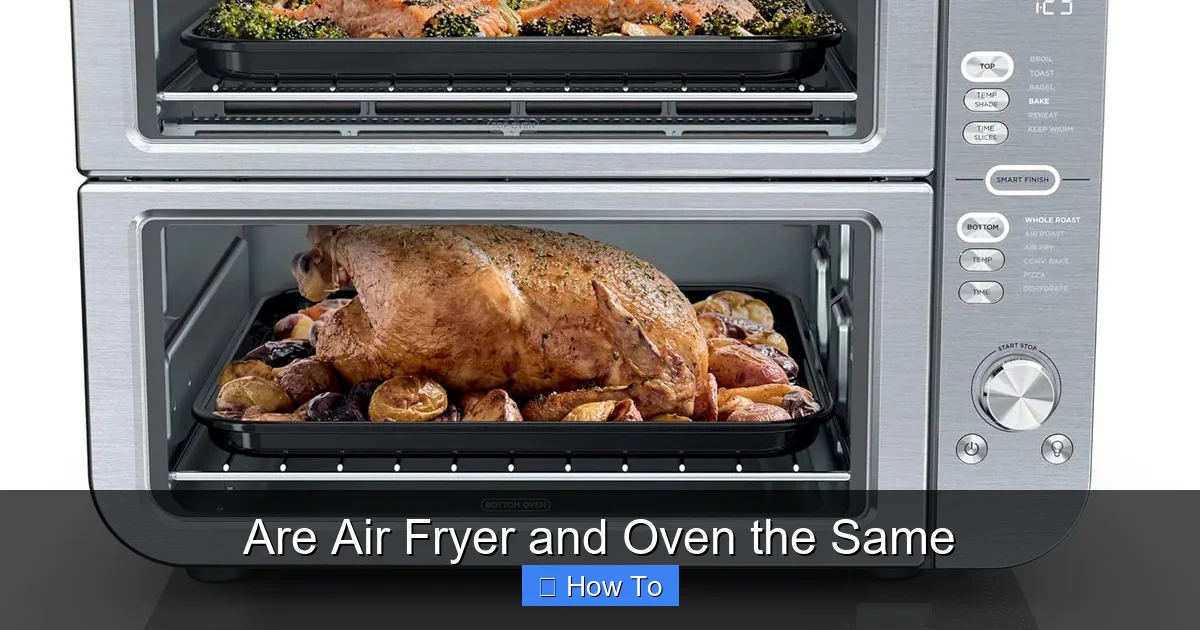
Conventional ovens have been the backbone of home cooking for generations. They work by heating the air inside a sealed chamber to a set temperature, then circulating that heated air around your food through radiant and convective heat. Most ovens can operate anywhere from 170°F to 450°F depending on the model and settings.
Visual guide about Are Air Fryer and Oven the Same
Image source: m.media-amazon.com
What makes ovens superior for certain tasks? Their ability to handle prolonged low-temperature baking. Think of making artisan bread, pastries, or dessert cakes — these often require gentle, steady heat over extended periods. An air fryer simply cannot replicate those delicate chemical reactions because it lacks sustained, low-heat capability. The Maillard reaction still happens in an air fryer, but usually only in brief bursts, resulting in milder browning.
When to Choose a Traditional Oven
The classic oven shines in scenarios where patience and precision matter. If you’re baking a complex family recipe that demands consistent heat for hours, a well-maintained oven will deliver better results than any air fryer. Similarly, large-scale baking for dinner parties or commercial-style batch cooking benefits from the scale and reliability of traditional ovens.
Another case for sticking with an oven: when you need to customize multiple dishes side-by-side. You can easily load a sheet pan of cookies alongside a tray of muffins in the same oven, adjusting racks and timing as needed. Air fryers typically have limited interior space, with small baskets and narrow trays that make simultaneous cooking challenging.
Moreover, ovens are more forgiving for beginners. The learning curve is gentler — you set a temperature, load your ingredients, and walk away. Air fryers introduce variables like basket arrangement, rotation, and time management that can sometimes lead to overcooking or uneven results if you’re not experienced with the technique.
Key Differences Between Air Fryers and Ovens
While both appliances heat food, their approaches and outcomes are fundamentally distinct. The core difference boils down to speed and method. An oven is built for endurance — lingering heat that transforms ingredients over time. An air fryer is built for intensity — rapid heat delivery that mimics some fried food qualities.
Heating Technology Comparison
This is where the battle gets interesting. Traditional ovens heat primarily through radiant hot air that warms surfaces gradually. Convection ovens improve this slightly by moving air around, but they still operate within a moderate temperature range. Air fryers push the envelope by generating extreme internal temperatures exceeding 400°F. That’s nearly double the heat of a typical oven setting, enabling the explosive browning you see on crispy french fries or perfectly browned eggs.
To visualize the contrast: imagine baking a loaf of sourdough in a 375°F oven versus using an air fryer at 425°F. The oven gives you a slower, more gradual rise and crumb development. The air fryer delivers a quicker crust formation followed by a lighter interior texture. Neither approach is inherently “better” — it depends on what you’re cooking and how long you want the process to take.
Cooking Speed and Efficiency
Here’s a practical demonstration: try searing a piece of fish fillet. In an oven at 350°F, it takes about 15-18 minutes before it reaches the desired doneness. In a properly calibrated air fryer at 400°F for the same amount of time, you might achieve similar or superior results in half the time. This speed advantage extends beyond individual pieces to entire meal components. Roasted vegetables, grilled corn, and even simple burgers transform from raw to finished almost instantly.
Efficiency also factors into electricity costs. Because air fryers run hotter and faster, they consume more power per unit of output. However, their smaller footprint means less standby power draw during idle periods. For frequent users who consider daily cooking expenses, this nuance matters. Many home cooks find that despite higher wattage, the overall energy use remains comparable due to reduced cooking time.
Can You Combine Both Functions?
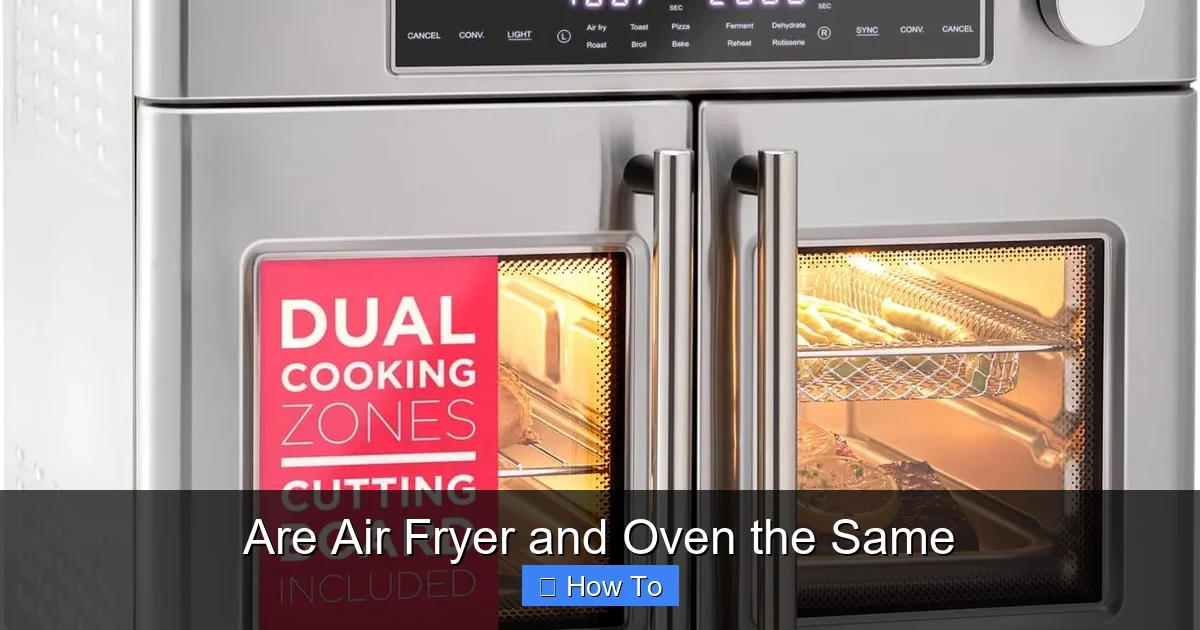
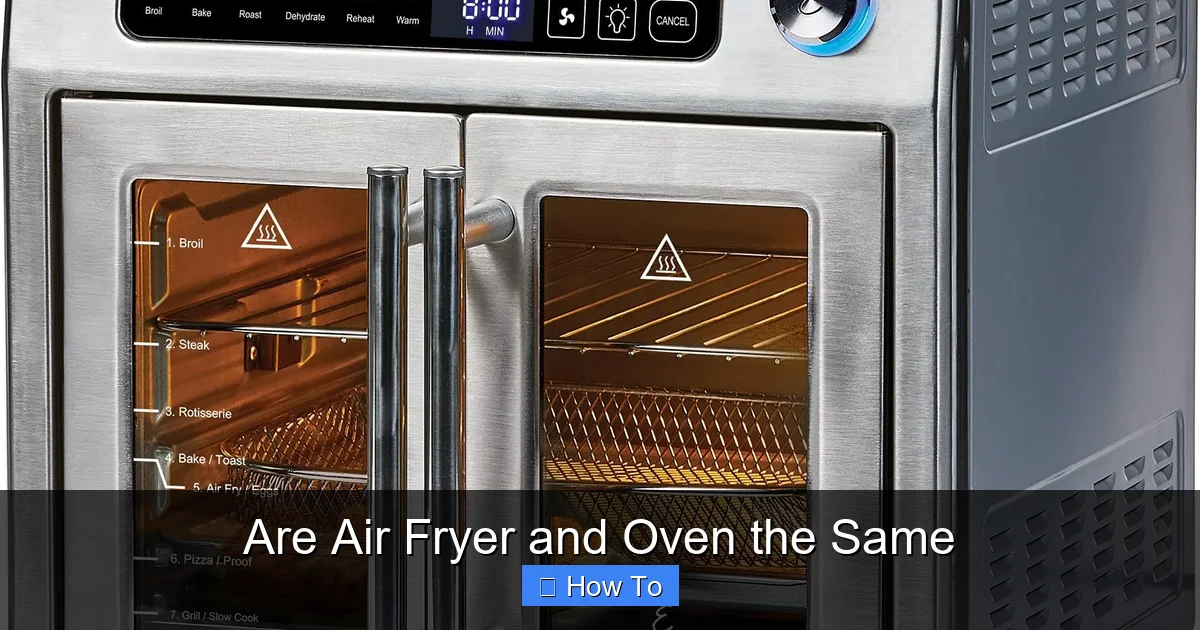
Yes! The market has evolved to meet demand for versatile cooking solutions. Dual-function appliances, often called “air french ovens” or “hybrid ovens,” merge the best features of both worlds. These machines feature separate heating zones — one optimized for convection/crisping and another for traditional baking. Some models even let you switch between modes with a single button press.
Visual guide about Are Air Fryer and Oven the Same
Image source: m.media-amazon.com
Consider the popular Instant Pot Duo or the Nespresso PowerZone oven — both blur the line between traditional and modern convenience. These hybrids typically include a dedicated air fry basket alongside a conventional oven cavity. They’re particularly attractive for families who enjoy both healthy crispy snacks and comforting baked goods regularly.
However, there’s a trade-off to consider. Every additional feature adds weight, complexity, and price. Premium hybrid models can cost significantly more than entry-level air fryers or basic ovens. Also, maintenance becomes trickier — you need to clean both the convection element and the traditional baking surface separately. For casual cooks, a specialized air fryer might be simpler to own and maintain.
Which Should You Buy?
Choosing between an air fryer and a traditional oven requires honest self-assessment. Ask yourself three questions: What types of food do you cook most frequently? Do you prioritize speed or detailed baking precision? Are budget constraints a major factor? Answering these honestly will guide you toward the right purchase.
Decision Factors Based on Your Needs
If you gravitate toward quick meals, meal-prepping, or health-conscious cooking, an air fryer is likely your best companion. Its rapid heating and minimal oil requirement appeal to anyone wanting better-for-you eating habits. Look for models with adjustable temperature controls, multiple cooking presets, and smart connectivity features for easy remote monitoring.
On the other hand, if your culinary repertoire leans heavily toward artisanal breads, cakes, pies, or slow-roasted meats, invest in a quality conventional oven. Brands like Ooni, Calway, and popular countertop models from Samsung or Panasonic deliver reliable, professional-grade baking performance. Pair it with a second air fryer if you crave occasional crispy treats — having both ensures you never compromise on either style.
Budget-wise, entry-level air fryers typically start around $80-$120, while mid-range models climb to $250+. Full-featured hybrid ovens sit at the premium end of the spectrum, often $500 and above. Remember that appliance longevity matters too. Spend extra on warranties and accessories that enhance usability — durable baskets, non-stick liners, and easy-clean interiors extend your investment.
Final thought: don’t view this as an either-or decision. Many households keep both appliances because they serve different purposes beautifully. The key is knowing which tool to reach for when you’re ready to cook.
Conclusion
In summary, air fryers and ovens are not interchangeable substitutes. Each excels at different tasks, with air fryers winning on speed and health, while traditional ovens dominate in precision baking and batch cooking. By understanding their distinct mechanisms, strengths, and limitations, you can confidently select the appliance that matches your lifestyle and cooking ambitions. Whether you choose the efficient crispiness of an air fryer or the timeless reliability of a classic oven, both can elevate your home cooking experience. Happy cooking!
Frequently Asked Questions
Question?
Are air fryers and ovens really that different?
Yes. While both heat food, air fryers use rapid convection at high temperatures to mimic fried cooking results quickly, whereas traditional ovens provide lower, more sustained heat ideal for baking and roasting. The main differences lie in speed, heat intensity, and typical use cases.
Question?
Which appliance is healthier?
Air fryers generally produce healthier meals because they require little to no added oil and cook food faster, meaning fewer calories are absorbed. However, both methods can be nutritious if used correctly. The key is choosing cooking techniques wisely rather than relying solely on the appliance type.
Question?
Can I use my air fryer for baking bread or cakes?
It’s possible but not optimal. Air fryers lack the sustained low-temperature environment needed for proper cake or bread rising. You may get a decent crust but the interior won’t develop the same texture as a true oven. For baking, reserve your oven for these tasks.
Question?
Do air fryers work just as well as ovens?
They perform exceptionally well for items that benefit from browning and crisping — fries, veggies, poultry, and frozen foods. However, they struggle with delicate, moist baked goods that need careful moisture retention. An oven’s ability to maintain humidity during baking gives it an edge for these recipes.
Question?
Is a dual-function oven worth the extra cost?
For heavy, frequent use of both crispy and baked items, yes. Hybrid models save time and eliminate the need to switch appliances. But for casual users who mostly prefer one cooking style, a dedicated air fryer or oven might be more economical and straightforward.
Question?
What should I look for when buying an air fryer?
Prioritize adjustable temperature settings, multiple preset programs, and a generous basket size. Check for consistent heating elements and a built-in timer. Read reviews focusing on durability and ease of cleaning the filter or basket.
[FEATURED_IMAGE_PLACEHOLDER]