How Long Should I Put Steak in the Oven
Master oven steak timing with our step‑by‑step guide. From ribeye to filet mignon, find the exact minutes and temperatures to achieve your ideal doneness. Save time, avoid over‑cooking, and impress every dinner guest.
Key Takeaways
- Cooking Time: Roughly 10–12 minutes per inch of thickness for medium‑rare.
- Temperature: 400 °F (205 °C) is the sweet spot for most steaks.
- Resting Matters: Let steak rest 5–10 minutes to lock in juices.
- Thickness Counts: Thicker cuts need longer time; thinner cuts cook faster.
- Use a Thermometer: The most accurate way to hit your desired doneness.
- Finish with Sear: A quick pan sear after the oven gives a perfect crust.
- Season Early: Salt and pepper at least 30 min before cooking for flavor.
📑 Table of Contents
- Introduction
- Why Oven Cooking? The Benefits of Baking Steak
- Understanding Doneness: What Do the Numbers Actually Mean?
- Rule of Thumb: Oven Time Per Inch of Thickness
- Step‑by‑Step: How to Cook a Perfect Oven Steak
- Common Mistakes and How to Avoid Them
- Oven Time for Popular Steak Cuts
- How to Adjust for Different Doneness Levels
- Using a Thermometer: The Ultimate Tool
- Pairing Tips: Side Dishes and Sauces
- When Time Is Tight: Quick Oven-Steak Hacks
- Frequently Asked Questions About Oven-Steak Timing
- Conclusion
Introduction
When it comes to cooking steak in the oven, timing is everything. You want that gorgeous sear on the outside while the inside stays juicy and tender. Too little time and you end up with a raw center; too much and you’re left with a dry, over‑cooked slab. This guide will walk you through the science behind oven steak timing, give you clear cut‑specific rules, and share pro tips that will have you cooking like a chef in no time.
We’ll cover everything from the best temperatures, how thickness affects cooking time, to the importance of resting. And because we’re all about practical help, you’ll find easy-to‑remember formulas and real‑world examples you can try tonight.
Why Oven Cooking? The Benefits of Baking Steak
Even Heat Distribution
Ovens provide consistent, even heat, which means your steak cooks uniformly from edge to edge. This eliminates the risk of hot spots that can happen on a grill or skillet.
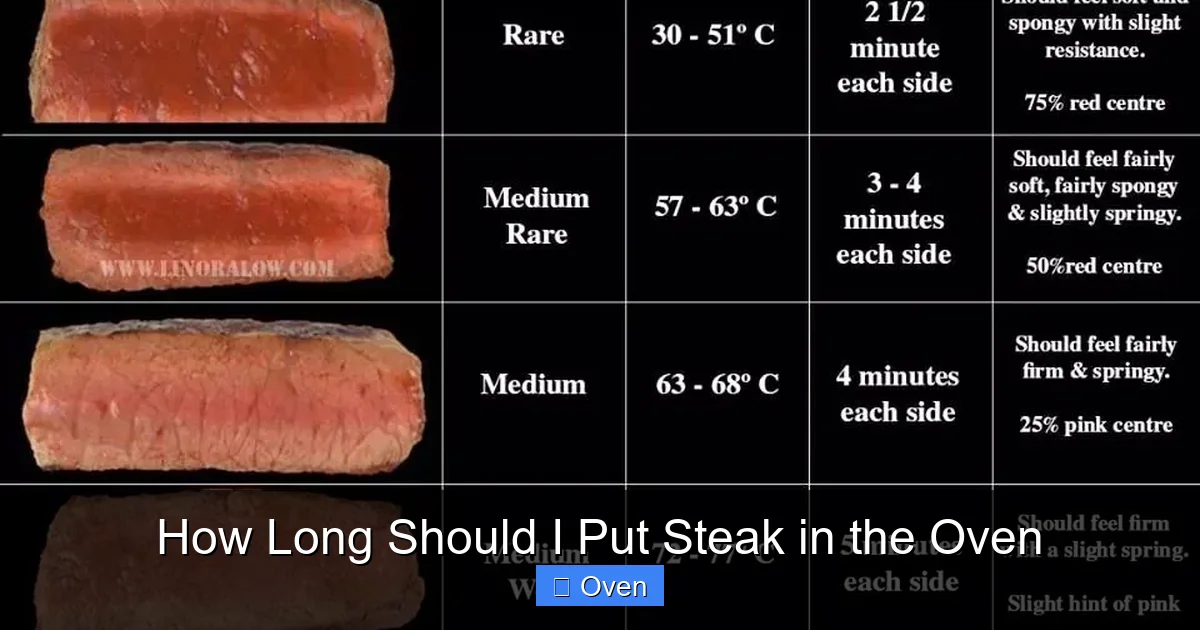
Visual guide about How Long Should I Put Steak in the Oven
Image source: i.pinimg.com
Hands‑Free Cooking
Once you set the timer, you can focus on side dishes or a glass of wine. No constant flipping or monitoring needed.
Great for Larger Cuts
Steaks like a ribeye or porterhouse, which are thick and tender, benefit from the gentle heat of the oven before a quick sear.
Minimal Clean‑Up
With a sheet pan or baking rack, you’ll save time on scrubbing later.
Understanding Doneness: What Do the Numbers Actually Mean?
Internal Temperature Guide
- Rare: 120–125 °F (49–52 °C)
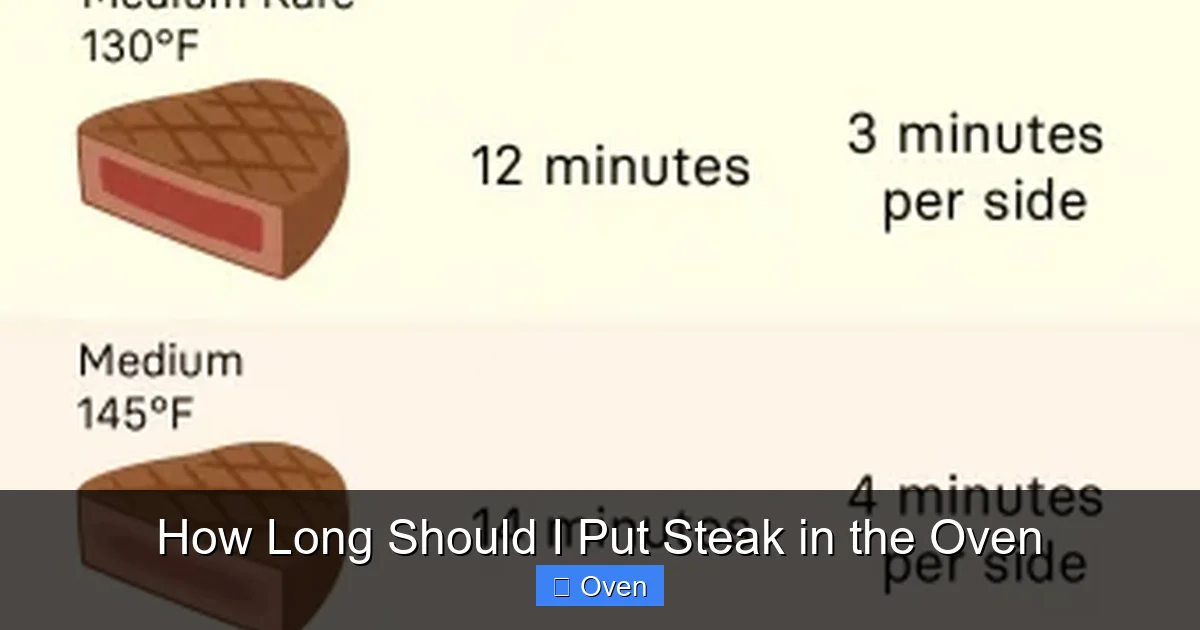
- Medium‑Rare: 130–135 °F (54–57 °C)
- Medium: 140–145 °F (60–63 °C)
- Medium‑Well: 150–155 °F (66–68 °C)
- Well‑Done: 160 °F+ (71 °C+)
These temperatures are the gold standard for determining doneness. Use a instant-read thermometer for accuracy.
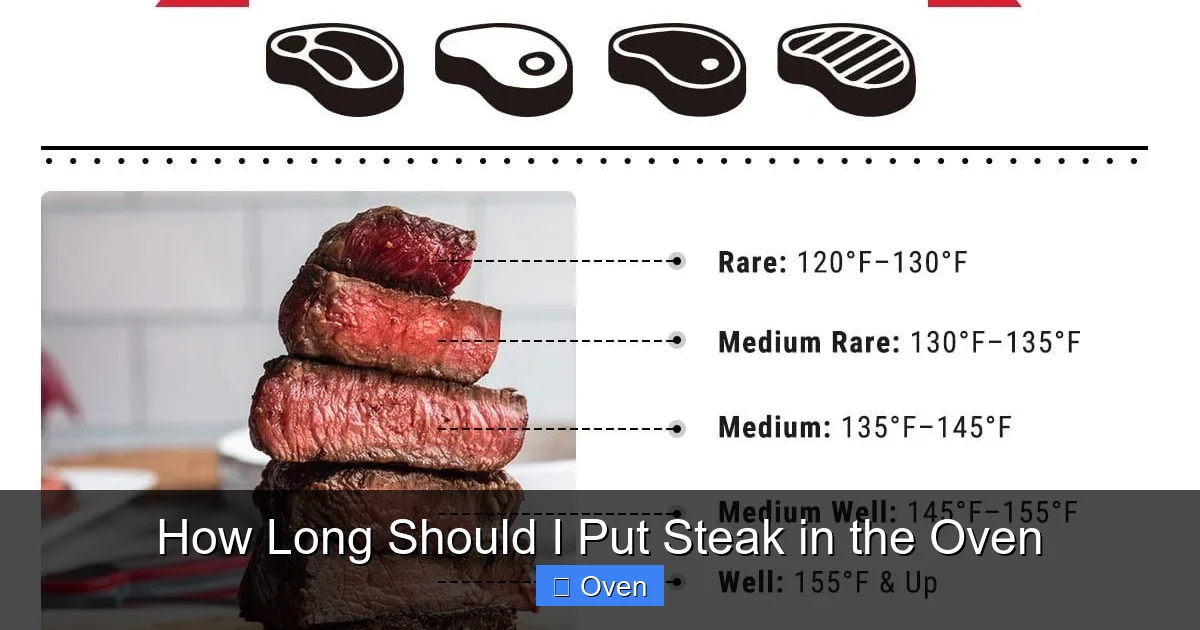
Visual guide about How Long Should I Put Steak in the Oven
Image source: i.pinimg.com
Rule of Thumb: Oven Time Per Inch of Thickness
Basic Formula
For most cuts, cook 10–12 minutes per inch of thickness at 400 °F (205 °C). This works well for medium‑rare. Adjust slightly for other doneness levels.
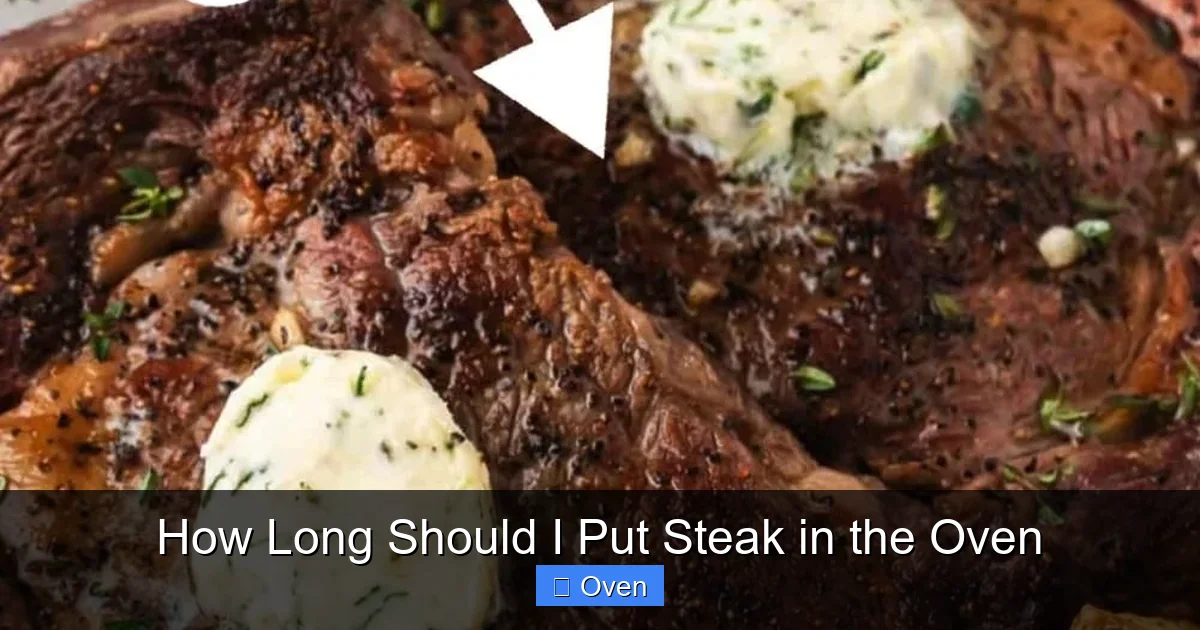
Visual guide about How Long Should I Put Steak in the Oven
Image source: i.pinimg.com
Examples
- 1‑inch ribeye: 10–12 min (medium‑rare)
- 1.5‑inch T‑bone: 15–18 min (medium‑rare)
- 0.75‑inch sirloin: 7–9 min (medium‑rare)
Remember, this is a starting point. Use a thermometer to verify.
Step‑by‑Step: How to Cook a Perfect Oven Steak
1. Prep the Steak
- Pat dry with paper towels.
- Season generously with salt, pepper, and any herbs you like.
- Let it sit at room temperature for 30 min; this promotes even cooking.
2. Preheat Your Oven
Set to 400 °F (205 °C). A preheated oven ensures the steak starts cooking immediately.
3. Bake
Place the steak on a wire rack over a sheet pan to allow air circulation. Bake until the internal temperature is about 5–10 °F below your target (this compensates for carry‑over heat).
4. Sear for the Finish
Heat a cast‑iron skillet over high heat. Add a tablespoon of oil or butter and sear each side for 30–60 seconds. This gives a caramelized crust.
5. Rest
Let the steak rest on a cutting board, loosely tented with foil, for 5–10 minutes. Juices redistribute, making the steak juicy.
6. Slice and Serve
Cut against the grain to keep the meat tender and enjoy!
Common Mistakes and How to Avoid Them
Under‑Seasoning
Salt is the backbone of flavor. Don’t skip it—season early and let the steak breathe.
Skipping the Rest
Resting is crucial. A steak that rests will be more flavorful and less likely to dry out.
Over‑Searing
A pan that’s too hot can burn the exterior before the interior is ready. Keep the skillet hot but controlled.
Relying Solely on Time
Time varies with thickness and oven differences. A thermometer is your best friend.
Oven Time for Popular Steak Cuts
Ribeye
Thickness 1 inch: 10–12 min. Aim for 130–135 °F for medium‑rare.
Filet Mignon
Thickness 1.5 inches: 15–18 min. Target 125–130 °F.
New York Strip
Thickness 1 inch: 10–12 min. Target 135–140 °F.
Porterhouse
Thickness 1.5 inches: 18–20 min. Target 135–140 °F.
Flank Steak
Since it’s thin, cook 6–8 min per side in the oven, then sear.
How to Adjust for Different Doneness Levels
- Rare: Reduce oven time by 20–30 seconds per inch.
- Medium: Increase oven time by 10–15 seconds per inch.
- Well‑Done: Add 20–25 seconds per inch.
Always check with a thermometer, especially when aiming for rare or well‑done.
Using a Thermometer: The Ultimate Tool
Invest in a reliable instant‑read thermometer. Insert it into the thickest part of the steak. Remove from the oven when it’s 5–10 °F below your target to account for carry‑over heat.
Pairing Tips: Side Dishes and Sauces
Complement your steak with classic sides like roasted potatoes, garlic green beans, or a fresh salad. For sauces, try a classic béarnaise, chimichurri, or a simple herb butter.
When Time Is Tight: Quick Oven-Steak Hacks
- Preheat the oven and skillet simultaneously.
- Use a thinner cut like skirt or flank for a quick 5‑minute oven bake.
- Finish with a high‑heat sear for instant crust.
Frequently Asked Questions About Oven-Steak Timing
What is the best oven temperature for steak?
400 °F (205 °C) is the most common and reliable temperature for most steak cuts, offering a good balance between a crisp exterior and a juicy interior.
Can I cook steak in a low‑temperature oven and still get a good crust?
Yes, but you’ll need to finish it with a high‑heat sear in a skillet or broiler to achieve that signature crust.
How do I know if my steak is done without a thermometer?
Use the finger test: press the center of the steak—soft means rare, slightly firmer means medium‑rare, and firm means medium.
Is it okay to leave steak in the oven longer than the recommended time?
It’s safer to stop at the recommended time and use a thermometer. Overcooking can cause dryness and tough texture.
Can I use the same timing for bone‑in steaks?
Bone‑in steaks often need a slightly longer time. Add 1–2 minutes per inch and check the internal temperature carefully.
What is the best way to finish a steak after baking?
A quick sear in a hot skillet or a blast of the broiler for 1–2 minutes per side gives the best crust without overcooking the interior.
Conclusion
Cooking steak in the oven is a foolproof way to achieve restaurant‑level results at home. By following the time‑per‑inch rule, using a thermometer, and finishing with a sear, you’ll consistently hit your desired doneness. Remember to season early, let the steak rest, and pair it with your favorite sides for a complete meal. Now, grab your steak, preheat that oven, and enjoy the process—your taste buds will thank you.
Frequently Asked Questions
What is the best oven temperature for steak?
400 °F (205 °C) is the most common and reliable temperature for most steak cuts, offering a good balance between a crisp exterior and a juicy interior.
Can I cook steak in a low‑temperature oven and still get a good crust?
Yes, but you’ll need to finish it with a high‑heat sear in a skillet or broiler to achieve that signature crust.
How do I know if my steak is done without a thermometer?
Use the finger test: press the center of the steak—soft means rare, slightly firmer means medium‑rare, and firm means medium.
Is it okay to leave steak in the oven longer than the recommended time?
It’s safer to stop at the recommended time and use a thermometer. Overcooking can cause dryness and tough texture.
Can I use the same timing for bone‑in steaks?
Bone‑in steaks often need a slightly longer time. Add 1–2 minutes per inch and check the internal temperature carefully.
What is the best way to finish a steak after baking?
A quick sear in a hot skillet or a blast of the broiler for 1–2 minutes per side gives the best crust without overcooking the interior.