Is Air Fryer Quicker Than Oven

Is an air fryer quicker than an oven? In most cases, yes—air fryers typically cook food 20‑30% faster than a conventional oven, especially for small batches and crispy textures.
When you’re deciding on kitchen gadgets, the first question most people ask is: Is Air Fryer Quicker Than Oven? The short answer is usually yes, but the details matter. In this guide we’ll break down the science, the numbers, and the practical side of using an air fryer versus a traditional oven.
Key Takeaways
- Point 1: Air fryers use rapid air circulation to cook food faster than a standard oven.
- Point 2: Typical time savings range from 20% to 40% depending on the food.
- Point 3: Energy consumption is usually lower because the appliance heats up quickly.
- Point 4: Preheating, proper spacing, and temperature control maximize speed.
- Point 5: Large roasts or multiple trays still work better in a full oven.
- Point 6: Capacity limits can affect how often you choose an air fryer.
- Point 7: For most everyday meals, the answer to “Is Air Fryer Quicker Than Oven” is a clear yes.
📑 Table of Contents
How Air Fryers Cook Food
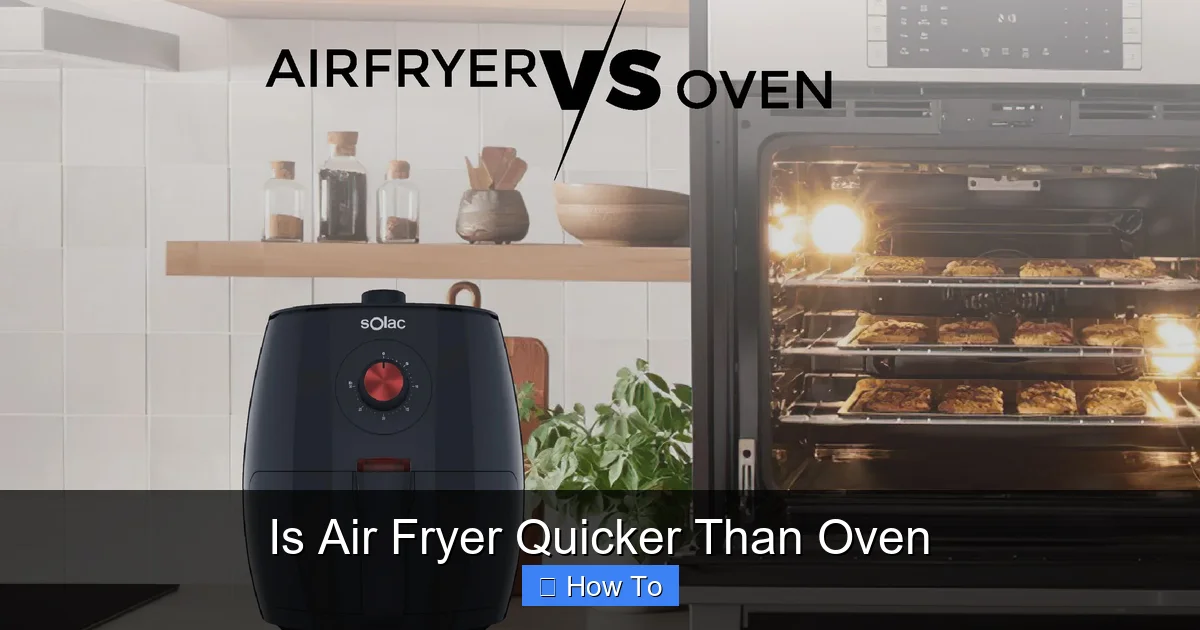
Air fryers use a small fan and a powerful heating element to circulate hot air around the food. This creates a crispy exterior while keeping the interior moist. Because the device is compact, the heat reaches the food faster than the larger, slower‑heating space of a conventional oven.
Rapid Air Circulation
The fan in an air fryer moves air at speeds that mimic a convection oven but on a much smaller scale. This means the food is exposed to hot air from all sides almost instantly. The result is a quick browning effect that you would normally need a longer preheat for in an oven.
If you want to dive deeper into the mechanics, check out our article Why Is Air Fryer Faster Than Oven 2.
Time Comparison: Air Fryer vs. Oven
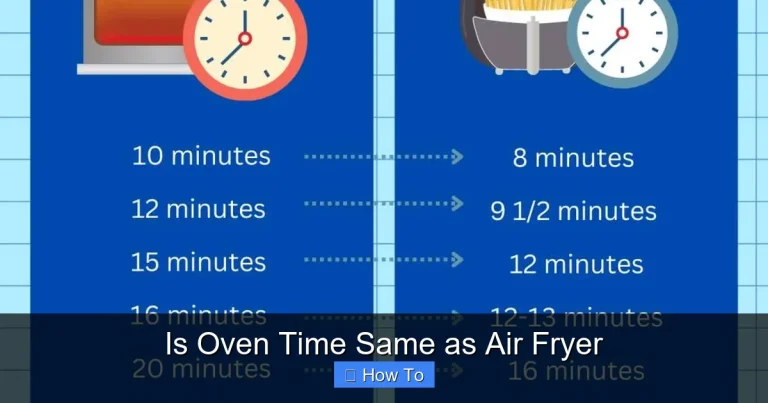
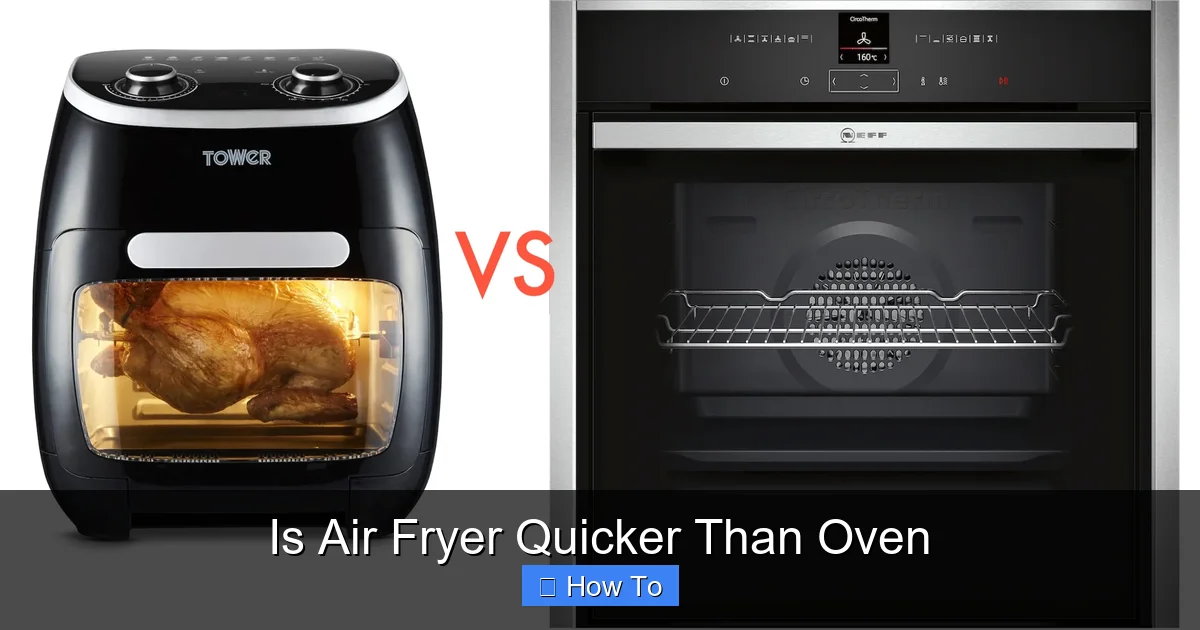
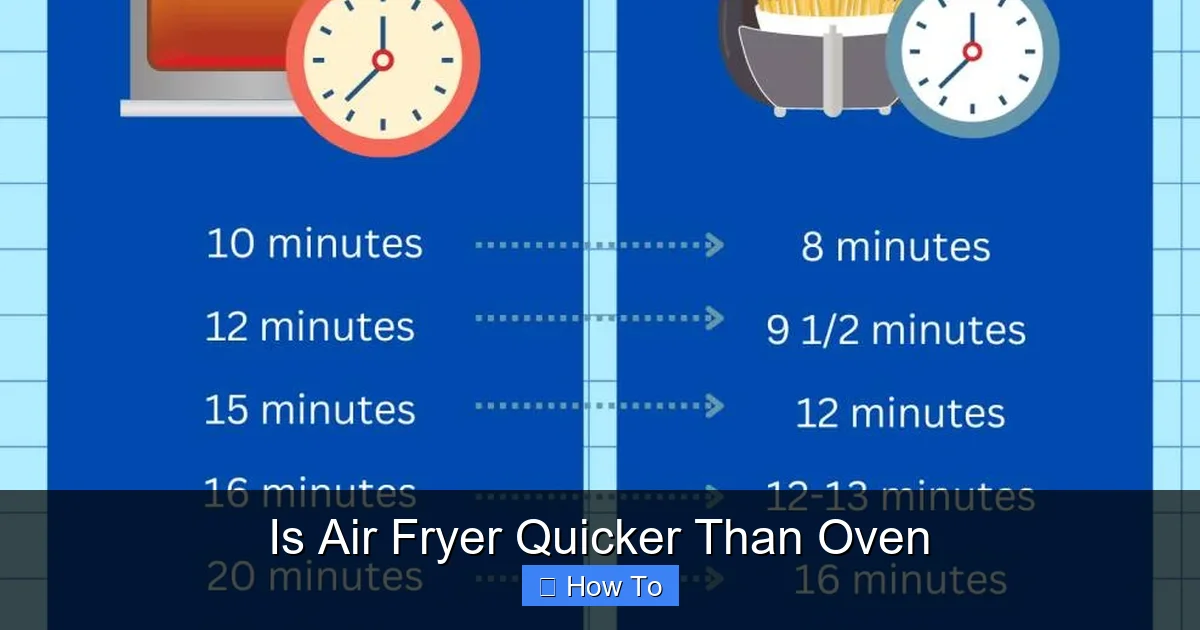
One of the biggest selling points of air fryers is speed. In many tests, a batch of chicken wings that takes 35 minutes in a 350°F oven can be ready in under 20 minutes in an air fryer. That’s roughly a 40% reduction in cooking time.
Visual guide about Is Air Fryer Quicker Than Oven
Image source: cdn.mos.cms.futurecdn.net
Typical Time Savings
Here are some common foods and the typical time difference:
- French fries: 25‑30 minutes in an oven vs. 15‑18 minutes in an air fryer.
- Chicken breasts: 30‑35 minutes in an oven vs. 12‑15 minutes in an air fryer.
- Frozen pizza: 12‑15 minutes in an oven vs. 8‑10 minutes in an air fryer.
These numbers show that the answer to “Is Air Fryer Quicker Than Oven?” is often a clear yes, especially for small‑to‑medium portions.
For a broader comparison, see our article Is The Air Fryer Quicker Than The Oven.
Energy Use and Efficiency
Because air fryers heat up faster and operate at lower temperatures for shorter periods, they generally consume less electricity than a full‑size oven. A typical air fryer uses about 1,200‑1,500 watts, while a conventional oven can draw 2,000‑5,000 watts depending on the setting.
Visual guide about Is Air Fryer Quicker Than Oven
Image source: keeshaskitchen.com
Power Consumption
If you only need to cook a small meal, the energy savings can add up. Over a month of frequent air frying, many users report a noticeable drop in their electric bill. For a deeper look, see our analysis of Is Using An Air Fryer Cheaper Than Oven 2.
Practical Tips to Maximize Speed
Even though air fryers are fast, you can make them even quicker with a few simple tricks:
Visual guide about Is Air Fryer Quicker Than Oven
Image source: behacolb.com
- Preheat the unit: Just a 2‑minute preheat can shave off several minutes from the total cook time.
- Don’t overcrowd the basket: Spread food in a single layer for optimal airflow.
- Use the right temperature: Follow recipe recommendations; too low and you’ll need extra time.
Applying these tips can often cut another 5‑10 minutes off your cooking sessions.
When the Oven Still Wins
There are scenarios where the oven outpaces the air fryer. Large roasts, multiple trays of cookies, or dishes that need even baking across a big surface often require the spacious, steady heat of an oven.
Large‑Capacity Cooking
If you regularly cook for a big family, the capacity limitation of most air fryers becomes a bottleneck. In those cases, the oven remains the more efficient choice.
Even Browning
Some foods, like casseroles, benefit from the gentle, uniform heat of an oven. An air fryer may brown the top too quickly while the center stays undercooked.
For a discussion on whether an air fryer can replace a convection oven, read our piece Is Air Fryer Better Than Convection Oven.
Conclusion
So, is an air fryer quicker than an oven? For most everyday meals, especially those that fit in a single basket, the answer is yes. Air fryers heat up in seconds, cook food faster, and often use less energy. However, they are not a one‑size‑fits‑all solution. When you need to cook large quantities or achieve uniform browning across a big surface, the traditional oven still has the edge.
By understanding the strengths and limitations of each appliance, you can choose the right tool for the job and enjoy faster, healthier meals without sacrificing quality.
Frequently Asked Questions
Is an air fryer really faster than a conventional oven?
Yes, in most cases an air fryer cooks food 20‑40% quicker than a standard oven, especially for small to medium portions.
Do I need to preheat an air fryer?
Preheating for 1‑3 minutes can reduce overall cooking time, but many recipes work fine without a preheat step.
Can an air fryer replace my oven entirely?
It can handle many everyday tasks, but for large roasts, multiple trays, or dishes requiring even heat, an oven is still preferable.
Is using an air fryer cheaper than using an oven?
Because it uses less electricity and cooks faster, an air fryer often costs less to operate for small meals.
What types of food cook best in an air fryer?
Foods that benefit from crisping, such as fries, chicken wings, and vegetables, tend to excel in an air fryer.
Does an air fryer consume a lot of electricity?
Typical models use 1,200‑1,500 watts, which is less than many full‑size ovens, especially when cooking for short periods.