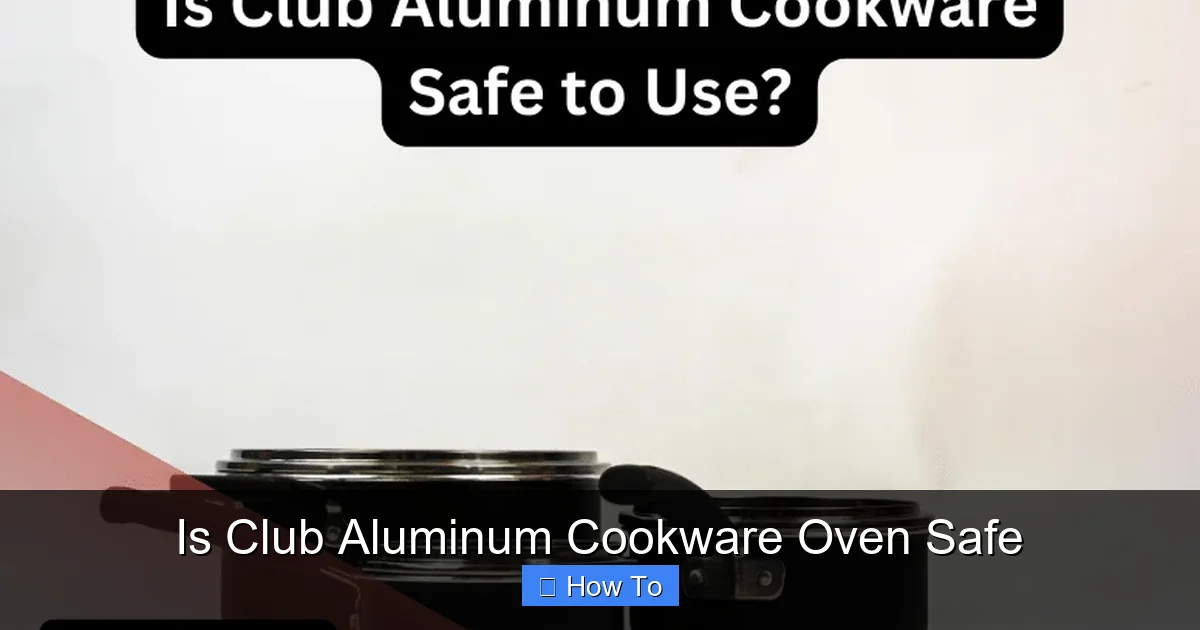
Is Club Aluminum Cookware Oven Safe
Club aluminum cookware can be oven safe, but safety depends on handle material, temperature ratings, and manufacturer guidelines. Always verify before placing any piece in the oven to avoid damage or hazards.
If you’ve recently picked up a set of Club aluminum cookware or spotted a shiny pot at a garage sale you’re itching to use, one question probably tops your mind: Is Club Aluminum Cookware Oven Safe? It’s a common worry. Aluminum heats up fast, distributes heat well, and is a staple in many kitchens. But when it comes to putting it in the oven, things aren’t always straightforward. Handles, lids, coatings, and manufacturer guidelines all play a role. In this post, we’ll walk through everything you need to know to use your Club aluminum cookware in the oven with confidence. From temperature limits to handle types, we’ve got you covered. Let’s dive in and clear up the confusion once and for all.
**What Makes Club Aluminum Cookware Unique**
Club aluminum cookware is prized for its lightweight nature and excellent heat conductivity. Aluminum itself is a soft metal, which is why manufacturers often add a protective coating or layer to prevent food from reacting with the surface. Many Club pieces feature a nonstick interior, an anodized exterior, or a simple polished finish. This construction not only makes cooking easier but also influences how the cookware behaves when exposed to oven temperatures. Understanding the base material helps you gauge its limits and decide whether it can handle the heat of your oven.
Most Club aluminum sets include pots, pans, and skillets with varying rim depths and sidewall thicknesses. Thicker walls generally retain heat better, while thinner ones heat up quickly. The brand often designs these pieces for stovetop use, but many home cooks wonder if the same convenience extends to the oven. Features like pour spouts, helper handles, and lid knobs can all affect oven compatibility. Knowing what your specific piece includes is the first step toward safe oven use, and it’s worth taking a moment to inspect each item before relying on it for baking or roasting.
**Decoding Oven-Safe Labels and Symbols**
The most reliable way to answer Is Club Aluminum Cookware Oven Safe is to check the manufacturer’s label. Club, like other brands, stamps oven-safe symbols on the bottom or inside the lid. These symbols often look like an oven icon with a temperature number inside, such as “oven safe to 350°F” or “oven safe to 500°F.” If you see no label at all, treat the piece as stovetop-only until you can verify otherwise. Manufacturer websites sometimes have PDF guides or product pages that list oven ratings for each model, making it easy to find the information you need.
Not every oven icon means the same thing. Some indicate the piece is safe for standard baking, while others restrict use to warming or low-heat tasks. A symbol with “350°F” means you can bake a casserole or roast vegetables at that temperature, but anything higher could risk warping or coating degradation. If the label is faded or missing, don’t guess—reach out to Club’s customer service or consult the original packaging. This simple step can save you from a melted handle or a warped pan, protecting both your cookware and your meal.
**Handle Materials and Oven Compatibility**
If you’re concerned about aluminum health effects, you might wonder is aluminum cookware bad for you, but most modern aluminum cookware, including Club pieces, is designed with safety coatings that minimize direct food contact. Aluminum pans with solid metal handles are generally your safest bet for oven use. Metal conducts heat but doesn’t melt or degrade at typical baking temperatures. However, the rivets that attach the handle to the pan can become hot spots. Always use oven mitts, and be mindful that the handle will get hot. If the pan has a helper handle opposite the main one, check that it’s also metal and securely fastened.
Many Club aluminum pieces feature plastic knobs on lids or rubberized grips on handles. These materials often have much lower temperature limits, sometimes as low as 350°F or even lower. Putting a pan with plastic knobs under the broiler or in a hot oven for an extended period can cause the plastic to melt or release odors. If your piece has these accents, look for a specific oven-safe rating, or consider removing the knob if it’s detachable before placing the pan in the oven. This precaution ensures you won’t end up with a melted mess or compromised food safety.
The way a handle is attached matters too. Welded handles tend to be more secure under thermal expansion and contraction. Riveted handles are common, but over time, the heat cycles can loosen the rivets or cause the handle to wobble. A wobbly handle in the oven is not just inconvenient—it’s a safety hazard. If you notice any looseness, it’s best to avoid oven use until the handle is repaired or replaced, keeping your kitchen experience both safe and enjoyable.
**Typical Temperature Limits for Aluminum Cookware**
While every piece is different, a common rule of thumb for aluminum cookware is that most are oven-safe up to 350°F or 400°F. Some higher-end anodized aluminum can handle up to 500°F, but this is less common in budget-friendly Club sets. Nonstick coatings, if present, often have lower limits, sometimes maxing out at 450°F. Exceeding these temperatures can cause the coating to break down, discolor the aluminum, or even emit unpleasant fumes, ruining both the pan and your food.
Nonstick and ceramic coatings are the most temperature-sensitive part of aluminum cookware. Once a coating starts to degrade, the pan loses its nonstick properties and may become harder to clean. Moreover, a damaged coating can flake into food, which is something no one wants. If your Club piece has a nonstick interior, stick to the lower end of the temperature range and avoid using metal utensils that could scratch the surface before it even enters the oven. Gentle handling preserves both the coating and your peace of mind.
**How to Verify If Your Specific Piece Is Oven Safe**
For a comprehensive guide on verifying oven safety, check out our article how to tell if cookware is oven safe, which walks you through similar steps for any brand. Checking your cookware’s oven safety doesn’t require special tools—just a bit of detective work. Start by flipping the pan or pot over and examining the bottom. Look for any stamped text, numbers, or symbols that indicate temperature ratings. Next, visit the Club official website and search your model number. If you bought the piece secondhand or lost the paperwork, call Club’s customer support; they can often tell you the oven rating based on the style and year of manufacture. Finally, when in doubt, perform a cautious test: place the empty pan in a cold oven, set the temperature to 350°F, and wait 15 minutes. Check for any discoloration, warping, or handle movement before deciding to use it for actual cooking.
Certain signs indicate a piece is not oven-safe. If the handle has a plastic or rubber component with no temperature rating, assume it’s not meant for the oven. Discoloration, bubbling, or peeling on the interior coating is another warning sign. Warping after a single oven use means the piece can’t withstand heat cycles. Always prioritize these red flags over the desire to use a favorite pan in the oven, protecting both your investment and your safety.
**Best Practices for Using Club Aluminum Cookware in the Oven**
One of the best ways to protect your cookware is to avoid sudden temperature changes. If you’re moving a pan from the stovetop to the oven, or from a cold oven to a preheated one, do it gradually. Start with a lower temperature and increase it slowly. This prevents thermal shock, which can cause aluminum to warp or nonstick coatings to crack. Think of it like easing into a warm bath—your cookware appreciates the gentle transition, and it will serve you well for many meals.
Where you place your pan in the oven also matters. The middle rack typically provides the most even heat distribution, reducing the chance of hot spots that could warp the pan. Avoid placing aluminum cookware directly on the oven floor, as the intense bottom heat can cause uneven expansion. If you’re baking a casserole or roasting vegetables, a middle position usually yields the best results without stressing the material, ensuring consistent cooking every time.
The broiler is the hottest part of the oven, and it’s where aluminum cookware is most vulnerable. Direct, intense heat can warp the pan, discolor the finish, and melt any plastic or rubber handles. Unless your piece is explicitly rated for broiler use, keep it out of the broiler zone. If a recipe calls for broiling, transfer the food to a baking sheet or a broiler-safe dish instead, preserving both your cookware and your recipe’s integrity.
After removing your Club aluminum cookware from the oven, let it cool on a trivet or heat-resistant surface. Never plunge a hot pan into cold water—that’s a fast track to warping. Once cooled, hand-wash with mild soap and a soft sponge. If there’s stuck-on food, soak the pan rather than scrubbing aggressively, especially if it has a nonstick coating. Proper cleaning after each oven use keeps the surface smooth and the oven-safe rating valid longer, extending the life of your cookware.
**So, Is Club Aluminum Cookware Oven Safe?**
So, is Club Aluminum Cookware Oven Safe? The answer isn’t a simple yes or no—it depends on the specific piece, its handle materials, any coatings, and the temperature you plan to use. By checking manufacturer labels, understanding your pan’s construction, and following gradual heating practices, you can safely enjoy the benefits of aluminum in your oven. Remember, when doubt creeps in, a quick call to the manufacturer or a cautious low-temperature test is your best bet. With these tips in mind, you can cook with confidence, whether you’re on the stovetop or sliding a dish into the oven. Happy cooking!
Key Takeaways
- Oven safety varies by piece: Not all Club aluminum cookware is created equal; check each item individually.
- Handle material is key: Metal handles often handle heat better than plastic or rubber-coated ones.
- Temperature limits exist: Most aluminum pieces are safe up to 350°F–450°F, but never exceed the manufacturer’s limit.
- Look for labels: Stamped or printed oven-safe symbols indicate approved temperature ranges.
- Avoid broiler use: Direct high heat from a broiler can warp aluminum or damage finishes.
- Proper care extends life: Gentle cleaning and avoiding harsh scratches preserve the cookware’s integrity.
- When in doubt, test cautiously: Start with low temperatures to see how your specific piece responds.
Frequently Asked Questions
Can I put any Club aluminum pot in the oven?
Not every Club aluminum pot is oven safe; it depends on the handle material, coating, and manufacturer labels. Always check the bottom or side of the piece for oven-safe symbols and temperature ratings before use.
What is the typical oven temperature limit for Club aluminum cookware?
Most Club aluminum pieces are safe up to 350°F–450°F, but this varies by model and whether the cookware has a nonstick coating, which often has a lower maximum temperature.
Do Club aluminum handles get hot in the oven?
Metal handles can become hot during oven use, so always use oven mitts or pot holders when handling the cookware, especially if the handles are riveted or have minimal insulation.
Can I use Club aluminum cookware under the broiler?
It is generally not recommended to use Club aluminum cookware under the broiler unless the manufacturer explicitly states it is broiler-safe, as direct high heat can warp the aluminum and damage handles or coatings.
How can I tell if my Club aluminum cookware is oven safe if the label is gone?
If the label is faded or missing, visit the Club website with your model number, contact customer service, or perform a cautious test by placing the empty pan in a cold oven at 350°F for 15 minutes to check for any adverse reactions.
Is nonstick Club aluminum cookware oven safe?
Nonstick Club aluminum cookware is often oven safe up to 450°F, but exceeding this temperature can cause the coating to degrade, so always check the specific product guidelines before oven use.