Is My Convection Oven an Air Fryer

Many home cooks wonder if their convection oven can double as an air fryer. The answer depends on the appliance’s features and how you use it. This guide breaks down the similarities, differences, and when you can truly call one the other.
Every home cook has stood in front of their kitchen appliances and asked themselves a simple yet puzzling question: “Is my convection oven an air fryer?” The answer isn’t always a straightforward yes or no. In this article we’ll explore what each device actually does, where the technologies overlap, and how you can tell if your oven can truly act like an air fryer. By the end, you’ll know exactly what’s inside your kitchen and whether you need a separate appliance or can get by with one.
Key Takeaways
- Convection ovens circulate hot air for even cooking, while air fryers use rapid hot air circulation in a small basket.
- Some modern ovens combine both technologies, offering true air‑fry settings.
- Energy use differs; air fryers often cook faster and use less power for small portions.
- Space and price vary; a convection oven is larger, while an air fryer is compact.
- Understanding your appliance’s controls helps you decide if it can replace the other.
📑 Table of Contents
Understanding Convection Ovens
How Convection Cooking Works
A convection oven uses a fan to circulate hot air throughout the cavity. This constant movement creates even temperature distribution. Foods cook faster because heat reaches all surfaces at once. You’ll find the fan on the back or side, and most models have a convection switch you can turn on or off.
When you set a convection oven, the thermostat controls the overall temperature, and the fan runs continuously. This design reduces hot spots, which means you get golden-brown results on roasts, crispier pizzas, and more uniform baked goods. Many bakers love convection because it eliminates the guesswork of turning pans.
If you’re curious about the physics behind it, think of the fan as a gentle breeze that keeps the air moving. This breeze helps moisture escape, giving foods a slightly drier exterior while keeping the interior juicy. It’s the same principle that lets you roast vegetables with less oil.
Key Features of Convection Ovens
Modern convection ovens often include extra features. You might see a “steam boost” option, a self‑clean function, or even a built‑in thermometer. Some models let you switch between conventional, convection, and broil modes with a simple dial.
Another helpful feature is the “pre‑heat” indicator. When the oven reaches the set temperature, a light turns on. This tells you it’s safe to load your food without losing heat. Convection ovens also tend to have larger capacities, making them ideal for families or batch cooking.
For those who love technology, there are smart convection ovens that connect to Wi‑Fi. You can control them from your phone, set timers remotely, and even get recipes that adjust automatically. These high‑end models blur the line between a regular oven and a kitchen assistant.
Understanding Air Fryers
The Air Fryer Mechanism
An air fryer works by forcing hot air into a small basket. The appliance typically has a heating element at the top and a powerful fan that circulates air downward. This rapid airflow creates a crispy texture with far less oil than deep frying.
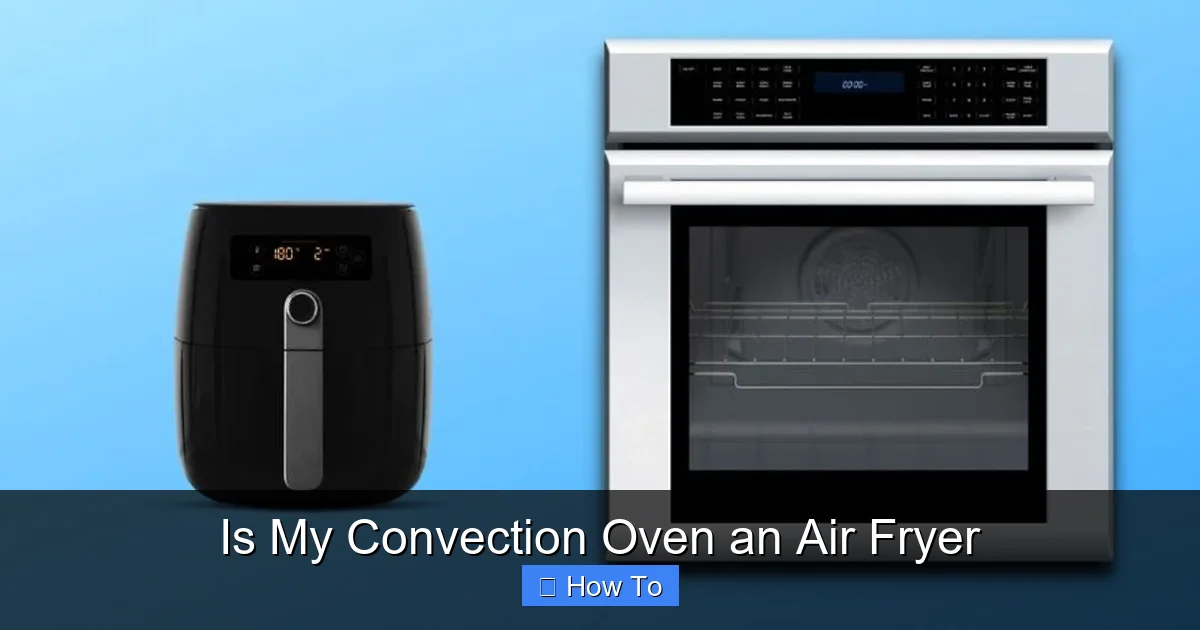
Visual guide about Is My Convection Oven an Air Fryer
Image source: ecoenergygeek.com
Air fryers are designed for small portions. They usually have a capacity of 2–6 quarts, which is perfect for one or two servings. The compact size means they heat up quickly and use less energy than a full‑size oven.
Most air fryers let you adjust temperature in 5‑degree increments. You can set them anywhere from 180 °F to 400 °F, which covers most cooking needs. Some models also have a “keep warm” function, so your food stays hot without overcooking.
What Sets Air Fryers Apart
One unique feature of air fryers is the rapid air technology. This term describes how the fan blows hot air at high speed, creating a Maillard reaction on the food’s surface. The result is a crunchy exterior while the interior remains tender.
Air fryers also often include a non‑stick basket that’s easy to clean. Many come with a drip tray that catches excess oil, making cleanup a breeze. This design appeals to health‑conscious cooks who want crispy foods without the guilt.
Because they’re small, air fryers are great for apartment living. They fit on a countertop and can be stored easily when not in use. They’re also popular for snack lovers, as you can make crispy vegetables, chicken nuggets, or even baked desserts in minutes.
The Overlap and When They Meet
Shared Technology
Both convection ovens and air fryers rely on forced air circulation. In essence, an air fryer is a miniature convection oven with a focused airflow pattern. Many manufacturers even call their premium models “convection air fryers” to highlight this similarity.
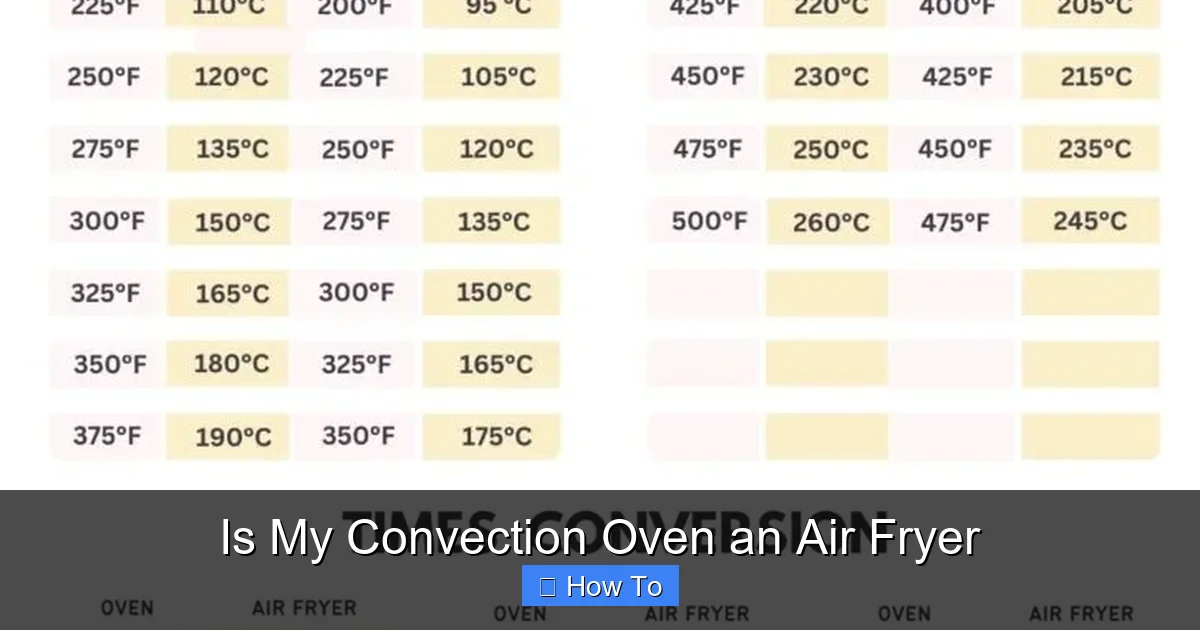
Visual guide about Is My Convection Oven an Air Fryer
Image source: the-bella-vita.com
When you look inside a high‑end convection oven, you might see a “Rapid Air” setting. This mode mimics the action of an air fryer by directing strong airflow to the food’s surface. It’s the same technology, just scaled up for larger cooking chambers.
For a deeper dive, check out our article What Is An Air Fryer Vs Convection Oven. It breaks down the core differences and explains why some ovens can truly replace an air fryer.
When One Becomes the Other
If your convection oven has a dedicated “air fry” button, you’re essentially holding both appliances in one. This setting usually combines convection heat with a low‑speed fan to achieve the crispness typical of an air fryer. It works best for smaller items like chicken breasts, fish fillets, or veggie sticks.
Some users ask, “Is my convection oven an air fryer?” The answer is yes when the oven offers a rapid‑air mode and you use it for small, single‑portion meals. The key is to avoid overcrowding the cavity, just as you would in a regular air fryer.
Another scenario is using a convection oven’s standard setting for tasks that traditionally belong in an air fryer. For example, you can bake shoestring potatoes at 425 °F, and they’ll get crisp without flipping. This works because the fan circulates heat evenly, similar to an air fryer’s action.
Real‑World Differences You’ll Notice
Cooking Speed and Energy Use
Speed is a major differentiator. Air fryers heat up in minutes and cook small batches quickly. Convection ovens need more time to preheat, but they excel at cooking larger items like roasts or multiple trays of cookies.
Energy consumption also varies. Air fryers draw about 1–2 amps, while a full‑size convection oven can use 10–15 amps. If you’re cooking a single serving, the air fryer is more efficient. For a family dinner with several dishes, the convection oven may be the better choice.
When you ask, “Is my convection oven an air fryer?” consider the energy cost. If you’re using the oven for a single piece of chicken, you might waste energy heating a large cavity. In that case, an air fryer could save you money on your electric bill.
Food Texture and Results
Texture differences are noticeable. Air fryers produce a very crisp, almost fried texture because the hot air hits the food from all angles. Convection ovens give a crisp exterior but may leave a slightly softer interior if the food is large.
Flavor can also vary. Air fryers often require less oil, which means foods can taste slightly drier. Convection ovens allow you to add a splash of oil or butter, which can enhance flavor and moisture.
Some cooks prefer the “smoke” effect from a convection oven’s broil setting, which can add a charred taste that an air fryer cannot replicate. Others love the consistent crunch of an air fryer for snacks. Your preference will influence whether you need both appliances or just one.
Choosing What Fits Your Kitchen
Space Considerations
If you have limited countertop space, an air fryer may be the better fit. It’s compact and can be tucked away easily. A convection oven, however, usually takes up more room but offers greater flexibility for larger meals.
Consider the layout of your kitchen. If you already have a built‑in oven, adding a separate air fryer might be simpler than upgrading to a dual‑function model. On the other hand, if you’re remodeling, a convection oven with air‑fry capabilities could save you a drawer full of gadgets.
When you wonder, “Is my convection oven an air fryer?” think about how you plan to use it. Do you need to bake a cake for the whole family? Do you want to grill a steak for two? The answers will guide you toward the right choice.
Budget and Versatility
Price is another factor. Basic air fryers start around $50, while entry‑level convection ovens can be found for $150. Premium models that combine both technologies can cost $300 or more. Your budget will shape which option you choose.
Versatility matters too. A convection oven can replace a toaster oven, a broiler, and a conventional oven. An air fryer, while efficient, is limited to small‑batch cooking. If you need a multi‑purpose appliance, the convection oven wins.
Finally, think about future needs. If you plan to host gatherings, a convection oven’s larger capacity will be a boon. If you’re cooking for one or two, an air fryer’s speed and energy efficiency may be more appealing. The question “Is my convection oven an air fryer?” becomes less about labels and more about matching the appliance to your lifestyle.
In the end, many home chefs find that having both appliances gives them the best of both worlds. You can use the air fryer for quick snacks and the convection oven for family meals. Others opt for a single high‑end convection oven that includes an air‑fry mode, saving space and money.
So, is my convection oven an air fryer? The short answer is it can be, under the right circumstances. Understanding the technology, features, and your own cooking habits will help you decide. Whether you stick with one appliance or embrace both, you’ll have the tools to cook delicious, healthy meals right in your kitchen.
Frequently Asked Questions
Is a convection oven the same as an air fryer?
No, they are not the same. A convection oven uses a fan to circulate hot air throughout a large cavity, making it ideal for baking, roasting, and broiling larger items. An air fryer is a compact convection oven designed for small portions, delivering a crispy texture with minimal oil. While both use forced air, their size, capacity, and typical uses differ.
Can I use my convection oven to get air‑fry results?
Yes, if your convection oven has a dedicated “Rapid Air” or “Air Fry” setting, it can mimic an air fryer. Use low‑speed fan options and smaller items to achieve the crispness you’d get from an air fryer. Avoid overcrowding the oven, just as you would in a regular air fryer.
Do convection ovens use more energy than air fryers?
Generally, convection ovens consume more electricity because they have larger heating elements and run for longer periods. Air fryers draw less power and heat up quickly, making them more energy‑efficient for small meals. For large batches, a convection oven can be more efficient overall.
What foods work best in an air fryer versus a convection oven?
Air fryers excel with small, single‑portion items like chicken nuggets, veggie sticks, and snacks. They produce a very crispy exterior. Convection ovens are better for larger cuts of meat, whole chickens, baked goods, and multiple trays of food, providing even cooking throughout.
How do I decide between buying an air fryer or a convection oven?
Consider your kitchen space, cooking habits, and budget. If you need quick, small‑batch meals and have limited counter space, an air fryer is ideal. If you cook larger meals, bake frequently, or want a multi‑purpose appliance, a convection oven (or a model with air‑fry capabilities) is the better choice.
Do I need both appliances in my kitchen?
Not necessarily. Many home cooks find that a high‑end convection oven with an air‑fry mode covers most needs, saving space and money. However, if you love the convenience of an air fryer for snacks and small portions, keeping both can give you maximum flexibility.