What Temperature to Cook Chicken at in Oven
Cooking chicken in the oven is simple when you know the right temperature.
From tender breasts to crispy thighs, this guide shows you the ideal heat settings, cooking times, and handy tips for perfect results.
Key Takeaways
- Optimal temperature range: 350°F‑425°F works for most cuts, balancing moisture and browning.
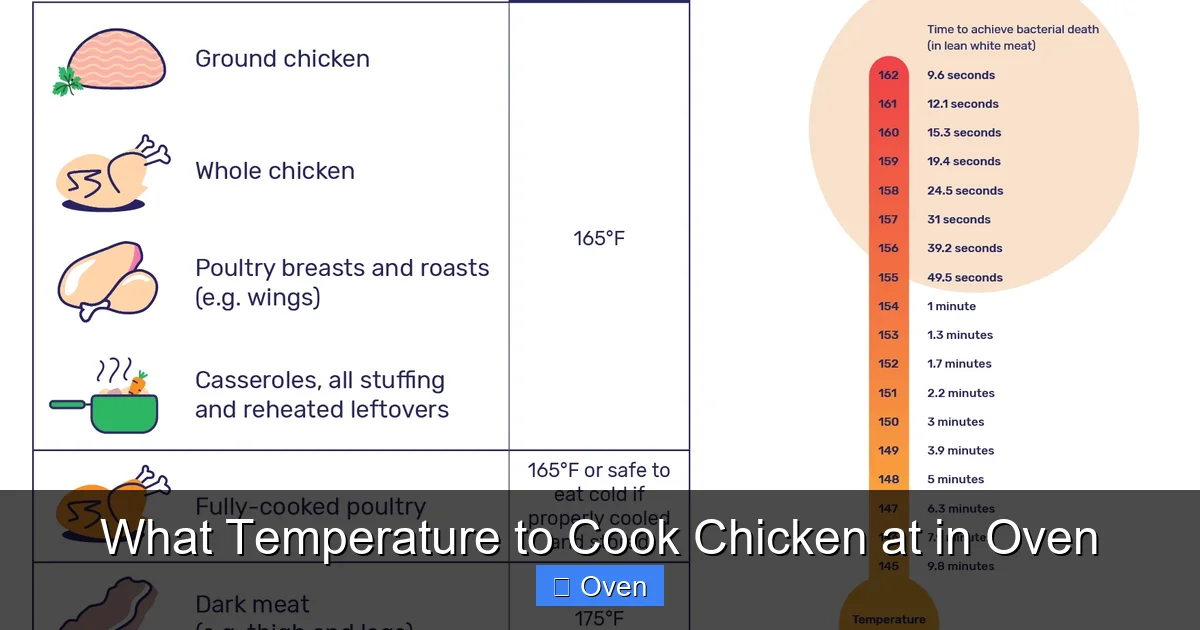
- Internal safety: Aim for 165°F at the thickest part to guarantee safety.
- Resting matters: Let chicken rest 5‑10 minutes to lock in juices.
- Use a meat thermometer: Guarantees perfect doneness without guessing.
- Adjust for size and bone: Larger or bone‑in pieces need lower heat or longer time.
- Cover or uncover: Cover for moisture, uncover for crisp skin.
- Pan choice influences results: A rimmed baking sheet or cast‑iron skillet can boost browning.
📑 Table of Contents
- Introduction: Why Temperature Is the Secret Ingredient
- 1. The Temperature Spectrum: 350°F to 425°F
- 2. Temperature Guidelines by Chicken Cut
- 3. How to Test for Doneness (Without Guesswork)
- 4. Pro Tips for Perfect Oven‑Baked Chicken
- 5. Adjusting for Special Situations
- Conclusion: Your New Confidence in the Oven
Introduction: Why Temperature Is the Secret Ingredient
When you think about cooking chicken in the oven, the first thing that comes to mind is probably the recipe. But the real star of the show is the temperature you choose. Too low, and the meat dries out; too high, and the outside burns while the inside stays raw. Finding the sweet spot means juicy, tender chicken with a beautiful golden crust – every time.
In this friendly guide we’ll walk through the best oven temperatures for different cuts, how to test for doneness, and a handful of pro tips that turn ordinary baked chicken into a crowd‑pleaser. Whether you’re a beginner or a seasoned home cook, you’ll finish this article with a clear game plan for “what temperature to cook chicken at in oven.”
1. The Temperature Spectrum: 350°F to 425°F
Most home cooks fall into three temperature zones when roasting chicken:
Visual guide about What Temperature to Cook Chicken at in Oven
Image source: i.ytimg.com
350°F – Gentle and Juicy
Cooking at 350°F (175°C) is the safest bet for larger, bone‑in pieces like whole chickens, thighs, and drumsticks. The moderate heat allows the meat to cook evenly, keeping the interior moist while the skin slowly renders its fat, resulting in a subtle crispness.
375°F – The All‑Rounder
At 375°F (190°C) you get a balance of speed and moisture. This is the go‑to temperature for boneless breasts, cut‑ups, and even spatchcocked (butterflied) birds. The skin becomes nicely browned in about 25‑30 minutes without overcooking the meat.
425°F – Fast and Crispy
If you love extra‑crunchy skin, crank the oven up to 425°F (220°C). This high heat is perfect for smaller pieces like chicken wings, tenders, or thin‑sliced strips. Expect a caramelized crust in 12‑18 minutes, but keep a close eye on the timer to avoid burning.
Choosing the right temperature depends on three factors: the cut, its size, and whether it’s bone‑in or boneless. Below we break down each cut and recommend the ideal heat.
2. Temperature Guidelines by Chicken Cut
2.1. Whole Chicken
A whole bird benefits from a lower, steadier heat. Roast at 350°F for about 20 minutes per pound. For a 4‑lb chicken, that’s roughly 1 hour and 20 minutes. If you want extra‑crisp skin, raise the oven to 425°F for the last 15 minutes.
Visual guide about What Temperature to Cook Chicken at in Oven
Image source: fooddocs.com
2.2. Bone‑In Thighs & Drumsticks
These dark‑meat cuts stay juicy at 375°F. Cook for 35‑45 minutes, turning halfway through. The internal temperature should read 165°F, but the meat will feel tender at 170°F.
2.3. Boneless, Skinless Breasts
Breasts are prone to drying, so a moderate 375°F works best. Bake for 20‑25 minutes, depending on thickness. To keep them moist, cover with foil for the first half, then uncover to brown the top.
2.4. Chicken Wings
Wings love the high heat of 425°F**.** In 12‑15 minutes they’ll be crispy and cooked through. For extra flavor, toss them in sauce after the first 8 minutes, then finish the bake uncovered.
2.5. Chicken Tenders & Strips
These thin pieces can be baked at 400°F**.** In 10‑12 minutes they’re ready. If you prefer a golden crust, spray lightly with oil before baking.
3. How to Test for Doneness (Without Guesswork)
3.1. The Meat Thermometer Trick
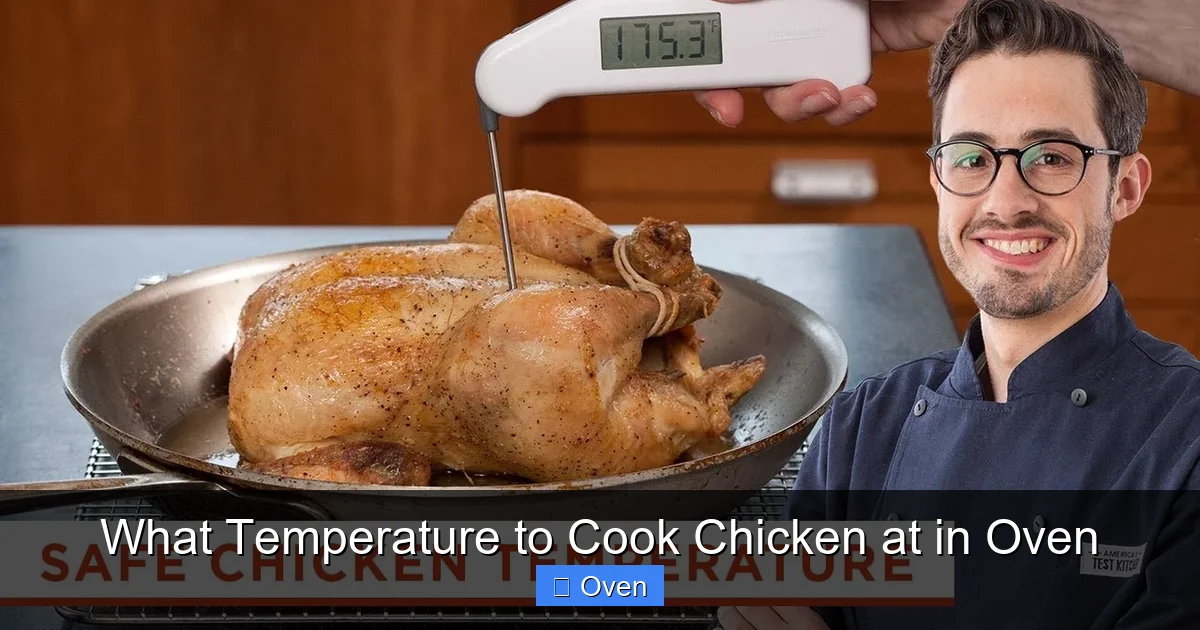
The single most reliable way to know if chicken is done is to use an instant‑read thermometer. Insert the probe into the thickest part, avoiding bone. When the reading hits **165°F (74°C)**, the chicken is safe to eat.
Visual guide about What Temperature to Cook Chicken at in Oven
Image source: static.vecteezy.com
3.2. The Finger Press Test
If you don’t have a thermometer, gently press the meat with your fingertip. Properly cooked chicken feels firm but springs back slightly, similar to the texture of the palm under your thumb when your hand is relaxed.
3.3. Visual Cues
- Juices run clear, not pink.
- Meat pulls away from the bone easily.
- Skin is golden brown and crisp (if uncovered).
4. Pro Tips for Perfect Oven‑Baked Chicken
4.1. Dry the Surface
Pat the chicken dry with paper towels before seasoning. Less moisture on the surface means better browning.
4.2. Season Early, Rest Later
Season at least 30 minutes before cooking, or even overnight in the fridge. This gives the salt time to penetrate the meat, enhancing flavor.
4.3. Use the Right Pan
A rimmed baking sheet or a cast‑iron skillet distributes heat evenly. For extra crispness, line the pan with a wire rack so air circulates around the chicken.
4.4. Add a Splash of Liquid
Pour a few tablespoons of broth, wine, or even water into the pan. The steam keeps the meat moist, especially at higher temperatures.
4.5. Rest Before Cutting
Let the chicken rest 5‑10 minutes after it leaves the oven. This redistributes the juices, preventing them from spilling out when you slice.
4.6. Pair with Complementary Recipes
If you’re roasting a whole bird, try a side of roasted vegetables cooked at the same temperature. For example, roasted cauliflower at 400°F makes a quick, tasty accompaniment.
5. Adjusting for Special Situations
5.1. High Altitude Baking
At elevations above 3,500 feet, increase the oven temperature by 15‑25°F and add a few extra minutes to the cooking time.
5.2. Frozen Chicken
Never bake frozen chicken straight from the freezer at a low temperature; it can stay in the danger zone too long. Instead, thaw first, or bake at a higher heat (425°F) for a shorter period, checking the internal temperature frequently.
5.3. Using a Convection Oven
Convection ovens circulate hot air, cooking food faster and more evenly. Reduce the recommended temperature by 25°F and cut the cooking time by about 10%.
5.4. When You Want Extra Crispy Skin
Start the chicken at 375°F, then finish the last 5‑7 minutes at 425°F, uncovered. The initial lower heat keeps the meat juicy; the final blast creates that coveted crunch.
Conclusion: Your New Confidence in the Oven
Knowing what temperature to cook chicken at in oven removes the guesswork from dinner time. Remember the temperature ranges, match them to the cut, use a thermometer, and let the bird rest. With these simple steps you’ll consistently serve juicy, flavorful chicken that looks as good as it tastes.
Now that you have the basics, experiment! Try a spatchcocked chicken at 425°F for a quick roast, or a low‑and‑slow 350°F whole bird for a family feast. Your oven is a reliable partner—just set the right heat, and let it do the magic.
Frequently Asked Questions
What is the safest internal temperature for cooked chicken?
The USDA recommends an internal temperature of **165°F (74°C)** measured at the thickest part of the meat, away from bone.
Can I bake chicken at a lower temperature for longer?
Yes. Baking at 300°F will keep the meat very moist, but you’ll need to increase cooking time by 25‑30% and may miss out on crispy skin.
How do I know if my oven temperature is accurate?
Place an oven-safe thermometer inside the oven and compare its reading to the set temperature. Adjust the dial if there’s a significant discrepancy.
Should I cover chicken while it bakes?
Covering traps steam and prevents drying, which is great for large or bone‑in pieces. Uncover during the last 10‑15 minutes to crisp the skin.
Is it okay to cook frozen chicken breasts at 425°F?
It’s safer to thaw first. If you must cook from frozen, use a higher temperature (425°F) and check the internal temperature often to ensure it reaches 165°F.
What pan works best for oven‑roasted chicken?
A rimmed baking sheet, cast‑iron skillet, or a roasting pan with a rack works well. The rack allows air to circulate, giving even browning.