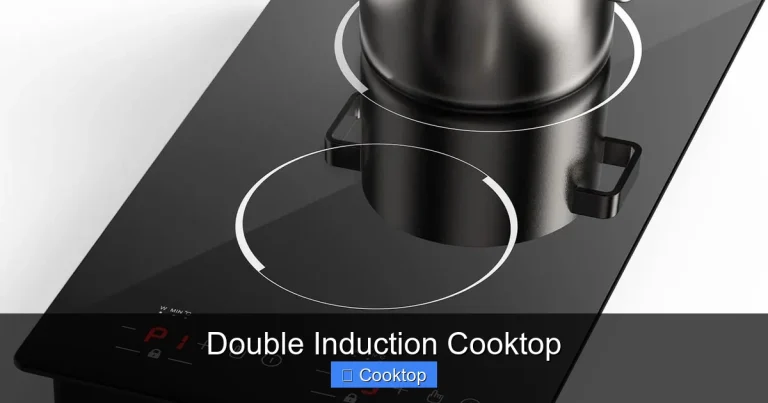
Wattage for Induction Cooktop
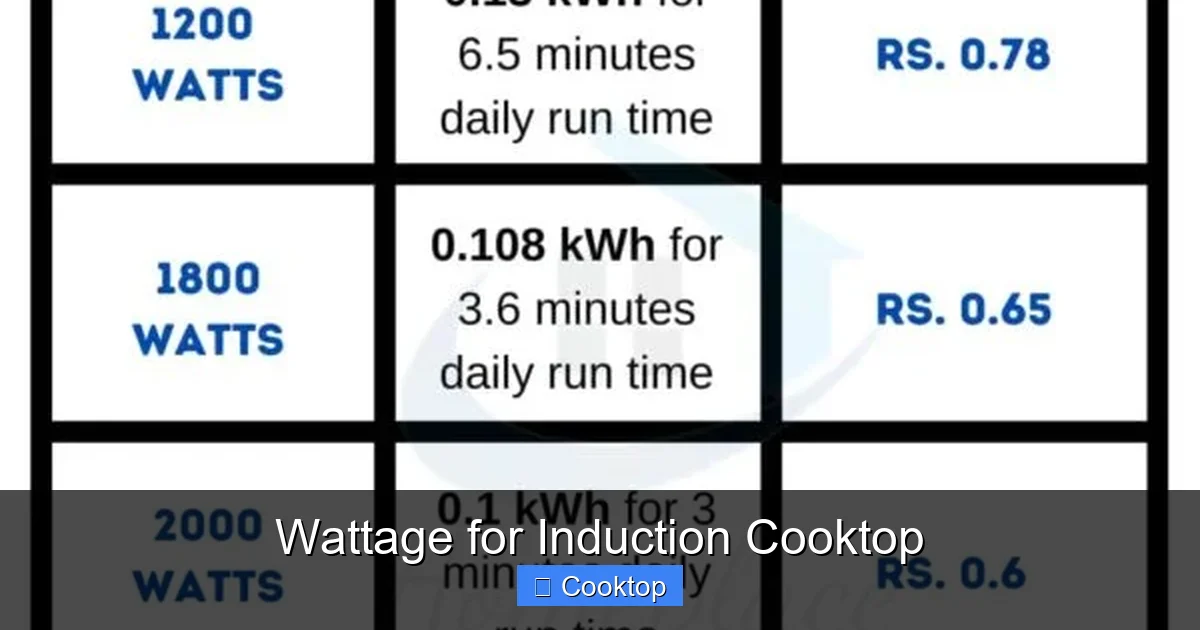
Understanding the wattage for induction cooktop is key to matching power with your cooking needs. Higher wattage means faster heating, while lower wattage saves energy for simmering tasks.
When you start shopping for an induction cooktop, one of the first specifications you’ll notice is the wattage rating. This number tells you how much electrical power each burner can draw, and it directly influences how fast your pot or pan heats up. Understanding the Wattage For Induction Cooktop helps you pick a model that matches your cooking habits, kitchen electrical capacity, and budget.
Many home cooks assume that more wattage is always better, but the reality is more nuanced. A high‑wattage burner excels at tasks like boiling water quickly or achieving a hard sear on meat, while a lower‑wattage setting provides gentle heat for melting chocolate or simmering sauces without scorching. By learning how wattage translates into real‑world performance, you can avoid overpaying for power you rarely need and still enjoy rapid results when you do.
In this guide we’ll break down the basics of induction wattage, explore how it affects cooking speed and energy consumption, and give you practical tips for selecting the right power level for your kitchen. We’ll also debunk common myths and point you toward helpful resources, such as our guide to the best frying pan for induction cooktop, to ensure you get the most out of your new appliance.
Key Takeaways
- Wattage For Induction Cooktop: Typical residential units range from 1200W to 3700W per burner, influencing how quickly food heats.
- Power vs. Speed: A 1800W burner can boil a quart of water in about 2‑3 minutes, whereas a 1200W burner may take 4‑5 minutes.
- Energy Use: Running a 2000W burner for 30 minutes consumes roughly 1 kWh, helping you estimate electricity costs.
- Cooking Style Match: High wattage suits searing and stir‑fry; lower wattage is ideal for delicate sauces and slow simmers.
- Compatibility Note: Wattage does not affect pan compatibility—any ferromagnetic cookware works on any induction burner.
- Portable vs. Built‑in: Portable single‑burner units often max out at 1800W, while built‑in cooktops can offer multiple high‑power zones.
- Saving Tips: Use lids, match pan size to burner, and turn off the burner a few seconds before food is done to retain heat.
📑 Table of Contents
Understanding Induction Cooktop Wattage Basics
Induction cooktops generate heat by creating a magnetic field that induces electric currents in compatible cookware. The strength of that field—and thus the amount of heat produced—is proportional to the electrical power supplied, measured in watts. When you see a rating like “1800W” on a burner, it means the unit can draw up to 1800 watts of electricity at maximum output.
What Wattage Means
Wattage is a measure of power consumption per second. One watt equals one joule of energy per second. Therefore, a 2000W burner can deliver 2000 joules of energy every second it runs at full power. This energy transfers directly to the ferromagnetic base of your pan, heating the food inside.
It’s important to note that the advertised wattage is the maximum possible draw. Most cooking tasks do not require the burner to run at 100 % capacity; instead, the cooktop’s electronics modulate power to maintain the temperature you set. This modulation is why you can simmer a sauce on a high‑wattage burner without burning it—by lowering the power output.
Typical Wattage Ranges
Residential induction cooktops usually offer burners in the following ranges:
- Low‑end: 1000W–1200W (often found on budget portable units)
- Mid‑range: 1500W–1800W (common in many built‑in models)
- High‑end: 2000W–3700W (premium zones, sometimes with boost functions)
Some cooktops feature a “boost” or “power” setting that temporarily exceeds the rated wattage—for example, a 1800W burner might reach 2300W for up to 5 minutes to bring a large pot of water to a rapid boil.
Understanding these ranges helps you compare models. If you frequently cook large volumes or need ultra‑fast boiling, look for burners with at least 2000W. If your cooking mostly involves sautéing, simmering, or reheating, a 1200W–1500W burner will be sufficient and may save on installation costs.
How Wattage Affects Cooking Performance
The wattage of an induction burner directly influences how quickly it can raise the temperature of your cookware. Higher wattage means more energy is delivered per second, which translates to shorter heat‑up times. However, the relationship isn’t always linear because factors like pan size, material thickness, and the amount of food also play roles.
Boiling Water Speed
One of the most common benchmarks for induction performance is how fast a burner can bring a quart of water to a rolling boil. Approximate times based on wattage are:
- 1200W: ~4–5 minutes
- 1500W: ~3–4 minutes
- 1800W: ~2–3 minutes
- 2200W (boost): ~1.5–2 minutes
If you often prepare pasta, blanch vegetables, or need hot water for beverages, a burner in the 1800W–2200W range will noticeably reduce waiting time. For occasional boiling, a lower‑wattage unit may still be adequate, especially if you cover the pot to retain heat.
Searing vs. Simmering
High wattage shines when you need intense, instantaneous heat—such as searing a steak, stir‑frying vegetables, or achieving a caramelized crust on scallops. A 2000W+ burner can bring a heavy skillet to the ideal searing temperature (around 400‑450°F) in under a minute.
Conversely, delicate tasks like melting butter, making a custard, or keeping a sauce warm benefit from precise, low‑power control. Even a high‑wattage burner can handle these tasks because the induction system can dial down to as low as 50W–100W, providing gentle, steady heat without hot spots.
Thus, the Wattage For Induction Cooktop is less about a single “best” number and more about having a flexible power range that accommodates both rapid heating and low‑temperature finesse.
Matching Wattage to Your Cooking Style
Choosing the right wattage starts with an honest assessment of what you cook most often. Different culinary techniques benefit from different power levels, and matching your cooktop’s capabilities to your habits ensures you get both efficiency and performance.
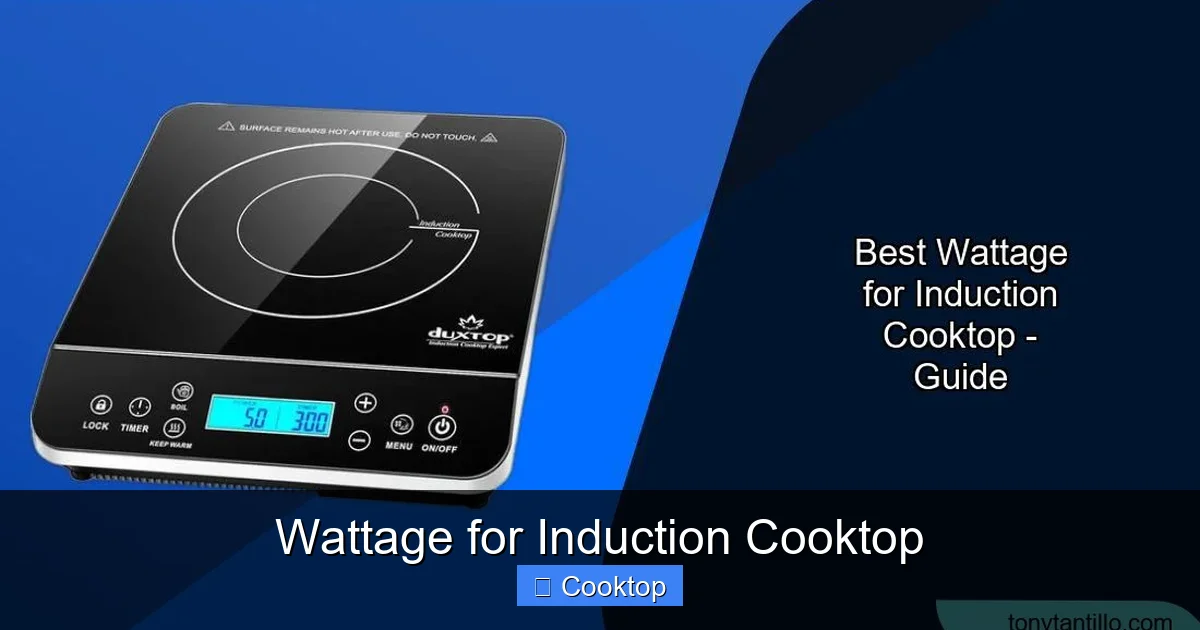
Visual guide about Wattage for Induction Cooktop
Image source: tonytantillo.com
For Quick Meals
If your weekday routine involves boiling pasta, blanching broccoli, or quickly searing proteins, prioritize burners with at least 1800W. A boost function can be especially handy for those moments when you need a large pot of water to reach boiling point in under two minutes.
Consider a cooktop that offers at least one high‑power zone paired with a couple of medium‑power zones. This layout lets you run a rapid boil on one burner while simultaneously simmering a sauce on another, optimizing both speed and energy use.
For Low‑and‑Slow Dishes
Dishes that require gentle, prolonged heat—such as risotto, braises, or chocolate tempering—do not need maximum wattage. In fact, running a high‑wattage burner at low settings can sometimes cause unnecessary wear on the electronics over time. Look for models that offer fine power increments (e.g., 10W steps) at the low end, allowing you to maintain a precise simmer without constant adjustment.
Some induction cooktops include a “keep warm” or “melt” mode that automatically limits power to around 100W–150W, ideal for these tasks.
Energy Efficiency and Electricity Costs
Induction cooking is already more efficient than traditional gas or electric coil methods because energy transfers directly to the pan with minimal loss. However, wattage still plays a role in your electricity bill, especially if you frequently run burners at high power for extended periods.
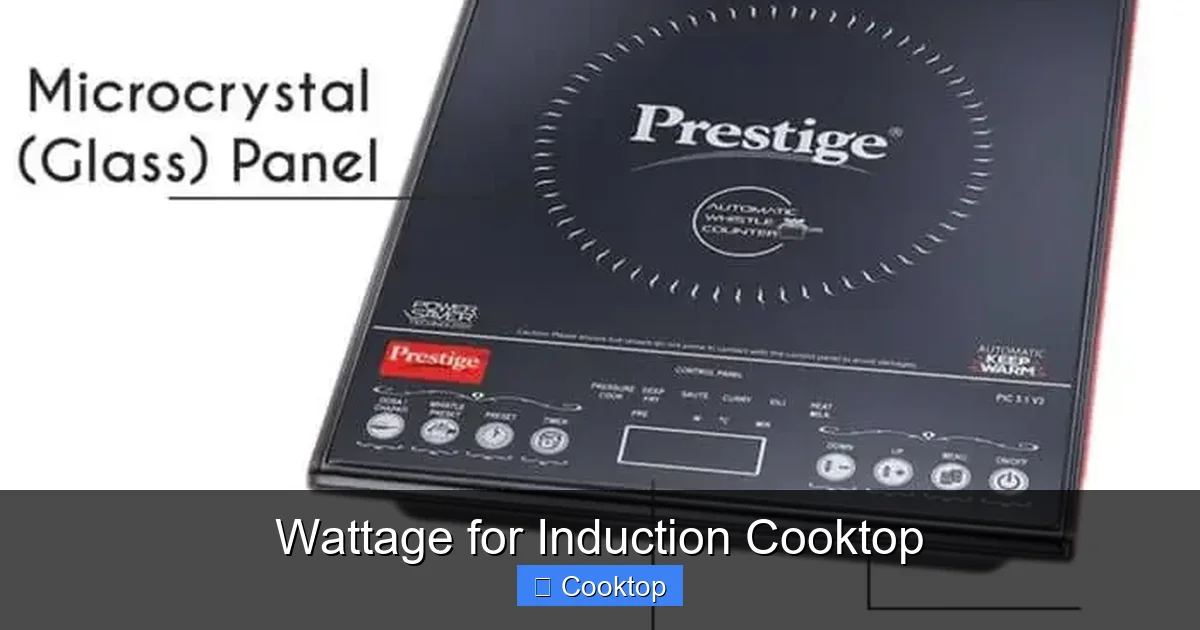
Visual guide about Wattage for Induction Cooktop
Image source: bestcookery.in
Calculating Energy Use
To estimate the energy consumption of a burner, use this simple formula:
Energy (kWh) = (Wattage ÷ 1000) × Hours Used
For example, running a 2000W burner for 30 minutes (0.5 hours) consumes:
(2000 ÷ 1000) × 0.5 = 1 kWh
If your electricity rate is $0.15 per kWh, that half‑hour of high‑power cooking costs about $0.15. By contrast, the same duration at 1200W would cost roughly $0.09.
Understanding this calculation helps you decide whether investing in a higher‑wattage burner is worth the potential increase in operating cost, based on how often you actually need that power.
Tips to Save Power
- Use lids on pots and pans to trap heat, reducing the time needed at high wattage.
- Match the pan size to the burner zone; an oversized pan wastes energy, while an undersized one may not couple efficiently.
- Take advantage of the cooktop’s power‑modulation feature—set a lower temperature and let the electronics maintain it rather than constantly turning the burner on and off.
- When boiling water, start with hot tap water instead of cold; this cuts the required energy by up to 30 %.
- Consider using a pressure cooker for foods that traditionally need long boiling times; the sealed environment raises the boiling point, cutting cooking time and energy use.
Choosing the Right Wattage for Your Kitchen Setup
Your kitchen’s electrical infrastructure, the number of burners you plan to use simultaneously, and whether you opt for a portable or built‑in unit all influence the wattage you should target.
Single Burner vs. Multi‑Burner
A portable single‑burner induction cooktop typically maxes out around 1800W, limited by the standard 120V household circuit (15A or 20A). If you need more power, you’ll have to look for a 240V model or a built‑in cooktop that can draw from a dedicated circuit.
Built‑in cooktops often feature four or five zones, with power distributed across them. For instance, a common configuration might be:
- Two zones at 1800W each
- One zone at 2200W with boost
- One zone at 1200W for low‑power tasks
This arrangement lets you handle multiple cooking tasks without overloading the circuit, as the total simultaneous draw stays within the breaker’s limit.
Portable vs. Built‑in
Portable units are ideal for dorm rooms, RVs, or as an extra burner during holidays. Their plug‑in design means you must respect the outlet’s rating—usually 1500W–1800W on a standard 120V circuit. If you frequently need more than that, a portable 240V model (requiring a special outlet) or a built‑in unit is the better choice.
Built‑in cooktops are wired directly into your home’s electrical panel, allowing for higher wattage zones and multiple high‑power burners running at once. When planning a kitchen remodel, consult an electrician to ensure your panel can support the desired load—especially if you opt for a cooktop with several 2200W+ zones.
For help picking compatible cookware to pair with your new induction surface, see our roundup of the best stainless steel cookware for induction cooktop. Having the right pans ensures you fully benefit from the wattage you select.
Common Myths About Induction Wattage
Misconceptions about wattage can lead to over‑ or under‑buying. Let’s clear up a few of the most persistent myths.
Myth: Higher Wattage Always Better
Many shoppers assume that the highest wattage number equals the best cooktop. In reality, excessive wattage offers diminishing returns if you rarely need rapid boiling or intense searing. Moreover, higher wattage zones can increase the upfront cost and may require a stronger electrical circuit. Choose the wattage that matches your actual cooking frequency rather than simply chasing the biggest number.
Myth: Wattage Determines Pan Compatibility
Wattage has no effect on whether a pan will work with induction. Compatibility depends solely on the pan’s ferromagnetic properties (e.g., cast iron, magnetic stainless steel). A 1200W burner will heat a suitable pan just as effectively as a 3000W burner—it will just do so more slowly. Always verify cookware compatibility with a magnet test before purchasing.
Myth: Boost Mode Damages the Cooktop
The boost or power function is designed for short‑duration, high‑output use. Running it for the recommended time (usually 1–5 minutes) is safe and does not harm the electronics. However, keeping a burner at boost for extended periods can trigger overheating protection, causing the unit to shut down temporarily. Use boost for quick tasks like boiling water, then return to a normal setting for the remainder of cooking.
Conclusion
Selecting the appropriate Wattage For Induction Cooktop is a balancing act between speed, versatility, energy use, and your kitchen’s electrical capacity. By understanding how wattage translates into real‑world performance—whether you’re boiling water in minutes, searing a steak to perfection, or maintaining a delicate simmer—you can tailor your cooktop choice to your specific cooking habits.
Remember that a higher wattage rating is not inherently superior; it simply provides more power for tasks that demand rapid heat. For everyday sautéing, simmering, and reheating, a medium‑wattage burner (1500W–1800W) often delivers the best mix of efficiency and capability. If you frequently cook large batches or need ultra‑fast boiling, investing in a zone with 2000W+ or a boost function will save you time and frustration.
Finally, pair your cooktop with suitable induction‑ready cookware to maximize heat transfer and minimize wasted energy. Explore our guides on the best frying pan for induction cooktop and the best stainless steel cookware for induction cooktop to ensure you have the right tools for every wattage level.
With the right wattage matched to your style, your induction cooktop will become a reliable, efficient centerpiece of your kitchen—delivering fast results when you need them and gentle control when you don’t.
Frequently Asked Questions
What is a good wattage for an induction cooktop if I mostly boil water and simmer sauces?
A burner in the 1500W–1800W range provides a solid performance for boiling water quickly while still offering fine control for simmering sauces. If you often need to boil large pots, consider a model with a 2000W boost zone for extra speed.
Can I use a high‑wattage induction burner on a standard 120V outlet?
Most portable induction cooktops are limited to about 1800W on a standard 120V, 15A–20A circuit. Built‑in units with zones above 2000W usually require a 240V connection or a dedicated circuit, so check your home’s electrical capacity before purchasing.
Does wattage affect how well my induction cooktop works with non‑stick pans?
No. Wattage only influences how fast heat is generated. Non‑stick pans work on induction as long as they have a ferromagnetic base; the power level simply changes the speed at which the pan reaches the desired temperature.
Is it safe to run the boost function on my induction cooktop for several minutes?
Boost is intended for short bursts—typically 1 to 5 minutes—depending on the model. Running it longer can trigger the cooktop’s overheating protection, causing a temporary shutdown. Use boost for quick tasks like bringing water to a boil, then revert to a normal setting.
How do I calculate the electricity cost of using a specific wattage on my induction cooktop?
Multiply the wattage by the number of hours used, divide by 1000 to get kilowatt‑hours, then multiply by your electricity rate. For example, a 2000W burner used for 0.5 hours at $0.15/kWh costs (2000/1000)×0.5×0.15 = $0.15.
Should I choose a cooktop with all high‑wattage zones or a mix of low and high?
A mix offers the most flexibility. High‑wattage zones excel at rapid boiling and searing, while lower‑wattage zones provide precise, gentle heat for delicate tasks. This combination lets you cook multiple dishes efficiently without overloading your electrical circuit.