Is Air Fryer Same as a Convection Oven
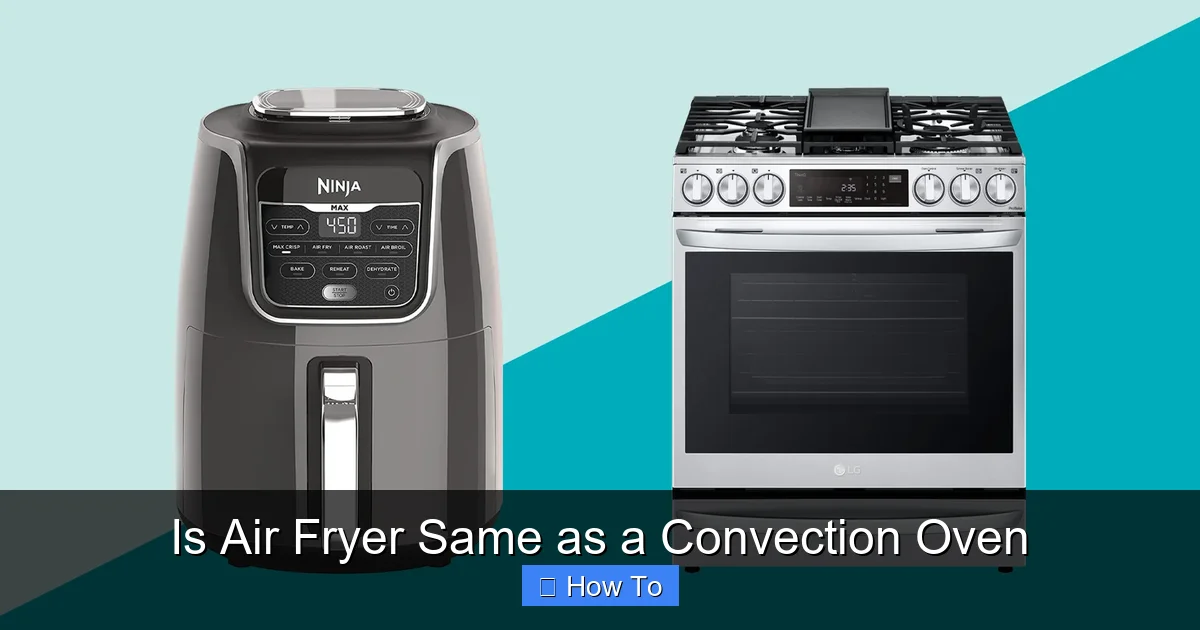
While air fryers and convection ovens both use rapid air circulation for cooking, they are not the same appliance. Air fryers are essentially small countertop convection ovens designed specifically for frying-like results with minimal oil, whereas convection ovens are full-sized ovens that can bake, roast, and more. Understanding their differences helps you choose the right tool for your cooking needs.
Key Takeaways
- Different Sizes: Air fryers are compact countertop appliances, while convection ovens are typically full-sized or large built-in units.
- Cooking Method: Both use rapid air circulation, but air fryers are optimized for crisping and frying-like results with little to no oil.
- Versatility: Convection ovens offer more cooking functions like baking and roasting, while air fryers focus on frying alternatives.
- Capacity: Convection ovens can handle larger meals and multiple items, whereas air fryers are best for smaller portions.
- Temperature and Time: Air fryers generally cook faster at higher temperatures compared to convection ovens, which offer more precise temperature control.
📑 Table of Contents
Is Air Fryer Same as a Convection Oven?
If you’ve ever wondered whether an air fryer is the same as a convection oven, you’re not alone. These two kitchen appliances have taken the culinary world by storm, and their similarities can be confusing. Both promise crispy, evenly cooked food using less oil, and both rely on the power of hot air circulation. But are they truly interchangeable? Let’s break it down.
At first glance, air fryers and convection ovens might seem like distant cousins at best—or maybe even twins separated at birth. After all, they both use a fan to circulate hot air around food, creating that golden, crunchy texture we all crave. However, their design, functionality, and intended use cases differ significantly. So, if you’re trying to decide which one deserves a spot in your kitchen, keep reading. We’ll explore everything from how they work to what kinds of food they excel at cooking.
How Do Air Fryers Work?
Air fryers were designed with one goal in mind: to replicate the texture and taste of deep-fried foods without submerging them in oil. They achieve this through a simple yet effective mechanism. Inside every air fryer is a heating element and a powerful fan. The fan rapidly circulates hot air around the food at high speed, creating a crispy outer layer while keeping the inside tender and juicy.
The Science Behind the Crisp
The magic happens thanks to the Maillard reaction—a chemical process that occurs when proteins and sugars in food are exposed to high heat. This reaction is responsible for browning and developing complex flavors. In traditional frying, oil transfers heat to the food. In an air fryer, it’s the super-hot air that does the job, eliminating the need for excessive oil while still achieving that satisfying crunch.
Most air fryers come with a basket that sits inside the main unit. Food is placed in the basket, and as the hot air circulates, it lifts and tumbles the food slightly, ensuring even cooking. This makes air fryers particularly effective for items like french fries, chicken wings, and vegetables.
Understanding Convection Ovens
Convection ovens are a step up from conventional ovens. Instead of relying solely on radiant heat from the top and bottom elements, convection ovens include a fan and exhaust system that circulates hot air throughout the oven cavity. This constant movement of heat ensures that food cooks more evenly and often reduces cooking time compared to standard ovens.

Visual guide about Is Air Fryer Same as a Convection Oven
Image source: airfryeraid.com
Types of Convection Ovens
There are several types of convection ovens available today:
- Standard Convection: Features a fan and heater that turn on and off together to maintain consistent temperature.
- Convection Broil: Combines convection heat with intense top-down broiling for extra browning.
- Steam Convection: Uses steam in addition to convection for moist, flavorful results—ideal for baking bread or roasting meats.
Convection ovens are versatile workhorses. Whether you’re baking cookies, roasting a turkey, or reheating leftovers, these ovens can handle it all. Their spacious interiors make them perfect for family meals and entertaining guests.
Key Differences Between Air Fryers and Convection Ovens
Now that we’ve covered how each appliance works, let’s look at the key differences that set them apart.
Size and Capacity
One of the most obvious distinctions is size. Air fryers are compact, countertop-friendly devices that typically hold 2–5 quarts. Perfect for singles, couples, or anyone short on space, they’re ideal for small portions. Convection ovens, on the other hand, range from medium-sized toaster oven styles to full-sized wall or range ovens. These can easily accommodate a whole chicken, multiple baking sheets, or a large lasagna.
Cooking Performance
When it comes to cooking performance, air fryers shine in one area: crispiness. Their focused airflow and smaller chamber create an environment that mimics deep frying. Convection ovens are more balanced—they excel at baking, roasting, and reheating, but may not deliver the same level of crisp without additional steps like broiling.
User Experience
Air fryers are incredibly user-friendly. Most models feature digital controls with preset programs for common foods. Just add your ingredient, select the setting, and press start. Convection ovens offer more manual control, allowing experienced cooks to fine-tune temperature and timing. However, this flexibility also means there’s a steeper learning curve.
Can You Use Them Interchangeably?
While air fryers and convection ovens share some similarities, swapping one for the other isn’t always straightforward. If you’re following a recipe designed for one appliance, you’ll likely need to adjust cooking times and temperatures when using the other.
Adapting Recipes
For example, if a recipe calls for air frying at 375°F for 20 minutes, you might need to increase the time to 30–35 minutes in a convection oven. Conversely, if you’re adapting a convection oven recipe for an air fryer, reduce the temperature by about 25°F and check for doneness earlier than suggested.
It’s also worth noting that certain foods perform better in one appliance over the other. Frozen french fries? Air fryer wins. Baking a cake? Convection oven is your best bet. Roasting vegetables? Either works well, though the air fryer will give you more caramelization.
Choosing the Right Appliance for Your Kitchen
So, how do you decide which appliance is right for you? It really comes down to your lifestyle, cooking habits, and available space.
Go for an Air Fryer If:
- You live alone or have a small household.
- You want healthier versions of fried favorites.
- You value convenience and speed.
- You have limited counter or storage space.
Choose a Convection Oven If:
- You frequently cook for families or host gatherings.
- You enjoy baking, roasting, or making multi-course meals.
- You prefer precise control over cooking settings.
- You already own a microwave and toaster and want a multifunctional upgrade.
Interestingly, some modern appliances blur the line between the two. Air fryer ovens combine the functionality of a convection oven with air frying capabilities. These hybrid units offer the best of both worlds—ample capacity plus the ability to crisp up your favorite foods.
Final Thoughts: Not the Same, But Both Valuable
In short, an air fryer is not the same as a convection oven, though they certainly share some DNA. Air fryers are specialized tools built for speed and crispiness, while convection ovens are more general-purpose appliances with broader culinary applications.
Whether you opt for one, both, or something in between, the key is understanding what each appliance brings to the table. With this knowledge, you’ll be better equipped to make informed decisions about your next kitchen purchase—and maybe even discover new ways to enjoy your favorite dishes.
Remember, the “best” appliance is the one that fits seamlessly into your routine and helps you create delicious meals with ease. Whether that’s a sleek air fryer or a robust convection oven, your perfect match is out there waiting.
Frequently Asked Questions
Is an air fryer just a mini convection oven?
Yes, an air fryer functions similarly to a mini convection oven, using rapid air circulation to cook food. However, air fryers are specifically designed for achieving crispy textures with minimal oil, while convection ovens are more versatile for various cooking methods.
Can I use my air fryer like a convection oven?
You can use an air fryer for many convection oven tasks, especially roasting vegetables or reheating food. However, due to its smaller size and focused airflow, it may not replace a full-sized convection oven for baking or cooking large meals.
Do air fryers and convection ovens cook food the same way?
Both use fans to circulate hot air, but air fryers operate at higher speeds in a smaller space, creating more intense airflow. This results in quicker cooking and crispier textures compared to most convection ovens.
Which is better for healthy cooking: air fryer or convection oven?
Air fryers are excellent for reducing oil intake while maintaining texture, making them ideal for healthier versions of fried foods. Convection ovens also promote even cooking with less oil, but air fryers offer more targeted benefits for low-fat frying alternatives.
Should I buy both an air fryer and a convection oven?
If you have the space and budget, owning both can be beneficial. Air fryers are great for quick, crispy meals, while convection ovens handle larger batches and diverse cooking styles. Alternatively, consider an air fryer oven that combines both functions.
Can I bake in an air fryer like a convection oven?
You can bake certain items like muffins or small cakes in an air fryer, but results may vary due to the intense airflow. For best baking outcomes, a convection oven provides more even heat distribution and better control over texture and rise.