Is Air Fryer Different from Oven

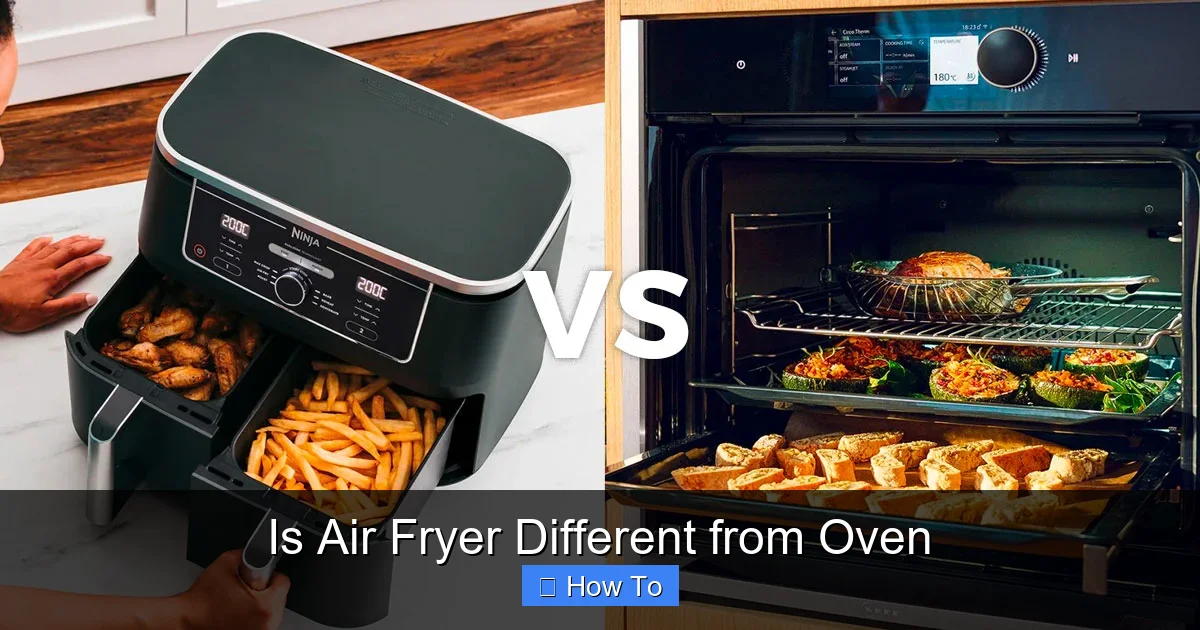
Air fryers and ovens both cook food, but they work in fundamentally different ways. Air fryers use rapid hot air circulation to cook food quickly with little oil, while ovens rely on static heat and larger cavities. Understanding these differences helps you choose the right appliance for your meals.
Imagine standing in your kitchen, holding a crisp, golden‑brown piece of chicken, and wondering how that magic happened. Did you use a regular oven, or was it the new air fryer sitting on the counter? If you’ve ever asked, “Is Air Fryer Different From Oven?” you’re not alone. Millions of home cooks grapple with this question every day. The short answer: yes, they are different, but the real story is about how those differences affect your cooking, your energy bills, and your kitchen’s workflow.
In this guide we’ll break down the core mechanics of both appliances, compare their performance, and help you decide which one fits your lifestyle. We’ll sprinkle in practical tips, real‑world examples, and even point you to deeper articles on related topics. By the end, you’ll know exactly when to reach for an air fryer and when an oven is the better choice.
Key Takeaways
- Air fryers cook faster: Small baskets heat air to high temperatures, reducing cooking time compared to a conventional oven.
- Ovens handle larger loads: Their spacious interior lets you cook whole turkeys or multiple trays at once.
- Energy use varies: Air fryers often use less electricity for small portions, while ovens can be more efficient for big batches.
- Flavor and texture differ: Air fryers give a crispy exterior with less oil; ovens provide even browning and moist heat.
- Learning curves differ: Air fryers are simple for quick snacks, while ovens require more timing and temperature adjustments.
- Cost considerations matter: Initial price, running costs, and recipe adaptation all affect long‑term value.
- Hybrid options exist: Combo units merge air fryer and oven features for versatile kitchen setups.
📑 Table of Contents
Understanding Air Fryer Technology
What an Air Fryer Actually Is
An air fryer is a small, box‑shaped device that mimics convection cooking but in a compact form. At its heart is a heating element and a powerful fan. The fan blasts hot air around the food at speeds up to 200 miles per hour. This rapid circulation creates a crispy texture with far less oil than traditional frying.
Key Components
- Heating element: Provides the base heat.
- Fan: Moves air quickly through the basket.
- Basket: Holds food in a single layer for even exposure.
- Temperature dial: Lets you set the exact cooking temperature, usually from 180°F to 400°F.
Because the air is constantly moving, heat reaches every surface of the food. This is why an air fryer can crisp a piece of salmon in 12 minutes while a conventional oven might need 25 minutes.
How a Conventional Oven Works
Static Heat vs. Convection
A standard oven uses static heat. The heating elements sit at the top and bottom, warming the air. This air rises, cools, and sinks again, creating gentle currents. Most home ovens are not equipped with a fan, so heat distribution is more uniform but less intense.
Visual guide about Is Air Fryer Different from Oven
Image source: danbyinteriors.co.uk
Large Cavity Advantage
The oven’s spacious cavity allows you to cook large items like a whole turkey or multiple trays of cookies simultaneously. You can also use various racks, trays, and accessories—rotisserie kits, pizza stones, and convection upgrades.
When you set the temperature, the oven heats until it reaches that point, then maintains it. There’s no rapid air movement, so food cooks more slowly and often more evenly across larger surfaces.
Key Differences in Cooking Method
Speed and Efficiency
Air fryers are built for speed. The concentrated hot air cooks food in a fraction of the time. For example, a batch of frozen fries takes about 12‑15 minutes in an air fryer but 25‑30 minutes in a standard oven. This speed comes from the high fan speed and the small cooking chamber.
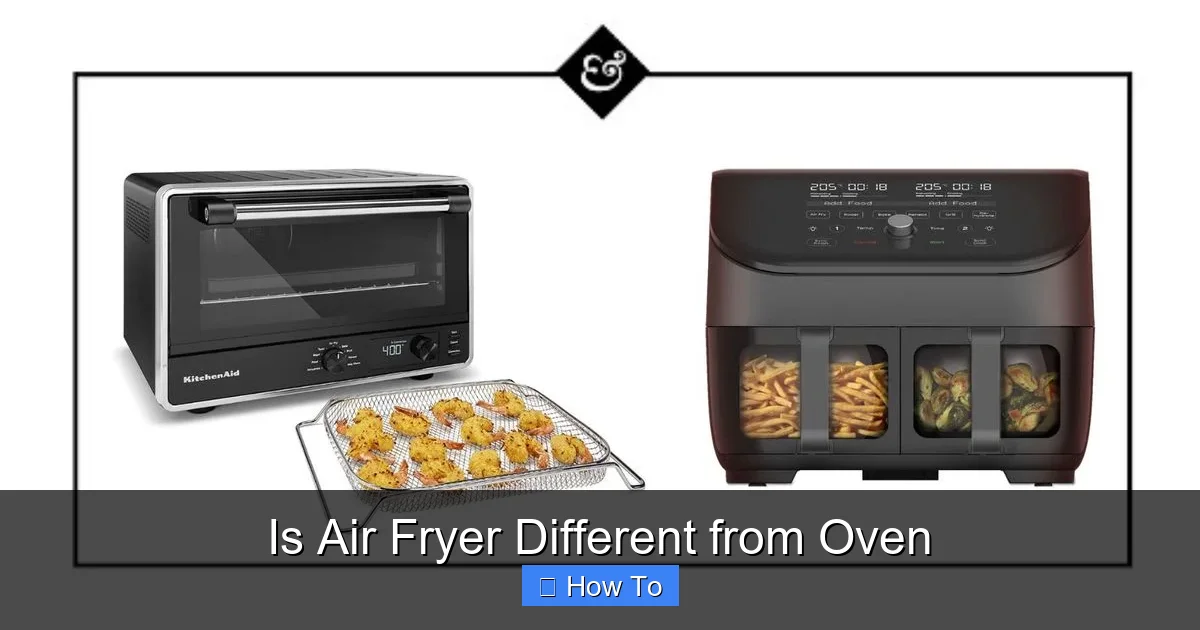
Visual guide about Is Air Fryer Different from Oven
Image source: cdn.mos.cms.futurecdn.net
Temperature Range
Both appliances can reach similar temperature ranges, but the way they deliver heat differs. An air fryer’s fan can maintain a consistent temperature with minimal fluctuation. In an oven, temperature can vary by 10‑15°F across different shelves.
Oil Usage
One of the biggest draws of an air fryer is reduced oil. You can cook with as little as 1 tablespoon of oil for crispy results. Ovens require more oil or butter to achieve similar browning because the heat is less intense.
Flavor Development
Air fryers create a Maillard reaction quickly, giving a deep, caramelized flavor. Ovens develop flavor more slowly, which can lead to a more nuanced taste, especially for roasted meats with natural juices.
If you want to dive deeper into how these differences affect specific dishes, check out our detailed guide on Is Air Fryer Different From Oven. It walks through chicken, steak, and desserts side by side.
Energy Efficiency and Cost Comparison
Power Consumption
Air fryers typically draw 1,200‑1,500 watts, while a standard oven uses 2,000‑2,500 watts. However, because air fryers cook faster and use smaller portions, the total energy cost per meal can be lower.
Running Costs
Consider the cost of a typical week of cooking. If you make a small batch of roasted vegetables, an air fryer might use 0.3 kWh, costing about $0.04. The same vegetables in a large oven could consume 1.2 kWh, costing $0.15. Over months, those savings add up.
Initial Investment
Entry‑level air fryers start around $50, while mid‑range models can be $150‑$200. Ovens range from $200 for basic models to $1,500 for high‑end convection units. Choose based on your kitchen space and cooking volume.
For a deeper look at whether the ongoing expense is worth it, read our article on Is Using An Air Fryer Cheaper Than Oven. It breaks down monthly utility bills and maintenance costs.
Food Quality and Health Impact
Nutrient Retention
Air fryers preserve more vitamins because the cooking time is short and oil usage is minimal. Vitamin C and B vitamins degrade less than in deep‑fried or prolonged oven cooking.
Fat Content
With up to 75% less oil, air fryers produce lower‑fat meals. This is especially appealing for heart‑healthy diets. Ovens often require added fats for flavor, which can increase caloric intake.
Texture and Palatability
Air fryers excel at achieving a crunchy exterior while keeping the interior tender. Ovens are better for achieving a uniformly browned surface on larger cuts of meat, which some people prefer.
Practical Tips and When to Choose Each Appliance
Use an Air Fryer When…
- You need a quick snack or meal in under 30 minutes.
- You’re cooking a single serving or small batch.
- You want crisp results with minimal oil.
- You have limited kitchen counter space.
- You’re trying to reduce fat intake.
Use an Oven When…
- You’re cooking a large turkey or multiple dishes at once.
- You need to bake a sheet pan of cookies or a large casserole.
- You prefer slow‑roasted flavors with natural juices.
- You have accessories like pizza stones or rotisserie kits.
- You’re planning a meal prep batch for the week.
Hybrid Solutions
Some modern kitchens invest in combination units that merge an air fryer and an oven. These hybrids offer flexibility but also higher cost and larger footprint. If you cook both small snacks and large meals regularly, a combo might be worth the upgrade.
Remember, the best appliance is the one you’ll use most often. Mixing and matching based on the day’s menu keeps your kitchen efficient and your meals exciting.
Conclusion
So, is an air fryer different from an oven? Absolutely. The core mechanics, cooking times, energy use, and food outcomes set them apart. However, each appliance shines in its own niche. By understanding these differences—air fryers for speed, small batches, and low‑oil crispness; ovens for large loads, even heat, and versatile cooking—you can make smarter choices every time you cook.
Take the insights from this guide, try a few recipes from both sides, and see which tool feels right in your hands. Whether you end up with a dedicated air fryer, a trusty oven, or a hybrid combo, the goal is to make cooking easier, healthier, and more enjoyable. Happy cooking!
Frequently Asked Questions
Is an air fryer the same as a regular oven?
No. An air fryer uses a powerful fan to circulate hot air rapidly, cooking food quickly and with little oil. A regular oven relies on static heat and a larger cavity, making it better for bigger items and batch cooking.
Can I replace all oven recipes with an air fryer?
Partial replacement works well for small portions, snacks, and crispy dishes. Large roasts, baked desserts, and multi‑tray meals are often better suited to a conventional oven.
Which uses less electricity, an air fryer or an oven?
For small portions, an air fryer typically uses less power because it cooks faster. For large batches, an oven can be more energy‑efficient per serving.
Do air fryers require special oil?
Most oils work, but high‑smoke‑point oils like canola, grapeseed, or avocado are recommended. You need only a thin coating—usually 1‑2 tablespoons—for crisp results.
Is an air fryer healthier than an oven?
Air fryers generally produce meals with less added fat and retain more nutrients due to shorter cooking times. However, the overall health impact depends on the ingredients and cooking techniques you choose.
Can I bake a cake in an air fryer?
Yes, but you’ll need an appropriate pan and may need to adjust time and temperature. The small chamber can cause rapid browning, so monitor closely.