How to Adjust Oven Temp to Air Fryer
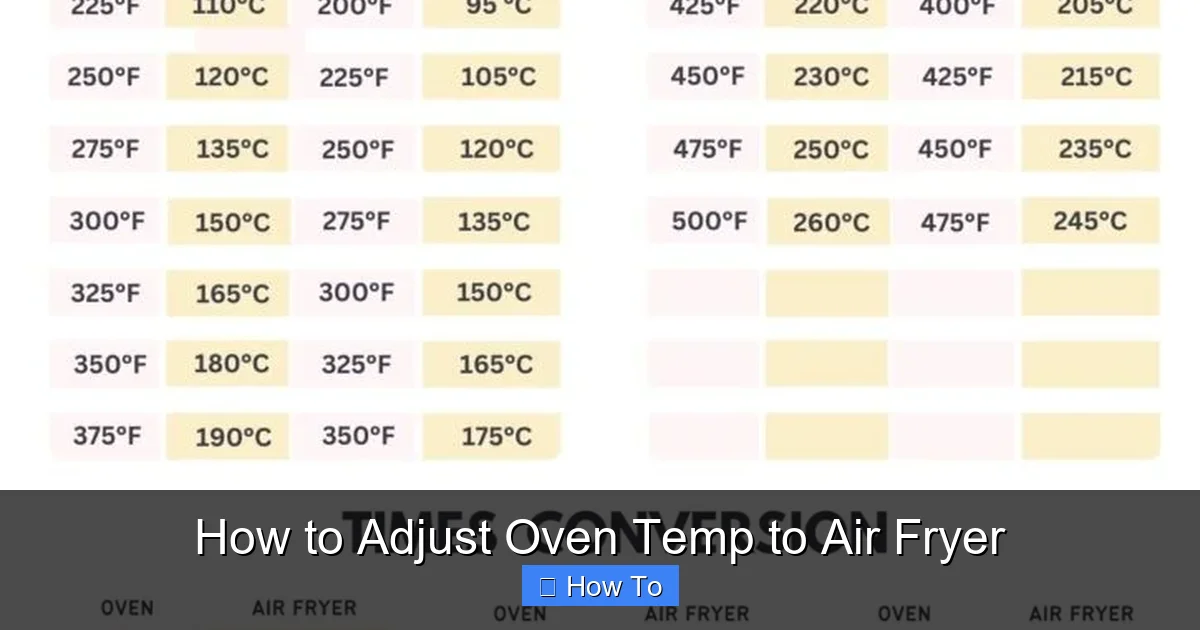
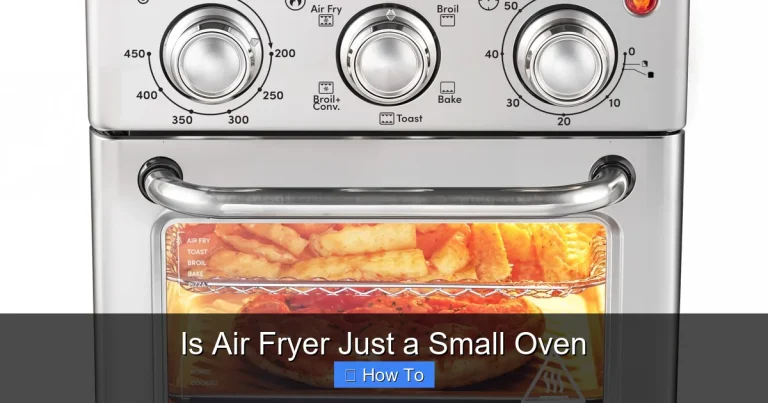
When using your oven’s air fryer function, you’ll need to adjust both temperature and cooking time to achieve crispy results. Lower the oven temperature by 25-50°F compared to traditional recipes, reduce cooking time by 20-30%, and avoid overcrowding for optimal air circulation.
Key Takeaways
- Temperature Adjustment: Lower oven temps by 25-50°F for air fry mode to prevent burning.
- Time Reduction: Cut cooking time by 20-30% for faster, crispier results.
- Preheating: Preheat your oven before adding food for even cooking.
- Rack Placement: Use the center rack and avoid overcrowding for maximum airflow.
- Check Halfway: Flip or shake food during cooking for uniform browning.
- Convection Setting: Enable convection if available to enhance crispiness.
- Monitor Closely: Air fryer cooking is faster—watch for doneness to avoid overcooking.
📑 Table of Contents
Understanding the Basics of Oven vs. Air Fryer Cooking
When you use your oven’s air fry function, you’re essentially creating a hybrid cooking method that combines the benefits of both conventional baking and air frying. Traditional ovens rely on radiant heat and slower air circulation, while air fryers use a powerful convection fan to circulate super-hot air around food, resulting in a crispy exterior without the need for deep frying. This difference in heat distribution means that adjustments are necessary when converting recipes from a standalone air fryer to your oven’s air fry setting.
Why Temperature Adjustments Matter
In a typical air fryer, temperatures range from 300°F to 400°F, whereas conventional ovens often bake at 350°F to 450°F. Because air fryers are more efficient at transferring heat, using the same temperature in your oven’s air fry mode can lead to overcooked, burnt, or unevenly cooked food. To avoid this, you’ll need to reduce the temperature by 25-50°F. For example, if a recipe calls for 400°F in a standalone air fryer, set your oven’s air fry function to 350-375°F.
Time is of the Essence
Air frying is also faster than conventional baking because of the concentrated heat. Most recipes will require 20-30% less cooking time. This is especially true for items like chicken wings, french fries, or vegetable chips. If your original recipe says 20 minutes in a conventional oven, try 14-16 minutes in air fry mode. Always check for doneness before the timer goes off to prevent overcooking.
Adjusting Temperature When Using Air Fry Mode
To adjust your oven temperature for air frying, start by identifying the required temperature in your original recipe. Then subtract 25-50°F based on your oven’s air fry function. Here are some common examples:
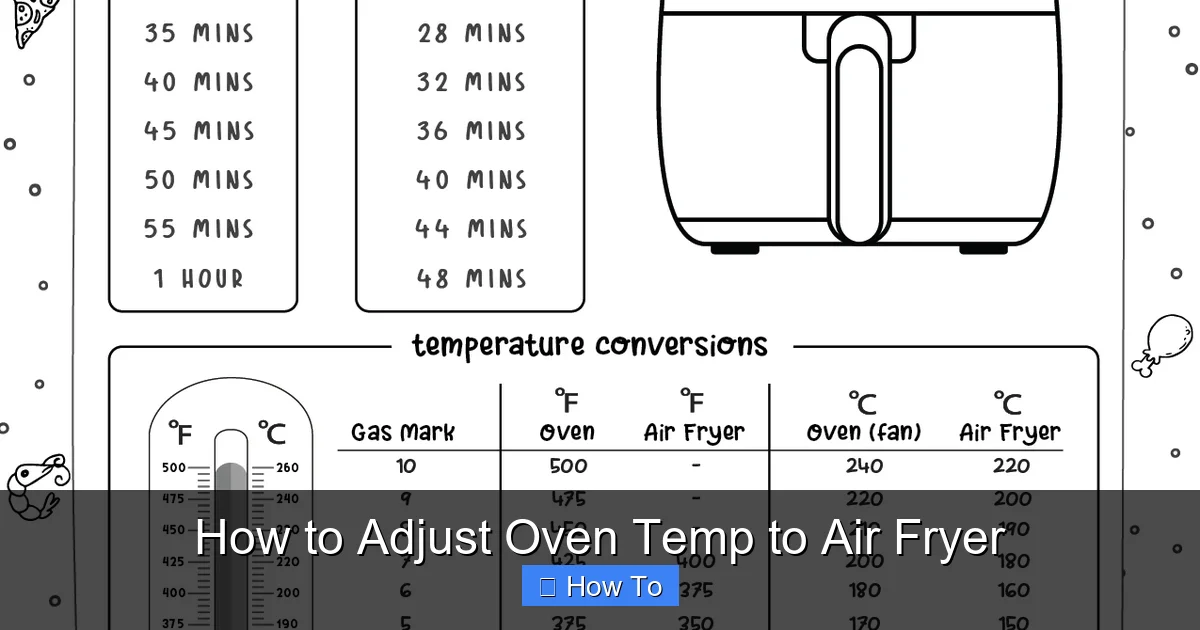
Visual guide about How to Adjust Oven Temp to Air Fryer
Image source: i.pinimg.com
Food-Specific Temperature Adjustments
- French Fries: Original 425°F → Adjusted 375-400°F
- Chicken Wings: Original 400°F → Adjusted 350-375°F
- Fish Sticks: Original 375°F → Adjusted 325-350°F
- Onion Rings: Original 400°F → Adjusted 350-375°F
- Potato Wedges: Original 450°F → Adjusted 400-425°F
These adjustments ensure your food cooks evenly without burning. It’s also wise to test a small batch first to fine-tune the settings for your specific oven model.
Using the Right Convection Setting
Many ovens with air fry capabilities also offer a convection setting. If your oven has both, use the air fry mode for the crispiest results. However, if you’re unsure, the convection setting can also work effectively. Make sure to reduce the temperature and time as outlined above, regardless of which setting you choose.
Time Adjustments for Air Fry Cooking
Because air fryers circulate heat more efficiently, cooking times are significantly shorter than traditional baking. Here’s how to adjust:
General Time Reduction Guidelines
- Baked Goods: Reduce time by 15-20%
- Proteins: Reduce time by 20-25%
- Vegetables: Reduce time by 25-30%
- Frozen Foods: Reduce time by 30-40%
Practical Example: Cooking Chicken Wings
Suppose a recipe calls for 40 minutes at 400°F in a conventional oven. In air fry mode, set the temperature to 350-375°F and cook for 25-30 minutes. Check the wings halfway through and flip them for even browning. The result should be crispy skin and fully cooked meat without the need for additional broiling.
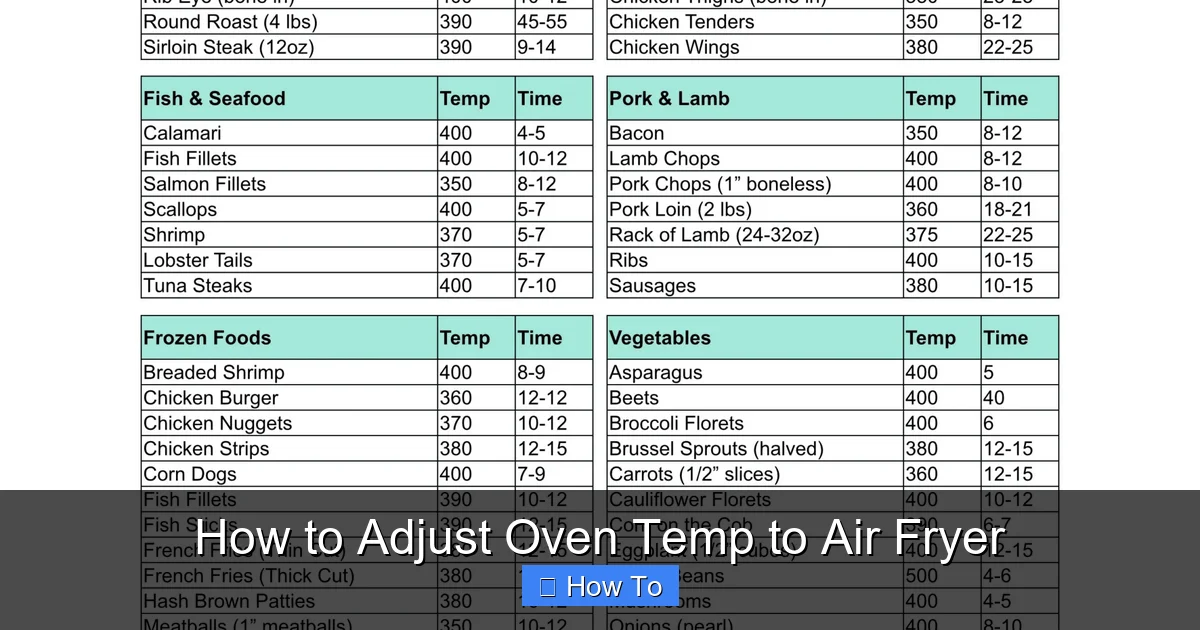
Visual guide about How to Adjust Oven Temp to Air Fryer
Image source: thebustedoven.com
Checking for Doneness
Use a meat thermometer to ensure proteins are cooked to the appropriate internal temperature. For example, chicken should reach 165°F, while burgers should hit 160°F. If you don’t have a thermometer, look for visual cues like golden-brown coloration and a sizzling sound.
Preheating Considerations
Preheating your oven before air frying is crucial for achieving that signature crispy texture. Unlike traditional baking, air frying relies on immediate, intense heat to create a crust. If you skip preheating, your food may absorb moisture and become soggy instead of crispy.
When to Preheat
Always preheat your oven for at least 5-10 minutes before adding food. However, there are exceptions. Some recipes, like reheating leftover french fries, may not require preheating. Always check your specific recipe or test a small batch to determine the best approach.
Preheating Tips
- Use the Air Fry Mode: Ensure the preheat cycle activates the convection fan.
- Check Your Manual: Some ovens automatically preheat when you select the air fry setting.
- Avoid Opening the Door: Keep the door closed during preheating to maintain consistent heat.
Positioning Food in the Oven
Proper placement of food in your oven’s air fry mode is just as important as temperature and time adjustments. The air fry function relies on unobstructed airflow, so positioning matters.
Using the Correct Rack
Most ovens with air fry capabilities come with a specialized rack or basket designed to maximize airflow. If your oven uses a standard rack, elevate it to the center position. Avoid placing food too close to the heating elements, as this can cause uneven cooking or burning.
Avoiding Overcrowding
Never overcrowd the oven. Leave at least 1-2 inches of space between food pieces to allow hot air to circulate freely. If you need to cook a large batch, do it in multiple rounds. Overcrowding will result in soggy, steamed food instead of crispy results.
Flipping or Shaking Food
Halfway through cooking, open the oven and use tongs or a spatula to flip or shake the food. This ensures even browning and prevents sticking. For delicate items like fish sticks, avoid flipping to prevent breakage.
Common Mistakes and How to Avoid Them
Even experienced cooks can make mistakes when using their oven’s air fry function. Here are common pitfalls and how to fix them:
Overcrowding the Oven
One of the most common errors is cramming too much food into the oven. This traps moisture and reduces crispiness. To avoid this, cook in batches and rotate trays if needed.
Not Adjusting Time
Using the same cooking time as a conventional recipe is a recipe for disaster. Always reduce the time by 20-30% and check for doneness early.
Using the Wrong Rack
Using a lower rack or blocking the air vents can ruin your results. Stick to the designated air fry rack or center position for best outcomes.
Skipping Preheating
Failing to preheat is another frequent mistake. A properly preheated oven ensures immediate heat transfer, which is key for crispiness.
Ignoring the Manual
Every oven model varies, so refer to your user manual for specific instructions. Some ovens may require additional adjustments based on their unique air fry design.
Conclusion
Adjusting your oven temperature and cooking time for air fry mode takes practice, but once you get the hang of it, you’ll wonder why you ever used a standalone air fryer! By lowering the temperature, reducing cooking time, preheating, and avoiding overcrowding, you’ll achieve crispy, golden results every time. Don’t forget to monitor your food closely and make small tweaks based on your oven’s performance. With these tips, you’ll be a pro at using your oven’s air fry function in no time.
Frequently Asked Questions
Can I use the same temperature for air frying as I would for baking?
No, you should lower the temperature by 25-50°F when using your oven’s air fry function. Air frying cooks faster and more efficiently than traditional baking, so lower temps prevent burning while still achieving crispiness.
Do I need to preheat my oven for air frying?
Yes, preheating is essential for air frying. It ensures immediate heat transfer, which helps create that signature crispy texture. Preheat for 5-10 minutes before adding your food.
How do I know when my food is done in air fry mode?
Check for visual cues like golden-brown coloration and listen for a sizzling sound. For proteins, use a meat thermometer to ensure they reach the appropriate internal temperature (e.g., 165°F for chicken).
Why is my air fried food not crispy?
Overcrowding, incorrect temperature, or skipping preheating can all lead to soggy results. Ensure there’s space between food pieces, use the right temperature adjustments, and always preheat your oven.
Can I cook frozen food in air fry mode?
Yes, but reduce the cooking time by 30-40%. Frozen foods take longer to heat through, so keep an eye on them and check for doneness early to avoid overcooking.
Do I need to use the convection setting for air frying?
True air fry mode is ideal, but if your oven has a convection setting, you can use it with reduced temperature and time. The convection fan helps circulate heat, mimicking air fry mode.