Can My Convection Oven Be an Air Fryer
Yes, many modern convection ovens can function as air fryers with a few simple adjustments. This guide walks you through the basics, showing you how to set temperature, airflow, and cooking times to get crispy results without buying a separate machine. You’ll discover the benefits, potential drawbacks, and easy recipes that make the switch worthwhile.
Many home cooks wonder, “Can My Convection Oven Be an Air Fryer?” The short answer is yes—most convection ovens can mimic an air fryer with just a few tweaks. This article explores how the two appliances overlap, gives step‑by‑step conversion instructions, and shares practical tips so you can enjoy crispy, juicy results without buying a second device.
Key Takeaways
- Point 1: Convection ovens circulate hot air, which is the core principle behind air fryers.
- Point 2: By adjusting temperature and using the right accessories, you can achieve the same crispiness as a dedicated air fryer.
- Point 3: Most convection ovens lack a drawer‑style basket, so cooking larger batches may require a rack or a universal air‑fryer basket.
- Point 4: Energy use is often lower than a stand‑alone air fryer, making it a cost‑effective option for many households.
- Point 5: Understanding the differences helps you decide when a convection oven is the better choice and when a true air fryer might be needed.
- Point 6: Simple conversion steps and a few handy tips can turn your existing oven into a versatile air‑fryer cooking station.
📑 Table of Contents
- Introduction: Why the Question Matters
- What Is a Convection Oven vs. an Air Fryer?
- Can a Convection Oven Really Cook Like an Air Fryer?
- Simple Steps to Use Your Convection Oven as an Air Fryer
- Benefits and Drawbacks of Using a Convection Oven as an Air Fryer
- Tips, Recipes, and Getting the Most Out of Your Setup
- Conclusion: Yes, Your Convection Oven Can Be an Air Fryer
Introduction: Why the Question Matters
Kitchen space is precious. You may already own a convection oven and wonder if you can skip the extra countertop air‑fryer. The answer often depends on your cooking habits, the size of your family, and the types of dishes you love. In this guide we break down the science, the equipment, and the real‑world pros and cons. By the end, you’ll know exactly how to use your convection oven as an air fryer and when it might be better to keep the two separate.
We also touch on energy savings, recipe ideas, and safety tips. Whether you are a busy parent looking for quick meals, a health‑conscious cook wanting less oil, or a gadget enthusiast exploring new ways to use existing equipment, this article has something for you.
What Is a Convection Oven vs. an Air Fryer?
The Basics of Convection Cooking
A convection oven uses a fan to circulate hot air evenly. This means food cooks faster and more uniformly than in a conventional oven. Most modern convection ovens let you turn the fan on or off, and many have a “convection bake” setting that works well for roasts, pizzas, and baked goods.
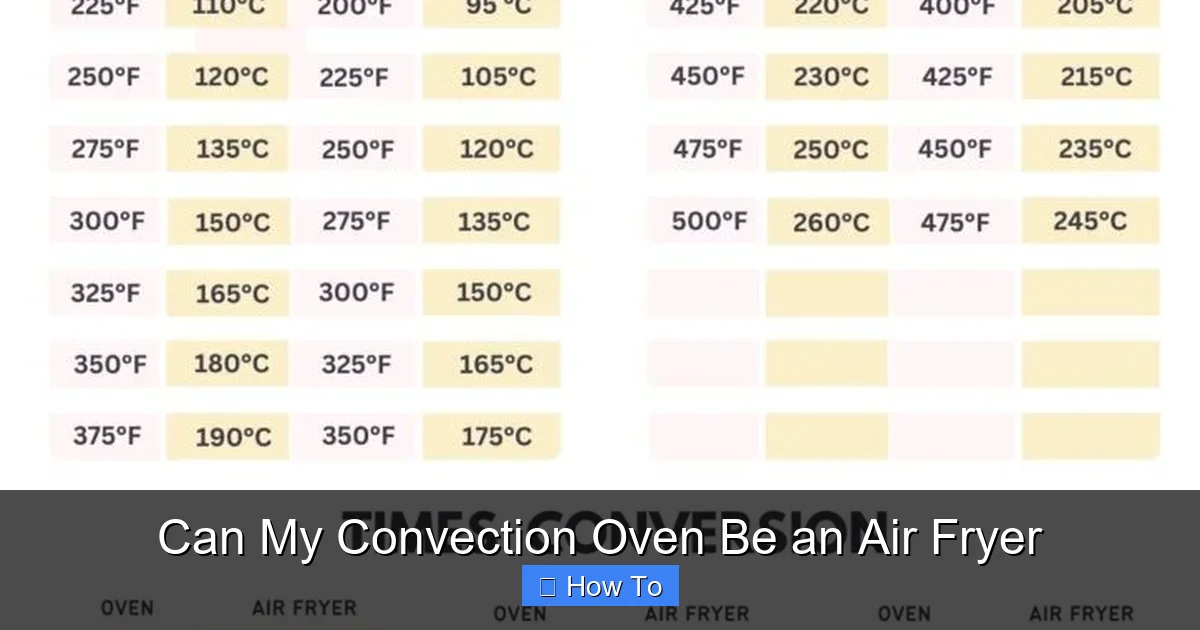
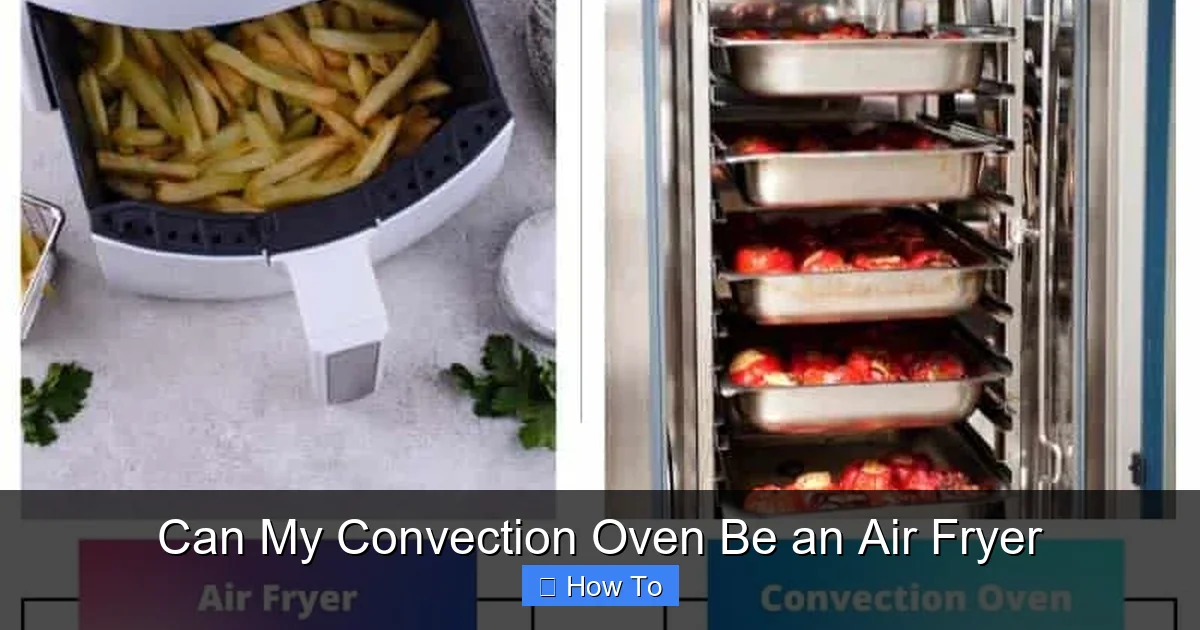
Visual guide about Can My Convection Oven Be an Air Fryer
Image source: the-bella-vita.com
How an Air Fryer Works
An air fryer is essentially a small convection oven in a compact box. It uses a powerful fan to blow hot air around a food basket, creating a crispy exterior while keeping the interior tender. Air fryers typically operate at higher temperatures (300‑400°F) and require less oil than traditional frying.
Key Differences at a Glance
- Size: Air fryers are usually 2‑5 quarts. Convection ovens range from 1.5‑5 cubic feet.
- Power: Air fryers draw 1‑2 kW. Convection ovens draw 1.5‑2.5 kW.
- Control: Air fryers have digital touch controls. Convection ovens often have analog dials or simple digital panels.
- Accessories: Air fryers come with a basket and tray. Convection ovens have racks and sometimes a lower drawer.
For a deeper look at the technical comparison, check out What Is Difference Air Fryer Vs Convection Oven. Understanding these nuances helps you decide if you can replace one with the other.
Can a Convection Oven Really Cook Like an Air Fryer?
Scientific Similarity
Both appliances rely on forced hot air. The main goal—creating a crispy surface while cooking food inside—is the same. In an air fryer, the food sits in a basket that allows air to flow freely. In a convection oven, you can place food on a wire rack or a baking sheet, and the fan does the rest.
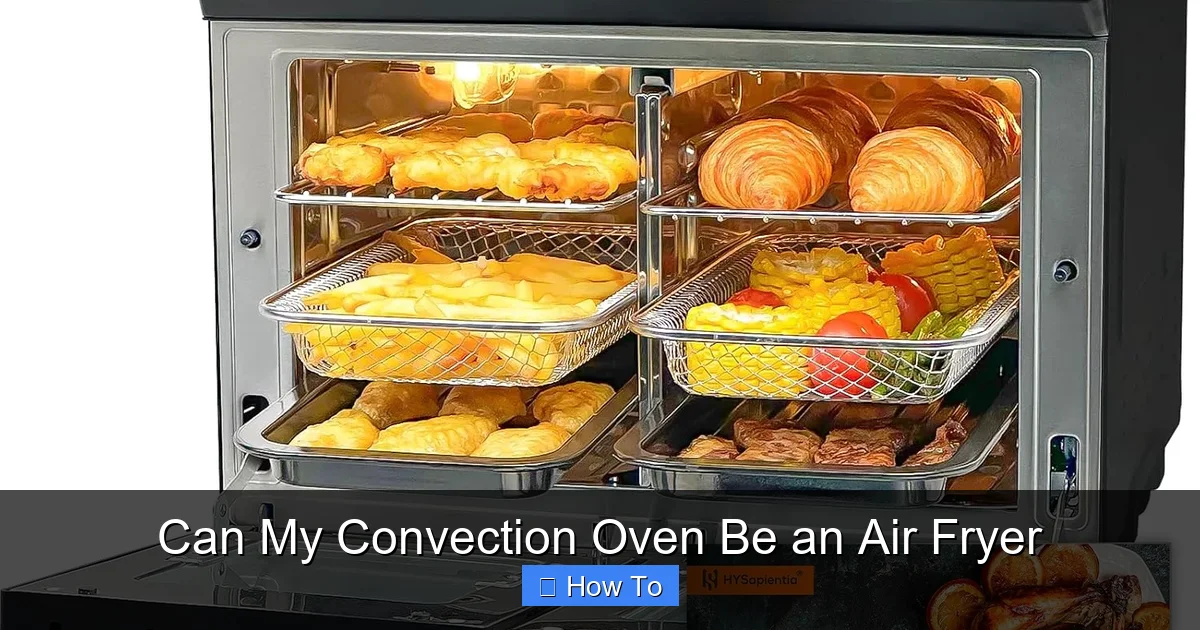
Visual guide about Can My Convection Oven Be an Air Fryer
Image source: m.media-amazon.com
Real‑World Performance
Tests show that a convection oven can produce results that rival an air fryer for many foods: fries, chicken wings, roasted vegetables, and even donuts. The main limitation is space. If you need to fry a large batch of chicken wings, a convection oven’s larger capacity can actually be an advantage.
However, some convection ovens lack the high‑speed fan that gives air fryers that signature “popping” texture. Look for models with a “Turbo” or “High‑Velocity” setting. If your oven has a separate “Air Fry” mode (found on some LG and Samsung units), you’re already set.
When a True Air Fryer Might Be Better
- Portability: Air fryers sit on a countertop and can move easily.
- Energy efficiency for small batches: Heating a huge oven for one piece of chicken wastes energy.
- Built‑in recipes: Many air fryers have preset programs for specific foods.
If you often cook single‑serve meals, an air fryer may be more practical. For families that cook larger meals regularly, a convection oven can handle the load and often uses less electricity per serving.
Simple Steps to Use Your Convection Oven as an Air Fryer
1. Choose the Right Accessories
You don’t need a special basket. A universal air‑fryer basket fits most convection ovens. If you have a lower drawer, you can slide the basket in and close the drawer for a sealed environment.
For smaller items like shrimp or nuts, a wire rack works fine. Just make sure there is at least ½‑inch clearance on all sides for air flow.
2. Set Temperature and Time
Air fryers typically run 350‑400°F. Convection ovens can do the same. Use these guidelines:
- Temperature: 375°F is a good starting point for most foods.
- Time: Start with the time listed in your air‑fryer recipe, then adjust by 10‑15 %.
- Pre‑heat: Let the oven heat for 5‑10 minutes before adding food.
3. Position the Food Correctly
Place food in a single layer on the basket or rack. Overcrowding blocks air flow and leads to soggy results. Cook in batches if needed.
4. Use Minimal Oil
Air fryers need only 1‑2 tsp of oil for most recipes. You can even cook with just a spray of oil or cooking spray. The hot air creates a crispy texture without deep‑frying oil levels.
5. Monitor and Adjust
Check for doneness halfway through. Convection ovens may cook a bit faster or slower than an air fryer, depending on the model. Adjust temperature down by 25°F if you notice excessive browning.
For a step‑by‑step visual guide, see How To Convert Convection Oven To Air Fryer. This article walks through the exact settings and accessories you’ll need.
Benefits and Drawbacks of Using a Convection Oven as an Air Fryer
Benefits
- Energy Savings: A convection oven uses less power than running a separate air fryer and oven at the same time.
- Capacity: Cook larger meals, like a whole chicken or a tray of fries, without multiple batches.
- Versatility: After you set up the basket, you can also bake, roast, and reheat using the same equipment.
- Cost‑Effective: No need to purchase an additional appliance, saving money upfront.
Drawbacks
- Learning Curve: You’ll need to experiment with temperature and placement to match air‑fryer results.
- Space: Some convection ovens are bulky; you may need to move dishes carefully.
- Limited Preset Programs: Without an “Air Fry” mode, you must manually set temperature and time.
Overall, the benefits often outweigh the drawbacks for home cooks who already own a convection oven. The key is to understand the differences and adjust your technique accordingly.
Tips, Recipes, and Getting the Most Out of Your Setup
Tip 1: Keep the Fan On High
Most convection ovens have a “High” fan speed. Set it to this for best crispiness. If your oven has a “Turbo” mode, use that for extra airflow.
Tip 2: Use a Drip Tray
Place a shallow tray beneath the basket to catch drips. This protects your oven’s bottom and makes cleanup easier.
Tip 3: Season Heavily
Since you use less oil, seasoning becomes crucial for flavor. A mix of salt, pepper, smoked paprika, and herbs works well.
Tip 4: Experiment with Temperature Swings
Some recipes call for a two‑step process: start high (400°F) for 5 minutes to crisp, then lower to 350°F for the remaining cook time. This mimics the “air‑fryer sear‑then‑finish” technique.
Popular Recipe Ideas
- Crispy chicken wings – 375°F for 20 minutes, flip halfway.
- Classic french fries – 425°F for 15 minutes, shake halfway.
- Roasted vegetables with a crunch – 400°F for 25 minutes.
- Air‑fryer donuts – 375°F for 8 minutes, flip once.
- Baked salmon with a crispy crust – 350°F for 12 minutes.
These recipes work in a standard convection oven when you follow the same principles as an air fryer. For more ideas, visit Is An Air Fryer A Mini Convection Oven 2 to see how other home cooks adapt their meals.
Cleaning and Maintenance
After each use, remove the basket and wipe the oven interior with a damp cloth. The fan blades can collect grease; a quick spray of oil and a wipe helps keep them spinning smoothly.
If you use a universal basket, make sure it’s oven‑safe and fits securely. Some baskets have a non‑stick coating that can be scratched by metal utensils—use silicone or wood spatulas instead.
Conclusion: Yes, Your Convection Oven Can Be an Air Fryer
After exploring the technology, benefits, and practical steps, the answer to “Can My Convection Oven Be an Air Fryer?” is a confident yes. With the right accessories, temperature settings, and a bit of trial and error, you can enjoy crispy, healthy meals without buying a separate air fryer.
Remember to start with simple recipes, keep the fan at high speed, and adjust temperature as needed. Your convection oven already has the core feature that makes an air fryer work—forced hot air. All you need is the know‑how to use it effectively.
Take the first step today. Place a basket in your oven, set it to 375°F, and try a batch of crispy fries. You’ll quickly see why many home cooks are choosing to get more mileage out of their convection ovens. Happy cooking!
Frequently Asked Questions
Can any convection oven be used as an air fryer?
Most modern convection ovens can mimic an air fryer if they have a high‑speed fan and allow you to set temperatures between 300‑400°F. Some models include a dedicated “Air Fry” mode, which makes the conversion even easier.
Do I need a special basket for my convection oven?
No special basket is required, but a universal air‑fryer basket works best. It fits securely, allows air flow, and is easy to clean. A wire rack can also work for smaller items.
How much oil should I use when cooking in a convection oven?
Air fryers typically need only 1‑2 tsp of oil. You can even cook with a light spray of oil or cooking spray. The hot air creates a crispy texture without deep‑frying levels.
Is cooking in a convection oven as energy‑efficient as using a dedicated air fryer?
Convection ovens often use less electricity per serving because you can cook larger batches at once. However, heating a huge oven for a single dish can waste energy. Choose the appliance that matches your batch size.
What foods work best in a convection oven as an air fryer?
Foods that benefit from high heat and even crispiness shine best: french fries, chicken wings, roasted vegetables, shrimp, and even donuts. Anything that needs a crispy exterior while staying tender inside works well.
How do I clean the convection fan after using it as an air fryer?
Turn off the oven and let it cool. Use a damp cloth to wipe the interior. For the fan blades, a small brush or a cotton swab dipped in oil can remove grease. Avoid using harsh chemicals.