Is Curtis Stone Cookware Oven Safe
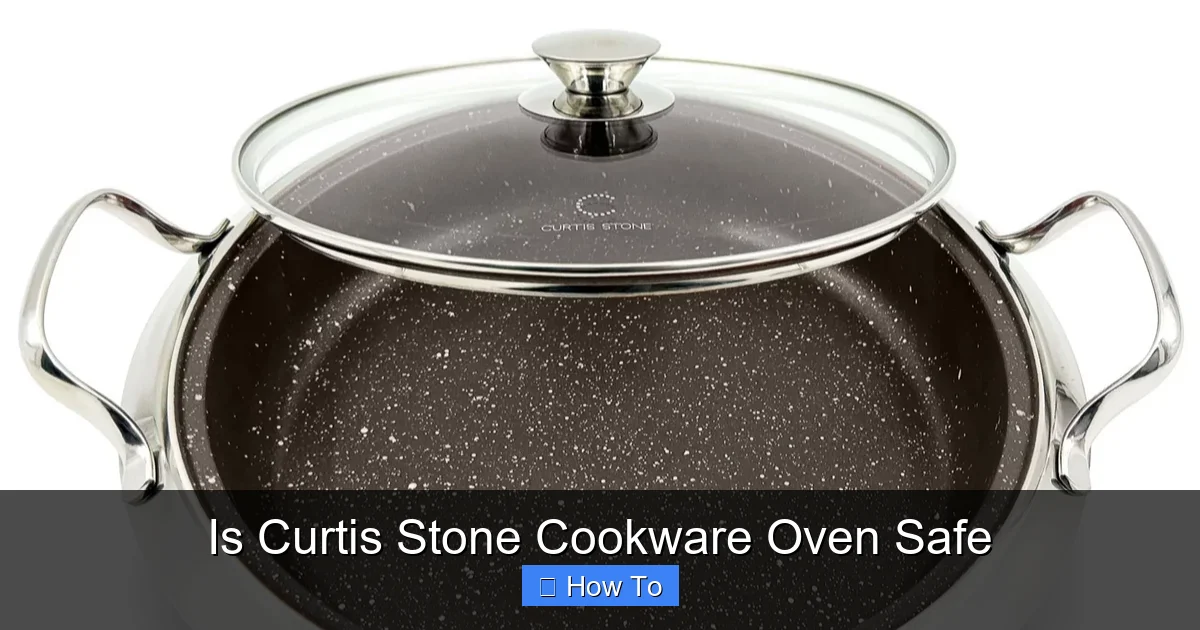
Most Curtis Stone cookware oven safe claims depend on the exact pan, lid, and handle. Check the model guide for its heat limit, since many nonstick pans stop well below broiler heat while metal and glass parts may have lower limits.
Is Curtis Stone Cookware Oven Safe
A pan that works on the hob can feel just as useful in the oven. You may want to roast vegetables, finish a sauce, or move a dish straight from prep to heat. Before you do, you need one clear answer: Is Curtis Stone cookware oven safe?
The short answer is yes, some pieces are. Others are not. The exact answer can change by pan size, coating, lid, handle, and oven type. So the phrase Curtis Stone cookware oven safe should never be treated as a yes for every item in the range.
That split answer matters. It keeps a cheap handle from melting and a glass lid from cracking. This guide shows what to check, which materials usually handle heat, and how to use each piece with care. It also explains why a pan can be oven safe while its lid is not. For a wider look at material safety, read our guide to whether Curtis Stone cookware is toxic.
Key Takeaways
- Not every piece: Some Curtis Stone cookware oven safe items are rated for oven use, while others are not.
- Check every part: The base, lid, knob, and handle may have different heat limits.
- Follow the manual: The exact model number matters more than a general claim about the brand.
- Nonstick needs care: Use lower heat and never place nonstick under a broiler unless the guide allows it.
- Small ovens differ: A toaster oven or air fryer can heat cookware more intensely than a standard oven.
- Stop at warning signs: A warped base, loose handle, bubbling coating, or soft knob means it is time to stop.
- When unsure, leave it out: Remove a low-rated lid or use another oven-safe dish.
📑 Table of Contents
What “Oven Safe” Means for Curtis Stone Cookware
One item can have several limits
An oven-safe claim may cover only the main body of a pan. The base, lid, knob, and handle can have different limits. A metal base may tolerate high heat, while a plastic knob may not. A glass lid may have a lower limit than the pan. In that case, the lowest part sets the safe limit. If the lid is not rated, take it off before baking.
Always use the limit given for your exact set. A mark of 260°C on the base does not prove that a 180°C handle can enter a 200°C oven. Heat can pass into the handle even when the base feels fine. When in doubt, cook without the lid.
Safe does not mean indestructible
Oven safe means the item can be used within a stated range. It does not mean the piece can take unlimited heat. Repeated use near the limit can shorten its life. Avoid hard impacts, sudden temperature changes, and heating above the max. A scratched nonstick pan may still cook, but it should not be used at high heat.
Stovetop safe is not oven safe
Stovetop safe means the base can be used on a burner. It does not prove that the whole pan can go in an oven. The same is true for induction safe. Some pans have a steel base for induction but a heat-limiting handle. Check both labels. A pan that is safe for the hob and oven is much easier to use, but it must say so.
Each oven creates a different test
A standard oven uses heat from all sides. A broiler uses strong heat from the top. A toaster oven has elements close to the food. An air fryer uses a small space and fast air flow. Each setup can stress a pan in a different way. A pan that works in a regular oven may not survive a broiler or a tight air-fryer basket. Oven safe is not the same as every oven type safe.
Which Curtis Stone Cookware Is Oven Safe?
Nonstick pans
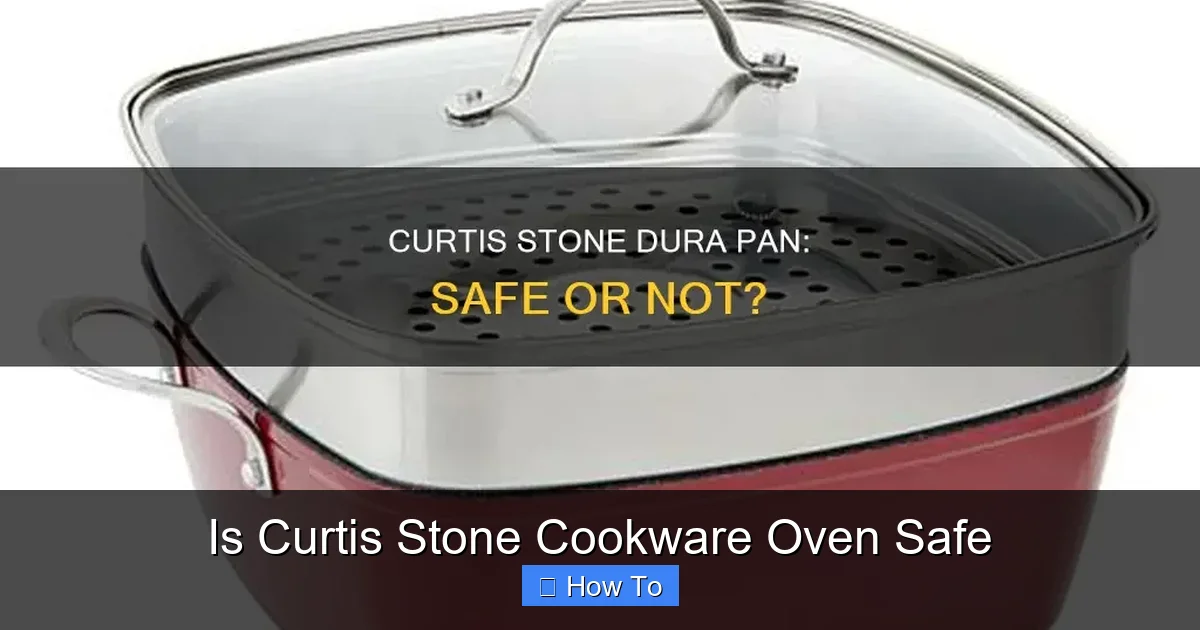
Some Curtis Stone nonstick pans are marked oven safe. That does not mean every color, size, or line has the same limit. The coating, base, and handle all matter. Check the bottom of the pan and the user guide. If the guide gives no oven rating, treat it as not oven safe. Do not use nonstick under a broiler. Also avoid heating it empty, as this can push the inner surface past a safe level.
Visual guide about Is Curtis Stone Cookware Oven Safe
Image source: cycookery.com
If a pan is rated to 200°C, do not use it at 220°C. Leave room for oven swings. A lower heat also helps the nonstick surface and handle last longer. The simple answer to Curtis Stone cookware oven safe use is to stay below the printed limit.
Stainless steel and cast iron
Stainless steel and plain cast iron often handle higher oven heat. They are good choices for roasting vegetables, baking bread, or finishing a casserole. Yet the full piece still needs a check. Some stainless pans have bonded handles. Enameled cast iron can have its own heat limit. Follow the care card for the exact item.
These materials can be useful when you need one pan for the hob and oven. Before use, check that the base is dry and flat. A warped base may heat unevenly. Use dry mitts, and set the pan on a stable rack. Plain cast iron should also be fully dry before storage to help prevent rust.
Glass lids and ceramic-coated pans
Glass lids are common on Curtis Stone sets. Some can go in a standard oven, but many should not face a broiler. Ceramic-coated pans may also have an oven rating. The coating is not the only concern. Sudden heat or cold can crack glass and damage finishes. Do not move a hot glass lid to a wet counter.
Ceramic looks tough, but it does not make every pan broiler safe. Treat the printed limit as the rule. If there is no rule, use the piece on the hob or in a microwave only if the manual says so. Glass is safest when it changes temperature slowly.
Lids and handles are often the weak point
Lids and handles are often the weak point. They may contain Bakelite, plastic, silicone, rubber, or a bonded layer. These parts can soften, smoke, or break loose. An oven mitt can protect your hand, but it cannot raise the rated heat of the part. If a knob, grip, or rivet cover looks soft or loose, stop using that piece in the oven.
This is where the phrase Curtis Stone cookware oven safe can cause trouble. People may see an oven-safe base and assume the full set is safe. It is not. Check the lid, knob, and handle before you place the pan inside.
How to Check the Oven Limit of Your Exact Model
Find the model number
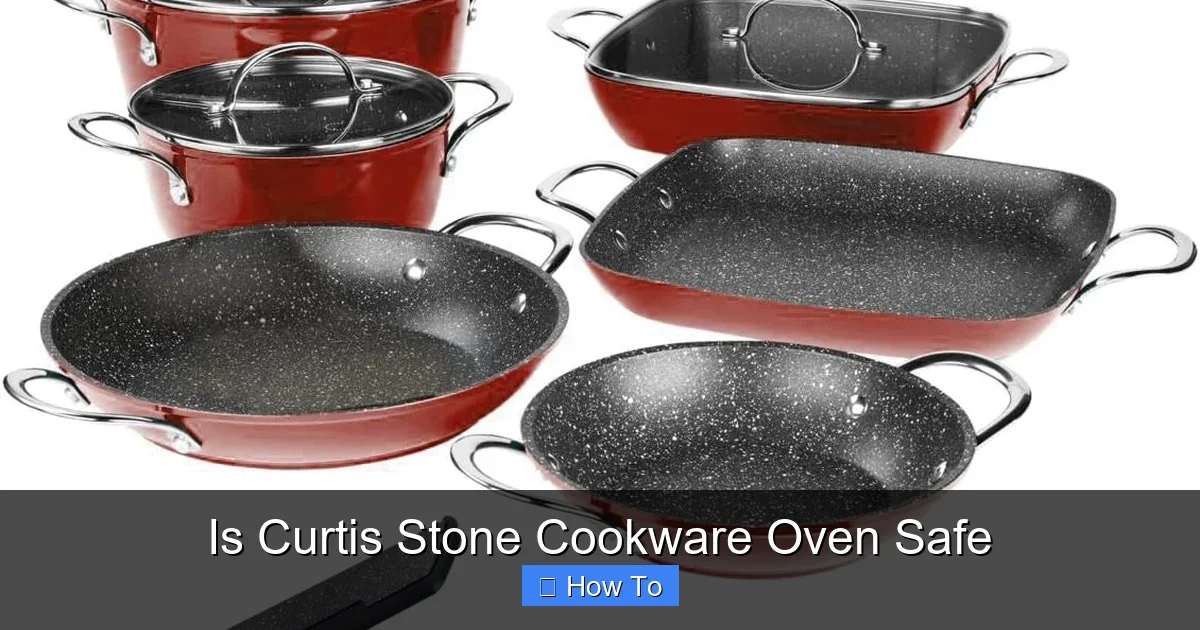
Start with the exact model. Look on the box, manual, or underside of the pan. Write down the name and model number. Then check the care sheet from Curtis Stone or the seller. Do not use the limit from a similar pan. A same-brand pan can use a different handle or lid.
Visual guide about Is Curtis Stone Cookware Oven Safe
Image source: m.media-amazon.com
If you no longer have the guide, contact the seller with photos. A clear photo of the underside, lid, and handle can help them find the right part. This is a smart step when two pans look alike but have different grips.
Read every label and warning
Look for words such as oven safe, max oven temperature, or not oven safe. Also note whether the mark applies to the lid. A small oven icon can help, but a written limit is clearer. If the only claim is stovetop safe, induction safe, or hob safe, there is no proof for oven use.
Check the words “maximum” and “only.” A note such as “oven safe only to 200°C” gives a firm limit. A note about stovetop heat does not. If the guide is missing or unclear, choose a lower heat or use another dish.
Convert temperatures without rounding up
Use the lower of the Celsius and Fahrenheit limits. A guide may show 200°C or 400°F. These are close, but not exact. Do not round up. If your oven is set to 205°C, that is above a 200°C limit. Choose a lower setting or use a different dish. Remember that ovens can overshoot their set point.
Use an oven thermometer
An oven thermometer can show that your oven runs hot. Place it in the center of the oven and let it warm up as you would for baking. Compare the reading with the set temperature. If the oven runs 15°C to 25°C hot, you may need to lower the setting. This small step is useful for nonstick and glass parts.
Leave room for heat and air
Set the rack in the middle unless the recipe says otherwise. Keep the pan away from walls and heating elements. Do not let foil touch the elements. Use dry mitts, and place the pan on a stable, heat-safe surface. For a deep roaster, allow more space. It holds heat and can make the outer wall very hot.
How to Use Curtis Stone Cookware in Different Ovens
In a standard oven
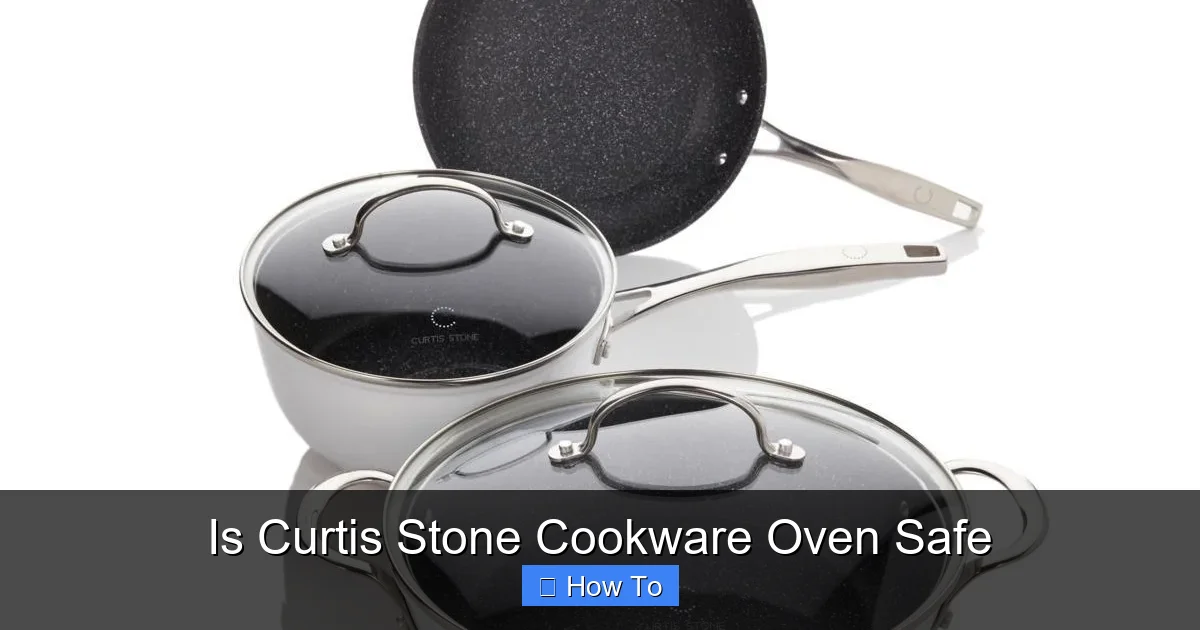
In a standard oven, heat is usually more even. Preheat the oven only if the recipe and pan guide allow it. Never preheat an empty nonstick pan. Put the food in first. Start with the lid off if its limit is lower. Check the food near the end. When done, move the pan to a dry trivet and let it cool.
Visual guide about Is Curtis Stone Cookware Oven Safe
Image source: s3.amazonaws.com
Example: You roast potatoes in a rated pan at 200°C. Remove any low-rated lid. Use mitts, not bare hands. After cooking, leave the pan on the trivet. Do not put the hot base in the sink. This gives the metal time to cool without stress.
In a toaster oven
A toaster oven can work, but it is not always like a full-size oven. Check that the pan fits with room around it. It must not touch the top, side, or heating element. Small ovens often run hot. Start with a lower temperature and watch the first few minutes. You can also read whether a toaster oven works like a regular oven for more context.
If the handle gets hot fast or the food browns too quickly, remove the pan with care and let it cool. Size and air flow matter as much as the heat rating. A pan that fits a large oven may be too close to the elements in a small one.
In an air fryer
An air fryer is a small, fast, forced-air oven. That can make hot spots. Even if a pan is oven safe, it may not fit or may block airflow. Check both manuals. You need space around the pan and a clear path for air. Also see whether oven-safe cookware is air-fryer safe.
Never place a pan in an air fryer if it rubs the basket, rises above the food space, or touches the fan. A safe temperature means little if the pan cannot move air or clear the machine. A shallow, small pan is usually easier to use than a deep casserole.
Under the broiler
Do not use a Curtis Stone pan under the broiler unless the exact model says broiler safe. Broiler heat is direct and intense. It can scorch nonstick, weaken handles, and crack glass. A regular oven rating does not cover this job. Use a known broiler-safe dish when you need strong top heat.
This rule is especially important for glass lids and dark nonstick coatings. They can change temperature very fast. If a recipe needs broiling, choose the right dish before the food goes in.
How to Care for Oven-Safe Curtis Stone Cookware
Cool it slowly
Cooling matters after oven use. Let the pan cool on a dry trivet. Do not set a hot pan on marble, glass, or a wet cloth. Do not rinse it under cold water. A sudden change can warp metal and crack glass. Let it cool before washing.
Clean it with gentle tools
Wash with warm water, mild soap, and a soft sponge. For stuck food, soak the pan after it cools. Avoid steel wool, harsh powder, and abrasive cleaners. These can scratch nonstick and ceramic surfaces. Dry it well, especially around rivets and handles. Good care keeps heat limits clear and surfaces intact.
Know when to stop
Stop oven use if the base warps, the coating bubbles, a handle loosens, or a knob changes shape. Also stop if you smell burning or see smoke. These signs show that the part may be failing. Clean minor stains only as the guide allows. For serious damage, contact the seller or Curtis Stone support.
Store it in a dry place
Let every piece cool and dry before stacking it. Moisture can trap heat and cause stains or rust, especially on cast iron. Do not force a swollen lid onto a cool pan. Proper storage helps you avoid damage before the next use.
Final Verdict: Is Curtis Stone Cookware Oven Safe?
So, is Curtis Stone cookware oven safe? Yes, but only when the exact piece says it is. Some pans can go in a standard oven. Others cannot. The lid or handle may have a lower limit than the base. The safe answer always comes from the model guide, not a general brand claim.
Before you bake, roast, or broil, check the material, temperature, lid, handle, and oven type. Keep the heat below the stated limit. If any part is unclear, leave it out or use another dish. That small check can protect both your food and your cookware.
The best rule is simple: rated base, rated lid, rated handle, and a suitable oven. Follow that rule, and you can use the piece with far more confidence.
Frequently Asked Questions
Is every Curtis Stone pan oven safe?
No. Some Curtis Stone pans are rated for oven use, but others are not. Check the underside, box, and user guide for the exact model.
Can I put a Curtis Stone glass lid in the oven?
Only if the lid is marked oven safe and the temperature is within its limit. Many glass lids should not be used under a broiler or in very high heat.
What is the highest safe oven temperature?
There is no single temperature for the whole brand. The limit depends on the pan, coating, lid, and handle. Always use the lowest limit listed for your exact item.
Can I use Curtis Stone cookware under the broiler?
Only use it under the broiler if the model guide clearly says broiler safe. A normal oven-safe rating does not cover direct, high top heat.
Can I use it in a toaster oven?
Yes, if the pan fits and has an oven rating. Leave space from the heating elements and use a lower temperature at first, since small ovens can run hot.
Can I put Curtis Stone cookware in an air fryer?
Not unless both the cookware and air-fryer guides allow it. The pan must fit with enough room for air flow and must not touch the basket or fan.