Why Does My Toaster Oven Burn Everything

If your food is turning into charcoal every time you use your appliance, you are not alone. This common problem is usually caused by inaccurate temperature settings, dirty heating elements, or poor food placement. By following our guide, you can identify the root cause and get back to cooking perfect meals.
We have all been there. You are hungry. You decide to make a quick snack. You pop some bread or a frozen pizza into the toaster oven. You set the timer. You wait patiently. Then, suddenly, a smell of smoke fills the kitchen. You open the door, only to find a blackened, burnt mess. It is incredibly frustrating. You might find yourself asking, “Why does my toaster oven burn everything?”
It feels like the appliance is working against you. You follow the instructions. You set the dial to the right temperature. Yet, the results are always the same. Your food is either raw in the middle or completely burnt on the outside. The good news is that your toaster oven is likely not “broken” in a way that requires an immediate replacement. Most of the time, the issue comes down to simple maintenance or small adjustments in how you use it.
In this guide, we are going to dive deep into the reasons behind this problem. We will look at mechanical issues, user errors, and cleaning habits. By the end of this article, you will know exactly how to troubleshoot your appliance. You will be able to turn that burnt mess into a delicious meal once again. Let’s get started!
Key Takeaways
- Temperature Inaccuracy: Your thermostat may be faulty, causing the oven to run hotter than the setting shows.
- Dirty Heating Elements: Old food crumbs and grease on the elements can cause uneven heat and burning.
- Improper Food Placement: Placing food too close to the top heating elements is a frequent cause of charring.
- Convection Issues: High-speed fans in convection models can cook food much faster than expected.
- Sensor Malfunctions: A broken temperature sensor can lead to uncontrolled heat levels.
- Maintenance is Key: Regular cleaning is the best way to prevent burning and smoke.
📑 Table of Contents
Common Mechanical Reasons for Overheating
Sometimes, the problem is not you. It is the machine itself. Toaster ovens are smaller than regular ovens. This means they are more sensitive to small changes in temperature. If a component inside is failing, the oven might run much hotter than it is supposed to.
Faulty Thermostats
The thermostat is the “brain” of your toaster oven. Its job is to tell the heating elements when to turn on and when to turn off. If the thermostat is broken, it might tell the elements to stay on much longer than necessary. This results in a constant stream of heat that quickly turns your food into carbon. If you notice your oven stays hot long after the timer ends, the thermostat is a prime suspect.
Damaged Heating Elements
Heating elements are the metal coils that get red hot. Over time, these coils can wear out. Sometimes, they develop “hot spots.” A hot spot is a specific area on the coil that gets much hotter than the rest. If your food is burning in one specific spot but looks fine in another, you likely have a damaged element. This can lead to uneven cooking and localized burning.
Broken Temperature Sensors
Many modern toaster ovens use a sensor to monitor the internal air temperature. If this sensor sends the wrong signal to the control board, the oven will not know it has reached the target temperature. It will keep pumping out heat, thinking it still has a long way to go. If you find that your oven feels much hotter than the setting suggests, you might want to check if is a toaster oven like a regular oven in terms of how it manages heat. Unlike large ovens, these small units can spiral out of control very quickly if the sensor fails.
The Role of Cleanliness and Maintenance
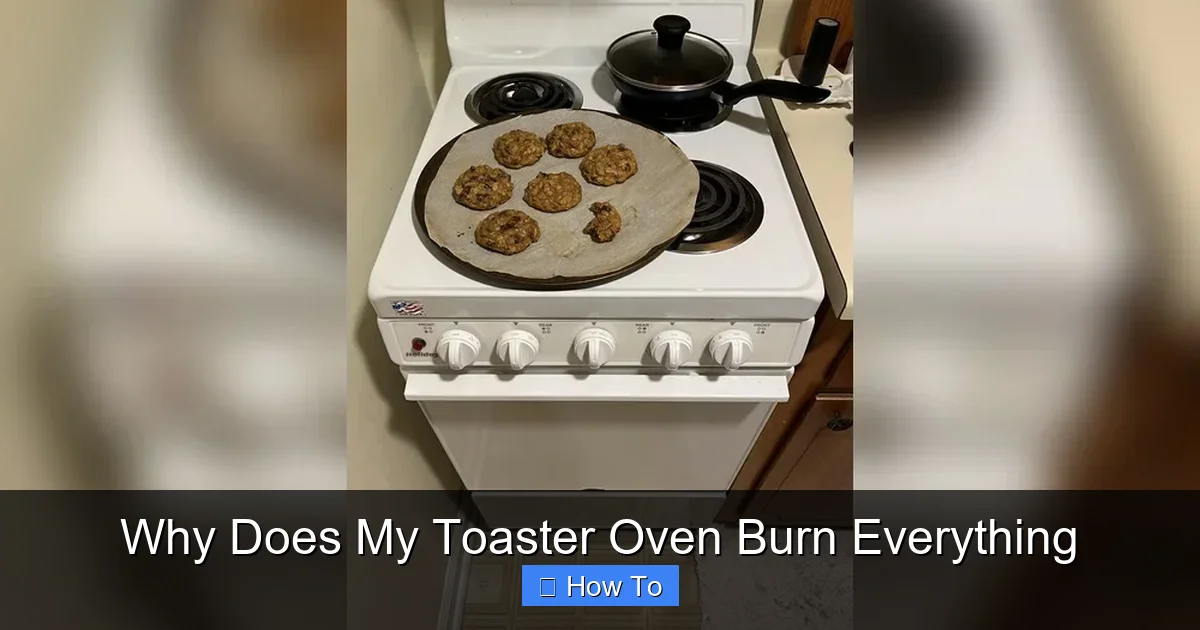
If your toaster oven is working fine mechanically, the problem might be sitting right in front of you. Specifically, it might be the buildup of old food. This is one of the most common reasons why people ask, “Why does my toaster oven burn everything?”
Visual guide about Why Does My Toaster Oven Burn Everything
Image source: kitchenwink.com
Grease and Food Debris
Every time you cook, tiny droplets of grease and small crumbs fall onto the bottom of the oven or onto the heating elements. If you do not clean these out regularly, they build up. When you turn the oven on, these old bits of food begin to burn. This creates smoke and can actually transfer extra heat to your new food. It creates a cycle of burning that is hard to break until you clean the unit.
The Connection to Smoke
Burning food debris is also a leading cause of smoke. If you have noticed that your appliance is producing more smoke than usual, it might not be the food you are currently cooking. It could be the residue from last week’s meal. If you are wondering why does my air fryer oven smoke, the answer is often a buildup of grease on the heating elements or the walls of the oven. A deep clean can often solve this problem immediately.
How to Clean Properly
To prevent burning, you should clean your toaster oven once a month. Use a non-abrasive cleaner on the interior walls. For the crumb tray, empty it every single time you use the oven. Be very careful around the heating elements. Never spray liquid cleaners directly onto the coils. Instead, use a damp cloth to gently wipe away any visible residue once the oven is completely cool.
User Errors and Cooking Techniques
Even with a perfect machine and a clean interior, you can still burn your food. Cooking in a toaster oven requires a slightly different approach than using a full-sized oven. Because the space is so small, the heat is much more intense and immediate.
Visual guide about Why Does My Toaster Oven Burn Everything
Image source: elliott.org
Improper Food Placement
This is perhaps the most common mistake. In a large oven, your food is far away from the heat source. In a toaster oven, the heating elements are often only a few inches away from your tray. If you place a thin piece of bread or a delicate pastry too close to the top element, it will burn in seconds. Always try to use the middle rack position if your model allows it.
The “Convection” Trap
Many people upgrade to a convection toaster oven because they want faster cooking. Convection works by using a fan to circulate hot air around the food. This is great for crispiness, but it also makes the oven much more efficient at transferring heat. If you use a standard recipe designed for a regular oven in a convection toaster oven, your food will almost certainly burn. You often need to lower the temperature by about 25 degrees Fahrenheit when using the convection setting.
Using the Wrong Cookware
Not all pans are created equal. Some metal pans absorb heat very quickly and can cause the bottom of your food to burn. If you are unsure about your pans, you might want to look into the best small broiler pan for toaster oven use to ensure you are using materials designed for small-space cooking. Using heavy-duty, dark-colored pans can also lead to faster heat absorption, which might be too much for delicate items.
How to Troubleshoot and Fix the Problem
So, you have identified the potential cause. Now, what do you do? Troubleshooting doesn’t always require a toolkit. Sometimes, it just requires a bit of testing and observation.
Visual guide about Why Does My Toaster Oven Burn Everything
Image source: tastingtable.com
Step 1: The Temperature Test
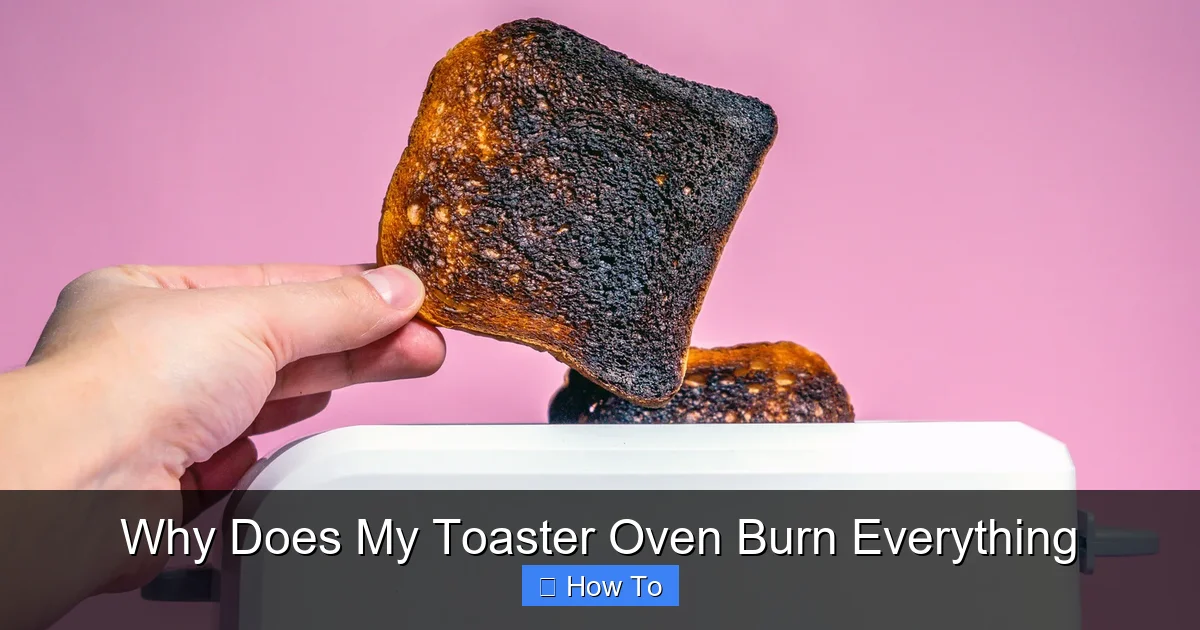
To see if your oven is actually accurate, perform a temperature test. Place an oven thermometer inside the toaster oven. Set it to 350 degrees Fahrenheit. Wait about 15 minutes. Check the thermometer. If the thermometer says 400 degrees, you know your thermostat is the problem. If this is the case, the unit may need professional repair or replacement.
Step 2: Visual Inspection of Elements
Unplug the oven and let it cool completely. Look at the heating elements. Do they look bent? Are there cracks in the material? Do you see any dark, charred spots that won’t wipe off? If the elements look physically damaged, they are likely the reason why everything is burning. Replacing elements is possible on some models, but for many budget toaster ovens, it is safer to buy a new one.
Step 3: Deep Cleaning Session
If you haven’t cleaned your oven in a while, do this before assuming it is broken. Remove the crumb tray. Wipe down the interior. If you can safely reach the elements with a soft, slightly damp cloth, do so. Once it is clean, try cooking something simple, like a piece of toast, and see if the results improve. If the burning stops, you have found your culprit!
When is it Time to Replace Your Toaster Oven?
We all want to save money, but sometimes, fixing an appliance is a waste of time. There comes a point where a toaster oven becomes more of a headache than a help. Knowing when to let go is important for both your wallet and your kitchen safety.
The Cost of Repair vs. Replacement
If your thermostat or heating element needs replacing, look up the cost of the part. If the part costs $40 and a brand-new, high-quality toaster oven costs $60, it makes more sense to buy a new one. Additionally, labor costs for a repair technician can quickly exceed the price of a new appliance.
Safety Concerns
If your toaster oven is burning food AND it is also causing electrical issues, stop using it immediately. If you notice sparks, or if you find why does my toaster keep tripping the breaker is a recurring issue, the internal wiring may be compromised. A malfunctioning appliance is a fire hazard. No amount of burnt toast is worth the risk of a house fire.
Age of the Appliance
Toaster ovens are generally not designed to last decades. They are high-heat appliances that undergo significant thermal stress every day. If your toaster oven is more than five or six years old and is starting to behave erratically, it is likely reaching the end of its functional life. Modern models often have much better temperature control and safety features than older ones.
Conclusion
Dealing with a toaster oven that burns everything is frustrating, but it is a problem with many logical solutions. Most of the time, it boils down to one of three things: a dirty oven, a faulty thermostat, or simply using the wrong cooking technique for the small space. By taking the time to clean your appliance, testing its temperature accuracy, and adjusting your cooking methods, you can likely solve the issue without spending a dime.
Remember to treat your toaster oven with care. Keep it clean, avoid overcrowding it, and always keep an eye on your food. A little bit of extra attention goes a long way in ensuring your kitchen gadgets work for you, rather than against you. Happy (and successful) cooking!
Frequently Asked Questions
Why does my food burn on the outside but stay raw in the middle?
This usually happens because the heat is too intense or the food is too close to the heating elements. The exterior cooks too fast before the heat can penetrate the center. Try lowering the temperature or moving the rack lower.
Can a dirty crumb tray cause my food to burn?
Yes, it can. Old crumbs and grease in the tray can smoke and create excess heat. This heat can rise and affect the temperature of the food you are currently cooking.
Is it normal for a new toaster oven to smell a little bit?
Yes, it is normal for a brand-new appliance to have a slight odor during the first few uses. This is usually just the protective coatings on the heating elements burning off. It should disappear after a few sessions.
How can I tell if my toaster oven thermostat is broken?
The easiest way is to use an independent oven thermometer. If the thermometer shows a significantly different temperature than what you set on the dial, your thermostat is likely faulty.
Should I use a thermometer when cooking in a toaster oven?
Using a meat thermometer is always a great idea to ensure food safety. Additionally, using an oven thermometer helps you verify that your toaster oven is actually reaching the temperature it claims to be.
Why does my toaster oven smoke when I turn it on?
Smoke is usually caused by burnt food residue or grease on the heating elements. If it happens every time, you likely need to perform a deep cleaning of the interior and the coils.