What Size Toaster Oven Should I Buy
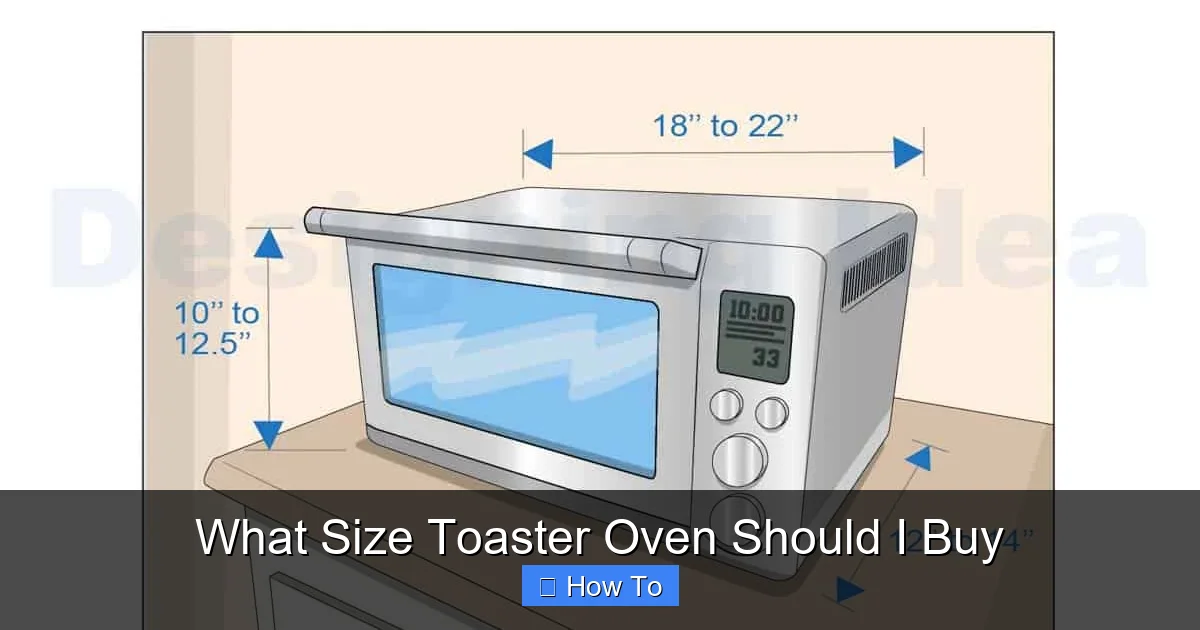
Choosing the right toaster oven size depends on your counter space, cooking habits, and the types of meals you prepare. Measure your available area and consider whether you need to fit a 12-inch pizza, a whole chicken, or just toast for two. This guide breaks down capacity categories and helps you pick the best fit.
Shopping for a new countertop oven can feel overwhelming. You see terms like “compact,” “mid-size,” and “extra-large,” but what do they really mean for your daily cooking? If you have ever wondered What Size Toaster Oven Should I Buy, you are not alone. The answer depends on a mix of kitchen space, cooking goals, and how much you want to spend. Let’s walk through the decision together so you can pick a model that feels like it was made for your home.
First, think about what you actually cook. Do you mostly reheat leftovers and make toast? Or do you want to roast a whole chicken, bake a 12-inch pizza, and air fry a batch of fries? Your answer will steer you toward the right capacity. At the same time, you need to know exactly how much room you have on your counter. A beautiful oven that sticks out past the cabinets or blocks the upper cabinet doors is a daily annoyance. We will cover measuring, capacity categories, and the trade-offs between features and footprint.
Key Takeaways
- Measure first: Always measure your countertop width, depth, and height clearance before shopping.
- Match capacity to meals: A 0.5 cubic foot unit handles toast and small snacks; 1.0 cubic foot or more fits a 12-inch pizza or a small chicken.
- Consider household size: Singles or couples often do well with compact models; families may need larger interiors.
- Check exterior dimensions: Some ovens have bulky handles or controls that add inches to the footprint.
- Think about ventilation: Leave at least 4 inches of clearance on all sides for safe airflow.
- Balance features and size: Convection, air fry, and dehydrate functions may require a larger interior to work effectively.
- Read reviews for real-world fit: Owners often share whether a model actually fits a standard baking sheet or casserole dish.
📑 Table of Contents
Understanding Toaster Oven Sizes and Capacities
Manufacturers usually describe size in two ways: exterior dimensions (width, depth, height) and interior capacity (cubic feet or liters). Exterior dimensions tell you if the unit will fit on your counter. Interior capacity tells you how much food you can cook at once. Both matter.
Exterior Dimensions vs. Interior Capacity
A toaster oven might be 18 inches wide on the outside but only offer 0.5 cubic feet inside because of thick insulation or a bulky door handle. Always check both numbers. If you have a narrow countertop, a slim exterior is crucial. If you cook for a crowd, interior capacity takes priority.
Common Capacity Ranges
- Compact (0.3–0.5 cu ft): Fits 4 slices of toast or a 9-inch pizza. Good for singles, dorms, or occasional use.
- Mid-size (0.6–0.9 cu ft): Fits 6 slices of toast, a 11-inch pizza, or a small casserole. Versatile for couples or small families.
- Large (1.0–1.3 cu ft): Fits a 12-inch pizza, a 9×13-inch baking pan, or a 4-pound chicken. Ideal for families and serious home cooks.
- Extra-large (1.4+ cu ft): Can handle two 12-inch pizzas, a full-size sheet pan, or a small turkey. Often doubles as a second oven.
How to Measure Your Kitchen Space
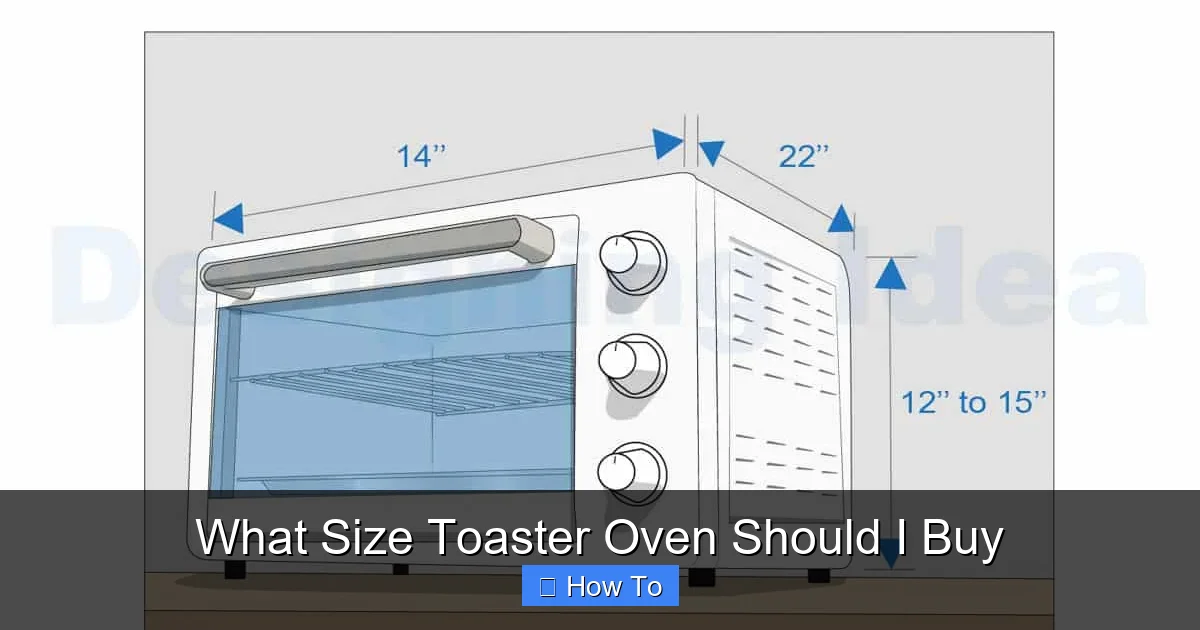
Before you fall in love with a model, grab a tape measure. You need three numbers: width, depth, and height clearance. Don’t forget to account for the oven’s door swing and any rear vent clearance.
Visual guide about What Size Toaster Oven Should I Buy
Image source: designingidea.com
Step-by-Step Measuring Guide
- Width: Measure the clear countertop space between appliances or walls. Subtract at least 2 inches for breathing room.
- Depth: Measure from the backsplash to the front edge of the counter. Standard counters are 24–25 inches deep. Most toaster ovens are 12–16 inches deep. Leave 4 inches behind the unit for ventilation.
- Height: Measure from the countertop to the bottom of upper cabinets. Allow 4–6 inches above the oven for heat dissipation and door opening.
Don’t Forget the Door Swing
Many toaster ovens have a drop-down door that extends forward. If your counter is against a wall or an island, make sure the door can open fully without hitting anything. Some models have a side-swing door or a French-door design that needs less front clearance.
Ventilation and Safety
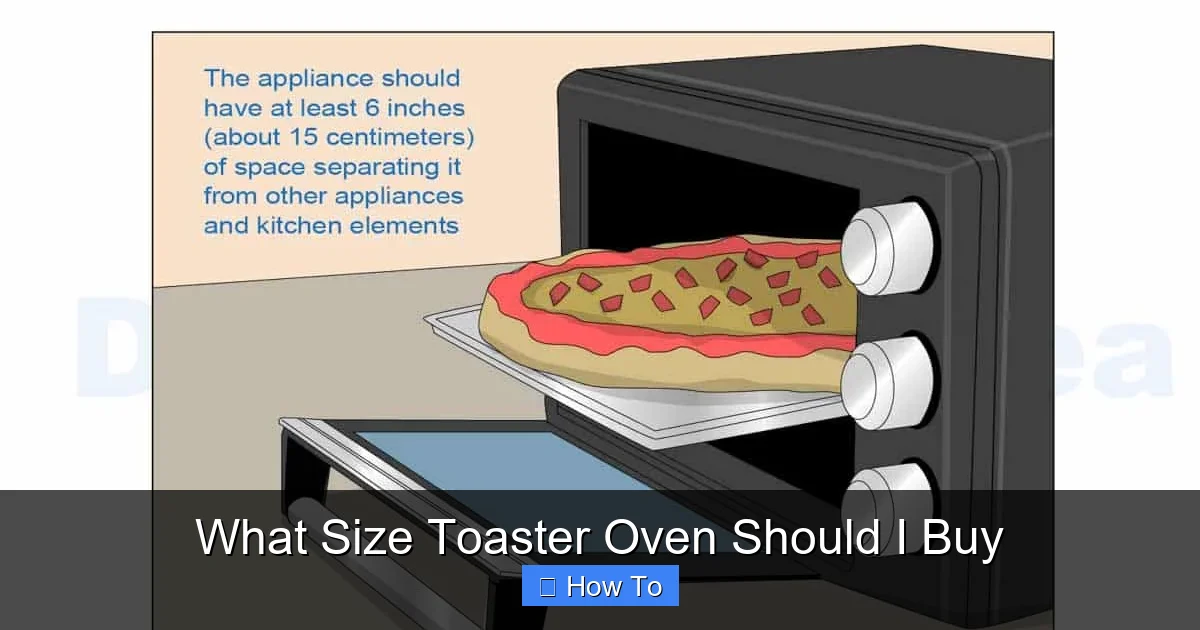
Toaster ovens get hot. Manufacturers recommend at least 4 inches of clearance on the sides and back. If you plan to tuck the unit under a cabinet, check the manual for specific clearance requirements. Overheating can damage cabinets and create a fire hazard.
Matching Size to Your Cooking Needs
Now that you know your space limits, think about what you want to cook. The size of the oven determines the size of the pans and the quantity of food you can prepare.
Visual guide about What Size Toaster Oven Should I Buy
Image source: designingidea.com
Solo or Couple: Compact to Mid-Size
If you mostly make toast, reheat a slice of pizza, or bake a small batch of cookies, a 0.5 cubic foot oven is plenty. It heats up fast, uses less energy, and leaves more counter space. For a couple that enjoys sheet-pan dinners, a 0.7–0.9 cubic foot model lets you fit a quarter-sheet pan (9×13 inches) which is a game changer for weeknight meals.
Family of Four or More: Large to Extra-Large
Families often need to cook multiple servings at once. A 1.0 cubic foot oven can handle a 12-inch pizza and a side of veggies. If you love batch cooking or entertaining, look at 1.3+ cubic foot models. They can accommodate a full-size 13×18-inch sheet pan, two racks of cookies, or a 5-pound chicken. Some extra-large units even have two oven cavities for simultaneous cooking at different temperatures.
Specialty Cooking: Air Fry, Dehydrate, Rotisserie
Air fry baskets and rotisserie spits need vertical space. If you plan to use these features often, choose a model with at least 1.0 cubic foot interior height. A cramped interior blocks airflow, leading to uneven results. Also, check if the oven comes with the right accessories or if they are sold separately.
Common Toaster Oven Size Categories
Let’s break down the typical categories you will see in stores and online. Knowing the lingo helps you compare apples to apples.
Visual guide about What Size Toaster Oven Should I Buy
Image source: designingidea.com
Compact (4-Slice)
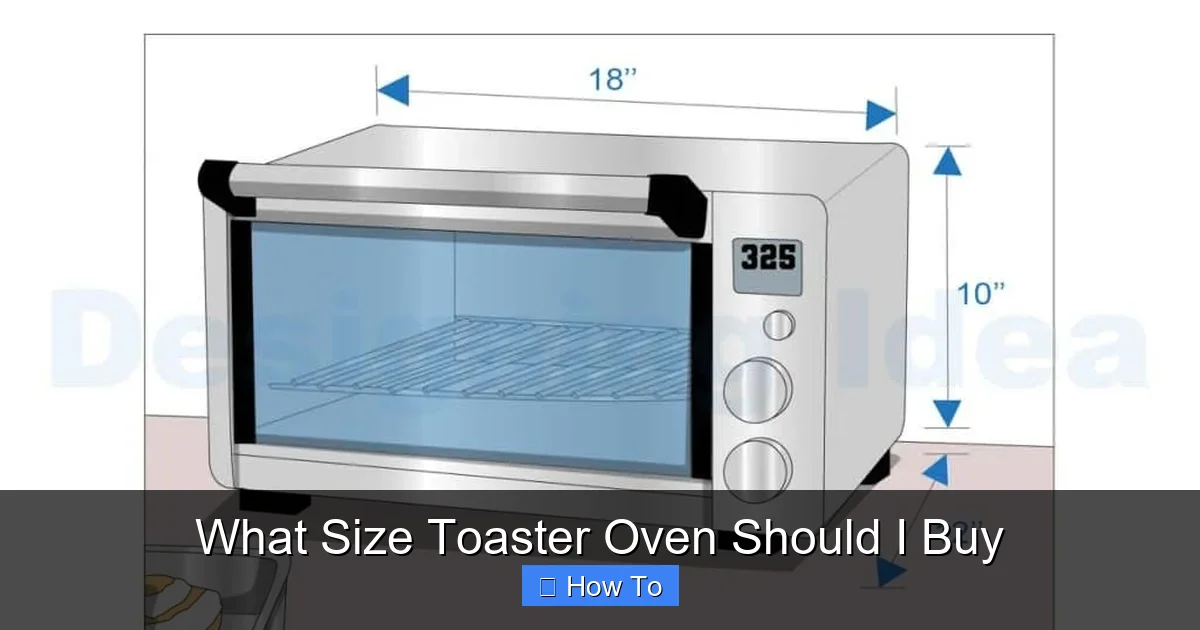
These are the smallest countertop ovens. They usually measure around 15–17 inches wide, 10–12 inches deep, and 8–10 inches tall. Interior capacity is 0.3–0.5 cu ft. They are perfect for toast, bagels, frozen snacks, and small baked potatoes. They are lightweight, affordable, and easy to store. However, they cannot fit standard 9×13 bakeware.
Mid-Size (6-Slice)
Mid-size ovens run about 17–20 inches wide, 12–14 inches deep, and 10–12 inches tall. Capacity is 0.6–0.9 cu ft. They fit a 9×13 pan, a 11-inch pizza, or a small chicken. This is the sweet spot for many kitchens: versatile enough for real meals, yet not dominating the counter. Many mid-size models now include convection and air fry.
Large (9×13 Pan / 12-Inch Pizza)
Large models measure roughly 20–22 inches wide, 14–16 inches deep, and 12–14 inches tall. Capacity is 1.0–1.3 cu ft. They handle a 9×13 casserole, a 12-inch pizza, or a 4-pound chicken. These are great for families who want to replace their full-size oven for everyday tasks. They often have multiple rack positions and advanced presets.
Extra-Large / Oven Replacements (1.4+ cu ft)
These are essentially countertop convection ovens. They can be 22–26 inches wide, 16–18 inches deep, and 14–16 inches tall. They fit a full 13×18 sheet pan, two 12-inch pizzas, or a small turkey. Some have dual cavities. They are heavy, expensive, and require significant counter real estate. But they can truly act as a second oven for holidays and big batches.
Balancing Features and Footprint
Size isn’t just about capacity. Features like convection fans, air fry baskets, and smart controls add bulk. You need to decide which features are worth the extra inches.
Convection and Air Fry
Convection fans circulate hot air for faster, more even cooking. Air fry is essentially super-charged convection. Both require a fan and sometimes a dedicated heating element. This can make the oven deeper or taller. If you want these functions, expect a mid-size or larger unit. A compact oven with air fry often has a tiny basket that holds only a single serving.
Smart Controls and Displays
Large LCD screens, Wi-Fi connectivity, and dial-plus-button interfaces add to the front panel width. Some models put controls on the side to save width. If you have a narrow counter, look for a model with a compact control layout.
Accessory Storage
Some ovens come with a dedicated storage drawer for pans and racks. This adds height but keeps your counters tidy. If you have vertical space, this is a nice bonus. If not, you will need a separate spot for accessories.
Door Design
Drop-down doors are standard. French doors (two side-by-side doors) look sleek and require less front clearance when open. Side-swing doors are rare but useful for tight spaces. Choose based on your kitchen layout.
Final Tips for Choosing the Right Size
You have measured your space. You know your cooking style. Now, here are a few practical tips to seal the deal.
Bring a Pan When You Shop
If you are buying in a store, bring your favorite 9×13 pan or a 12-inch pizza stone. Place it inside the display model. Does it fit with the door closed? Is there room for air circulation? This simple test saves returns.
Read Owner Reviews for Real-World Fit
Specs can be misleading. Owners often post photos of what actually fits. Search for “fits 9×13 pan” or “holds 12-inch pizza” in reviews. You will learn if the rack positions are practical or if the door handle gets in the way.
Consider Future Needs
If you are planning to expand your cooking repertoire, buy a size up. A slightly larger oven gives you room to grow. On the other hand, if you are downsizing or moving to a smaller kitchen, a compact model might be the smarter long-term choice.
Check the Weight
Large toaster ovens can weigh 25–35 pounds. If you plan to move it in and out of a cabinet daily, a lighter mid-size model is easier on your back. Some extra-large units are meant to stay put.
Energy Efficiency
Smaller ovens heat up faster and use less electricity. If you only cook for one or two, a compact model will save energy over time. For larger meals, a big toaster oven still uses less energy than a full-size wall oven.
Where to Place Your Toaster Oven
Finding the right spot is just as important as picking the right size. You need a stable, heat-resistant surface with easy access to an outlet. For more placement ideas, check out our guide on where to put a toaster oven in kitchen.
Know What You Can Cook
Once you have the right size, you will be surprised at the variety of meals you can make. From roasted vegetables to baked desserts, a toaster oven is incredibly versatile. Explore our article on what can I cook in an oven toaster for inspiration.
Still Deciding Between Models?
If you are torn between a few specific models, our comparison guide on which toaster oven to buy breaks down top picks by size, features, and price.
Choosing the right toaster oven size is a balance of space, cooking habits, and features. Measure your counter, think about your favorite meals, and pick a capacity that gives you a little room to grow. A well-chosen oven becomes a daily kitchen companion that makes cooking faster, easier, and more enjoyable. Happy shopping!
Frequently Asked Questions
What is the best size toaster oven for a small kitchen?
A compact 4-slice model (0.3–0.5 cubic feet) is ideal for small kitchens. It takes up minimal counter space while still handling toast, bagels, and small frozen items.
Can a toaster oven replace a full-size oven?
Large and extra-large toaster ovens (1.0+ cubic feet) can handle most everyday baking and roasting tasks, making them a viable second oven or even a primary oven for small households.
How much clearance does a toaster oven need?
Manufacturers typically recommend at least 4 inches of clearance on the sides, back, and top for safe ventilation and heat dissipation.
What size toaster oven fits a 9×13 inch pan?
You need a mid-size or larger oven with at least 0.6 cubic feet of interior capacity. Check the interior width and depth specifications to confirm the pan fits with the door closed.
Is a convection toaster oven worth the extra size?
Convection adds a fan and sometimes a heating element, which can increase the oven’s depth. If you value faster, more even cooking and air frying, the extra size is usually worth it.
How do I know if a toaster oven will fit under my cabinets?
Measure the distance from your countertop to the bottom of the upper cabinets. Compare that to the oven’s height plus the recommended 4–6 inches of top clearance. Also account for the door swing if the oven sits deep on the counter.