How to Use Toaster Oven as Microwave
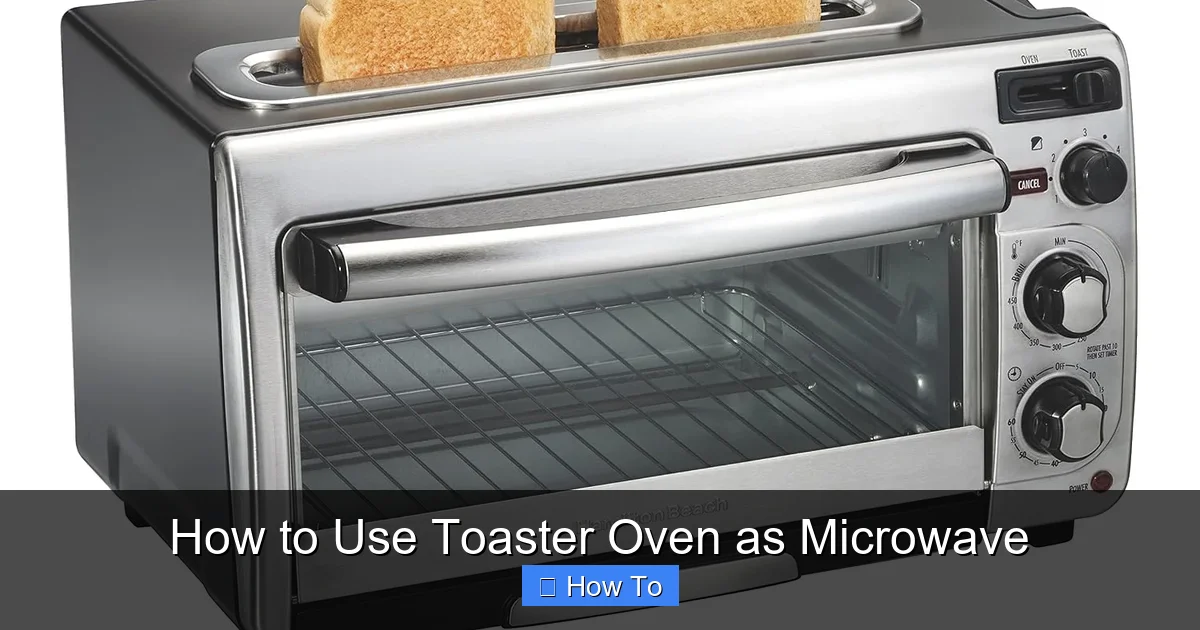
Mastering the toaster oven as a microwave requires understanding its unique capabilities and safety protocols. This guide shows you how to safely heat food, defrost items, and achieve even results without damaging your appliance. Follow these steps and enjoy faster cooking in your favorite kitchen tool.
# How to Use Toaster Oven as Microwave
When you first pull out your toaster oven from the pantry, you might wonder: why do I have this fancy device instead of just relying on my microwave? The answer lies in its versatile design. While primarily designed for browning, roasting, and broiling, a toaster oven functions remarkably similarly to a microwave when you use the right settings. Many homeowners find themselves wanting the speed and convenience of microwave heating without needing a separate appliance. This guide will walk you through everything you need to know to transform your toaster oven into a reliable microwave replacement for everyday tasks.
Think of your toaster oven as a hybrid kitchen workhorse. Its compact size makes it perfect for quick reheats, defrosting leftovers, and preparing single portions of food. But unlike a dedicated microwave, it has more surface area and can handle larger items. That said, using it as a microwave comes with some important considerations. You must adjust temperature and time significantly compared to traditional microwave operation. Hot air circulation differs, and your food may brown differently compared to a true microwave. Understanding these nuances is essential before you start experimenting.
## Understanding Your Toaster Oven as a Microwave Alternative
Before diving into specific techniques, it’s crucial to grasp how your toaster oven actually works. Most modern toaster ovens operate on two primary modes: convection (for baking) and conventional (for roasting and toasting). When you want to use it as a microwave substitute, you’ll typically engage the conventional mode and adjust your expectations accordingly. Conventional toaster ovens circulate hot air around food, similar to how a microwave heats by agitating water molecules. However, the heat transfer is less uniform because your food sits closer to the heating elements.
To treat your toaster oven like a microwave, begin by setting the temperature lower than you would for deep frying or roasting. Instead of aiming for high heat, think medium-low. Most microwave operations run at 800-1000 watts; your toaster oven’s conventional mode often operates between 280-360 degrees Fahrenheit, which translates roughly to a medium heat setting. If your model has a “microwave-like” preset, use that instead—it’s designed specifically for these applications.
Preheating plays a vital role when mimicking microwave behavior. A toaster oven reaches steady temperature quickly, so give it 5-10 minutes to warm up before starting. This ensures even heating across your dishes rather than having cold spots. Think of it as priming your appliance before a workout—you don’t want sudden temperature changes that could burn food unevenly.
## Best Practices for Microwave-Freezing
One of the most common reasons people use their toaster oven as a microwave is to thaw frozen meals and reheat leftover food. This technique works surprisingly well, though you need to follow specific guidelines. The key difference between using a toaster oven versus a true microwave is that residual heat persists longer inside your appliance after it turns off. This means food continues to warm gradually once you close the door.
For freezing and defrosting, set your toaster oven to the lowest possible temperature setting and open the door briefly every few minutes during the first few cycles. This allows steam to escape and prevents condensation from pooling on your food. Ideally, leave the door slightly cracked (a few millimeters) for the duration of the defrost cycle. This creates gentle airflow that mimics microwave leaching effect without creating dangerous pressure builds.
Time calculations differ significantly too. A 15-minute microwave defrost takes much longer in a toaster oven. Expect 30-45 minutes depending on portion size, thickness, and initial freezer temperature. Thicker cuts of meat or dense vegetables need extra patience, while thin slices of chicken breast or cheese packets warm almost instantly. Always check food regularly—simply leave it until the exterior is golden and the interior reaches safe temperature.
When reheating frozen vegetables or frozen pasta, place the food on a rack over the baking tray rather than directly on the plate. This promotes even heating and prevents sogginess. Covering food loosely with foil helps retain moisture and adds a protective barrier that reduces drying out. Remember, the goal isn’t perfection but getting food edible while preserving texture as much as possible.
## Defrosting Frozen Meals with Confidence
Defrosting is perhaps where most home cooks feel uncertain about using their toaster oven as a microwave alternative. The safest approach involves slow, controlled warming. Start by selecting a moderate temperature—around 300°F—and place your frozen item on a clean baking sheet. Leave the door ajar throughout the process, checking progress every 8-12 minutes.
For tougher cuts like frozen fish fillets or large burritos, consider breaking pieces into smaller sections. This reduces the risk of uneven thawing and makes monitoring easier. Once the exterior starts to melt (about 80-90% thawed), switch to higher temperature and shorten remaining time. The final stages should be brief—just enough to warm through while preventing overcooking.
A helpful trick involves adding a shallow pan of water near your food. The gentle vapor rising acts like steam, accelerating defrosting without direct contact. This method works beautifully for multi-item defrosts—for instance, you could put leftover lasagna slices next to frozen breadsticks in the same oven. Just ensure nothing touches the metal walls where water might accumulate. After thawing, allow food to rest uncovered for 5-10 minutes before serving to let any released moisture redistribute.
Popular recipes benefit greatly from this technique. Try defrosting sliced chicken breasts before breading, reheat frozen pizza slices for a crispier crust, or soften frozen waffle batter patches for better baking results. The flexibility of toaster oven defrosting means you can tackle anything that came out of the freezer without waiting for microwave availability.
## Cooking Wet Ingredients Like a Pro
Simulating microwave heating for wet ingredients requires attention to timing and liquid management. Unlike microwave convection which blasts food uniformly, your toaster oven delivers heat in waves from all directions. This means liquid-based mixtures such as soups, sauces, and batters behave differently.
For soups and stews, reduce volume by about 25% before reheating in the toaster oven. Too much liquid can cause splashing onto the oven floor. Heat at medium heat, stirring occasionally to distribute warmth evenly. If you notice excess bubbling or boiling at the edges, immediately lift the lid or cover partially to trap steam. This controlled evaporation prevents overflow while maintaining food integrity.
Baking sauces or gravies in the toaster oven needs slightly shorter times than microwave versions due to the oven’s different heat retention characteristics. A thick gravy that stays warm for 20 minutes in a microwave may scorch in a toaster oven. Keep an eye on it constantly—the surface should bubble gently but not boil violently. Stir every few minutes to avoid sticking, especially since the wet surfaces release more moisture than dry foods.
For batter-making tasks like cornbread or biscuit dough, pour the mixture into greased containers and bake as normal. The toaster oven excels here because it provides consistent bottom heat that prevents the bottom from browning too quickly—a common microwave issue. If you’re making pancakes or French toast, cover the container with a lid halfway through cooking to create steam and get that perfect golden top. This step is optional but dramatically improves texture.
## Baking Small Batches Quickly
One major advantage of treating your toaster oven as a mini-microwave is its space efficiency. You can fit multiple small dishes at once—ideal for meal prep or family dinners. The secret lies in organization and timing. Arrange items so heat circulates evenly around each piece rather than clustering them together.
Try this strategy: divide your workload into rounds. Place a small dish in the center, then add others around the perimeter. Rotate the oven 90 degrees after 5-7 minutes if needed, or simply serve guests as they finish cooking. Because toaster ovens have narrow cooking chambers, crowding leads to steaming rather than browning. Give yourself generous headroom—invest in a larger capacity model if possible.
Cupcakes demonstrate this principle perfectly. Prepare several individual cupcakes on separate trays and bake them one layer at a time. While the first batch finishes, pop a second layer inside. This maximizes output while maintaining even rise and color. Similarly, small casseroles like vegetable gratins or quiche can share space efficiently when cut into manageable squares.
Remember that toaster ovens brown food somewhat differently than traditional ovens. Darker crusts tend to form faster, so monitor closely during the first half of cooking. For delicate pastries or fish, keep temperatures slightly lower than typical oven broiling. A target of 325°F works well for most small items—this balances browning with gentle cooking without burning edges.
## Safety First: Avoiding Common Mistakes
While your toaster oven is versatile, using it incorrectly can lead to unpleasant surprises. The most frequent error involves leaving food unattended. Toaster ovens continue generating heat after turning off, particularly in their residual thermal mass. Check your dishes periodically, especially when dealing with liquids or meats that continue releasing steam.
Another pitfall is overcrowding the cavity. Adding too many items forces air away from each piece, compromising the microwave-like uniformity you strive for. Imagine trying to microwave a crowded plate of mixed leftovers versus spreading them out—the latter gives each piece equal access to heat. Leave at least an inch of clearance between dishes whenever possible.
Don’t forget about ventilation. Cooking with high humidity foods—such as fresh fish, grilled vegetables, or dairy-heavy dishes—requires adequate airflow. Some models offer vent options; consult your manual. Poor airflow traps moisture, creates steam pockets, and can cause mold growth if food remains exposed too long.
Finally, always pay attention to the instruction manuals specific to your model. Different brands may recommend varying power levels and temperature ranges. Some older toaster ovens lack digital controls and require dial adjustments that differ from modern touch interfaces. Taking the time to understand your appliance’s quirks will save frustration and extend its lifespan.
Key Takeaways
- Safe power settings ensure your toaster oven doesn’t overheat delicate foods while still reaching effective temperatures.
- Proper reheating involves using medium power levels and monitoring food throughout the process.
- Defrosting techniques require low moisture settings and gradual temperature increases to prevent damage.
- Wet ingredient handling matters greatly when simulating microwave heating for sauces and batters.
- Space optimization allows multiple small dishes to cook simultaneously like a microwave.
- Cleaning between uses prevents residue buildup that can affect heat distribution and food quality.
- Model-specific variations mean checking your toaster oven manual for manufacturer-recommended operating ranges.
Frequently Asked Questions
Question?
Can I completely replace my microwave with a toaster oven?
Yes, for many everyday tasks. A well-maintained toaster oven can handle reheating, defrosting, and small batches of food nearly as effectively as a dedicated microwave. However, reserve your toaster oven for situations requiring browning, crisping, or air-frying. It lacks the specialized cones and basket systems found in true microwaves, so complex preparations remain better done elsewhere.
Question?
What are the best foods to defrost in a toaster oven?
All frozen ready-to-eat items work well. This includes pizza slices, frozen meals like lasagna, fish fillets, and egg patties. The key is using moderate temperatures and allowing partial coverage of the food with water or steam to accelerate melting without overcooking.
Question?
Does a toaster oven work as effectively as a microwave for certain foods?
The answer varies by application. For reheat and defrost scenarios, yes—it’s excellent. For rapid heating of single servings or small batches, also yes. But for deep cooking like bread baking or large roasts, a traditional oven or dedicated microwave offers superior control and flavor development.
Question?
How can I improve cooking consistency when using my toaster oven as a microwave?
Organize strategically. Spread food evenly, rotate trays if multiple items exist, and set appropriate temperatures. Using a thermometer to check internal doneness adds confidence, especially with less intuitive heat patterns compared to standard microwaves.
Question?
Is there a specific temperature setting that mimics microwave performance?
Conventional mode around 300°F generally aligns closest with microwave behavior. If your toaster oven has a “microwave assist” button, utilize it for delicate heating. Otherwise, trust your instincts and test small batches first to calibrate timing.
Question?
Will my toaster oven damage if I try to microwave certain foods?
No serious harm, but caution is advised. As long as you respect the appliance’s limits—avoiding excessive times or extreme temperatures—there’s minimal risk. Still, never put raw eggs, meat balls, or other hazardous foods inside if your oven wasn’t designed for it. Stick to prepared, cooked items for safe microwave-style cooking.