How to Make Biscuits in Toaster Oven
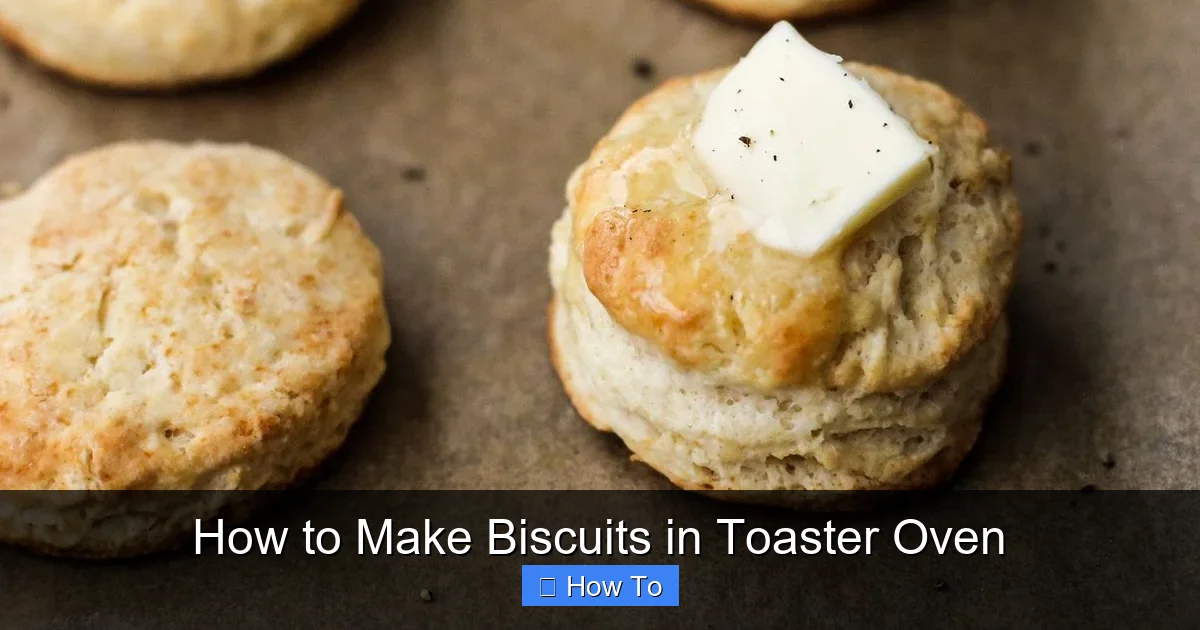
Learning how to make biscuits in a toaster oven is simple: preheat, use a small pan, and bake at 400°F (375°F with convection) until golden. Keep the dough light, avoid crowding, and you’ll get crisp edges with a tender center in about 10–15 minutes.
How to Make Biscuits in Toaster Oven
A toaster oven makes biscuits surprisingly well. It heats quickly, fits a small batch on one tray, and gives you the buttery flavor you expect from a full-size oven. You can have warm biscuits without waiting for a large oven to preheat.
Most successful toaster oven biscuits use simple dough, a moderate pan, and enough space around each biscuit for hot air to move. Compact ovens can have hot spots, so preheat fully and check the food early. This guide shows how to make biscuits in a toaster oven with homemade dough or refrigerated biscuits.
The instructions here use a countertop toaster oven, also called an oven toaster, with a heating element and bake setting. A two-slot pop-up toaster cannot bake biscuits.
If you are still deciding whether the appliance is up to the task, read Can I Make Biscuits in a Toaster Oven?. It explains the difference between a toaster oven and a slot toaster, then gives you a simple starting point.
Key Takeaways
- Use the right appliance: You need a countertop toaster oven with a heating element and bake setting. A standard pop-up toaster cannot make biscuits.
- Preheat the oven: Start at 400°F for regular bake or 375°F for convection, and give the oven enough time to reach full heat.
- Keep the dough cold: Cold butter and buttermilk help biscuits rise and develop flaky layers. Mix only until the dough comes together.
- Leave room between biscuits: Bake four to six rounds at a time and space them about 1 inch apart so hot air can circulate.
- Check the first batch early: Most biscuits need 10 to 14 minutes. Look for golden tops, set sides, and a center that springs back.
- Adjust for the recipe: Frozen, thick, cheesy, or sugary biscuits may need extra time. Follow package directions for store-bought biscuits.
📑 Table of Contents
Before You Bake: Gather the Right Tools and Ingredients
Good biscuits depend more on technique than on a special appliance. For your first try, use a straightforward all-purpose flour recipe and a rimmed baking sheet that leaves room around the biscuits. A crowded tray cools the dough and traps steam, so a toaster oven is best for four to six biscuits at a time.
Use a simple six-biscuit recipe
For six medium biscuits, gather:
- 2 cups (240 g) all-purpose flour
- 1 tablespoon granulated sugar
- 1 tablespoon baking powder
- 1 teaspoon salt
- 6 tablespoons (85 g) cold unsalted butter, cubed
- ¾ cup (180 ml) buttermilk
- 1 egg mixed with 1 tablespoon milk or water, for brushing
Keep the butter and buttermilk cold. If you use self-rising flour, omit the baking powder and reduce the salt to ½ teaspoon. Do not swap baking soda for baking powder unless the recipe says so. Measure flour by spoon and level it. Scooping straight from the bag can add too much flour and make the dough sticky.
Prepare the toaster oven
You will need a few basic items:
- A toaster oven with a bake setting and a small metal baking sheet
- Parchment paper or a lightly greased pan
- A rolling pin and 2-inch biscuit cutter
- A pastry blender or fork, plus a spoon
Set the rack in the middle, not directly under the top element. Leave a little space on every side of the pan. If your model runs hot or cool, test it with an oven thermometer. For a model without a display, see how to bake in an oven toaster without temperature for ways to estimate heat and protect the food.
How to Make Biscuits in Toaster Oven: Step by Step
Follow this simple method for how to make biscuits in a toaster oven. It makes four to six tender biscuits with a crisp top and a flaky center.
- Step 1 — Preheat the oven: Set the toaster oven to 400°F (205°C) on regular bake. For convection, use 375°F (190°C), or follow the manufacturer’s adjustment. Give the oven a full 8 to 10 minutes to preheat.
- Step 2 — Mix the dry ingredients: Whisk the flour, sugar, baking powder, and salt in a medium bowl. Make a small well in the center.
- Step 3 — Add the butter: Add the cubed butter. Use a pastry blender, fork, or your fingertips to cut it into the flour. Stop when the largest butter pieces are about the size of peas. Some pieces should remain visible for flaky layers.
- Step 4 — Add the buttermilk: Pour in the buttermilk and stir with a spoon until the flour is mostly wet. The dough will look rough and shaggy. Do not knead it or add extra liquid. Too much mixing makes biscuits dense.
- Step 5 — Roll and cut: Turn the dough onto a floured surface. Pat it into a thick disk, then roll it about ¾ inch thick. Cut rounds with a 2-inch cutter. Gather the scraps, press them together, and roll them only one or two more times. If the dough feels tight, let it rest for 10 minutes before rolling. This makes it easier to cut without pressing the rounds too thin.
- Step 6 — Arrange the biscuits: Line a small rimmed baking sheet with parchment, or lightly grease it. Place the rounds 1 inch apart and keep them from touching. You should fit four to six biscuits on the pan. Brush the tops with egg wash, but do not flood them.
- Step 7 — Bake: Bake at the set temperature for 10 to 14 minutes. Start checking at 9 or 10 minutes. The biscuits are ready when the tops and edges are golden, the centers look set, and a gentle touch makes them spring back. If one side browns first, rotate the pan halfway through. If the tops darken too fast, tent them with loose foil, but keep the foil away from the vents.
- Step 8 — Cool: Remove the pan with oven mitts. Let the biscuits cool on the pan for 5 minutes. Cutting them while hot can release steam and make the centers gummy. The center should look moist, not wet. For the best texture, move the biscuits to a wire rack after the short rest.
Keep the dough cold while it bakes. If the butter melts before it reaches the oven, the biscuits may spread and lose their lift. For very warm rooms, chill the shaped rounds for 10 minutes. A small batch also gives you a better result than a full tray because heat can move freely around each biscuit.
How to Set the Temperature and Baking Time
Temperature is the biggest difference between a toaster oven and a conventional oven. Compact ovens often recover heat quickly, but their top element can brown the surface before the center cooks. Start at 400°F (205°C) for regular bake. Use 375°F (190°C) for convection unless your manual says otherwise. The lower setting gives the hot air time to circulate before the buttery edges brown.

Visual guide about How to Make Biscuits in Toaster Oven
Image source: i.pinimg.com
Use these starting times
- Classic 2-inch rounds: 10 to 14 minutes on regular bake
- Convection setting: 9 to 13 minutes, with the first check at 8 minutes
- Thick or frozen biscuits: 12 to 17 minutes, depending on the oven
Timing changes with the size of the biscuit, the amount of dough, and the actual heat of your oven. At high altitude, reduce the temperature by about 25°F and watch closely. Cold ovens need extra time, while hot ovens need less. Treat these times as a guide, not a strict rule.
Know when the biscuits are done
- Golden brown on top and along the edges
- Sides that look set, not wet or shiny
- A center that springs back after a light touch
- An internal temperature near 200°F to 205°F for thick biscuits
Place the rack in the middle of the oven and leave space around it. If the oven runs very hot, use a lower setting and check often. Knowing how to make biscuits in a toaster oven means treating the first bake as a test. If you also bake cookies, compare the method for how long to cook cookies in a toaster oven. The preheat and airflow rules are similar, but biscuits should look flaky and tender, not dry and crisp like cookies.
Easy Biscuit Variations
These simple changes let you adjust how to make biscuits in a toaster oven for breakfast, soup, or a side dish.
Visual guide about How to Make Biscuits in Toaster Oven
Image source: i.pinimg.com
Drop biscuits
For drop biscuits, scoop 2-tablespoon mounds of dough instead of cutting rounds. They need the same heat and about the same bake time, but a small gap between the mounds is still important.
Sweet cinnamon biscuits
For a cinnamon biscuit, add ½ teaspoon cinnamon and 2 tablespoons sugar to the dry mix. Brush the tops with melted butter, then add a light coat of cinnamon sugar. Sugar burns fast, so check early.
Cheddar and herb biscuits
For a cheddar biscuit, fold in ½ cup shredded cheese, 2 tablespoons chopped green onion, and ¼ teaspoon garlic powder. Add black pepper. These savory biscuits pair well with soup or eggs, and they may need 1 to 2 extra minutes.
For a fresh herb-and-lemon biscuit, add 1 tablespoon chopped parsley and the zest of half a lemon. The zest adds brightness without extra sugar.
Whole-wheat and plant-based options
For a hearty version, replace up to ½ cup of the flour with whole-wheat flour. If the dough feels dry, add 1 tablespoon milk. You can also use plant-based butter and unsweetened plant milk, then brush the tops with plant milk instead of egg.
Store-bought biscuits
For refrigerated biscuits, set the oven to 400°F, or 375°F with convection. Place the rounds on a lightly greased sheet and bake for about 10 to 14 minutes. Frozen rounds may need 12 to 17 minutes. Follow the package directions if they differ, and never bake biscuits in a cardboard tube.
Troubleshooting Common Toaster Oven Biscuit Problems
Most baking problems come down to heat, spacing, or dough handling. A small change can often fix the next batch.
Fix the most common issues
- Pale biscuits: Preheat the oven fully, use the center rack, and give the dough more space. If needed, bake 1 to 2 minutes longer. Old baking powder may also cause a weak rise.
- Dark edges with a raw center: Lower the heat by 25°F, move the pan down one level, and use a loose foil shield. Make the rounds a little thinner or give them more bake time.
- Flat biscuits: You may have kneaded the dough too much or pressed the rounds too hard. Mix less, handle the dough gently, and chill it if it feels sticky.
- Dense biscuits: Check that the baking powder is fresh and that the oven reaches temperature. Too much liquid or a cool oven can also make the texture heavy.
- Unevenly browned biscuits: Rotate the pan halfway through the bake. Use only one tray at a time, and move it to the center of the oven.
- Burnt cheese or sugar: Add cheese later in the bake, reduce the heat, or cover the top with foil. Watch the food during the final three minutes.
- Greasy biscuits: Let the baked biscuits cool on a rack so steam can escape. If the bottoms stay oily, blot them gently with a paper towel.
Always use oven mitts and keep the pan clear of the heating elements. Do not block vents with foil or parchment. If grease smokes, turn off the oven and let it cool. Never pour water onto a grease fire.
Serving, Storing, and Making Biscuits Ahead
Fresh biscuits are best, but you can plan ahead. Shape extra dough before baking, or make a full batch and freeze the baked biscuits for later.
Make-ahead options
- Freeze shaped raw biscuits on a tray until firm, then move them to a freezer bag. Bake from frozen and add 1 to 3 minutes, checking early.
- Refrigerate a dough log for up to 3 days. Slice it when ready, then add about 1 to 2 minutes to the bake time.
- Freeze fully baked biscuits once they cool. Wrap them well and store them for up to 2 months.
Store and reheat
Keep plain biscuits in a sealed container at room temperature for 2 to 3 days. For longer storage, freeze them in a freezer bag or wrap them well. Reheat one at a time in the toaster oven at 350°F for 5 to 8 minutes, or until warm. If you want the edges crisp again, reheat until the butter smells warm, but avoid drying out the center.
Serve them warm
Serve the biscuits warm with butter, jam, honey, or gravy. They also make quick sandwiches for lunch. A warm biscuit adds a homey touch to soup, eggs, or breakfast without using the main oven.
Bottom line: The best way to learn how to make biscuits in a toaster oven is to make one small batch and learn your oven’s hot spots. Use cold ingredients, 400°F on regular bake or 375°F on convection, and give each biscuit room to bake. Check the first batch early. With a little practice, you will get golden, flaky biscuits every time.
Frequently Asked Questions
Can I make biscuits in a toaster oven?
Yes. Use a countertop toaster oven with a bake setting and a metal baking sheet. A pop-up toaster cannot produce biscuits because it does not reach baking temperature or provide a flat cooking surface.
What temperature should I use for biscuits in a toaster oven?
Start at 400°F (205°C) on regular bake and 375°F (190°C) on convection. If your toaster oven runs hot, lower the temperature by about 25°F and check the biscuits a few minutes early.
How long does it take to bake biscuits in a toaster oven?
Most small biscuits take 10 to 14 minutes at 400°F. Convection biscuits may finish in 9 to 13 minutes, while thick or frozen biscuits can take 12 to 17 minutes.
Should I use convection when baking biscuits?
Convection works well because it spreads heat around the biscuits. Reduce the recipe temperature to about 375°F, use the fan setting, and rotate the pan if the tops brown unevenly.
Can I bake refrigerated biscuits in a toaster oven?
Yes. Place the biscuits on a lightly greased baking sheet, not in their cardboard tube. Bake at 400°F for about 10 to 14 minutes, but follow the package directions if they give a different time.
Why are my toaster oven biscuits flat or dense?
Flat biscuits often come from overmixing, pressing the dough too hard, or using melted butter. Dense biscuits may result from too much liquid, old baking powder, or an oven that has not reached full temperature.