Is Air Fryer Different Than Convection Oven
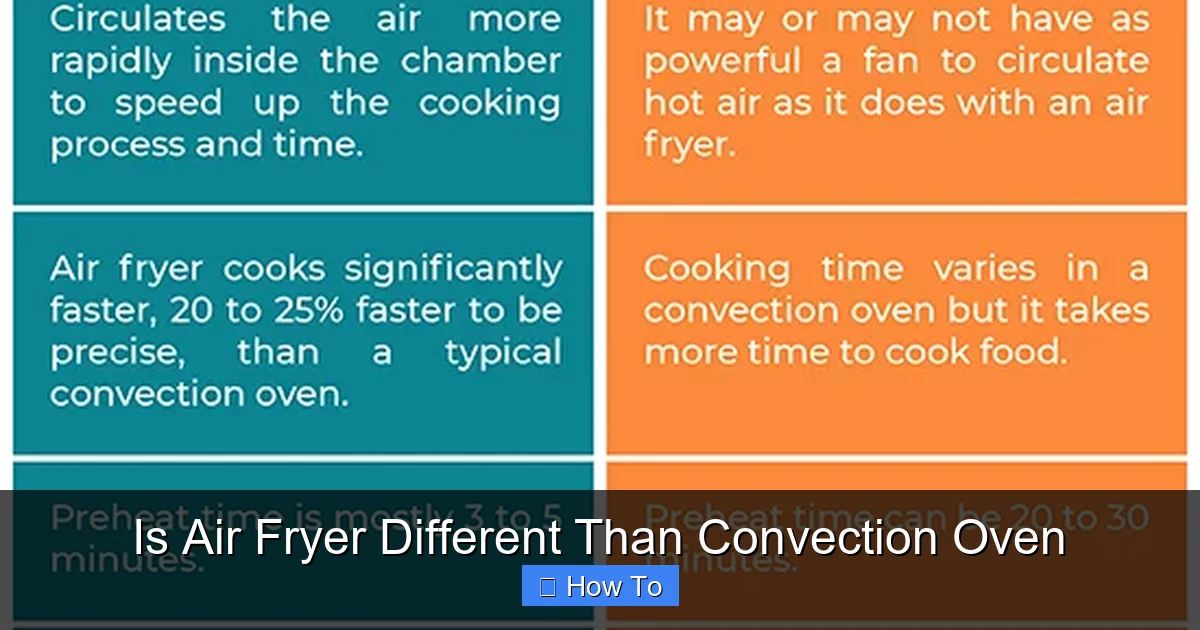
Many home cooks ask, Is Air Fryer Different Than Convection Oven? While both use hot air circulation, air fryers are compact, faster for small batches, and often deliver crispier results with less oil. Convection ovens offer larger capacity and versatility for baking, roasting, and broiling.
Is Air Fryer Different Than Convection Oven?
When you stand in the appliance aisle, the question Is Air Fryer Different Than Convection Oven? often pops up. Both devices promise healthier, crispy meals with less oil, yet they look and feel distinct. In this guide we’ll break down how each works, where they overlap, and where they diverge so you can decide which fits your kitchen routine.
Key Takeaways
- Heating mechanism: Both appliances rely on a fan to circulate hot air, but air fryers place the heating element closer to the food for intensified heat.
- Size and capacity: Air fryers are countertop units ideal for 1‑4 servings; convection ovens are built‑in or freestanding and handle larger meals.
- Cooking speed: Thanks to smaller cooking chambers, air fryers preheat faster and can reduce cook time by 20‑30% for items like fries or chicken wings.
- Texture and crispiness: The rapid air flow in an air fryer often yields a crunchier exterior with little to no oil compared to a convection oven.
- Versatility: Convection ovens excel at baking breads, roasting large cuts of meat, and broiling, while air fryers shine with frozen snacks, reheating, and quick veggie dishes.
- Energy use: Air fryers generally consume less electricity per session due to shorter run times and smaller volume.
- Cost consideration: If you already own a convection oven, an air fryer may be a supplemental gadget; otherwise, a convection oven with air‑fry mode offers a two‑in‑one solution.
📑 Table of Contents
How the Technologies Work
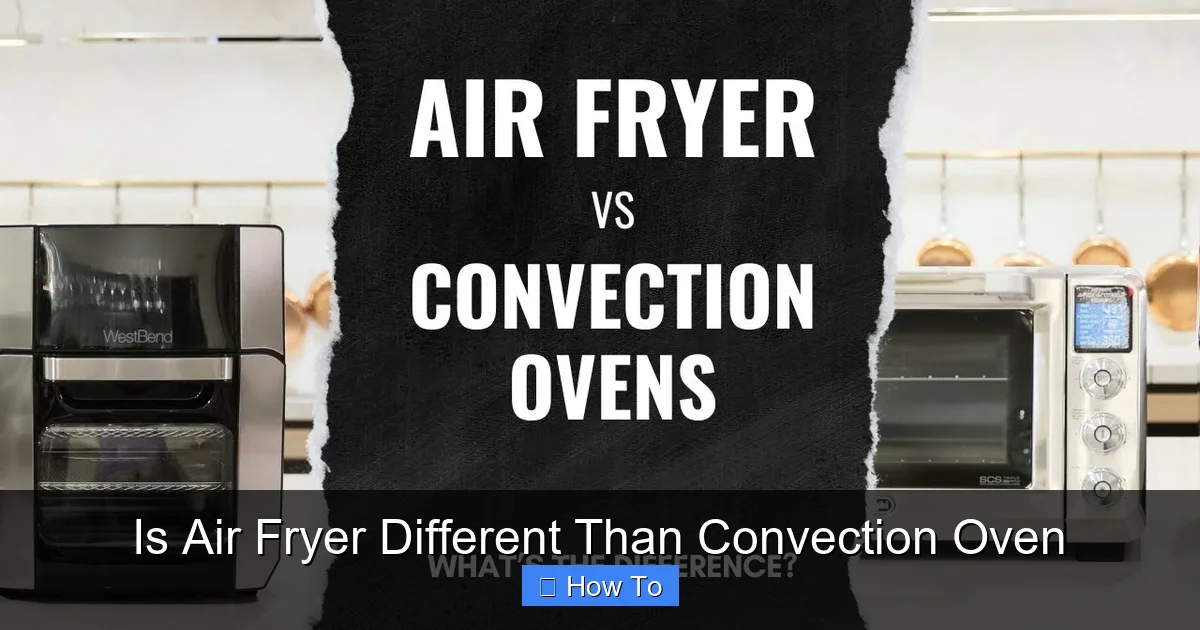
At their core, both an air fryer and a convection oven use forced hot air to cook food. A fan blows heated air around the cooking chamber, transferring heat more evenly than a traditional static oven. The main difference lies in the design of the airflow path and the distance between the heat source and the food.
Air Fryer Airflow
An air fryer features a compact basket or tray positioned just above a powerful heating element. The fan sits at the top, pulling air down through the food and then back up around the sides. This creates a vortex of hot air that surrounds the food from all directions, leading to rapid surface dehydration and browning.
Because the cooking chamber is small—often just a few quarts—the temperature can rise quickly, and the food sits very close to the heat source. This proximity is why many people ask, Is Air Fryer Different Than Convection Oven? and notice that fries or wings get crispier in less time.
Convection Oven Airflow
A convection oven, whether built‑in or freestanding, has a larger cavity. The heating elements are usually at the top and bottom, and a fan located at the back circulates the air. The food sits on a rack that can be placed at various heights, giving you flexibility for baking trays, roasting pans, or broiling.
The larger volume means the air takes a bit longer to reach peak temperature, but the oven can accommodate bigger dishes like a whole turkey or multiple cookie sheets. When comparing the two, the answer to Is Air Fryer Different Than Convection Oven? often hinges on capacity versus speed.
Size, Capacity, and Countertop Footprint
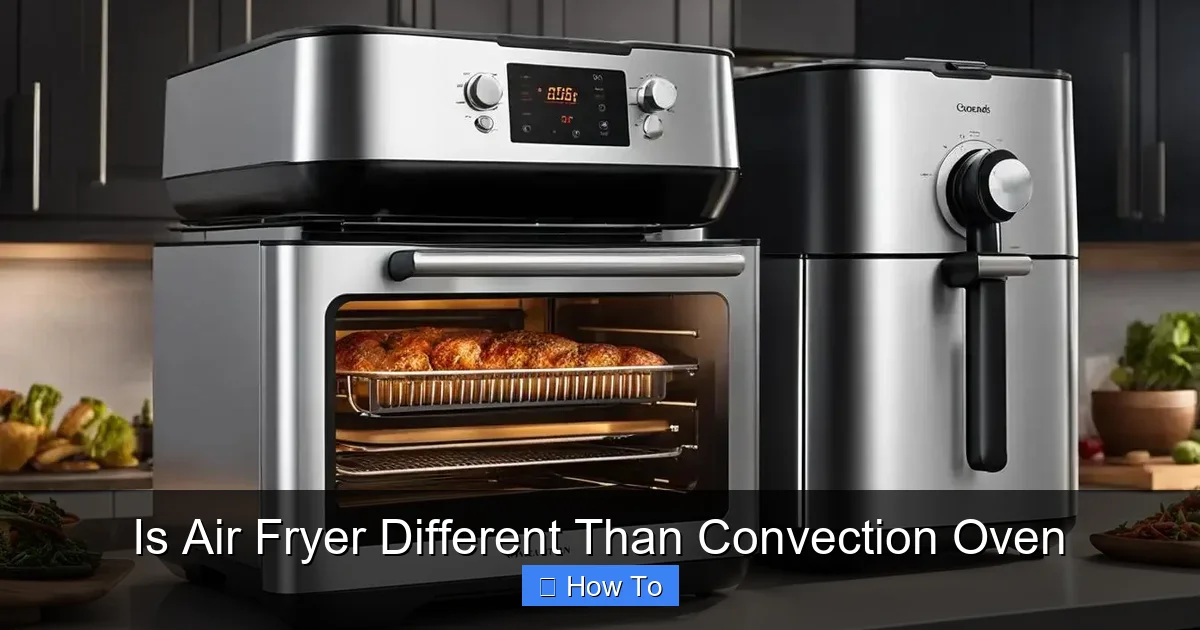
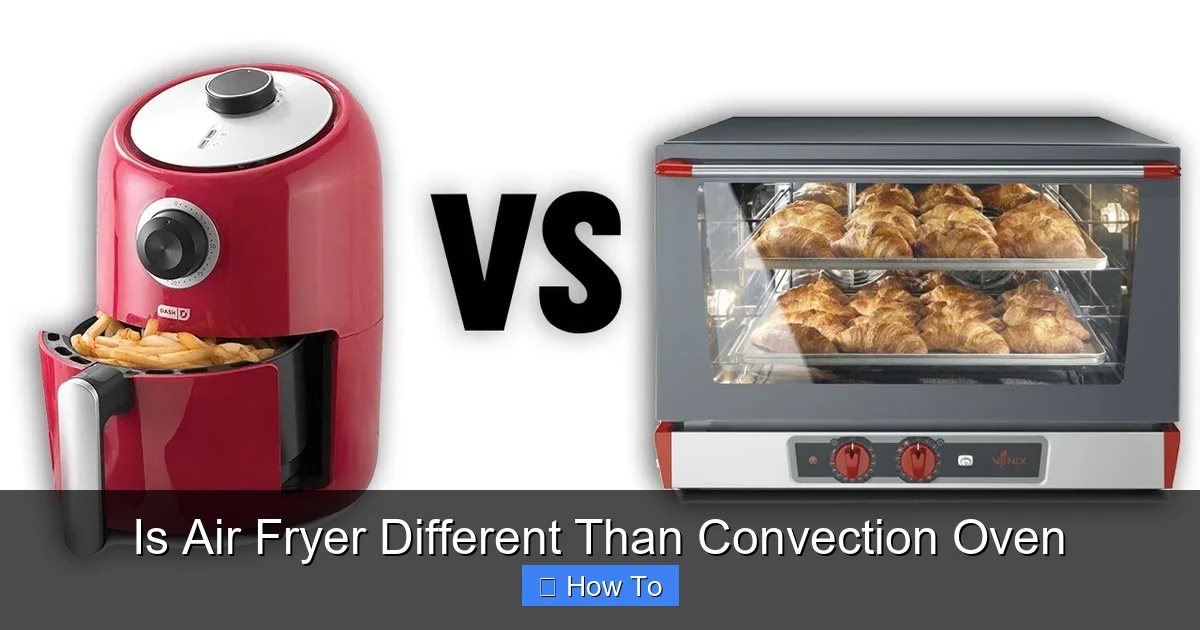
One of the most noticeable differences is physical size. Air fryers are designed to sit on a countertop and typically hold between 2 and 6 quarts of food. This makes them perfect for singles, couples, or small families who want to prepare a quick side dish or snack.
Visual guide about Is Air Fryer Different Than Convection Oven
Image source: airfryeraid.com
Convection ovens, on the other hand, range from compact countertop models to full‑size built‑in units. Even the smallest convection oven usually offers at least 0.5 cubic feet (about 15 quarts) of space, allowing you to roast a whole chicken or bake a 9‑inch cake.
If you frequently cook for a crowd, the convection oven wins. If you mostly reheat frozen foods or make small batches of crispy veggies, the air fryer’s compact nature is a major plus.
Cooking Speed and Preheat Time
Because of its reduced interior volume, an air fryer reaches the set temperature in as little as 2‑3 minutes. A convection oven may need 5‑10 minutes to preheat, depending on the model and the target temperature.
Visual guide about Is Air Fryer Different Than Convection Oven
Image source: i.ytimg.com
Once preheated, the cooking time difference can be significant for thin or small items. For example, frozen French fries might take 12‑15 minutes in an air fryer versus 18‑22 minutes in a convection oven. This speed advantage is a key reason many ask, Is Air Fryer Different Than Convection Oven? when they want a quick weeknight meal.
However, for larger cuts of meat or dishes that benefit from slower, more even heat—like a lasagna or a roast—the convection oven’s steady airflow can produce superior results without the risk of over‑drying the exterior.
Texture, Crispiness, and Oil Usage
The rapid, concentrated airflow in an air fryer excels at creating a crunchy crust while keeping the interior moist. Because the food is surrounded by hot air from all sides, moisture evaporates quickly from the surface, promoting Maillard browning with as little as a teaspoon of oil.
Visual guide about Is Air Fryer Different Than Convection Oven
Image source: i.ytimg.com
In a convection oven, the airflow is more diffuse. You can still achieve crispiness, especially if you use a perforated tray or a wire rack, but you may need a bit more oil or a longer cook time to match the air fryer’s crunch level.
Many users find that foods like chicken tenders, onion rings, or homemade potato chips turn out noticeably crispier in an air fryer, reinforcing the perception that Is Air Fryer Different Than Convection Oven? is a question worth exploring for texture lovers.
Versatility and Cooking Functions
While both appliances can bake, roast, and reheat, their strengths diverge:
- Air fryer: Ideal for frozen snacks, reheating leftovers, making crispy vegetables, cooking small portions of meat, and even dehydrating fruits or making jerky.
- Convection oven: Excels at baking breads, cakes, and cookies; roasting large poultry or beef cuts; broiling steaks; and cooking multiple dishes simultaneously on different racks.
Some modern convection ovens come with an “air fry” setting that uses a high‑speed fan and a specialized basket to mimic the air fryer effect. If you own such an oven, you might find that the answer to Is Air Fryer Different Than Convection Oven? leans toward “not really” when you use that mode.
Energy Consumption and Cost Efficiency
Air fryers generally draw between 800 and 1500 watts, and because they run for shorter periods, the total energy per use is often lower than that of a convection oven, which can consume 1500‑2500 watts and run longer.
If you’re trying to cut electricity bills, using an air fryer for small tasks can save noticeable amounts over a month. For larger meals, however, the convection oven’s ability to cook more food at once may offset the higher per‑minute energy use.
When evaluating the overall cost, consider not just the purchase price but also how often you’ll use each appliance. A dedicated air fryer costs $70‑$200, while a quality convection oven (or a range with convection) can be $500‑$1500. If you already have a convection oven, adding an air fryer might be redundant unless you value the speed and texture benefits.
Practical Tips for Getting the Best Results
For Air Fryers
- Do not overcrowd the basket; leave space for air to circulate.
- Shake or flip food halfway through cooking for even browning.
- Lightly spray oil on foods that tend to stick, like breaded items.
- Use a perforated parchment liner to ease cleanup without blocking airflow.
For Convection Ovens
- Reduce the recipe temperature by about 25°F compared to a conventional oven setting.
- Place heavier items on lower racks and lighter, crispier items on upper racks.
- Use a rimmed baking sheet to catch drips and prevent smoke.
- If your oven has a true convection setting (third heating element + fan), use it for best results.
When to Choose One Over the Other
Ask yourself these questions:
- How much food do I typically cook? If it’s usually under 4 servings, an air fryer is convenient.
- Do I need baking capabilities? For breads, cakes, or pastries, a convection oven is superior.
- How important is speed? For quick snacks or reheating, the air fryer wins.
- Do I already have a convection oven with an air‑fry mode? Then you may not need a separate gadget.
In many households, the two appliances complement each other rather than replace one another. You might use the convection oven for Sunday roasts and the air fryer for weekday fry‑ups.
Conclusion
So, Is Air Fryer Different Than Convection Oven? The answer is both yes and no. They share the same fundamental principle of circulating hot air, but differences in size, airflow intensity, preheat time, and ideal use cases set them apart. Air fryers deliver faster, crispier results for small batches with minimal oil, while convection ovens provide greater capacity and versatility for larger meals and baking.
Understanding these nuances helps you pick the right tool for the job—or decide that having both gives you the ultimate flexibility in the kitchen.
Frequently Asked Questions
Can I use an air fryer basket in my convection oven?
Yes, many convection ovens come with a compatible air fryer basket or you can purchase a universal one that fits the rack. Just ensure the basket allows proper airflow and does not block the oven’s fan.
Do air fryers produce less acrylamide than convection ovens?
Studies show that air frying can reduce acrylamide formation compared to deep frying, but the levels are similar to those achieved in a convection oven when cooking times and temperatures are comparable.
Is it safe to put aluminum foil in an air fryer?
You can use foil in an air fryer as long as you do not cover the entire basket or obstruct the airflow. Place it loosely at the bottom or wrap food lightly, leaving space for hot air to circulate.
Which appliance is better for baking cookies?
A convection oven generally provides more even baking for cookies due to its larger, flat baking surface and adjustable racks. An air fryer can bake cookies, but you may need to rotate the tray and watch for over‑browning on the edges.
Do I need to preheat an air fryer before cooking?
Preheating is recommended for best results, especially for foods that benefit from an immediate burst of heat like frozen fries or chicken wings. Most models reach the desired temperature in 2‑3 minutes.
Can I cook a whole chicken in an air fryer?
You can cook a small whole chicken (around 3‑4 pounds) in a large‑capacity air fryer, but you may need to truss it tightly and rotate it halfway through. For larger birds, a convection oven offers more space and more consistent results.