How to Fix a Toaster Oven
Most toaster oven problems can be fixed with basic checks, careful cleaning, and the right settings. Unplug the appliance, match the symptom to a safe test, and try the least invasive fix first. Stop if the cord, outlet, or wiring shows damage, and let a qualified technician handle high-heat or electrical repairs.
How to Fix a Toaster Oven
A toaster oven is useful until it stops heating, trips a breaker, or smells odd. Many faults come from a dirty crumb tray, loose rack, wrong setting, or tripped outlet. You can often solve these issues without opening the appliance.
This guide explains how to fix a toaster oven by checking easy causes first. It also shows when to stop and call a professional. Never work on it while plugged in, because heat and electricity can cause injury.
Use the manual for your model whenever possible. Similar ovens can use different switches, fuses, and heating parts. The steps below offer a safe general plan.
Key Takeaways
- Safety comes first: Unplug the toaster oven and let it cool before checking any part.
- Start with simple causes: Check the outlet, controls, timer, door, rack, and crumb tray before opening the appliance.
- Clean before repairing: Grease, spilled food, and packed crumbs can cause smoke, odors, and poor heating.
- Use an oven thermometer: This helps confirm whether the oven is actually reaching the selected temperature.
- Never bypass safety parts: Do not ignore the door switch, thermal fuse, thermostat, or heating element.
- Know when to stop: A tripped breaker, electrical smell, sparks, or damaged glass requires professional service.
📑 Table of Contents
1. Prepare Safely Before You Fix a Toaster Oven
The first step is to make the appliance safe. This matters even when it seems off. Some parts stay hot, and heating elements can crack without warning.
Unplug and cool the oven
- Pull the plug straight from the wall. Do not yank it by the cord.
- Wait until the toaster oven is completely cool. This may take at least 30 minutes after a long bake.
- Move food to a heat-safe dish and protect your counter from hot trays.
Do not spray cleaner into a toaster oven. Water can enter the controls or heating area. If liquid has been spilled inside, leave the appliance unplugged and arrange service.
Find the model and manual
Look for a model number on the back, side, or under the crumb tray. The manual explains each light, control, and error message. It also lists approved replacement parts. If you own a Black & Decker model, the guide to fixing a Black & Decker toaster oven can help with model-specific checks.
Do a simple reset
- Unplug the toaster oven and leave it disconnected for a few minutes.
- Check that the outlet and breaker are working. Reset a tripped breaker once.
- Inspect the plug, cord, and outlet face for cracks, heat marks, or a loose fit.
- Plug the toaster oven directly into a wall outlet. Avoid extension cords and power strips.
- Set the time, choose a standard bake setting, and open the door if your model requires it for power.
If the appliance works after this reset, the issue may have been a temporary control or power problem. Repeat the test later if it happens again.
2. Diagnose the Main Toaster Oven Problem
Start by matching the symptom to one basic test. This keeps your toaster oven repair safe and simple. Change only one thing at a time, then note what happens.
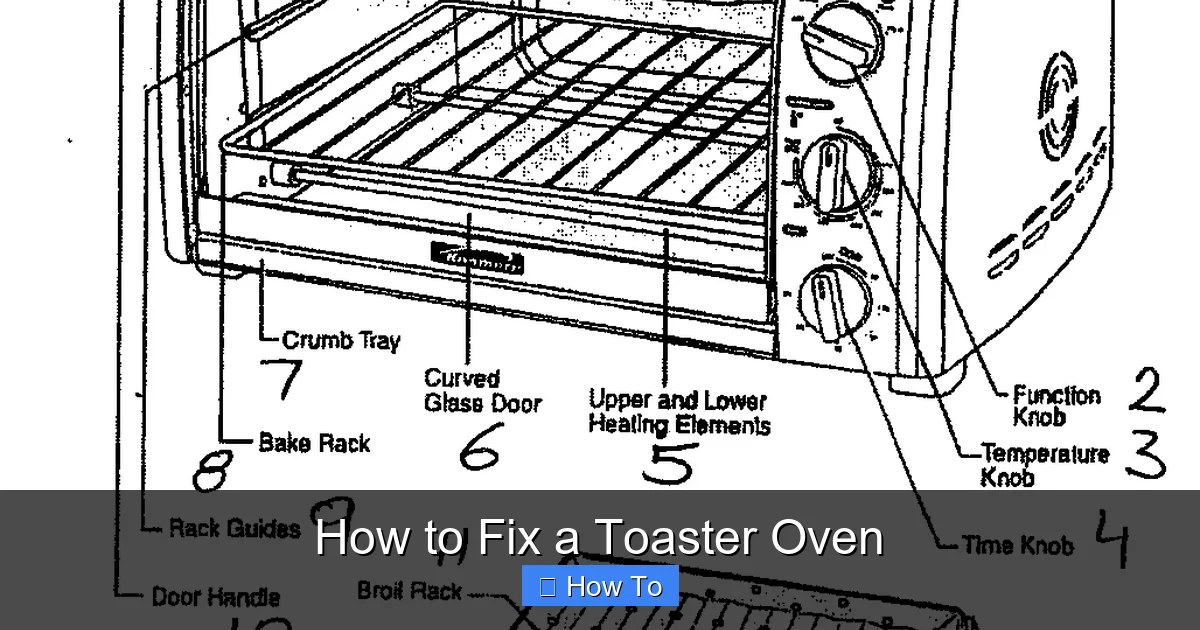
Visual guide about How to Fix a Toaster Oven
Image source: i2.wp.com
Use the symptom checklist
- No lights or display: Check the outlet, plug, breaker, and door switch.
- The oven runs but does not heat: Confirm the correct mode and temperature are selected.
- Food burns on one side: Check the rack position and rotate the food.
- The timer does not start: Check the door, control panel, and cooking preset.
- The breaker trips: Stop using the oven and inspect for moisture, cord damage, or a short.
- Burning smell: Clean crumbs and grease, but stop if the odor is sharp or electrical.
- The fan is loud: Check for a blocked fan cover, loose debris, or a damaged fan blade.
Run a controlled test
With the toaster oven empty, set it to bake at a moderate temperature. Many models need about five minutes to show that the elements are heating. Watch for the warm glow or oven light. Do not touch the glass, metal, or rack to test heat. Use a separate oven thermometer if you need a number.
For a timer issue, set the clock and cooking time while the door is closed. Some models pause the timer when the door opens. A timer that will not start may have a door-switch or control problem.
Write down the model number, symptom, and test results. These notes help you search the manual and give a repair service useful facts.
3. Fix Power, Timer, and Control Problems
A toaster oven may seem dead when its outlet has tripped. It may also sit idle because the wrong cooking mode is selected. Work through these checks in order.
When the display stays off
- Unplug the oven and check the wall outlet with a known-good tester.
- Look for a loose receptacle, scorched outlet, or plug that feels hot. Stop if you see these signs.
- Check the circuit breaker. If it trips again, leave the toaster oven unplugged.
- Connect the oven directly to a wall outlet and wait for the display to appear.
Do not use a toaster oven to test a questionable outlet. A damaged plug, cord, or outlet needs replacement, not repeated testing. Never twist bare wires together or use electrical tape to repair a cord.
When the clock or timer will not set
Make sure the oven has power. Then press the clock or timer control as the manual states. Some models use a separate bake, broil, or convection setting. Holding a button too long can put the panel into another mode. Unplugging the toaster oven for a short reset may clear a stuck program.
If the display shows an error code, write it down. Search the manual before trying another combination. If the panel remains blank while the outlet works, the control board or power connection may have failed. That level of toaster oven repair should stay with a qualified technician.
When the oven turns on but will not heat
Check that you selected a cooking function, not a timer-only or defrost setting. Confirm the temperature is above room temperature. Make sure the door is fully closed. Some toaster oven models will not energize the elements unless the door latch is engaged.
Press start or begin. A relay or control board should energize the heating elements. If the fan runs but no heat appears after the normal preheat time, unplug the appliance. Cracked, disconnected, or burned heating parts need professional service.
When the breaker trips
A repeated trip usually means an overload, moisture, a damaged cord, or an internal short. Remove food and pans, but do not open the toaster oven. If the breaker trips during a normal bake, unplug it and contact an appliance repair shop. If it trips after a spill or cleaning job, keep it unplugged until a technician checks it.
4. Fix Heating and Uneven Cooking Problems
Heating problems often come down to airflow, calibration, or a failed part. Cleaning and careful tests can solve many cases. They cannot fix a broken element or control.
Food is browned unevenly
- Move the rack to the position suggested in the manual.
- Place food in the center of the rack. Leave room around it for hot air.
- Rotate food halfway through cooking, especially pizza, cookies, or a large tray.
- Preheat the toaster oven when the recipe calls for it.
- Check that the fan works in convection mode.
For example, if one side of pizza browns first, rotate the pizza after eight minutes. If the same side burns every time, the heating element may be uneven. A technician can test the element and thermostat for safe replacement.
The oven runs too hot or too cool
Use an oven thermometer to check the real temperature. Put it in the cold toaster oven, set the oven to 350°F, and allow the full preheat time. Compare the dial with the actual reading after 15 minutes. Repeat once because one test can be off by a little.
If the difference is small, adjust the recipe temperature. If the gap is large or changes from one test to the next, suspect the thermostat or temperature sensor. Some models allow a calibration offset, but only use the exact menu steps in the manual. Never bend a sensing element or adjust an internal screw by guesswork.
There is smoke or a burning smell
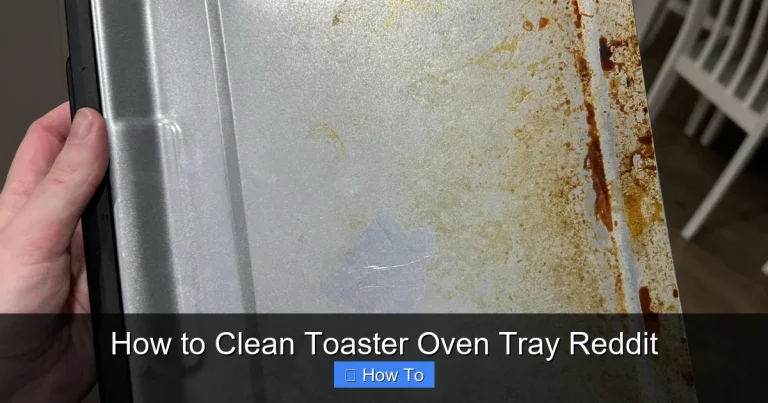
First, unplug the toaster oven and let it cool. Food grease, spilled sauce, and burnt crumbs often create smoke. Remove the crumb tray, rack, and other washable parts. Vacuum loose crumbs while holding the vacuum well away from the heating elements. Wash the removable pieces as the manual allows and dry them fully.
For a deeper clean, a toaster oven cleaning method using baking soda can lift baked-on grease. For brand-specific advice, see how to clean a Ninja toaster oven. Avoid foil, harsh scrubbers, and aerosol cleaner near the heating elements.
A sharp electrical smell, melting plastic, or smoke from a stationary toaster oven is not normal. Do not try another bake. Have the appliance inspected. A toaster oven with a damaged heating element can create a serious fire risk.
A heating element looks damaged
After the oven cools, you may notice a break, dark gap, or loose section in an exposed element. Do not touch it. Do not pry up a crumb tray to reach a concealed part. Heating elements, thermal fuses, and thermostats work at unsafe temperatures and connect to mains power. Replacing one requires the exact part and careful repair procedures.
5. Fix Door, Rack, Tray, and Fan Issues
Some toaster oven faults are simple mechanical issues. A skewed door can block heat. A bent rack can touch an element. A blocked fan can make cooking slow. Always unplug and cool the unit before moving any part.
The door does not close or latch
Check that the rack and tray are seated correctly. A pan that sits too high can stop the door from closing. Look for food crumbs packed into the latch area. Remove them with a dry brush or soft cloth.
If the door sags, compare both hinges. Some models have adjustable hinges, but use only the instructions in the manual. Do not glue a hot hinge or use general-purpose glue near the oven. Replace a cracked glass door, loose handle, or broken latch with the approved part. Do not use a toaster oven with damaged glass.
The tray or rack will not slide
Check for a bent tray edge, warped rack, or missing support roller. Straighten only a removable piece if the manual allows it. Do not force it back into the toaster oven. A rack that touches an element can cause sparks and uneven cooking. Replace warped racks and trays rather than bending them sharply.
Use the correct pan size. A pan that is too large can press against the door or heating area. It can also block airflow. Before buying another tray, compare its size with the cooking space in your manual.
The fan is noisy or will not spin
Set the toaster oven to convection and listen for the fan. Check the rear vent or fan cover for crumbs and grease. Unplug the appliance before cleaning the vent. Use a soft, dry brush or a vacuum held well away from moving parts.
A grinding or scraping sound may mean a bent fan blade. A fan that does not move may have a failed motor. Do not reach behind the rear cover. These repairs can expose live wiring, and a toaster oven should never run with its outer casing removed.
Replace small worn parts safely
Use the model number to find an approved rack, tray, handle, knob, or light. Parts that look similar can fit poorly. Poor clearance can block airflow or put the part close to an element. Keep screws and clips in order during a permitted replacement, but stop if the manual does not cover the procedure.
6. Decide Whether to Repair or Replace a Toaster Oven
You have two choices after basic troubleshooting. A simple repair may make sense if the toaster oven is under warranty, the part is easy to replace, and the fault is minor. Replacement may cost less if several parts have failed.
Try these low-risk fixes first
- Reset the outlet and control panel.
- Correct the mode, temperature, timer, or rack position.
- Remove and clean the crumb tray and removable cookware.
- Clear approved vent openings with a dry brush.
- Order an exact replacement part only when the manual supports it.
These steps cover many common problems without opening the toaster oven. Keep the receipt and manual if you contact the maker. A warranty service may replace the whole unit rather than the failed part.
Know when to call a technician
Stop and seek service if the toaster oven trips the breaker, has a hot or damaged plug, smells electrical, makes sparking sounds, or shows damaged wiring. The same rule applies if the door glass cracks or the case becomes warped. These signs can lead to shock or fire.
A technician can test the heating elements, thermostat, thermal fuse, control board, and door switch. Ask for a written estimate and whether the repair is worth the cost. If the oven is old, the model is hard to find, or parts are expensive, a new toaster oven may be the safer choice.
Use a final safety check
- Read the fault notes and manual one more time.
- Confirm the toaster oven is dry, cool, and free of packed crumbs.
- Check the cord and plug for damage.
- Run the oven empty for the normal preheat time in a clear area.
- Stay nearby during the first test. Turn it off if you see smoke or a new odor.
If the fault returns, unplug the unit and arrange professional service. Do not keep testing a damaged appliance.
Conclusion
To fix the appliance, begin with safety. Unplug it, cool it, and check the simple causes: outlet power, settings, door position, crumbs, and rack placement. These steps solve many common faults and can prevent a small problem from becoming a fire risk.
If the unit trips a breaker, smells electrical, has damaged glass, or stops heating after a clean reset, stop do-it-yourself work. A qualified technician can test the hidden heating and electrical parts safely. Knowing when not to make a repair is part of a smart troubleshooting plan.
Frequently Asked Questions
Is it safe to fix a toaster oven yourself?
Basic checks and cleaning are safe if you unplug the appliance and let it cool first. Do not remove the outer casing or test live wiring. Internal repairs should be handled by a qualified technician.
Why is my toaster oven not heating?
Check the cooking mode, temperature, door latch, outlet, and breaker first. A clean reset may solve some control problems. If the fan runs but the elements never heat, a thermostat, thermal fuse, or heating element may need professional service.
Why does my toaster oven keep tripping the breaker?
A repeated trip can mean a damaged cord, moisture, an electrical short, or an overloaded circuit. Unplug the oven and stop using it until the outlet and appliance have been checked. Do not keep resetting the breaker to test the oven.
Why does my toaster oven smell like burning?
Burnt crumbs, spilled sauce, and stuck grease often cause a burning smell. Unplug and cool the oven, then clean the crumb tray and removable parts. A sharp electrical odor, melting plastic, or smoke from a stationary oven needs immediate professional inspection.
Can I replace a broken toaster oven heating element?
Only replace it with the exact part specified for your model, and follow the manufacturer instructions closely. Heating elements and thermostats reach unsafe temperatures and connect to mains power. For most people, hiring a technician is safer than opening the oven.
Should I repair or replace my toaster oven?
Repair the appliance if it is under warranty, the fault is minor, and approved replacement parts are available. Replace it if parts are costly, the model is discontinued, or several electrical or heating components have failed. The age of the unit and the repair estimate should guide your choice.