Can You Put Foil in Oven Toaster
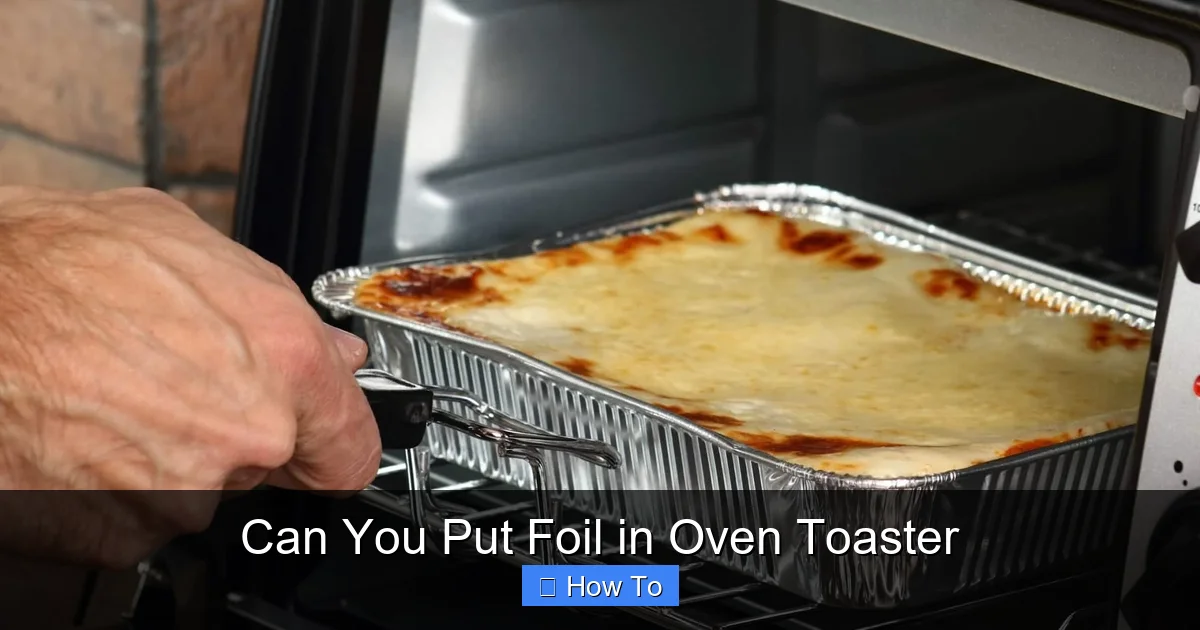
Yes, you can put foil in an oven toaster, but you must follow safety rules to avoid fire or damage. Use foil only on the rack or as a loose cover, never block vents or heating elements. Always check your manufacturer’s manual before using foil.
If you have ever wondered Can You Put Foil in Oven Toaster appliances, you are not alone. Many home cooks reach for aluminum foil to line trays, wrap food, or catch drips, but the compact size of a toaster oven makes the rules a bit different from a full‑size range. In this guide we break down the safety concerns, manufacturer recommendations, and practical tips so you can use foil confidently without risking a kitchen mishap.
Toaster ovens are essentially miniature convection ovens. They rely on a fan and exposed heating elements to circulate hot air quickly. Because the cavity is small, any obstruction — like a sheet of foil — can dramatically change airflow, reflect heat back onto the elements, or even touch the heating coils. Understanding how your specific model handles foil is the first step to safe cooking.
Key Takeaways
- Foil is allowed in most toaster ovens: but only when used correctly and sparingly.
- Never cover the crumb tray or heating elements: doing so can cause overheating and fire.
- Keep foil away from the oven walls: maintain at least a one‑inch gap for proper airflow.
- Use heavy‑duty foil for high‑heat tasks: thin foil may melt or tear.
- Consider alternatives like parchment paper or silicone mats: they reduce risk and cleanup.
- Read the owner’s manual first: some brands explicitly forbid foil.
- Clean foil residue promptly: leftover pieces can smoke on future uses.
📑 Table of Contents
Understanding Your Toaster Oven and Foil Basics
What Is a Toaster Oven?
A toaster oven combines the functions of a toaster and a small oven. It typically has a top and bottom heating element, a convection fan in many models, and a removable crumb tray. The interior space ranges from about 0.5 to 1.5 cubic feet. Because of this limited volume, heat builds up faster than in a conventional oven, making proper ventilation critical.
Types of Foil (Aluminum vs. Tin)
When people say “tin foil” they usually mean aluminum foil. True tin foil is rare today. Standard household aluminum foil comes in regular and heavy‑duty thicknesses. Heavy‑duty foil withstands higher temperatures and is less likely to tear when you shape it around food. For toaster oven use, heavy‑duty is the safer choice.
Why People Use Foil
Foil serves three main purposes: it creates a non‑stick surface, it catches drips for easy cleanup, and it can shield parts of a dish from over‑browning. In a toaster oven, you might line the baking pan when roasting vegetables, tent a piece of fish to keep it moist, or fashion a small drip tray under a greasy item like bacon.
Safety Considerations When Using Foil in a Toaster Oven
Fire Risk and Heat Reflection
Foil reflects radiant heat. If a sheet touches the top heating element, the reflected heat can cause the element to overheat and potentially ignite any food residue on the foil. Even a small piece that flaps in the convection airflow can make contact with the element. Always secure foil tightly to the pan or rack so it cannot move.
Visual guide about Can You Put Foil in Oven Toaster
Image source: toasterovenlove.com
Blocking Airflow and Heating Elements
Convection relies on unobstructed air movement. Covering the entire rack with foil creates a barrier that stops hot air from reaching the food evenly. This leads to hot spots, longer cook times, and can cause the oven to overheat. Leave at least one inch of clearance around the edges of the foil and never cover the crumb tray or the rear wall where the fan sits.
Manufacturer Guidelines
Every brand has its own stance. Some manuals explicitly say “do not use aluminum foil,” while others allow it with restrictions. For example, the guide on whether tin foil is safe in a toaster oven explains that many manufacturers permit foil only on the baking pan, not on the rack or floor. Always read the manual before your first use.
Best Practices for Using Foil Safely
Proper Placement Techniques
Place foil directly on the baking pan or on a piece of parchment paper that sits on the pan. If you need a tent, shape the foil over the food and tuck the edges under the pan rim. Do not let foil hang over the sides of the rack where it could touch the heating elements. A good rule: the foil should never be larger than the pan it sits on.
Using Foil as a Liner vs. Cover
As a liner, foil catches drips and makes cleanup easy. As a cover, it traps steam and prevents over‑browning. Both are acceptable if you follow the placement rules. However, avoid using foil as a permanent rack liner; the constant heat exposure can degrade the foil and leave metallic residue on the rack.
Alternatives to Foil (Parchment, Silicone Mats)
If you want a non‑stick surface without the risks, consider parchment paper rated for up to 450 °F or a reusable silicone baking mat. Both allow airflow and are easy to clean. For more ideas on what you can safely put in a toaster oven, see our article on what can go in a toaster oven.
Common Mistakes to Avoid
Covering the Crumb Tray
The crumb tray collects food particles and grease. Covering it with foil blocks the tray’s ventilation holes and can cause grease to accumulate on the heating elements, creating a fire hazard. Always leave the crumb tray exposed and clean it regularly.
Wrapping Food Too Tightly
When you wrap a potato or fish packet, leave a little room for steam to expand. A completely sealed packet can burst, spraying hot liquid onto the elements. A loose fold or a few vent holes prevents pressure buildup.
Using Foil in Convection Mode
Convection fans blow air forcefully. Light foil can lift and flutter, increasing the chance of contact with the fan or heating coils. If you must use foil while the fan runs, secure it with a metal clip or weigh it down with a heat‑safe dish.
Creative Ways to Use Foil in Your Toaster Oven
Making Foil Packets for Veggies
Cut a sheet of heavy‑duty foil large enough to fold over a handful of seasoned vegetables. Seal the edges loosely, place the packet on the baking pan, and roast at 400 °F for 15‑20 minutes. The packet steams the veggies while the foil keeps the pan clean.
Shielding Edges of Baked Goods
When baking a small pie or a batch of cookies, the edges often brown faster than the center. Tear a strip of foil, fold it into a ring, and gently lay it over the crust or cookie edges halfway through baking. This simple shield prevents burning without affecting the rest of the bake.
DIY Drip Pans
For greasy foods like bacon or sausage, fold a piece of foil into a shallow tray with raised edges. Place it on the lower rack (if your model has two racks) to catch drips. This keeps the oven floor clean and reduces smoke.
Cleaning and Maintenance After Using Foil
Removing Foil Residue
After cooking, let the oven cool completely. Peel off any foil pieces and discard them. If tiny fragments remain stuck to the rack or pan, soak the parts in warm, soapy water and scrub with a non‑abrasive pad. Avoid harsh chemicals that could damage the oven’s interior coating.
Preventing Build‑Up on Heating Elements
Foil that touches the elements can leave a metallic film that reduces efficiency and creates hot spots. Wipe the elements with a damp cloth once they are cool. If you notice discoloration, run the oven empty at a low temperature (around 200 °F) for 10 minutes to burn off any residue, then wipe again.
Using foil in a toaster oven is perfectly doable when you respect the appliance’s airflow and heat dynamics. By following the placement rules, checking your manual, and considering safer alternatives like parchment or silicone mats, you can enjoy the convenience of foil without the worry. Remember, the key is moderation and attention to detail — keep foil away from elements, leave space for air, and clean up promptly. Happy toasting!
Frequently Asked Questions
Can you put aluminum foil directly on the toaster oven rack?
It is not recommended. Foil on the rack can block airflow and may touch the heating elements, creating a fire risk. Use foil only on a baking pan or tray.
Is heavy‑duty foil safer than regular foil in a toaster oven?
Yes. Heavy‑duty foil withstands higher temperatures and is less likely to tear or melt, making it a safer choice for toaster oven cooking.
Can foil cause a toaster oven to overheat?
If foil covers large areas or blocks vents, it can restrict airflow and cause the oven to overheat. Always leave at least one inch of clearance around foil.
What are the best alternatives to foil for lining a toaster oven pan?
Parchment paper rated for high heat and reusable silicone baking mats are excellent alternatives that allow proper airflow and easy cleanup.
Do all toaster oven manufacturers allow foil use?
No. Some brands explicitly prohibit foil. Always consult your owner’s manual before using foil in your specific model.
How should you clean foil residue from the heating elements?
Let the oven cool, then wipe the elements with a damp cloth. For stubborn residue, run the oven empty at a low temperature for a few minutes, then wipe again.