Can You Put Plastic in Toaster Oven
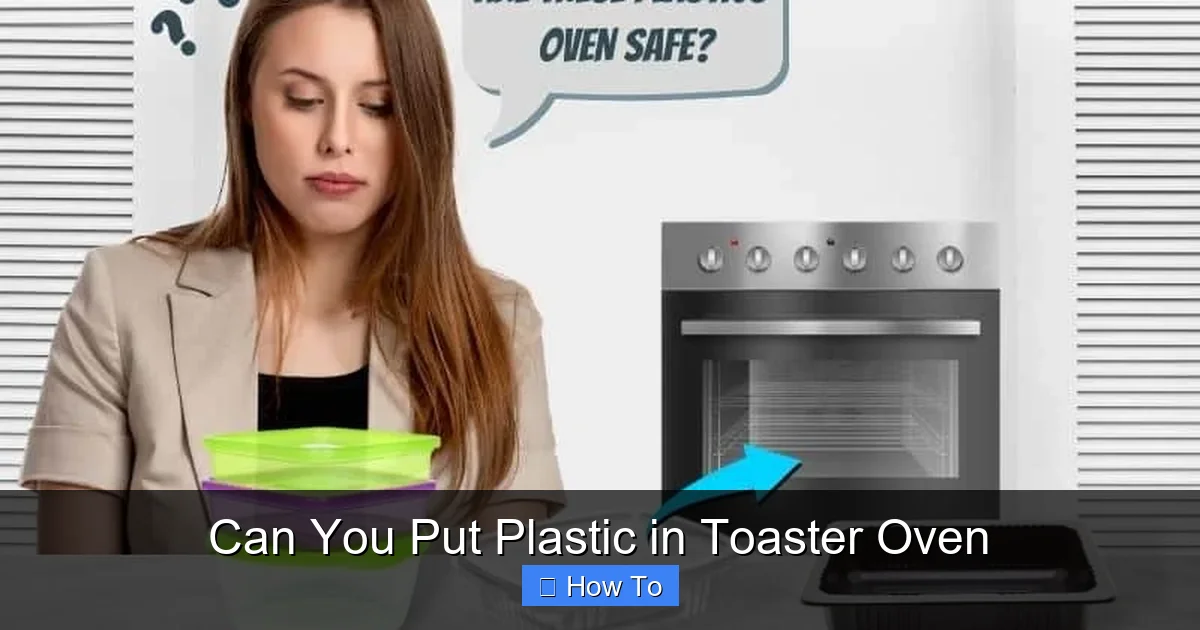
No, you should not put plastic in a toaster oven. Most plastics melt, warp, or release harmful fumes at temperatures well below what a toaster oven reaches. Even “heat-resistant” plastics are usually rated for microwaves, not dry oven heat, so stick to glass, metal, ceramic, or silicone instead.
You’re standing in the kitchen with a plastic container in one hand and a toaster oven door open with the other. Maybe you’re reheating leftovers. Maybe you’re melting cheese on a plate. And then the question hits you: can you put plastic in a toaster oven?
It’s a fair question, and honestly, a lot of people have tried it. Toaster ovens look small and gentle compared to a full-size oven. They sit on the counter. They toast bread. How hot could they really get?
Hot enough to ruin your dinner, your appliance, and possibly your day. Let’s walk through exactly what happens when plastic meets toaster oven heat, which exceptions exist, and what you should reach for instead.
Key Takeaways
- Plastic is not toaster-oven safe: Most plastics start softening around 200°F to 250°F, while toaster ovens easily hit 350°F to 450°F.
- Melting is only half the problem: Heated plastic can release fumes, warp onto heating elements, and even catch fire.
- “Microwave safe” does not mean oven safe: Those are two very different heat sources, and only one is dry, radiant heat.
- Silicone is the exception, not the rule: Food-grade silicone is heat-resistant, but it is not the same material as plastic.
- Accidents happen: If plastic melts in your toaster oven, unplug it, let it cool completely, and clean it before using it again.
- Safe swaps are easy: Glass, ceramic, metal pans, and parchment paper cover almost every job plastic was doing for you.
📑 Table of Contents
- The Short Answer: No, Plastic Doesn’t Belong in a Toaster Oven
- Why Plastic and Toaster Ovens Don’t Mix
- Not All Plastics Are Created Equal (But None Are Great Here)
- Common Plastic Items People Try (And What to Use Instead)
- What Happens If You Accidentally Melt Plastic in Your Toaster Oven
- Safe Swaps: What You Can Actually Put in a Toaster Oven
- Final Thoughts
The Short Answer: No, Plastic Doesn’t Belong in a Toaster Oven
Plain and simple, plastic should not go in a toaster oven. Not plastic plates, not plastic bowls, not plastic takeout containers, not plastic wrap, and not plastic utensils.
Here’s the core issue. A toaster oven heats with dry, radiant heat from exposed elements. Those elements glow red and reach temperatures that can climb past 800°F on the surface. The air inside the cavity typically runs between 200°F and 450°F depending on your setting.
Most everyday plastics start to soften, warp, or melt somewhere between 200°F and 250°F. Some hold on a bit longer. But almost none of them are designed to sit in dry oven heat for 15 or 20 minutes.
So when someone asks “can you put plastic in toaster oven,” the honest answer is no, and it’s not a close call. The margin between “fine” and “melted puddle on the rack” is razor thin.
Why Plastic and Toaster Ovens Don’t Mix
Let’s break down what actually goes wrong, because understanding the “why” makes the rule a lot easier to remember.

Visual guide about Can You Put Plastic in Toaster Oven
Image source: oveninsights.com
Heat Is the Enemy
Plastic is a polymer. It’s designed to hold its shape at room temperature. When you add heat, those polymer chains start to move, and the material loses structure. That’s why a plastic lid left near a hot pan curls at the edges.
In a toaster oven, that process happens fast. The heating elements are close to the food. There’s not much air volume to buffer the heat. A plastic container sitting on the rack might be only three or four inches from a glowing element.
Melting, Fumes, and Fire Risk
Melting is the visible problem. The invisible problem is worse. Many plastics release fumes when heated beyond their rating. Some of those fumes are irritating. Some are genuinely unhealthy to breathe in a small kitchen.
And then there’s fire. A thin plastic container that sags onto a heating element can ignite. Plastic wrap that touches a hot element can flare up in seconds. Toaster oven fires are small but they’re real, and they’re usually caused by something that shouldn’t have been in there.
The “Oven-Safe” Label Trap
This is where people get confused. You’ll see plastic containers stamped with “microwave safe” or even “oven safe.” Read carefully.
Microwave-safe means the plastic can handle the heat that food generates in a microwave. That’s a different kind of heat entirely, and it’s usually much lower. Oven-safe plastic does exist, but it’s rare, it’s expensive, and it’s almost never rated for the direct radiant heat of a toaster oven.
If a container doesn’t specifically say it’s safe for toaster oven use at your target temperature, treat it as a no.
Not All Plastics Are Created Equal (But None Are Great Here)
You might be wondering about the tougher plastics. The ones that feel rigid and heat-resistant. Let’s sort through them.
What About High-Heat Plastics Like Polycarbonate or PEEK?
Some engineering plastics can handle higher temperatures. Polycarbonate, for example, holds up better than a cheap takeout lid. But “holds up better” is not the same as “safe in a 400°F oven.”
These materials are also not food-contact rated for dry oven heat in most consumer products. You’d be guessing, and guessing with your appliance and your health isn’t a great plan.
Silicone Is the Exception, Not the Rule
Silicone baking mats, muffin cups, and spatulas are genuinely oven safe. Food-grade silicone typically handles up to 425°F or 450°F. That’s why silicone bakeware works in a toaster oven.
But silicone is not plastic. It’s a different material with a different chemical structure. Don’t let the soft, rubbery feel fool you into thinking your plastic spatula is in the same category. It isn’t.
What About Plastic Wrap and Cling Film?
Absolutely not. Plastic wrap is thin, it melts almost instantly, and it can droop right onto a heating element. If you need to cover food in a toaster oven, use foil or an oven-safe lid.
For a deeper look at what materials actually belong inside, this guide on what you can put in a toaster oven covers the safe list from top to bottom.
Common Plastic Items People Try (And What to Use Instead)
Let’s get practical. Here are the plastic items that most often end up in front of an open toaster oven door, plus the swap that solves the problem.
Plastic Plates and Bowls
Reheating leftovers on a plastic plate feels harmless. It isn’t. Even a short run at 300°F can warp a plate and leave you with a smell that lingers for days.
Use a ceramic plate or a glass dish instead. If you’re unsure whether your dishware can take the heat, this piece on whether you can put a plate in a toaster oven breaks down which materials are safe.
Plastic Storage Containers and Takeout Boxes
Those black takeout containers are the number one offender. They’re designed for holding hot food, not for being heated from the outside by a radiant element.
Transfer the food to a small glass or ceramic baking dish. It takes ten seconds and saves you a scrubbing session.
Plastic Cutting Boards and Utensils
Never rest a plastic spatula or cutting board on or near a hot toaster oven rack. Even leaving one leaning against the outside of the oven while it runs can cause warping.
Keep wooden spoons and metal tongs nearby instead. They handle heat without drama.
Plastic Bags and Packaging
Do not put a plastic bag of any kind in a toaster oven. Not to warm bread, not to soften butter, not for anything. This is the fastest route to a melted mess or a small fire.
If you’re thinking about liners and wraps in general, this guide on putting paper in the toaster oven explains which thin materials are safe and which will scorch.
What Happens If You Accidentally Melt Plastic in Your Toaster Oven
It happens. Someone else in the house, a rushed moment, a container that looked sturdier than it was. Here’s how to handle it without making things worse.
Step 1: Unplug It Immediately
Cut the power before you do anything else. Don’t open the door wide and fan the air around. Let the appliance cool down completely with the door closed.
Step 2: Ventilate the Room
Open a window and turn on the range hood if you have one. Melted plastic fumes are not something you want hanging around the kitchen.
Step 3: Remove the Rack and Wait
Once everything is cool to the touch, pull out the rack. If plastic has bonded to it, you’ll need to soften it again gently or use a plastic scraper. Never chip at it with a metal tool on a nonstick surface.
Step 4: Clean the Interior Carefully
Warm, soapy water and a soft sponge handle most residue. For stubborn spots, a paste of baking soda and water works well. Avoid abrasive pads on the interior coating.
Step 5: Check the Elements
Look closely at the heating elements. If plastic is stuck to them, don’t just turn the oven back on to “burn it off.” That can create smoke and fumes. Clean it off manually once cool.
Step 6: Do a Test Run
Run the empty oven at 350°F for ten minutes with a window open. If you smell plastic, there’s still residue. Repeat the cleaning step before cooking food in it again.
Safe Swaps: What You Can Actually Put in a Toaster Oven
Once you drop plastic from the rotation, you need replacements. The good news is that the safe list is long and most of it is already in your kitchen.
- Glass: Tempered glass baking dishes and heatproof glassware work well. Avoid cold glass straight from the fridge into a hot oven.
- Ceramic: Most ceramic plates and baking dishes are fine, as long as they’re not decorative or glazed with metallic trim.
- Metal: Aluminum pans, stainless steel trays, and cast iron all handle toaster oven heat without issue.
- Silicone: Baking mats, muffin liners, and spatulas rated to 425°F or higher are safe.
- Parchment paper: Great for lining trays, as long as it doesn’t touch the heating elements.
- Aluminum foil: Useful for covering and lining, but keep it away from the elements to avoid arcing or scorching.
If you want a broader list of materials that work, this guide on what can go in a toaster oven is a handy reference to bookmark.
One more tip: when you buy new dishware, look for the words “oven safe” and a temperature rating. If there’s no rating, assume it’s not safe for high heat.
Final Thoughts
So, can you put plastic in a toaster oven? No. Not plates, not containers, not wrap, not utensils. The heat is too direct, the elements are too close, and the risk of melting, fumes, or fire is too real.
The fix is simple. Keep a small stack of glass and ceramic dishes near the toaster oven. Use parchment or foil when you need a liner. And when in doubt, transfer the food to something you know can take the heat.
Your toaster oven is a genuinely useful little appliance. Treat it well, feed it the right materials, and it’ll keep earning its spot on your counter for years.
Frequently Asked Questions
Can you put plastic in a toaster oven at a low temperature?
No. Even at 200°F, many plastics begin to soften, and toaster ovens rarely hold a steady low temperature without hot spots near the elements. There’s no safe low setting for plastic in a toaster oven.
What happens if plastic melts in a toaster oven?
The plastic sags, sticks to the rack or interior, and can release fumes. If it touches a heating element, it may smoke or catch fire. Unplug the oven, let it cool fully, and clean the residue before using it again.
Is microwave-safe plastic safe in a toaster oven?
No. Microwave-safe ratings are based on heat generated by food in a microwave, which is a different and generally lower type of heat. Toaster ovens use dry radiant heat that most microwave-safe plastics cannot handle.
Can I use silicone in a toaster oven instead of plastic?
Yes, food-grade silicone rated to at least 425°F is safe in a toaster oven. Silicone baking mats, muffin cups, and spatulas are all good replacements for plastic items.
Can plastic wrap go in a toaster oven?
Never. Plastic wrap melts almost instantly and can droop onto a hot heating element, causing smoke or a fire. Use foil or an oven-safe lid if you need to cover food.
What should I use instead of plastic containers in a toaster oven?
Glass baking dishes, ceramic plates, metal pans, and silicone bakeware are all safe options. Look for an “oven safe” label with a temperature rating, and avoid anything without one.