Is Rae Dunn Cookware Oven Safe
Rae Dunn cookware is not oven safe, so you should avoid using it in the oven to prevent damage or unsafe conditions. For safe cooking, choose alternative oven‑safe materials like stainless steel or cast iron, and hand‑wash your Rae Dunn pieces to preserve their unique glaze.
Key Takeaways
- Check the label first: Oven safety varies by Rae Dunn piece, so confirm the bottom stamp or packaging.
- Respect temperature limits: Never exceed the manufacturer’s maximum oven temperature for your specific cookware.
- Avoid thermal shock: Don’t move hot ceramic pieces directly to cold surfaces or add cold liquids.
- Skip the broiler and stovetop: Most Rae Dunn cookware is not designed for direct flame or broiler use.
- Hand wash when possible: Gentle cleaning helps protect the glaze and keeps oven-safe pieces performing longer.
- Use proper protection: Always use oven mitts and place hot cookware on a heat-safe trivet.
- When in doubt, don’t bake: If oven safety isn’t clearly marked, use the piece for serving or décor only.
📑 Table of Contents
- Is Rae Dunn Cookware Oven Safe
- What Is Rae Dunn Cookware Anyway
- Understanding Oven Safety Basics
- Is Rae Dunn Cookware Oven Safe – The Short Answer
- Temperature Limits and Material Breakdown
- How to Use Rae Dunn Cookware in the Oven Safely
- Comparing Rae Dunn to Other Popular Brands
- Common Mistakes and How to Avoid Them
- Caring for Your Collection Long Term
- Final Thoughts on Rae Dunn Oven Safety
Is Rae Dunn Cookware Oven Safe
You have seen the pieces. Maybe you own a few. The large letters. The simple font. The creamy white glaze. Rae Dunn cookware sits on open shelves in dream kitchens everywhere. It looks great. But can it take the heat? Many home cooks ask the same question. Is Rae Dunn cookware oven safe for daily use? The answer is not a simple yes or no. It depends on the specific piece you own. It depends on the temperature. It depends on how you handle it. Let us break it down together. I will share what I have learned from research and from talking to other collectors.
We all want our pretty dishes to work hard. Nobody wants a cracked baker during a holiday dinner. Nobody wants a melted handle on a Sunday roast. This guide covers everything you need to know. We will look at materials. We will look at temperature limits. We will look at the difference between the stoneware and the metal lines. By the end, you will feel confident moving your favorite Rae Dunn cookware oven safe pieces from counter to oven and back again.
What Is Rae Dunn Cookware Anyway
The Brand Behind the Font
Rae Dunn is a California-based designer. She started with clay. Her signature look is handmade imperfection. Think wobbly rims. Think thumbprints in the glaze. Think that skinny, tall font spelling out CREAM or SUGAR or BAKE. Magenta, the parent company, licenses her designs. They produce several distinct lines. Not all of them act the same in heat. Knowing which line you have is step one.
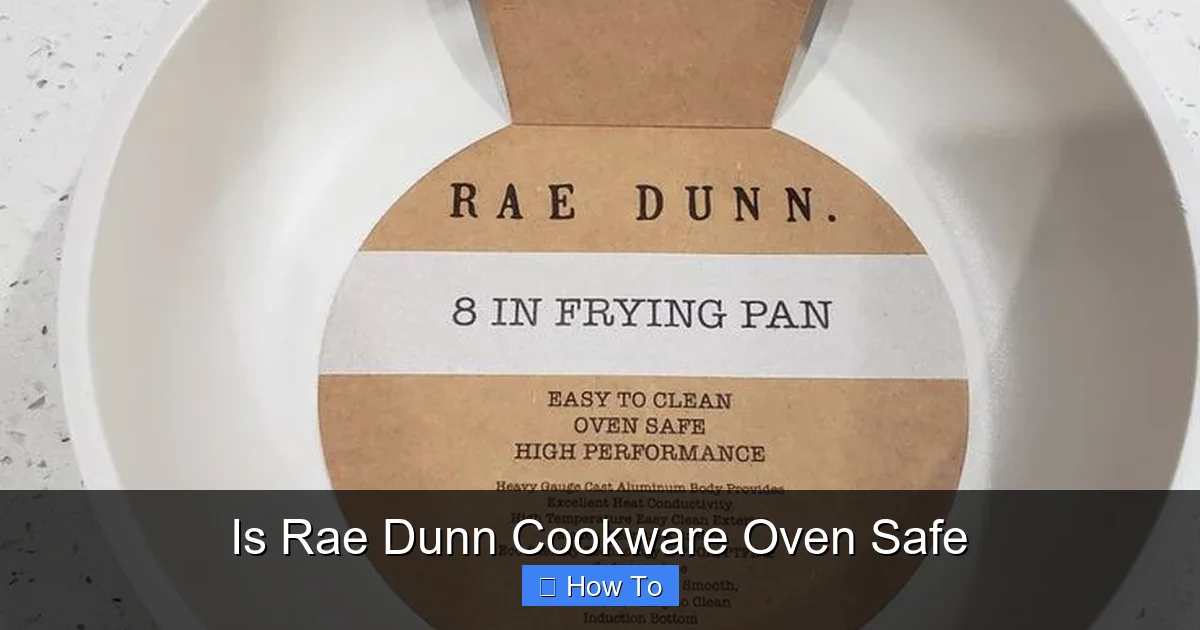
Visual guide about Is Rae Dunn Cookware Oven Safe
Image source: i.pinimg.com
Stoneware vs. Metal Collections
The most famous line is the stoneware. It is heavy. It feels like pottery. It includes bakers, mixing bowls, canisters, and mugs. Then there is the metal line. This includes sheet pans, loaf pans, and muffin tins. They are usually aluminized steel or carbon steel. They often have a nonstick coating. The handles might be silicone or stainless steel. There is also an enamelware line. That is steel coated with porcelain enamel. Each material has its own rules for the oven.
Where It Is Made Matters
Most Rae Dunn stoneware is made in China. The metal bakeware is also typically manufactured overseas. Quality control can vary batch to batch. This is common in the industry. It does not mean the pieces are bad. It means you must read the bottom stamp. It means you must check the packaging. It means you treat each piece as an individual. If you lost the box, check the official website or contact Magenta customer service. They are usually helpful.
Understanding Oven Safety Basics
What Does Oven Safe Really Mean
Oven safe means the item will not melt, warp, crack, or off-gas toxic fumes at a stated temperature. It does not mean indestructible. Thermal shock is the enemy. Taking a cold dish from the fridge and putting it into a hot oven causes stress. The material expands unevenly. Cracks happen. This is true for Pyrex. It is true for stoneware. It is true for Rae Dunn cookware oven safe items. Always let dishes come to room temperature first.
Reading the Symbols on the Bottom
Flip your piece over. Look for stamps. A little oven icon means oven safe. A temperature number next to it (like 450°F) is your max limit. A dishwasher icon means dishwasher safe. A microwave icon means microwave safe. If there is no oven icon, assume it is not oven safe. Some decorative canisters and jars are for storage only. They have thin walls. They crack easily. Do not guess. If the stamp is worn off, check the product page online. You can also learn how to tell if cookware is oven safe with a few simple checks.
Handles and Lids Change the Game
A stoneware baker might be safe to 500°F. But its wooden handle? Not safe. Its silicone lid? Maybe safe to 400°F. Its metal bale handle? Gets scorching hot. You need oven mitts. Always check the component with the lowest heat rating. That is your true limit. A Dutch oven with a plastic knob on the lid cannot go as high as the pot itself. This applies to every brand, not just Rae Dunn.
Is Rae Dunn Cookware Oven Safe – The Short Answer
Stoneware Bakers and Bowls
Yes, most Rae Dunn stoneware bakers, mixing bowls, and ramekins are oven safe. The typical rating is 450°F to 500°F. That covers almost all home baking. Cakes, casseroles, cobblers, bread. These pieces shine here. They hold heat beautifully. They brown crusts evenly. They go from oven to table looking gorgeous. Just remember the thermal shock rule. No fridge to oven. No oven to cold counter. Use a trivet or towel.
Metal Bakeware Pans
The metal line (sheet pans, loaf pans, muffin tins) is also oven safe. Usually up to 450°F. Some nonstick coatings degrade above that. Check the specific pan. The silicone handles on some loaf pans are rated lower, often 400°F. If a recipe calls for 425°F, you are fine. If it calls for 500°F pizza heat, maybe skip the nonstick pan. Use a plain steel sheet pan instead.
Enamelware and Decorative Pieces
Enamelware (the speckled blue or white pieces with silver rims) is generally oven safe to 500°F. But the rim can chip. Chipped enamel exposes steel. It rusts. It is not food safe. Inspect before each use. Decorative canisters with wooden lids? Not oven safe. The lids burn. The thin walls of a tall canister crack under heat. Keep those for flour and pasta. Mugs? Usually microwave safe. Rarely oven safe. The handles get too hot. The thin walls crack.
Temperature Limits and Material Breakdown
Stoneware Thermal Properties
Stoneware is fired at high temperatures (around 2150°F to 2330°F). It is vitrified. That means it is non-porous. It does not absorb water. It handles heat well. But it is brittle. A knock on the counter chips it. A sudden temp change cracks it. The glaze can craze (tiny spiderweb cracks) over time. This is cosmetic. It does not affect safety unless the crack goes deep. If you love ceramic, read about is ceramic cookware safe for oven to understand the broader category.
Metal Bakeware Performance
Aluminized steel heats fast. It cools fast. It is great for cookies and sheet pan dinners. Carbon steel is heavier. It holds heat longer. It is great for bread. Nonstick coatings make release easy. But they scratch. Use silicone or wood utensils. Never metal. High heat breaks down the coating over time. If the coating flakes, replace the pan. It is not worth the risk.
Silicone and Wood Components
Silicone handles and lids are common on the metal line. Food-grade silicone is usually safe to 400°F or 428°F. Some go to 450°F. Check the manual. Wood handles on stoneware? Not oven safe. They dry out. They crack. They can char. Remove them if possible. Some bakers have integrated handles (part of the clay). Those are fine. They get hot though. Use a thick mitt.
Quick Reference Temperature Table
| Piece Type | Material | Max Oven Temp | Notes |
|---|---|---|---|
| Large Baker (BAKE) | Stoneware | 500°F | Integrated handles, no lid |
| Mixing Bowl | Stoneware | 450°F | No lid, thermal shock risk |
| Ramekin | Stoneware | 500°F | Great for soufflés, crème brûlée |
| Loaf Pan | Aluminized Steel + Nonstick | 450°F | Silicone handles often 400°F max |
| Sheet Pan | Aluminized Steel | 450°F | Warps at high heat, use parchment |
| Muffin Tin | Carbon Steel + Nonstick | 450°F | Grease well even with nonstick |
| Enamelware Dutch Oven | Porcelain Enamel on Steel | 500°F | Check lid knob material |
| Canister (Tall) | Stoneware | Not Rated | Storage only, thin walls |
| Mug | Stoneware | Not Rated | Microwave yes, oven no |
How to Use Rae Dunn Cookware in the Oven Safely
Preheat With the Dish Inside (Sometimes)
For stoneware, putting the cold dish in a cold oven then heating up together reduces thermal shock. This works great for bread. The baker acts like a mini Dutch oven. Steam stays trapped. Crust gets crispy. For metal pans, preheat the oven empty. Put the batter in the pan. Then put the pan in the hot oven. Metal heats fast. You want that immediate hit for cookies and cakes.
Greasing and Lining Tips
Stoneware is naturally somewhat nonstick when seasoned. But butter and flour never hurt. Parchment paper is your best friend. Cut a round for the bottom of a cake pan. Cut a sling for a loaf pan. It guarantees release. It makes cleanup instant. For metal nonstick, a light spray of oil is enough. Avoid aerosol sprays. They build up a sticky residue that ruins the coating. Use a brush or a mister bottle.
Handling Hot Pieces
Stoneware holds heat for a long time. A baker out of a 450°F oven stays burning hot for 30 minutes. Set it on a trivet. Not on a cold granite counter. Not on a wet towel. The temperature difference can crack the bottom. Use two hands. These pieces are heavy. A large baker full of lasagna weighs 10+ pounds. Wear good mitts. Silicone grips help. Keep kids and pets away.
Cleaning After Oven Use
Let it cool completely. Stoneware: warm water, mild soap, soft scrubby. No steel wool. It scratches the glaze. Soak stuck-on food. It comes off easy. Metal nonstick: warm water, soft sponge. No abrasive pads. No dishwasher if you want the coating to last. Hand wash extends life by years. Enamelware: same as stoneware. Avoid knocking the rims. Dry everything thoroughly before stacking. Air dry is best.
Comparing Rae Dunn to Other Popular Brands
Rae Dunn vs. Le Creuset Stoneware
Le Creuset is the gold standard. It is made in France/Thailand. The quality control is tighter. The glazes are more durable. The thermal shock resistance is higher. It costs 3-4x more. Rae Dunn is accessible. It is pretty. It performs well for the price. If you bake weekly, Le Creuset is an investment. If you bake monthly and want the look, Rae Dunn delivers. Both are Rae Dunn cookware oven safe at similar temps.
Rae Dunn vs. Emile Henry
Emile Henry uses a special Burgundy clay. It handles direct flame. You can put it on a gas burner. You can put it under a broiler. Most Rae Dunn stoneware cannot take direct flame or broiler. The glaze blisters. The body cracks. Emile Henry is also more expensive. But for stovetop-to-oven dishes, it wins. Rae Dunn stays in the oven.
Rae Dunn Metal vs. USA Pan / Nordic Ware
USA Pan and Nordic Ware are commercial grade. Heavier gauge steel. Better nonstick (often ceramic reinforced or uncoated aluminum). They warp less. They last decades. Rae Dunn metal bakeware is lighter. It is fine for home use. It looks cuter in photos. If you are a serious baker doing high-volume cookies, upgrade to USA Pan. Keep Rae Dunn for the pretty loaf you gift to a neighbor.
When to Choose Which
- Choose Rae Dunn stoneware for: casseroles, cobblers, baked pasta, roasted veggies, serving tableside.
- Choose Rae Dunn metal for: quick breads, brownies, sheet pan dinners, muffins, photo-ready gifts.
- Choose premium brands for: daily heavy use, stovetop-to-oven, broiler work, professional results.
Common Mistakes and How to Avoid Them
Mistake 1: Broiling in Stoneware
The broiler hits 550°F+. The intense top-down heat cracks stoneware. It crazes the glaze instantly. Never put Rae Dunn stoneware under the broiler. If a recipe says “broil 2 minutes to brown,” move the food to a broiler-safe pan. Or use a kitchen torch. Keep your pretty baker intact.
Mistake 2: Stovetop Use
Stoneware is not for burners. Not gas. Not electric. Not induction. The concentrated heat creates a hot spot. Crack. Enamelware Dutch ovens can go on the stove. But keep heat medium. Do not boil dry. The enamel pops off. If you need stovetop-to-oven, look at what is Dutch oven cookware for better options.
Mistake 3: Ignoring the Handles
You pull a hot loaf pan out. You grab the silicone handle. It slips. The pan drops. Burns happen. Silicone gets slippery when wet or greasy. Use a dry mitt over the handle. Or grab the pan body with two mitts. Integrated stoneware handles get hot fast. They are thick. They hold heat. Mitts are non-negotiable.
Mistake 4: Stacking Hot on Cold
You take a hot baker out. You set it on a cold plate. Or you stack a hot pan on a cool one. Thermal shock cracks the bottom piece. Always use a trivet. Always place hot on hot (like a cooling rack) or hot on wood/cork. Never hot on stone, metal, or glass counters.
Mistake 5: Assuming All Pieces Match
You buy a “BAKE” baker. It goes to 500°F. You buy a matching “ROAST” platter. It might be decorative earthenware. Max 350°F. Or not oven safe at all. The font matches. The clay body does not. Check every single piece. Do not assume a collection shares specs.
Caring for Your Collection Long Term
Seasoning Stoneware
New stoneware can be thirsty. Bake a few batches of cookies or roast oil-coated veggies first. The oils polymerize in the pores. It creates a natural nonstick layer. Over time, the piece darkens. It develops a patina. Collectors love this. It means the piece is loved. It means it works. Do not scrub that patina away. It is not dirt. It is history.
Storing Without Chips
Stack stoneware with paper towels or felt pads between pieces. The rims are the weak point. A clink chips the glaze. A chip leads to a crack. A crack leads to a break. Store lids separately. Store metal pans nested with silicone mats between. Hang enamelware if you can. It prevents rim chips.
When to Retire a Piece
Hairline crack in the body? Retire from oven use. Use it for cold salad. Or as a planter. Chip on the rim of a baker? Sand it smooth with fine wet/dry sandpaper. It is fine for baking if the structure is solid. Flaking nonstick? Toss the metal pan. It is not safe. Rust on enamelware? Toss it. Bacteria hides in rust. Sentiment is sweet. Safety is sweeter.
Final Thoughts on Rae Dunn Oven Safety
So, is Rae Dunn cookware oven safe? Mostly yes. The stoneware bakers and bowls are workhorses at 450°F to 500°F. The metal bakeware handles standard baking temps. The enamelware Dutch ovens are versatile. The decorative canisters and mugs? Keep them out of the oven. Read the bottom stamp. Respect the thermal shock rule. Use mitts. Use trivets. Hand wash for longevity.
These pieces bring joy. They make a simple chicken dinner feel special. They make a gifted loaf of bread feel like a treasure. With a little knowledge, they last for years. They become part of your kitchen story. I have a “BAKE” baker that has seen three Thanksgivings, countless lasagnas, and one memorable peach cobbler disaster (burnt top, raw bottom – my fault, not the pan). It still looks great. It still works. Yours will too.
Treat them well. Know their limits. Bake with confidence. And if you ever wonder about another brand, check out our other guides. We have covered everything from Anolon to Zwilling. Your kitchen deserves the right tools. Happy baking.
Frequently Asked Questions
Is Rae Dunn cookware oven safe?
Yes, most Rae Dunn cookware is oven safe up to 450°F. However, you should always verify the specific temperature limit on the product label.
What is the maximum oven temperature for Rae Dunn cookware?
The maximum recommended temperature is typically 450°F. Exceeding this may damage the glaze or cause cracking.
Can I put Rae Dunn cookware in the oven?
Generally, Rae Dunn pieces can be used in the oven, but avoid sudden temperature changes. Preheat the oven and place the cookware inside together.
Are there any Rae Dunn items that are not oven safe?
Some decorative Rae Dunn items are not intended for oven use. Always check the manufacturer’s instructions before putting them in the oven.
How can I tell if my Rae Dunn piece is oven safe?
Look for an oven‑safe symbol or read the product description. If you’re unsure, contact the manufacturer for clarification.
Should I use a lower temperature when baking with Rae Dunn cookware?
Starting at a lower temperature and gradually increasing it helps prevent thermal shock. This practice extends the life of your cookware.