Can You Use Wax Paper in Toaster Oven
No, you should not use wax paper in a toaster oven. The wax coating can melt, smoke, and create a fire hazard in the appliance’s concentrated heat. Use parchment paper, a rated silicone mat, carefully placed foil, or a toaster-oven-safe dish instead.
Can You Use Wax Paper in Toaster Oven
A toaster oven is one of those appliances that seems simple until you start looking for shortcuts. It heats faster than a full oven and works well for small meals. It is great for toast, cheese melts, leftovers, and a single serving of baked food.
That convenience makes liners tempting. Wax paper is easy to find, inexpensive, and slick. It works well for wrapping sandwiches, separating layers of dough, and covering a counter while you work. Those jobs are very different from cooking.
If you are asking, “Can you use wax paper in toaster oven?” the safe answer is no. A toaster oven uses dry, concentrated heat. The wax coating is not designed to survive it. It can melt, smoke, transfer to food, or create a fire hazard. The good news is that safer swaps are easy to use. You can still catch crumbs and avoid scrubbing by choosing a material made for the temperature and cooking mode. For meal ideas, see what you can cook in an oven toaster.
Key Takeaways
- Safe answer: Do not use wax paper in a toaster oven.
- Main reason: The wax coating can melt, smoke, or ignite in dry heat.
- Higher risk: Toaster ovens have close heating elements and small cavities.
- Better swaps: Use parchment paper, a rated silicone mat, foil with care, or an oven-safe dish.
- Fit matters: Keep every liner flat, trimmed, and away from heating elements.
- If it happens: Turn off the appliance, let it cool, and clean it before using it again.
📑 Table of Contents
Can you use wax paper in toaster oven? The short answer
Wax paper starts as paper and receives a thin coating of wax. The coating helps keep moisture out and gives the sheet a slick feel. It does not make the paper heat-safe. Most wax paper is not rated for oven use, and a toaster oven can damage it quickly.
What happens to the wax
As the appliance warms, the coating can soften and melt. It may seep into food, stick to a pan, or drip onto the oven floor. At higher heat, the paper can smoke and may ignite. The exact temperature varies by brand, but it is far below many baking and broiling settings.
Covering the paper with food does not solve the problem. Heat reaches exposed edges, and a corner can curl upward. A loose sheet may also shift when you open or close the door. Even a short warming cycle is not a reliable safety test.
Wax paper is not parchment paper
Parchment paper is made for baking and is usually treated to resist heat. Wax paper is made for moisture resistance and low-heat tasks. The names sound similar, but the materials behave very differently. Never substitute one for the other in a hot appliance unless the package clearly permits it.
Some wax paper is labeled microwave-safe for covering moist food. A microwave heats food in a different way and does not have the same exposed heating elements. That label does not make the sheet safe for a toaster oven, broiler, or air-fry mode.
Why toaster ovens make the risk higher
A toaster oven is not simply a smaller regular oven. Its heating elements sit close to the rack, and the cavity is small. Heat builds quickly. A convection fan can also push hot air across a loose sheet.
Close elements and hot spots
A corner of wax paper may lift or curl. If it touches a heating element, it can burn or catch fire. Small ovens also have hot spots, so one area may become much hotter than the temperature shown on the dial. Food can shield part of a liner while leaving another part exposed.
The thermostat measures air temperature, not the surface temperature of a sheet near an element. A sheet can get hotter than the air around it. This is another reason to keep all paper products away from the top of the cavity.
Low heat and special modes
Some people try a low warming setting and assume it is safe. That is a risky guess. Wax can soften at temperatures well below normal baking heat. Toast, broil, and air-fry modes can be even more demanding because the heat source is close and direct.
Always check the appliance manual. Some models have specific rules about liners, foil, and cookware. If the manual does not mention wax paper, treat that as a no. A product label that says “nonstick” or “moisture-resistant” does not mean toaster-oven safe.
Safer alternatives to wax paper
You do have safer choices. Pick one that fits the food, temperature, and cooking mode. Always follow the toaster oven manual and the product label. The best option is the one that stays flat, fits the pan, and can handle the heat. Do not use wax paper as a shortcut.
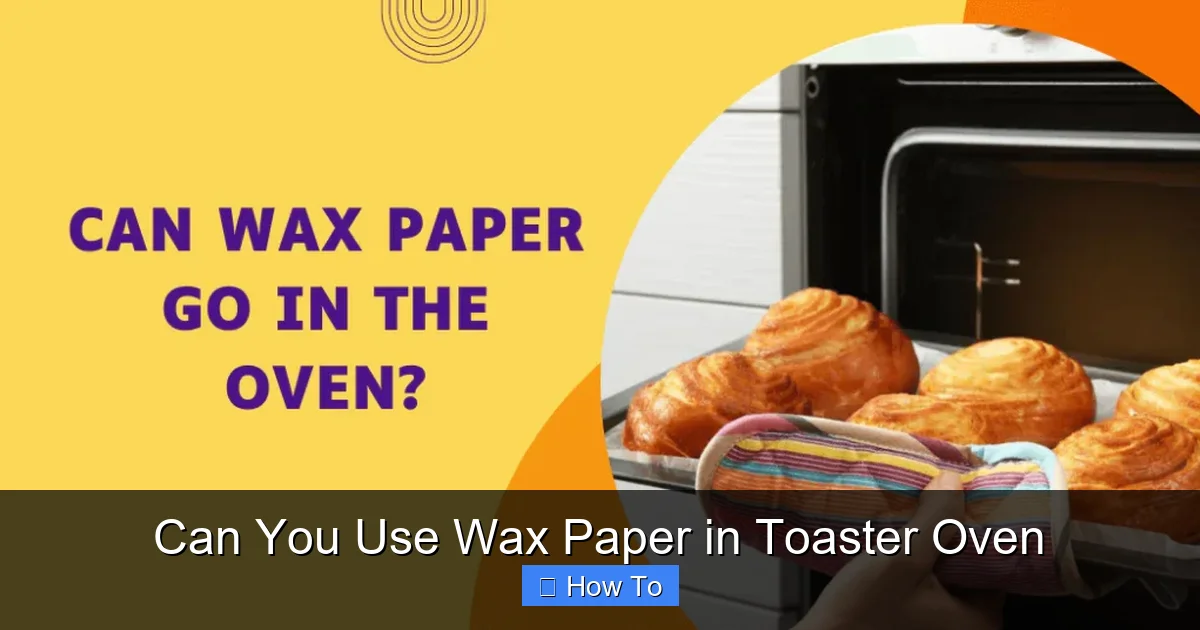
Visual guide about Can You Use Wax Paper in Toaster Oven
Image source: customwaxpaper.com
Parchment paper
Parchment is usually the best swap for baking. It is often rated for temperatures around 420°F to 450°F, but the exact limit depends on the brand. Check the box before use. Keep the sheet away from exposed elements, and do not use it under broil unless the package specifically allows it. Trim it to the pan so air cannot lift an edge.
Use parchment for cookies, scones, small muffins, and roasted vegetables. Unlike wax paper, parchment is made for oven heat. It gives food a nonstick surface and makes cleanup easier. If the edges begin to darken, stop using that sheet. Browned or brittle parchment is a sign that it has been pushed past its limit.
Silicone baking mats
A food-grade silicone mat can be reused many times. Choose one made for toaster ovens and check its maximum temperature. Place it flat on a pan, not directly on a rack. A mat that is too large can curl or touch the elements. Wash it according to the maker’s instructions and replace it if it becomes cracked or sticky.
Silicone works well for cookies, pastries, and foods that release oil. Unlike wax paper, it can handle baking heat when it is properly rated. It is not ideal for every job. Do not use a mat under a broiler unless it is rated for that mode. Also, leave room around the food so hot air can circulate.
Aluminum foil
Foil can work for some foods, but use it with care. Do not let it touch the heating elements. Do not cover the crumb tray, vents, or fan. Foil can react with acidic or salty foods, such as tomatoes and citrus, so use an oven-safe dish for those items. Keep the sheet smooth and below the pan rim.
Foil is useful for catching drips from roasted vegetables or warming a small portion of casseroles. It is a different material from wax paper, but it still needs careful placement. It should not be crumpled into a shape that blocks airflow. If your manual says not to use foil, follow that instruction.
Oven-safe dishes
A small metal pan, ceramic dish, or glass dish may be simplest. Use only cookware labeled oven safe or toaster-oven safe. Avoid sudden temperature changes with glass. For example, do not move a cold dish straight into a very hot oven unless the manufacturer says it is safe. If you are unsure, read our guide on whether Pyrex is safe in a toaster oven.
For saucy or juicy foods, a dish with sides is often better than any liner. It contains spills and keeps food away from the oven floor. A proper pan also gives you a stable surface, which is especially helpful in a compact appliance.
How to line a toaster oven safely
Good lining habits reduce mess without adding danger. Use a liner only when the appliance and cookware instructions allow it. The goal is to catch food, not create a new fire risk.
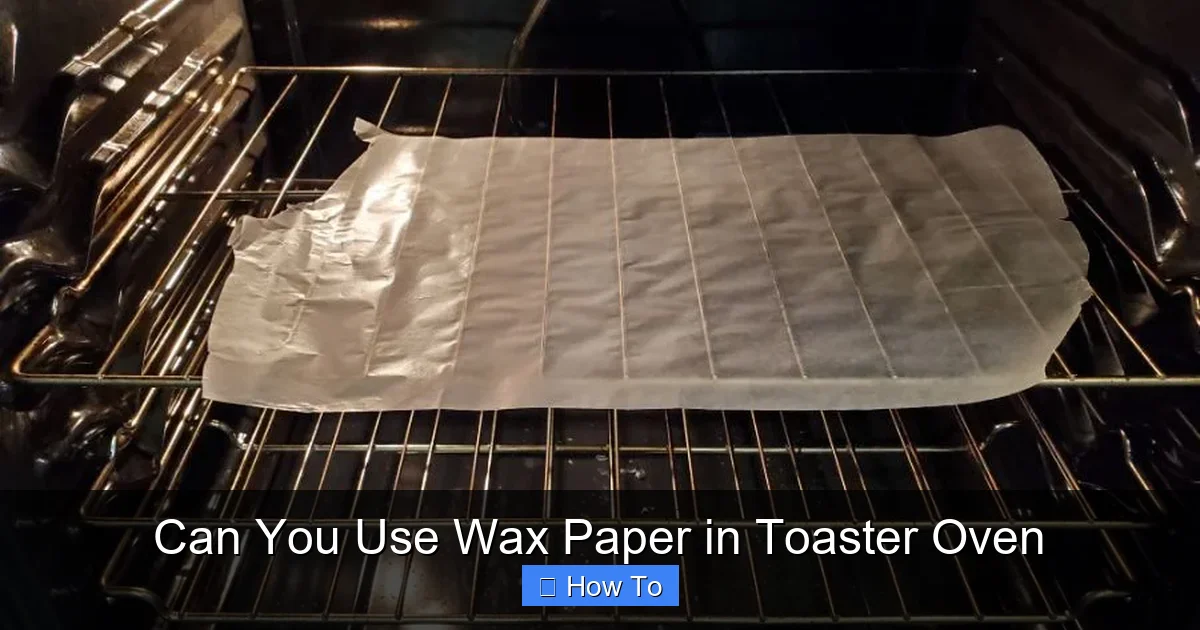
Visual guide about Can You Use Wax Paper in Toaster Oven
Image source: piacipizza.com
A simple step-by-step method
- Check the label: Confirm that parchment or a silicone mat is rated for the temperature and mode you plan to use.
- Use a pan: Put the liner on a rimmed baking pan. Never place a loose sheet directly on a rack.
- Trim the edges: Cut the liner so it stays below the pan rim and cannot blow toward an element.
- Leave space: Keep paper, foil, and mats away from the top and side heating elements.
- Watch the food: Stay nearby when using a new liner, high heat, or a convection fan.
Preheat the toaster oven with the empty pan only if the manual recommends it. Some liners should be placed after preheating, while others can go in from the start. Follow the product directions. When you add food, make sure it does not hang over the edge or touch the element.
Common mistakes to avoid
Do not use wax paper because it worked once in a regular oven. Do not cover an entire rack with foil. Do not put a liner under food that touches an element. Do not use a damaged mat or browned, brittle parchment. When in doubt, use a proper pan and skip the liner.
Also, do not assume that a clean-looking sheet is safe after one use. Heat can weaken paper and silicone over time. Inspect liners before each use. If a mat curls, tears, or smells odd, replace it.
For sticky foods, a light coating of oil on an oven-safe pan may be enough. For crumbly foods, a rimmed pan catches more than a flat sheet. Matching the tool to the food is safer than forcing one liner to do every job.
Practical examples and easy swaps
Here are common toaster oven tasks and a safer choice for each one. The right choice depends on whether you are baking, reheating, or using a high-heat mode.
Baking cookies or small cakes
Use parchment paper or a rated silicone mat on a baking pan. Wax paper may melt before the batter sets. Parchment gives cookies a nonstick surface and helps them brown evenly. Follow the recipe temperature and the liner’s limit. If you are making a very small batch, a metal pan with a little oil may work just as well.
Reheating pizza or fries
Place food directly on the rack or on a small metal pan. Foil can catch crumbs, but keep it flat and away from the elements. For more ideas, explore what you can use a toaster oven for. A preheated pan can make fries crispier, but use tongs and follow the appliance instructions.
Broiling, toasting, and air-fry modes
Avoid paper liners for these modes. The heat is intense, and food sits close to the source. Use a broiler pan, metal rack, or oven-safe dish. Never put wax paper under bacon, cheese, or bread while broiling. Fat and crumbs can cause smoke even when a liner is safe.
Warming leftovers and melting cheese
Use an oven-safe dish for saucy leftovers. A small ceramic ramekin works well for pasta, beans, or soup. For a sandwich, place it on a rack or pan and watch it closely. If cheese may drip, use a dish with sides rather than a sheet that can shift.
These examples show a useful rule: use the least complicated safe tool. A pan or dish often beats a liner. It holds food in place, catches spills, and leaves more room for air to move.
If wax paper has already been used
If you see smoke, turn off the toaster oven and unplug it if you can do so safely. Keep the door closed if there is flame. Use a fire extinguisher if needed. Call emergency services for a fire that does not go out right away. Never pour water on an electrical fire.
Clean up after the oven cools
Let the appliance cool completely. Remove food that touched melted wax. Wipe the pan and interior with warm, soapy water. Do not scrape a heating element. If wax is stuck to an element or the smell remains, contact the manufacturer before using the oven again.
It is better to discard food that has wax or smoke residue on it. A little melted coating can change the taste and texture, and you may not know what it touched. Once the oven is clean and dry, follow the manual if it recommends a short test cycle without food. Stop if you notice smoke or a strange smell.
Final verdict
So, can you use wax paper in a toaster oven? No. It is not designed for this job. The small space, exposed elements, and fast heat make it an unnecessary risk. Choose parchment, a rated silicone mat, careful foil, or a toaster-oven-safe dish. Your food will be easy to clean up, and your kitchen will be safer.
Frequently Asked Questions
Can you use wax paper in a toaster oven?
No. Wax paper is not designed for the dry, concentrated heat of a toaster oven. Its coating can melt, smoke, or ignite, so use parchment, a rated silicone mat, foil with care, or an oven-safe dish.
What happens if wax paper melts in a toaster oven?
The wax can stick to food, the pan, or the oven interior. It may also smoke and leave an odor. Turn off the appliance, let it cool, and clean it before using it again.
Can wax paper be used at a low temperature?
It is not a good idea. Wax can soften well below normal baking temperatures, and toaster ovens have hot spots. Follow the package label, and choose a heat-safe liner instead.
Is parchment paper safe in a toaster oven?
Usually, yes, if it is rated for the temperature and kept away from heating elements. Check the package and your appliance manual. Do not use it under broil unless the manufacturer permits it.
Can aluminum foil be used instead of wax paper?
Often, but only with care. Keep foil flat, away from elements, vents, and the fan, and follow the toaster oven manual. Avoid using it with highly acidic or salty foods.
What is the best liner for a toaster oven?
Parchment paper or a toaster-oven-rated silicone mat is usually best for baking. For juicy foods, an oven-safe dish with sides is often safer and easier to clean.