Does Air Fryer Use Less Energy Than Oven
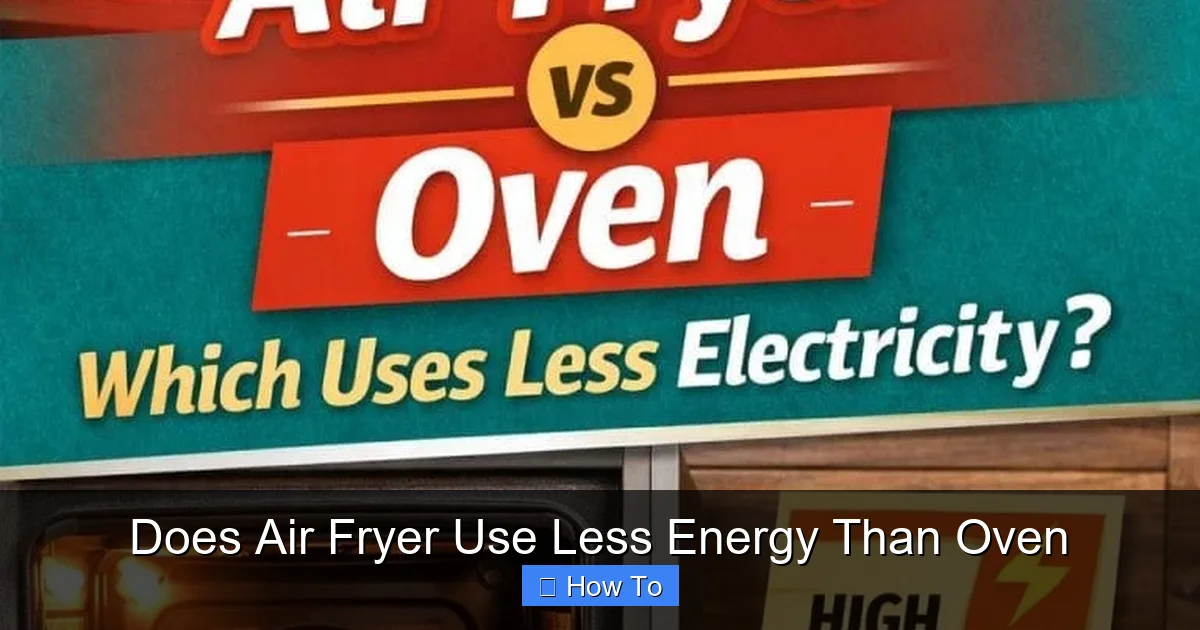
Air fryers generally consume far less power than traditional ovens, often cutting energy use by 30‑70% for small cooks. This article breaks down why the difference matters and how you can maximize savings. Switching to an air fryer can lower your utility bills while still delivering crisp, healthy meals.
Key Takeaways
- Air fryers use 30‑70% less electricity than ovens for typical portions. The smaller heating element and shorter cook times drive the savings.
- Oven size matters. A full-sized oven left on wastes energy, while a compact air fryer stays efficient.
- Cook time is a major factor. Air fryers finish dishes in minutes; ovens often need 20‑40 minutes.
- Smart usage habits boost savings. Preheating less, using lower settings, and batching meals amplify the advantage.
- Initial cost vs. long‑term savings. Though air fryers cost more upfront, reduced electricity bills can offset the price over time.
- Energy efficiency varies by model. Look for ENERGY STAR ratings and read reviews like the guide at How Much Energy Does An Air Fryer Use Compared To An Oven 2 2 for detailed comparisons.
- Real‑world testing confirms savings. Independent studies show consistent lower wattage draws when comparing an air fryer to a standard oven.
📑 Table of Contents
Introduction
If you’ve ever stood in front of a hot oven and wondered whether swapping to an air fryer could cut your electric bill, you’re not alone. The debate “Does Air Fryer Use Less Energy Than Oven?” sparks curiosity for many home cooks. In this guide we’ll explore the science behind each appliance, break down real‑world wattage numbers, and share practical tips to help you make the most energy‑smart choice for your kitchen.
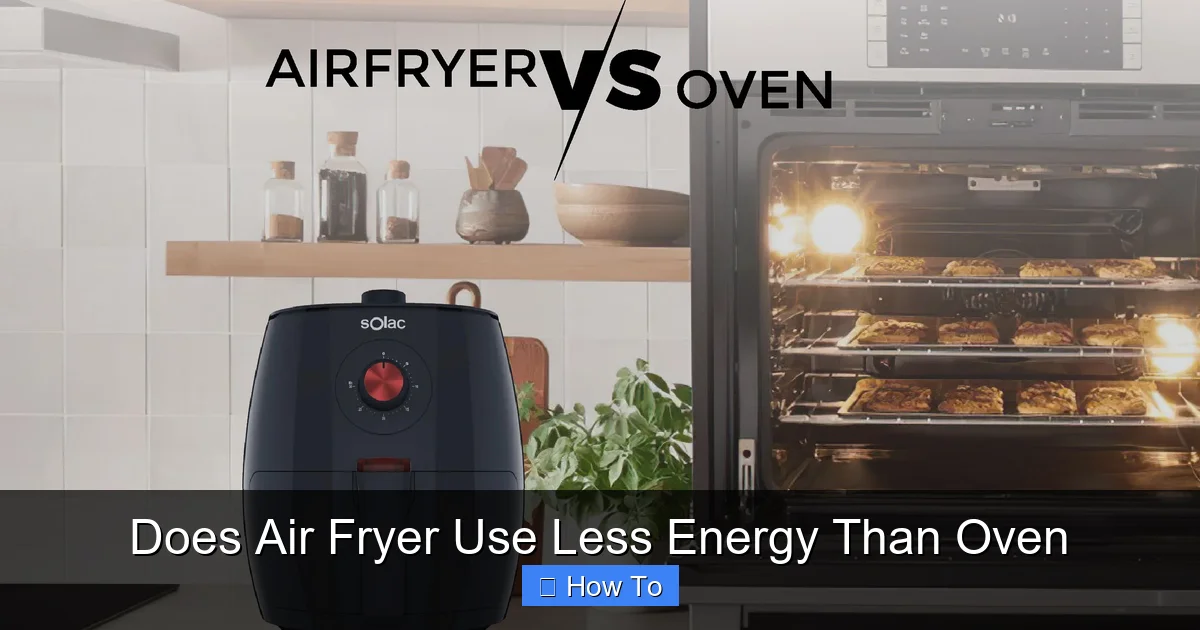
First, let’s set the stage. Air fryers are designed for rapid, convection‑style cooking. They circulate hot air around a small basket, heating food quickly. Ovens, especially conventional models, heat a larger cavity and often rely on longer preheat times. The differences in size, heating method, and usage patterns create a noticeable gap in energy consumption.
How Air Fryers and Ovens Work
Air Fryer Mechanics
An air fryer uses a heating element and a fan to blow hot air. The fan moves air at high speed, creating a crisp exterior while cooking the interior quickly. Because the cooking chamber is small, the appliance reaches target temperature in minutes.
Visual guide about Does Air Fryer Use Less Energy Than Oven
Image source: smartkitchenessentials.com
Oven Mechanics
A conventional oven heats a large cavity using top, bottom, and sometimes side elements. It relies on natural convection or, in convection ovens, a built‑in fan. Preheat times can range from 10 to 30 minutes depending on size and model.
Key Differences
The main contrast lies in size and speed. Air fryers heat a tiny space, while ovens heat a much larger space. Speed differences translate directly to wattage usage over time. Understanding these mechanics helps explain why an air fryer often wins the energy race.
Energy Consumption Basics
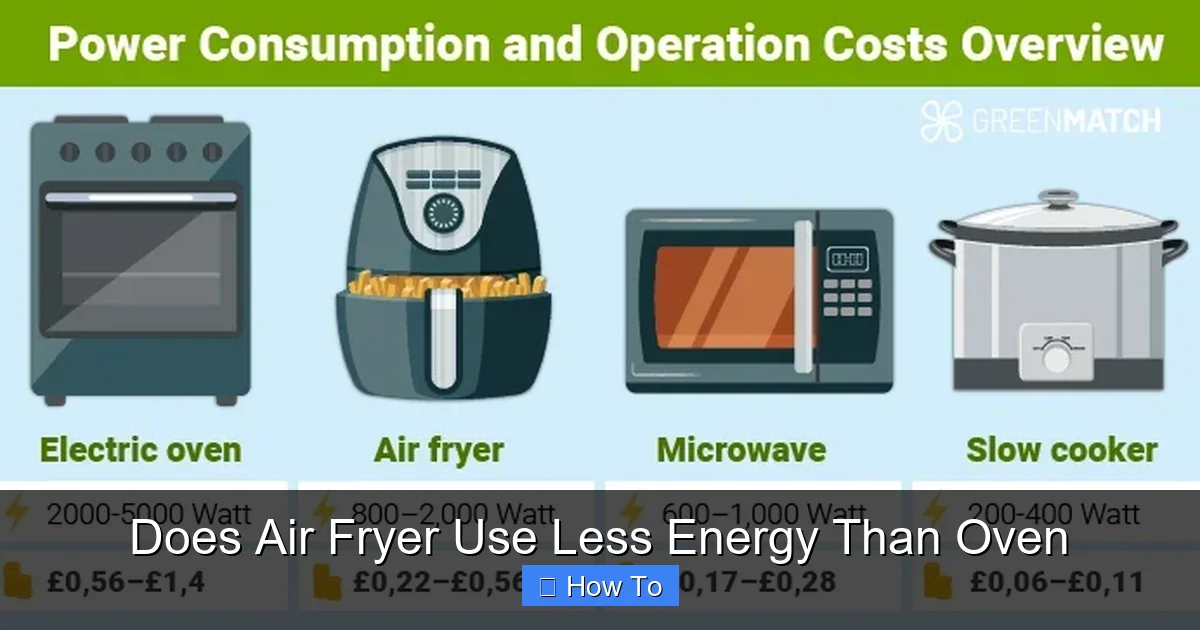
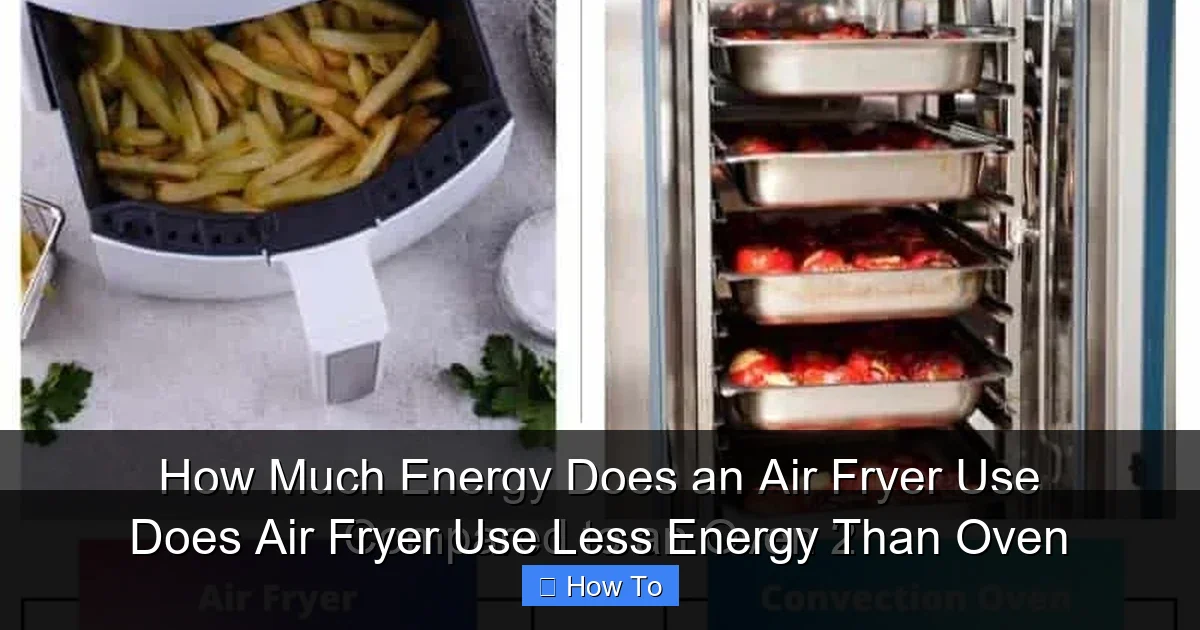
Typical air fryers draw between 800 and 1500 watts. Most household models hover around 1200 watts. Ovens range from 1200 to 3000 watts, with average usage near 2000 watts during baking or roasting.
Visual guide about Does Air Fryer Use Less Energy Than Oven
Image source: recipesalive.com
When you compare the two, an air fryer’s lower wattage is only part of the story. The duration of use matters just as much. For a 20‑minute roast, an air fryer might use about 0.4 kWh (1200 W × 0.33 h). A conventional oven could consume 0.67 kWh (2000 W × 0.33 h) for the same task.
For deeper data, check out the detailed comparison at How Much Energy Does An Air Fryer Use Compared To An Oven 2 2. It breaks down wattage charts and real‑world test results.
Real‑World Energy Savings
Small Portion Cooking
Cooking for one or two people is where the air fryer shines. You can crisp a chicken breast in 15 minutes, while an oven might need 30‑40 minutes. The shorter time directly reduces electricity use.
Visual guide about Does Air Fryer Use Less Energy Than Oven
Image source: behacolb.com
Batch Cooking Strategies
Even when cooking larger meals, you can split tasks. Use the air fryer for quick items like fries or fish, then finish the main dish in the oven later. This mixed approach often lowers overall energy draw.
Energy‑Efficient Models
Some air fryers earn ENERGY STAR certification. These models meet strict efficiency guidelines, using less power while delivering the same performance. Look for the label when shopping for a new unit.
For more insight on which models lead the pack, see the energy‑efficiency review at Is Air Fryer More Energy Efficient Than Oven. It ranks top‑selling units and highlights real‑world savings.
Factors That Influence Energy Use
Temperature Settings
Lower temperatures save energy. An air fryer can achieve crispy results at 350°F, while an oven may need 400°F for the same effect. Choosing the right setting reduces wattage draw.
Door Opening
Each time you open an oven door, heat escapes. This forces the oven to work longer to restore temperature, spiking energy use. Air fryers have smaller doors and less heat loss, making them more efficient in this regard.
Preheating Habits
Many recipes call for preheating. Skipping preheat for small air fryer tasks saves energy instantly. For ovens, limit preheat to only when absolutely necessary.
Size Matching
Using a massive oven to cook a single serving is wasteful. Choose an oven size that matches your load, or switch to an air fryer for small batches. The guide at What Uses Less Electricity Oven Or Air Fryer offers tips on sizing your cookers wisely.
Conclusion
The answer to “Does Air Fryer Use Less Energy Than Oven?” is a resounding yes for most everyday cooking scenarios. Air fryers typically consume 30‑70% less electricity because they heat smaller spaces faster and lose less heat when the door opens. While ovens remain essential for larger dishes and baking, strategic use of an air fryer can cut your kitchen’s energy footprint and lower utility bills.
Start by evaluating your typical meals. If you often cook small portions, consider making the air fryer your go‑to appliance. For larger roasts, combine both tools—quickly crisp the edges in the air fryer, then finish the interior in the oven. Over time, these habits will add up to noticeable savings.
Remember, the best appliance is the one you’ll use consistently. By understanding the energy dynamics and applying the tips above, you’ll enjoy delicious, healthy food while keeping your electricity usage in check.
Frequently Asked Questions
Does an air fryer really use less energy than a conventional oven?
Yes, most air fryers draw 800‑1500 W, while ovens typically use 1200‑3000 W. For the same dish, an air fryer often consumes 30‑70% less electricity because it cooks faster and loses less heat.
What factors affect the energy savings when using an air fryer?
Portion size, temperature settings, preheating, and how often you open the door all play a role. Smaller loads, lower temps, and minimal door openings maximize savings.
Can using an air fryer increase overall electricity bills?
Only if you replace efficient oven cooking with unnecessary air fryer use. For large meals, an oven may be more efficient. Balance both appliances based on portion size and recipe needs.
Are ENERGY STAR air fryers worth the extra cost?
These models meet strict efficiency standards, using less power while delivering the same performance. The modest price premium often pays off through lower energy bills over the appliance’s life.
How do I compare the energy use of my current appliances?
Check the wattage on the appliance’s label or in the manufacturer’s specs. Use a simple calculator: (watts ÷ 1000) × hours used = kWh. Track usage for a week to see real numbers.
Should I still use my oven for baking?
For items like cakes, casseroles, or roasted meats that need even heat over a large area, the oven remains the best tool. Use the air fryer for quick, small‑portion tasks to keep overall energy use low.