How Is Convection Oven Different from Air Fryer
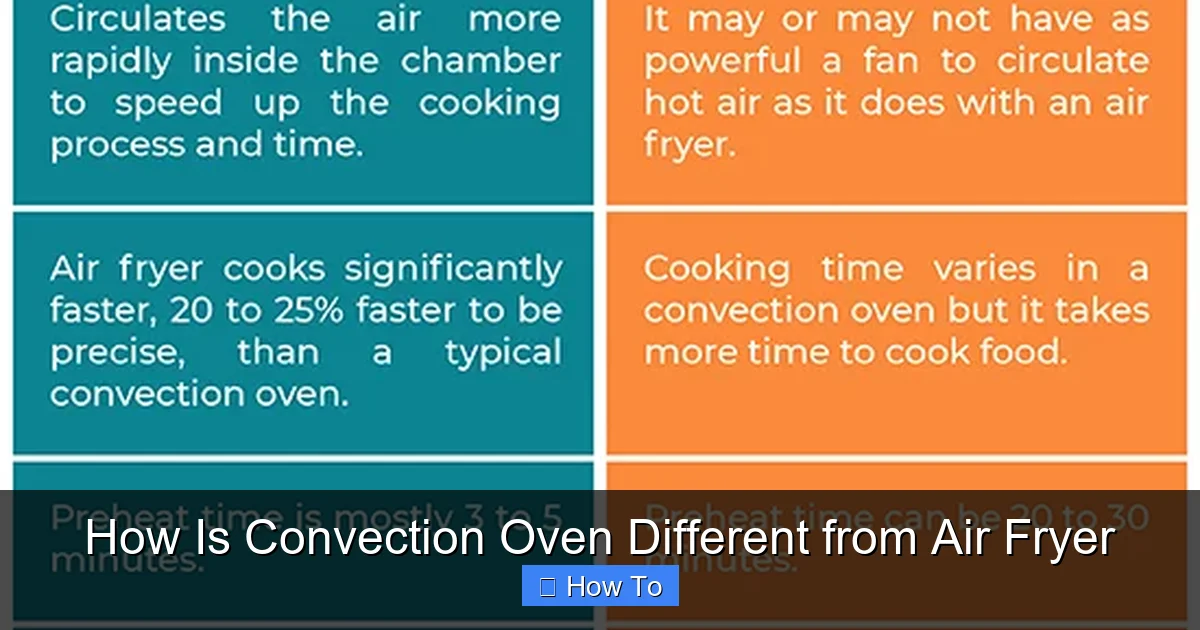
Convection ovens use a fan to circulate hot air throughout a roomy cavity, while air fryers force rapid air through a compact chamber for ultra‑crisp results. Choose based on size, cooking style, and desired texture.
Key Takeaways
- Convection ovens rely on a fan for even heat, while air fryers use high‑speed airflow for crisping. They circulate air differently, giving distinct cooking textures.
- Size matters: convection ovens are larger, often built‑in, whereas air fryers are compact countertop units. A typical convection oven holds a full-size turkey, while an air fryer fits a few chicken wings.
- Cooking speed differs; air fryers typically finish food 20‑30% faster than a conventional oven. The rapid air flow penetrates food quickly, reducing bake times.
- Energy use is lower in air fryers because they heat a smaller volume. A 1500‑watt air fryer uses less power than a 2500‑watt convection oven for similar tasks.
- Versatility: convection ovens excel at baking and roasting, air fryers shine at frying and reheating. Use a convection oven for cakes, an air fryer for crisp fries.
- Cost and space: convection ovens require a larger investment and installation, air fryers are affordable and portable. A basic countertop model costs under $100, while a built‑in oven starts at $500.
- Health impact: air fryers need little or no oil, making them a healthier option for fried foods. You can achieve golden crispness with just a spray of oil.
📑 Table of Contents
How Convection Ovens Work
The Fan Principle
Convection ovens rely on a built‑in fan to move hot air continuously around the food. The fan draws cooler air in from the back, passes it over a heating element, and then pushes the heated air toward the front of the oven. This constant circulation eliminates the natural hot‑and‑cold zones that appear in a regular oven. As a result, the temperature stays the same on every rack, and food cooks evenly. The fan also helps dry the surface of the food, which is why convection is excellent for achieving crispy skin on chicken or a golden crust on pizza. Most convection ovens let you turn the fan on or off. When the fan is on, the temperature is usually 25‑30°F lower than a conventional oven setting because the heat is distributed more efficiently. This allows you to bake at a lower temperature while still achieving the same results, which can be gentler on delicate foods like soufflés. The fan also helps reduce moisture, making convection ideal for dehydrating foods or keeping meat juicy while the exterior browns. For a deeper look at how these appliances differ, see our article Is Air Fryer Different From Convection Oven.
Heat Distribution
Because the fan forces air to flow in all directions, a convection oven provides uniform heat that reaches the top, bottom, and sides of the cavity. This means you can place a baking sheet on the middle rack and still get the same browning as if it were on the top rack. The even heat also shortens cooking times; a roast that typically needs two hours in a conventional oven may be done in about 1 hour 40 minutes with convection. Many bakers prefer convection for breads because the steady airflow promotes better rise and a more even crust. The consistent temperature also reduces the need to rotate pans mid‑cook, saving time and effort. In addition, convection ovens often have multiple fan speeds, allowing you to fine‑tune the airflow for delicate tasks such as proofing dough or keeping food warm without overcooking.
How Air Fryers Work
Rapid Air Circulation
Air fryers use a powerful fan to force hot air at high speed through a small cooking chamber. The air passes over a heating element, becomes very hot, and then circulates rapidly around the food. This rapid circulation creates a thin layer of hot air that removes moisture quickly, resulting in a crispy exterior. The process mimics deep frying but uses little or no oil. Because the air moves so fast, food cooks in a fraction of the time compared to a conventional oven. The high‑speed airflow also helps create a uniform crust on items like frozen fries, chicken nuggets, or even reheated pizza. The intense circulation is the reason air fryers can achieve a golden‑brown finish in as little as five minutes.

Visual guide about How Is Convection Oven Different from Air Fryer
Image source: askanydifference.com
Cooking Chamber Design
The cooking chamber of an air fryer is compact and often shaped like a basket or tray. Food sits in a single layer, allowing the hot air to reach all sides. The small space keeps the temperature high throughout the cooking cycle, which is why air fryers can produce a golden crust in just a few minutes. The tight chamber also helps retain heat, making the appliance more energy‑efficient for quick meals. The basket design also allows for easy shaking or stirring of food midway through cooking, ensuring that all pieces receive equal exposure to the hot air. If you want to know whether an air fryer can replace a mini convection oven, check out Is An Air Fryer A Mini Convection Oven 2.
Key Differences in Cooking Mechanism
Airflow Speed
Air fryers move air much faster than convection ovens. The fan in an air fryer can reach speeds of 20‑30 miles per hour, while a convection oven fan typically moves air at 5‑10 miles per hour. Faster airflow means heat penetrates food more quickly, which is why air fryers cook faster. The high‑speed air also creates a crispy texture without the need for oil. In contrast, convection ovens rely on a slower, more gentle flow that is better suited for even baking and roasting rather than rapid crisping.
Temperature Range
Both appliances can reach high temperatures, but air fryers often operate at 350‑400°F for crisping, while convection ovens usually stay between 300‑375°F for baking. The higher temperature range in air fryers helps create that signature crunchy texture. Convection ovens can maintain lower, steady temperatures ideal for slow roasting and baking delicate items like cakes or pastries. The ability to precisely control temperature makes convection ovens versatile for a wide range of cooking methods, from slow braises to quick roasts.
Size and Capacity
Countertop vs Built‑in
Convection ovens are usually built into kitchen cabinets or stand alone as freestanding units. They occupy a large footprint and can accommodate large roasts, multiple trays, or a whole turkey. Air fryers are countertop devices that take up only a few inches of space. Their compact size makes them ideal for small kitchens or for people who want a dedicated crisping appliance. A typical countertop air fryer fits on a kitchen counter, while a built‑in convection oven requires cabinet space or a separate stand. The size difference also affects the types of dishes you can prepare; a convection oven can hold a 12‑inch pizza or a 10‑pound turkey, whereas an air fryer typically fits a 5‑pound chicken or a single tray of fries.

Visual guide about How Is Convection Oven Different from Air Fryer
Image source: danbyinteriors.co.uk
Basket vs Rack
Inside a convection oven, food sits on racks or pans that can be moved around. The racks allow you to arrange multiple dishes at once, making it easy to cook a full meal with several components. Air fryers use a basket or tray where food is placed in a single layer. The basket design helps the hot air circulate freely around each piece, which is essential for even crisping. If you are curious about how air fryers compare to mini convection ovens, read Is An Air Fryer A Mini Convection Oven 2.
Energy Efficiency and Cost
Power Consumption
Convection ovens typically draw 2,000‑2,500 watts, depending on size and features. Air fryers usually consume 1,200‑1,800 watts because they heat a smaller volume. Lower wattage means less electricity used per cooking session, especially for quick meals. Over time, an air fryer can save you money on your electric bill, particularly if you use it for daily snack preparation or reheating leftovers. Some models even have automatic shut‑off features that further reduce energy waste.
Long‑term Savings
Even though a convection oven may have a higher upfront cost, its durability and multi‑functionality can make it a good investment for serious cooks. Air fryers are cheaper to buy and maintain, but they may need replacement sooner if used heavily. Consider your cooking frequency and budget when choosing between the two. For a detailed cost comparison, see Which Is Better Air Fryer Or Convection Oven.
Best Use Cases and When to Choose Which
Baking, Roasting, and Slow Cooking
Convection ovens shine for tasks that need even heat and large capacity. You can bake bread, roast a turkey, or slow‑cook a stew with consistent results. The fan ensures that heat reaches every part of the dish, reducing the need to rotate pans. If you love baking cakes or casseroles, a convection oven is usually the better choice. It also handles multi‑dish meals, letting you bake a tray of cookies while roasting vegetables on another rack. The steady heat is especially beneficial for dishes that require precise temperature control, such as soufflés or delicate pastries.
Crisping, Frying, and Quick Reheat
Air fryers are perfect for foods that benefit from a crunchy exterior. Frozen fries, chicken nuggets, and even reheated pizza become crisp again in an air fryer. The rapid air circulation creates a fry‑like texture without submerging the food in oil. For busy families, an air fryer offers fast, healthy “fried” options. It also reheats leftovers without making them soggy, preserving texture better than a microwave. Because the cooking chamber is small, air fryers heat up quickly, meaning you can have a snack ready in under ten minutes.
Conclusion
In summary, a convection oven uses a fan to circulate hot air in a spacious cavity, making it ideal for baking, roasting, and cooking larger meals. An air fryer forces high‑speed air through a small chamber, delivering fast, crispy results with little oil. Choose a convection oven if you need capacity, versatility, and even heat for slow cooking. Choose an air fryer if you want quick, crispy foods and have limited counter space. Both appliances can coexist in a well‑equipped kitchen, letting you pick the right tool for each recipe. For more insights on which appliance suits you best, see Which Is Better Air Fryer Or Convection Oven.
Frequently Asked Questions
Is a convection oven the same as an air fryer?
A convection oven circulates hot air with a fan, while an air fryer uses a high‑speed fan to force air through a small chamber. The main difference is size and cooking speed, not the basic principle of convection.
Can I use an air fryer instead of a convection oven for baking?
Yes, you can bake small items like cookies or muffins in an air fryer, but the results may differ because the heat circulates more intensely. Larger cakes or dishes that need even heat are better suited to a convection oven.
Do air fryers require less oil than convection ovens?
Air fryers need little or no oil to achieve crispiness, whereas convection ovens may require a bit of oil for roasting or browning. The reduced oil usage makes air fryers a healthier option for fried‑style foods.
Which appliance is more energy‑efficient?
Air fryers generally use less power because they heat a smaller volume of air. Convection ovens consume more electricity, especially when baking large quantities for longer periods.
How do I convert cooking times from a convection oven to an air fryer?
Reduce the temperature by about 25°F and cut the cooking time by roughly 20‑30%. Start checking the food a few minutes early to avoid overcooking, as the rapid air flow can brown food faster.
Can I use the same recipes in both appliances?
Many recipes work in both, but you may need to adjust temperatures and times. If a recipe calls for 350°F in a conventional oven, try 325°F in an air fryer and monitor the food closely.