How to Change Oven Recipe to Air Fryer
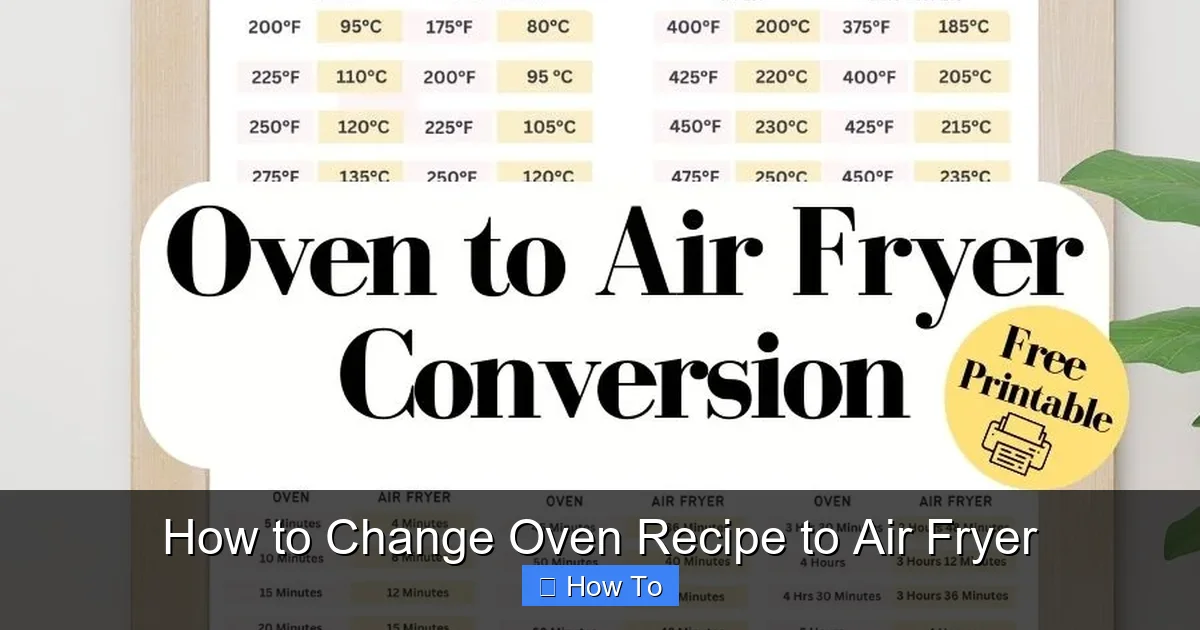
Converting a traditional oven recipe for an air fryer can save you time and energy. To do it right, you must lower the temperature by about 25°F and reduce the cooking time by roughly 20-30%. Follow our simple guide to master this conversion and achieve crispy perfection every single time.
Have you ever found the perfect recipe for crispy chicken wings or golden potato wedges, only to realize your oven takes forever to heat up? We have all been there. You want that crunch, but you don’t want to wait an hour for a traditional oven to do its job. This is where the magic of the air fryer comes in. It is fast, efficient, and makes everything taste incredible. But there is one big problem: most recipes you find online are written specifically for a standard oven.
So, how do you bridge that gap? You cannot just plug in the recipe and hope for the best. If you use the same temperature and time as a standard oven, you will likely end up with food that is burnt on the outside and raw on the inside. Learning how to change oven recipe to air fryer settings is a superpower that will change the way you cook. It turns your kitchen into a high-speed culinary studio.
In this guide, we are going to walk through the simple math and logic behind this conversion. Whether you are using a basket-style air fryer or a modern toaster oven with air fry settings, these rules will apply. By the end of this article, you will be able to take any oven-based recipe and adapt it perfectly for your air fryer without breaking a sweat.
Key Takeaways
- Lower the heat: Reduce the temperature from the original recipe by 25°F.
- Shorten the time: Check food much earlier than the recipe suggests to avoid burning.
- Don’t overcrowd: Airflow is the secret to success; keep food in a single layer.
- Preheat: Always preheat your air fryer for consistent cooking results.
li>Use less oil: Air fryers need very little oil to achieve a crispy texture.
📑 Table of Contents
The Golden Rules of Conversion
When you move from an oven to an air fryer, you are moving from a “convection” or “static” environment to a “high-velocity convection” environment. In a standard oven, heat radiates and moves slowly. In an air fryer, a powerful fan blasts hot air around the food at high speeds. This rapid movement is what creates that signature crunch.
The Temperature Rule
The most important thing to remember is that air fryers are much more efficient at transferring heat. Because the air is moving so fast, it cooks the surface of the food much quicker. Therefore, the first rule of thumb is to lower the temperature. If a recipe calls for 400°F in a conventional oven, you should set your air fryer to 375°F. This prevents the exterior from burning before the interior is fully cooked.
The Time Rule
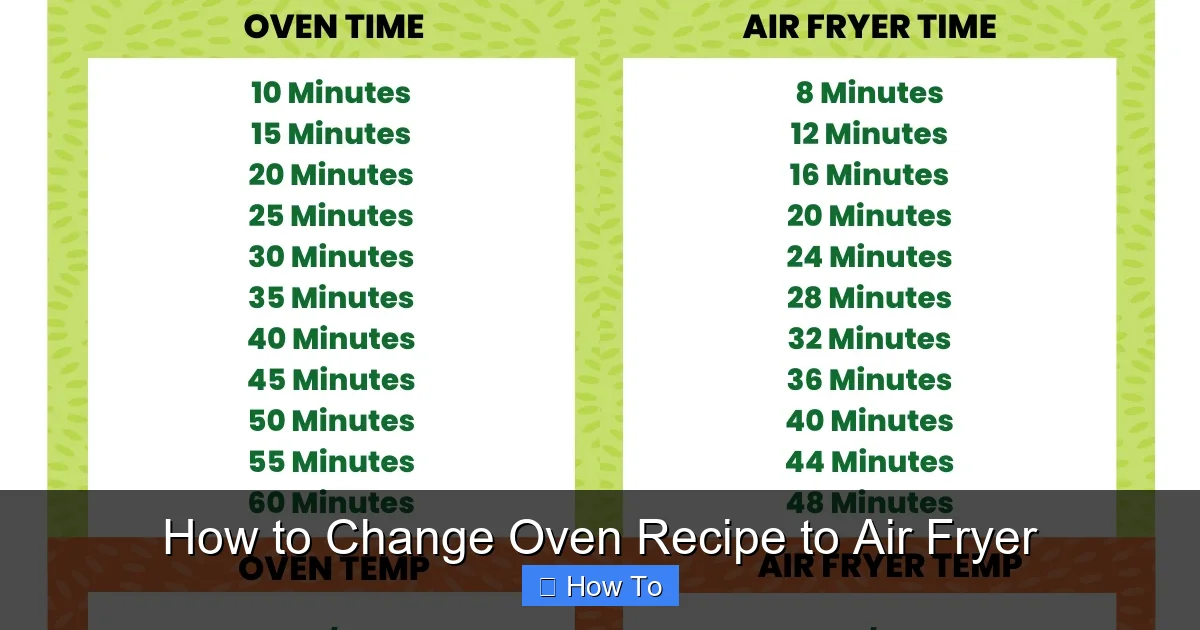
Because the heat is more intense and the air is moving faster, food cooks much quicker. As a general rule, you should expect your food to cook in about 75% to 80% of the time listed in the original recipe. If the oven recipe says 20 minutes, start checking your food at the 12 or 15-minute mark. It is always better to undercook slightly and add more time than to ruin a meal by overcooking it.
If you are using a specialized appliance, you might want to learn how to use air fryer setting on oven to make this process even smoother. Many modern ovens now have this built-in, making the transition much easier than using a standalone unit.
Step-by-Step Guide to Changing Recipes
Converting a recipe isn’t just about math; it’s about understanding how food behaves. Let’s break down the process into simple steps that you can use every time you cook.
Visual guide about How to Change Oven Recipe to Air Fryer
Image source: i.pinimg.com
Step 1: Analyze the Original Recipe
Look at the ingredients and the cooking method. Is it a “dry heat” method like roasting or baking? Or is it a “moist heat” method like steaming or braising? Air fryers are best for dry heat methods. If a recipe involves a lot of liquid or heavy sauces, you might need to adjust how you apply them to ensure the food stays crispy.
Step 2: Adjust the Temperature
Take the temperature listed in your oven recipe and subtract 25°F. This is the “sweet spot” for most foods. For example:
- 400°F (Oven) becomes 375°F (Air Fryer)
- 350°F (Oven) becomes 325°F (Air Fryer)
- 375°F (Oven) becomes 350°F (Air Fryer)
Step 3: Calculate the New Time
Take the total cooking time and multiply it by 0.75. This gives you a safe starting point. Always remember to use a timer and check the food manually. For example, if a recipe says 30 minutes, start checking it at 22 minutes. Look for the “visual cues”: golden brown color, crispy edges, and the correct internal temperature.
Step 4: Manage the Oil
In a traditional oven, you often need a fair amount of oil to prevent food from drying out. In an air fryer, you only need a tiny bit. A light spray of oil is usually enough to help the heat transfer and create that crunch. Using too much oil in an air fryer can actually make the food soggy or even cause smoking.
Tips for Specific Types of Food
Not all foods react the same way to rapid air movement. Different ingredients require different levels of care. Here are some common categories and how to handle them.
Proteins (Meat and Fish)
Meats like chicken thighs, steaks, and salmon love the air fryer. Because meat has fat, the air fryer helps render that fat and make the skin crispy. When converting meat recipes, always use a meat thermometer. Since air fryers cook so fast, it is very easy to miss the window where the meat is juicy. Aim for the temperature recommended by the USDA, but check it 5 minutes early!
Vegetables and Root Crops
Potatoes, carrots, and broccoli are air fryer superstars. When converting a roasted vegetable recipe, make sure the vegetables are cut into uniform pieces. If they are too large, the outside will burn before the inside is soft. For something like oven roasted potatoes in air fryer, you will find they come out much crispier than in a standard oven with just a fraction of the oil.
Frozen Foods
This is where the air fryer truly shines. Frozen nuggets, fries, and pizza rolls are designed for high-heat air circulation. If you are converting a frozen food recipe, you can often follow the package instructions closely, but still reduce the time by 2-3 minutes to ensure they don’t become too hard or “bready.”
Common Mistakes to Avoid
Even with a guide, it is easy to slip up. Here are the most common errors people make when trying to change an oven recipe to an air fryer.
Visual guide about How to Change Oven Recipe to Air Fryer
Image source: loveandotherspices.com
Overcrowding the Basket
This is the number one mistake. An air fryer works by circulating air around the food. If you pile the food up in a mountain, the air cannot reach the middle. You will end up with food that is burnt on the top and soggy on the bottom. Always cook in a single layer or at most two thin layers. If you have a lot of food, cook it in batches.
Forgetting to Preheat
In a traditional oven, preheating is a long process. In an air fryer, it is very fast. Many people skip this step and put food into a cold air fryer. This results in uneven cooking and a lack of that immediate “sear” that makes food delicious. Always run your air fryer for 3-5 minutes before adding food.
Using the Wrong Cookware
Not everything can go in an air fryer. You should avoid using standard baking dishes that are meant for ovens unless they are specifically labeled as air-fryer safe. Most air fryers use metal baskets. If you are using an oven that has a special feature, you might need to learn how to use air fryer rack in oven to ensure proper airflow.
Advanced Conversion: Using an Oven as an Air Fryer
Did you know that many modern ovens now come with a dedicated “Air Fry” mode? This is a game-changer for large families. Instead of a small basket, you use a large tray or rack to cook much larger quantities of food.
How to Use the Air Fry Setting on an Oven
If your oven has this feature, it usually works by engaging a high-powered convection fan. When using this mode, you still need to follow the “lower temp, lower time” rule. However, because the volume of air in a full-sized oven is much larger than in a small basket, the temperature drop might not need to be as drastic. A reduction of 15-20°F might be sufficient instead of 25°F.
Using Accessories
To get the best results when using your oven’s air fry mode, you should use the correct accessories. Using a perforated tray or a specialized rack allows the hot air to circulate under the food. If you are unsure how to set up your kitchen equipment, you can look into how to use air fryer tray in oven to ensure you are maximizing that airflow.
Conclusion
Mastering the art of converting an oven recipe to an air fryer is one of the best ways to upgrade your cooking game. It saves you time, reduces energy consumption, and produces much crispier, tastier food. Just remember the two golden rules: lower the temperature by 25°F and reduce the cooking time by about 25%.
Don’t be afraid to experiment! Every air fryer brand is slightly different, and every recipe has its own quirks. Start by checking your food a few minutes earlier than you think you need to, and use your senses—sight, smell, and touch—to determine when the food is perfect. Once you get the hang of it, you’ll wonder why you ever spent so much time waiting for a traditional oven to preheat!
Happy air frying!
Frequently Asked Questions
Do I need to use oil in an air fryer?
You don’t need much! A light spray of oil is recommended to help achieve crispiness, but you should use significantly less than a traditional oven recipe calls for.
Can I cook frozen food directly in the air fryer?
Yes, absolutely! In fact, air fryers are perfect for frozen foods. Just follow the temperature rules and check the food a few minutes early to prevent overcooking.
Should I preheat my air fryer?
Yes, preheating is highly recommended. It ensures that the food starts cooking at the correct temperature immediately, which helps create a better texture.
Can I use any pan in my air fryer?
No, you should only use cookware that is safe for high-speed air circulation. Metal baskets are standard, but ensure any other pans you use are heat-safe and allow for airflow.
What if my food is still soggy after air frying?
This usually happens if you overcrowd the basket or didn’t use enough oil. Try cooking in smaller batches and ensure the food is in a single layer.
Can I convert a slow cooker recipe to an air fryer?
It is difficult. Slow cookers use low, moist heat, while air fryers use high, dry heat. It is better to find a specific air fryer recipe for those types of meals.