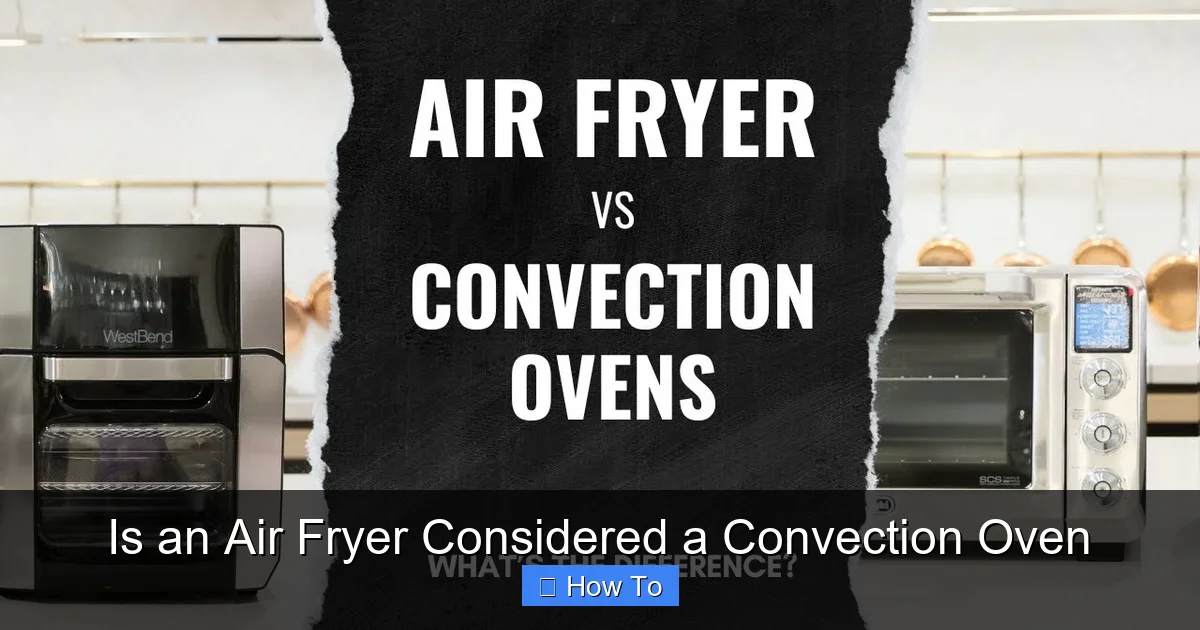
Is an Air Fryer Considered a Convection Oven
An air fryer uses rapid hot‑air circulation, much like a convection oven, but in a compact countertop design. While the core technology is similar, differences in size, airflow, and accessories affect cooking results. Understanding these nuances helps you decide if an air fryer can replace or complement your convection oven.
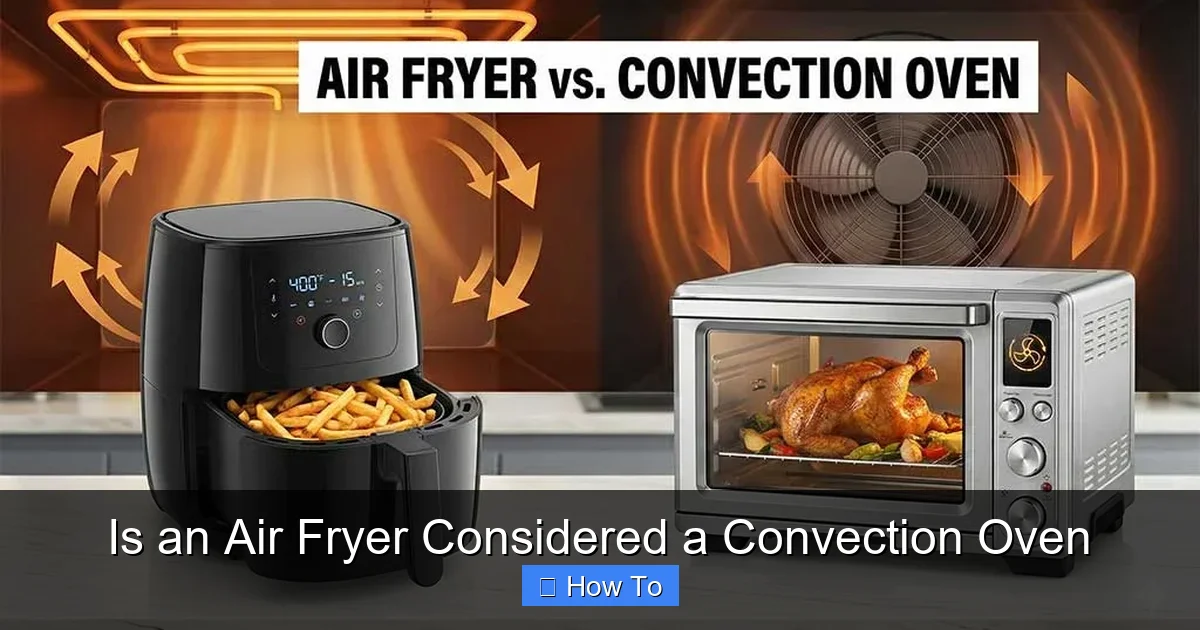
When you first see an air fryer sitting on the countertop, its sleek basket and rapid cooking promises can make you wonder: Is an air fryer considered a convection oven? The short answer is yes—at its heart, an air fryer is a miniaturized convection oven that uses the same principle of forced hot‑air circulation to cook food. However, the devil is in the details: size, airflow patterns, accessories, and intended use all create noticeable differences that affect everyday cooking.
In this guide we’ll break down the science behind both appliances, compare their performance, and help you decide which one (or both) deserves a spot in your kitchen. We’ll also look at practical tips for getting the best results from each, and we’ll reference a few related articles that dive deeper into specific comparisons.
Key Takeaways
- Core mechanism: Both appliances rely on a fan to circulate hot air, creating even cooking and browning.
- Size matters: Air fryers are smaller, limiting batch size but speeding up preheat times.
- Airflow design: Air fryers often have a more focused airflow pattern, which can produce crispier exteriors.
- Versatility: Convection ovens handle larger dishes and multiple racks; air fryers excel at quick snacks and small meals.
- Energy use: Due to shorter cooking cycles, air fryers typically consume less electricity for small portions.
- Cost consideration: An air fryer is usually cheaper upfront, but a convection oven offers greater capacity for families.
- Best use: Choose an air fryer for speedy, crispy results; opt for a convection oven when you need to bake, roast, or cook larger quantities.
📑 Table of Contents
How Convection Cooking Works
Convection ovens have been a staple in home kitchens for decades. At their core, they feature a heating element (usually at the top and bottom) and a fan that pulls air through the cavity, redistributing heat evenly. This constant movement eliminates hot spots, reduces cooking time, and promotes browning through the Maillard reaction.
The fan speed and placement vary by model, but the goal remains the same: move hot air around the food so that every surface gets a consistent temperature. Because the air is constantly refreshed, you can often lower the temperature by about 25°F compared to a conventional oven and still achieve similar results.
Convection ovens excel at tasks that benefit from even heat—baking cookies, roasting vegetables, dehydrating fruits, and even making crispy pizza crusts. Their larger interior allows you to cook multiple trays at once, making them ideal for families or batch cooking.
What Makes an Air Fryer Different?
An air fryer takes the convection concept and shrinks it into a compact, countertop‑friendly unit. Instead of a large cavity, most air fryers have a basket or tray that sits above a heating element, with a powerful fan positioned directly above or below the food. This close proximity creates a high‑velocity airflow that can reach speeds of up to 70 mph in some models.

Visual guide about Is an Air Fryer Considered a Convection Oven
Image source: askanydifference.com
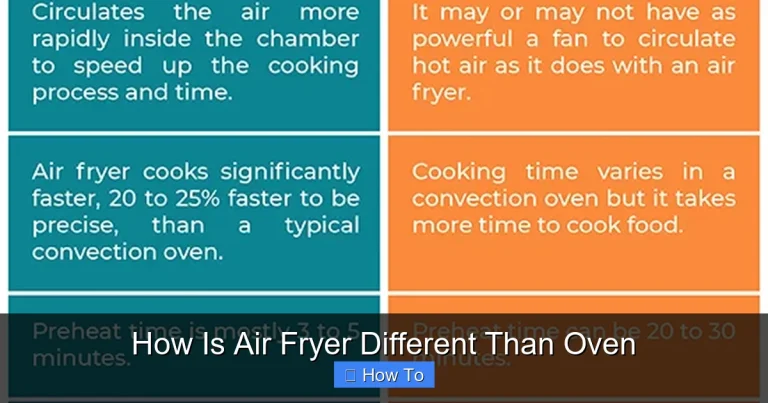
The result is a rapid, intense circulation of hot air that crisps the exterior of food quickly while keeping the interior moist. Because the cooking chamber is small, preheat times are often under three minutes, and total cook times can be 20‑30 % shorter than a full‑size convection oven for comparable items.
Many air fryers also include accessories like grill pans, skewers, or rotisserie spindles that expand their functionality beyond simple frying. Yet, the basket design limits the amount of food you can cook at once—typically enough for two to four servings, depending on the model.
Side‑by‑Side Performance Comparison
Cooking Speed and Energy Efficiency
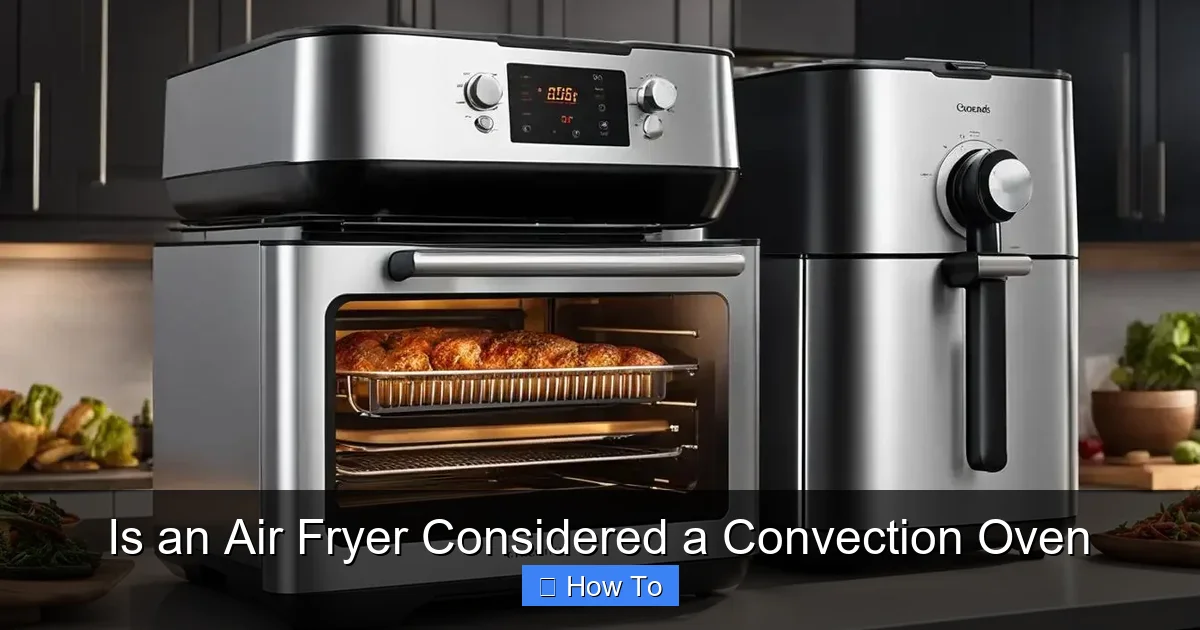
When you’re cooking a small batch of frozen fries, chicken wings, or veggie chips, an air fryer usually finishes the job in 12‑15 minutes, while a convection oven might need 18‑22 minutes plus a longer preheat. This speed advantage translates into lower energy consumption for small portions. For larger dishes—like a whole chicken or a tray of lasagna—the convection oven’s capacity wins out, as you’d need to run multiple batches in an air fryer, erasing the time savings.
Visual guide about Is an Air Fryer Considered a Convection Oven
Image source: airfryeraid.com
If you’re curious about cost differences, check out our article on Is Using An Air Fryer Cheaper Than Oven for a detailed breakdown of electricity usage.
Texture and Browning
The focused airflow in an air fryer often yields a crunchier crust on foods like breaded fish sticks or homemade potato wedges. The rapid air movement removes surface moisture quickly, encouraging Maillard browning. Convection ovens can achieve similar crispness, but you may need to toss food halfway through or use a perforated rack to improve air circulation.
For delicate baked goods—such as soufflés or cakes—convection ovens generally provide a gentler, more uniform heat that prevents over‑drying. Air fryers, with their intense airflow, can sometimes cause the tops of baked items to brown too fast while the center remains undercooked.
Versatility and Capacity
Convection ovens shine when you need to cook multiple dishes simultaneously. Imagine roasting a turkey on the lower rack while baking sweet potato casserole on the upper rack—something an air fryer simply cannot accommodate due to its single‑basket design. On the other hand, air fryers excel at quick snacks, reheating leftovers without sogginess, and even dehydrating fruits or making jerky in a fraction of the time.
If you want to explore how air fryers stack up against mini convection ovens, see our piece Is An Air Fryer A Mini Convection Oven for a focused comparison.
Practical Tips for Getting the Most Out of Each Appliance
Maximizing Your Air Fryer
- Preheat for 2‑3 minutes; most models signal when ready.
- Shake or flip food halfway through to ensure even crisping.
- Avoid overcrowding the basket—leave at least a half‑inch gap for air to flow.
- Use a light spray of oil (about 1 teaspoon per pound) to enhance browning without making food greasy.
- Experiment with temperature adjustments; many recipes call for 20‑25 °F lower than conventional oven settings.
Making Your Convection Oven Work Better
- Always use the convection setting when baking or roasting for even results.
- Lower the recipe temperature by 25 °F and check for doneness a few minutes early.
- Place heavier items on the lower rack and lighter, quicker‑cooking foods on the upper rack.
- Consider investing in a perforated baking sheet or a cooling rack to improve air circulation around foods like fries or chicken wings.
- Keep the oven clean; built‑up grease can impede fan performance.
When to Choose One Over the Other
Deciding between an air fryer and a convection oven often comes down to your cooking habits, kitchen space, and the types of meals you prepare most frequently.
Visual guide about Is an Air Fryer Considered a Convection Oven
Image source: roundtheyear.com
Choose an air fryer if:
- You primarily cook for one or two people.
- You love crispy snacks, frozen foods, or quick weeknight meals.
- Countertop space is at a premium, but you still want a dedicated appliance.
- You want to cut down on preheat time and energy use for small batches.
Choose a convection oven if:
- You regularly cook for families or entertain guests.
- You need to bake large batches of cookies, cakes, or bread.
- You enjoy roasting whole poultry, large cuts of meat, or multiple vegetable trays at once.
- You already have a full‑size oven and want to upgrade its performance without buying another gadget.
Of course, many home cooks find value in owning both. An air fryer handles the quick‑fire tasks, while the convection oven takes care of larger, more complex recipes. This combo can give you the best of both worlds without sacrificing convenience or quality.
Common Misconceptions
“Air fryers are just fancy microwaves.”
While both appliances sit on the countertop, their heating methods differ fundamentally. Microwaves excite water molecules to generate heat from within, whereas air fryers (and convection ovens) rely on external hot air. This distinction means air fryers produce browning and crispness that microwaves cannot replicate.
“You can’t bake in an air fryer.”
Many modern air fryers include baking functions and accessories like muffin tins or small cake pans. While the capacity is limited, you can successfully bake cookies, brownies, or even small loaves of bread—just expect a slightly different texture due to the intense airflow.
“Convection ovens are always better than air fryers.”
“Better” depends on the task. For large‑volume cooking, convection ovens win. For speed, energy efficiency, and ultra‑crispy results on small portions, air fryers often have the edge. Matching the tool to the job yields the best outcome.
Final Verdict: Is an Air Fryer Considered a Convection Oven?
Yes—an air fryer is essentially a convection oven scaled down to countertop size, employing the same fan‑driven hot‑air circulation principle. The differences lie in capacity, airflow intensity, and typical use cases. Understanding these nuances lets you harness each appliance’s strengths, whether you’re whipping up a batch of crispy sweet‑potato fries in minutes or slow‑roasting a herb‑infused chicken for a Sunday feast.
By recognizing that both technologies share a common foundation, you can make informed decisions about which gadget to reach for based on the meal at hand, your kitchen layout, and your energy‑saving goals. And if you ever want to dive deeper into specific comparisons—like whether a Ninja air fryer qualifies as a convection oven or how air fryers stack up against small convection ovens—our linked articles provide detailed, model‑focused insights.
In short, treat your air fryer as a powerful, compact convection tool, and let your full‑size convection oven handle the heavy lifting. Together, they form a versatile duo that can tackle almost any culinary challenge.
Frequently Asked Questions
Is an air fryer the same as a convection oven?
An air fryer uses the same convection principle—hot air circulated by a fan—but in a much smaller chamber. While the core technology is identical, size, airflow speed, and accessories create practical differences in cooking results.
Can I use my convection oven’s recipes in an air fryer?
Yes, but you’ll usually need to lower the temperature by about 20‑25 °F and reduce the cooking time by roughly 20 %. Keep an eye on the food the first time you adapt a recipe, as the air fryer’s intense airflow can brown items faster.
Do air fryers consume more electricity than convection ovens?
For small portions, air fryers typically use less electricity because they heat up faster and cook quicker. For large meals that require multiple batches, a convection oven may be more efficient overall.
What types of food are best suited for an air fryer?
Foods that benefit from a crisp exterior—such as frozen fries, chicken wings, breaded fish sticks, and roasted vegetables—shine in an air fryer. Delicate baked goods or large roasts are better handled by a convection oven.
Are there any safety concerns unique to air fryers?
Always place the air fryer on a heat‑resistant surface, keep the vent clear, and avoid overfilling the basket. Like any appliance that reaches high temperatures, use oven mitts when handling the basket or accessories.
Can I bake a cake in an air fryer?
Many air fryers have a baking mode and accommodate small pans. You can bake cakes, muffins, or brownies, but expect a slightly different texture due to the rapid air circulation. Adjust baking time and temperature as needed, and check for doneness with a toothpick.