Is an Air Fryer Different Than an Oven

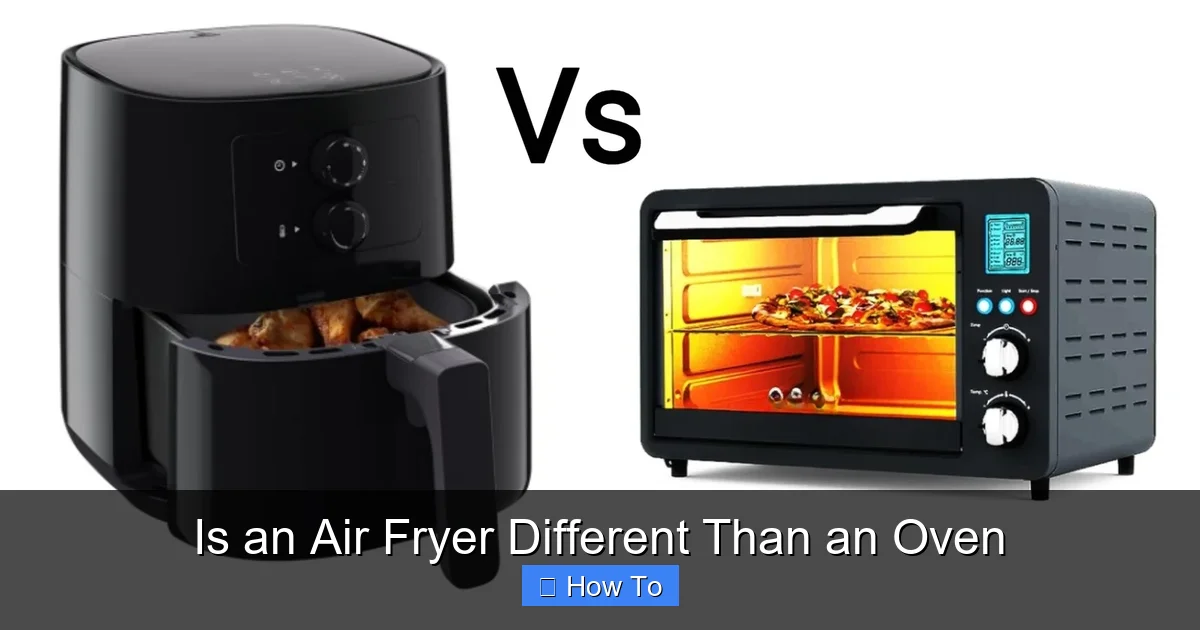
Air fryers and ovens are both cooking appliances, but they work differently. While traditional ovens use radiant heat, air fryers circulate hot air rapidly around food. Understanding these differences helps you choose the right tool for healthier, faster meals.
Key Takeaways
- Air fryers use rapid air circulation technology: Unlike conventional ovens that rely on radiant heat, air fryers employ a powerful fan to circulate extremely hot air around food at high speed, creating a crispy texture similar to deep-frying without oil.
- Cooking times differ significantly: Air fryers typically cook food 20-30% faster than conventional ovens due to the intense air circulation, while convection ovens may reduce cooking time by about 25% compared to standard baking.
- Energy efficiency varies between appliances: Small air fryers consume less electricity than full-size ovens because they heat up quickly and require less energy to maintain temperature in their compact chambers.
- Food texture and taste can differ: Air fryers excel at creating crispy exteriors while keeping interiors moist, whereas ovens provide more even browning and are better suited for large batch cooking or delicate items like soufflés.
- Capacity limitations affect usability: Most air fryers have limited space compared to standard ovens, making them ideal for individual servings or small families but less practical for entertaining or cooking large cuts of meat.
📑 Table of Contents
Is an Air Fryer Different Than an Oven
Let’s face it—we’ve all stood in our kitchen, staring at two appliances wondering which one to use. Maybe you’re trying to decide between your trusty conventional oven and that shiny new air fryer sitting on your counter. Both promise delicious results, but what really sets them apart? Understanding how each appliance works isn’t just interesting trivia—it directly impacts everything from cooking time to final flavor.
The truth is, while both ovens and air fryers apply heat to transform raw ingredients into mouthwatering meals, they do so through distinctly different mechanisms. Conventional ovens rely on radiant heat elements that warm the air inside the cooking chamber, slowly transferring that warmth to your food. In contrast, air fryers use rapid air technology—a powerful fan that blasts superheated air around your food at speeds of up to 50 mph, creating that coveted crispy exterior without submerging anything in oil.
This fundamental difference in heating method leads to variations in texture, cooking speed, energy consumption, and even cleanup. Whether you’re reheating leftover pizza, roasting vegetables, or attempting restaurant-quality chicken wings, knowing when to reach for your air fryer versus when to fire up the oven can make all the difference between a disappointing meal and a culinary triumph. Let’s dive deeper into what makes these appliances unique and help you become the confident cook who knows exactly which tool to grab for every job.
Understanding How Each Appliance Works
The Science Behind Conventional Ovens
Traditional ovens operate on a straightforward principle: electric or gas heating elements warm the air inside a sealed chamber until it reaches your desired temperature. This creates a consistent ambient environment where heat transfers gradually to food through conduction and radiation. When you bake cookies, roast a turkey, or broil steaks, you’re relying on this steady, surrounding heat to cook your food evenly from all sides.

Visual guide about Is an Air Fryer Different Than an Oven
Image source: lianaskitchen.co.uk
However, this method has some notable characteristics. Because the heat source is typically static—elements positioned at the top and bottom of the oven—the air circulation within the chamber remains relatively gentle. Hot spots can develop, especially in older models, requiring you to rotate pans midway through cooking. Additionally, reaching optimal temperature takes time, and maintaining that heat requires continuous energy input.
Rapid Air Technology Explained
Air fryers flip this approach on its head by focusing on forced convection rather than ambient heating. Inside an air fryer, a powerful fan sits near the heating element and spins rapidly, propelling scorching-hot air through a perforated basket or pan. This creates a vortex effect where thousands of tiny currents of air continuously bombard your food from every angle.
The result mimics the action of deep-frying without the need for large quantities of oil. The rapid air movement removes moisture from the surface of foods while simultaneously cooking them, producing that satisfying crunch we associate with fried foods. Because the air contacts food directly and consistently, cooking happens faster and more uniformly across smaller batches.
Cooking Performance Comparison
Speed and Efficiency
One of the most immediately noticeable differences between air fryers and ovens lies in cooking speed. Due to their compact size and intense air circulation, air fryers can often prepare foods in half the time required by conventional ovens. A batch of frozen french fries might take 15 minutes in an air fryer compared to 30 minutes in a traditional oven, simply because the circulating air transfers heat more efficiently than still air.
Beyond speed, air fryers also tend to be more energy efficient for small loads. Heating a full-size oven chamber consumes significantly more electricity or gas than warming up a countertop air fryer. For solo diners or couples preparing modest portions, this translates to lower utility bills and reduced environmental impact.
Texture and Flavor Outcomes
Texture plays a crucial role in determining which appliance works best for specific foods. Air fryers excel at achieving crispy exteriors while preserving interior moisture—perfect for chicken wings, potato wedges, or reheated bread. The rapid air flow effectively dehydrates the outer layer of food, promoting browning reactions that enhance both texture and taste.
Conversely, conventional ovens shine when working with delicate items that require gentle, even heating. Think of soufflés rising perfectly, cakes baking uniformly, or lasagna developing rich layers of flavor through slow, sustained heat. While air fryers can handle many baking tasks, they sometimes struggle with items that demand precise temperature control over extended periods.
Capacity and Practical Considerations
Suitable for Different Household Sizes
Perhaps nowhere is the distinction clearer than in terms of capacity. Standard ovens offer expansive cooking surfaces capable of accommodating multiple racks loaded with large dishes—ideal for holiday feasts, family gatherings, or meal prep sessions. You can roast a whole turkey alongside sheet pans of vegetables and still have room for dessert.
Air fryers come in various sizes, ranging from personal units designed for one or two people to larger models that can handle a small chicken or medium pizza. However, even the biggest air fryer pales in comparison to a full oven’s capacity. If you frequently entertain guests or cook for a crowd, relying solely on an air fryer becomes impractical.
Daily Convenience Factors
Beyond raw capacity, daily convenience also differs between these appliances. Air fryers generally preheat almost instantly—no waiting 15 minutes for the oven to warm up—and many models feature intuitive digital controls with preset programs for common foods. Cleanup tends to be easier too, with removable baskets that pop right into the dishwasher.
Ovens, meanwhile, offer greater versatility in cookware compatibility. Any oven-safe dish works, from cast iron skillets to ceramic casseroles, whereas air fryers usually require specially sized accessories or baskets. Additionally, ovens allow for hands-off cooking—you set the temperature and timer, then walk away knowing your dish will be ready when scheduled.
Cost and Long-Term Value
Initial Investment and Operating Costs
While entry-level air fryers can be surprisingly affordable—often under $50—they represent an additional purchase if you already own a functional oven. Higher-end models with advanced features like smart connectivity or multiple cooking functions push prices higher, sometimes rivaling budget-friendly toaster ovens.
Visual guide about Is an Air Fryer Different Than an Oven
Image source: hindustantimes.com
Operating costs favor air fryers for small meals, thanks to their quick heating and energy efficiency. However, if you already own an oven and rarely cook for more than a few people, buying an air fryer primarily to replicate basic cooking functions may not justify its cost. Consider whether the convenience premium outweighs the benefits of using your existing equipment.
Maintenance and Durability
Durability varies widely among manufacturers and price points, but generally speaking, air fryers built with quality components last several years with proper care. Their mechanical simplicity—fewer moving parts than many kitchen gadgets—means fewer things can break, though the motor and fan system do require occasional maintenance.
Ovens, being major kitchen fixtures, typically endure decades of heavy use before replacement becomes necessary. Their robust construction and replaceable components mean repairs remain feasible long after warranties expire. For homeowners investing in kitchen renovations, built-in ovens add resale value that portable air fryers cannot match.
Choosing the Right Tool for Your Needs
Match Your Cooking Habits
The key to maximizing satisfaction with either appliance lies in matching its strengths to your lifestyle and culinary preferences. If you frequently prepare single servings, enjoy crispy textures, and appreciate quick cleanup, an air fryer likely complements your routine beautifully. It’s particularly valuable for dorm rooms, apartments, or households where minimizing energy usage matters.
Those who regularly host dinner parties, love elaborate baking projects, or prefer hands-off cooking will find conventional ovens indispensable. The ability to scale recipes up or down without worrying about fitting everything into a basket makes ovens the workhorse of serious home kitchens.
Hybrid Solutions and Alternatives
For cooks seeking flexibility, hybrid options exist that combine air frying capabilities with traditional oven functions. These combo units attempt to bridge the gap between convenience and capacity, though they often come at a premium price point. Similarly, convection ovens offer many of the benefits of rapid air circulation while retaining standard oven dimensions and functionality.
Ultimately, your decision should reflect your priorities: speed versus scale, convenience versus tradition, or perhaps the desire to experiment with new cooking techniques. Neither appliance renders the other obsolete—they simply serve different purposes in the modern kitchen landscape.
Making the Most of Both Worlds
When to Reach for Your Air Fryer
Certain foods consistently perform better in air fryers thanks to their unique heating method. Frozen appetizers like mozzarella sticks or onion rings achieve superior crispiness compared to oven-baked versions. Reheating leftover pizza restores that fresh-from-the-pizza-shop texture remarkably well. Roasted nuts, chickpeas, and other snack items benefit from the intense air circulation that promotes even toasting.
Protein-focused dishes such as salmon fillets, chicken tenders, or hard-boiled eggs also thrive in air fryers. The controlled environment prevents overcooking while ensuring thorough heating, making them excellent choices for health-conscious cooks looking to minimize added fats.
Optimal Uses for Conventional Ovens
When tackling complex recipes requiring precise temperature management, conventional ovens remain unmatched. Multi-course meals that demand simultaneous preparation of diverse elements—from yeast rolls to glazed ham—are far easier to coordinate using multiple oven racks. Baking projects involving delicate pastries, custards, or artisan breads require the stable, predictable heat distribution that only full-size ovens provide.
Larger cuts of meat, including whole turkeys, beef roasts, or pork shoulders, simply cannot fit inside most air fryers. Slow-cooking techniques like braising or low-and-slow smoking also depend on the enclosed chamber and consistent heat retention characteristic of traditional ovens.
Conclusion
So, is an air fryer different than an oven? Absolutely—but not necessarily in ways that make one universally superior to the other. Each appliance brings distinct advantages depending on your cooking goals, household dynamics, and personal preferences. Air fryers shine in speed, energy efficiency, and achieving crispy textures without excess oil, making them perfect for quick meals and small households. Conventional ovens excel in versatility, capacity, and precision, serving as the backbone for elaborate cooking endeavors and large-family dining.
Rather than viewing this as a competition between competing technologies, consider how both tools can enhance your culinary repertoire. Many accomplished home cooks seamlessly integrate both appliances into their routines, choosing based on recipe requirements rather than brand loyalty or trend-following. By understanding the core differences outlined here—including heating methods, performance characteristics, and practical considerations—you’re equipped to make informed decisions that elevate every dish you create.
Whether you’re reheating leftovers, experimenting with new flavors, or planning your next gathering menu, remember that the best kitchen isn’t defined by having the latest gadget—it’s defined by understanding which tool serves your specific needs at any given moment. With this knowledge, you can confidently navigate your appliance choices and enjoy consistently delicious results regardless of which path you choose.
Frequently Asked Questions
Can I cook everything in an air fryer instead of an oven?
While air fryers handle many cooking tasks well, they aren’t suitable replacements for every oven function. Large items like whole turkeys won’t fit, and delicate baked goods may not achieve the same results due to the intense air circulation affecting rise and texture.
Is air-fried food actually healthier than oven-cooked food?
Air-fried foods can be healthier when you reduce or eliminate added oils compared to traditional frying methods. However, healthiness depends largely on ingredient choices and portion sizes rather than the cooking appliance itself.
Do air fryers really cook faster than ovens?
Yes, air fryers typically cook 20-30% faster than conventional ovens due to rapid air circulation and smaller cooking chambers that heat up quickly. This makes them ideal for quick weekday meals.
What size air fryer is best for a family of four?
Air fryers with 5-7 quart capacities work well for families of four, allowing you to prepare reasonable portions without overcrowding the basket. Larger families might prefer 8-quart models or stick with conventional oven cooking.
Can I use regular oven recipes in an air fryer?
Many oven recipes adapt well to air fryers, but you’ll need to adjust cooking times and temperatures. Generally, reduce temperature by 25°F and check for doneness 5-10 minutes earlier than suggested.
Is an air fryer worth buying if I already have a convection oven?
If you already own a convection oven, an air fryer offers convenience benefits like faster preheating and easier cleanup, but the cooking results will be similar. Consider whether the space-saving countertop footprint justifies the additional investment for your cooking habits.