What to Put in a Toaster Oven
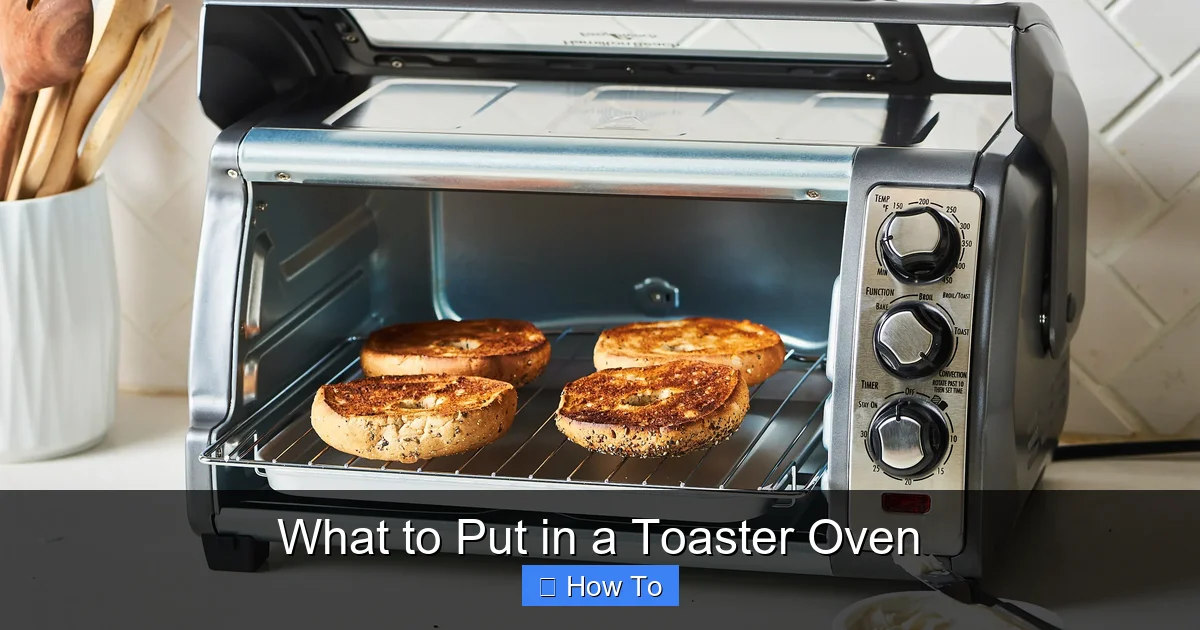
What to Put in a Toaster Oven reveals the versatile possibilities of your compact cooking appliance. From baking cookies to reheating leftovers, this guide breaks down the best foods, methods, and tips for maximizing your toaster oven’s potential. Whether you’re a busy home cook or looking to upgrade your kitchen, you’ll find practical advice here to help you get amazing results every time.
Key Takeaways
- Versatile appliance: A toaster oven handles baking, roasting, and reheating with ease.
- Perfect for small spaces: Compact size makes it ideal for apartments and tiny kitchens.
- Multiple cooking modes: Features like convection and broil expand what you can cook.
- Great for leftovers: Fast reheating preserves texture better than microwaves.
- Small-batch cooking: Ideal for individual meals and family-sized portions alike.
- Regular maintenance matters: Keep it clean to maintain optimal performance.
📑 Table of Contents
Introduction
Every kitchen needs a reliable way to keep food warm, reheat leftovers, or whip up something quick when you’re short on time. Enter the toaster oven — a compact powerhouse that packs more versatility into a smaller footprint than most appliances. It combines the convenience of a toaster with the flexibility of a full-size oven, making it one of those smart investments worth considering for many households.
The beauty of a toaster oven lies in its ability to handle a wide range of tasks. Whether you want to crisp up some vegetables, bake a loaf of artisan bread, or give a frozen pizza a golden finish, this single appliance can do it all. Plus, because it’s so compact, it often costs less to run and takes up minimal counter space. In this guide, we’ll explore exactly what to put in your toaster oven, from staples you’ll use daily to more adventurous projects that will impress your friends and family.
Think of your toaster oven as your kitchen’s Swiss Army knife. With the right knowledge and a few smart choices, you can transform it into a culinary workhorse. So grab that toaster oven, and let’s dive into the delicious world of what it can actually cook!
Understanding Your Toaster Oven
Types of Toaster Ovens
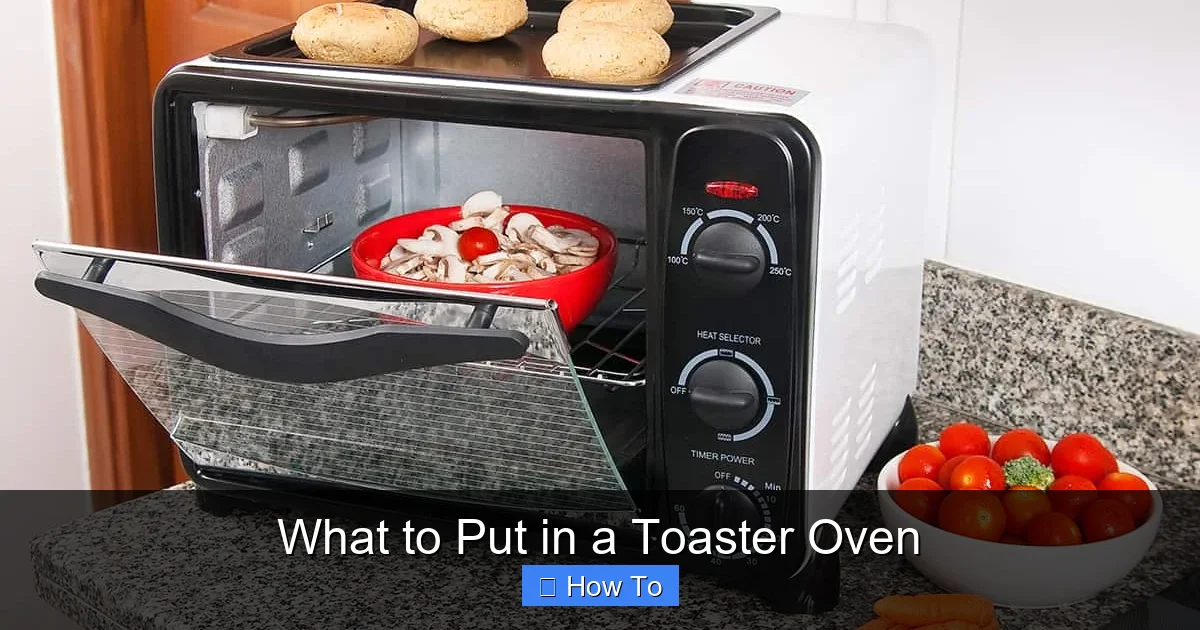
Not all toaster ovens are created equal. Most come standard with a moderate wattage between 800 and 1200 watts, but some premium models push toward 1400 watts for faster heating. There are also variations like convection ovens that circulate hot air for even browning, and microwave-assisted units that speed up certain tasks. Before diving into what goes inside, understand how your specific model works. Check the manual for details on temperature ranges and safety features like automatic shut-off.
Visual guide about What to Put in a Toaster Oven
Image source: howdykitchen.com
Capacity Matters
When selecting a toaster oven, consider whether you need a compact 1.7 cubic foot unit or a slightly larger 2.2 cubic foot model. The volume determines how much food you can fit at once and affects preheating time significantly. If your kitchen has limited counter space, opt for a smaller capacity — you won’t regret it when you start using it daily. Remember, a fanless toaster oven will heat more slowly than one with active cooling, so don’t expect ultra-fast starts if you choose the non-convective option.
Best Foods for Your Toaster Oven
Baking and Roasting Delights
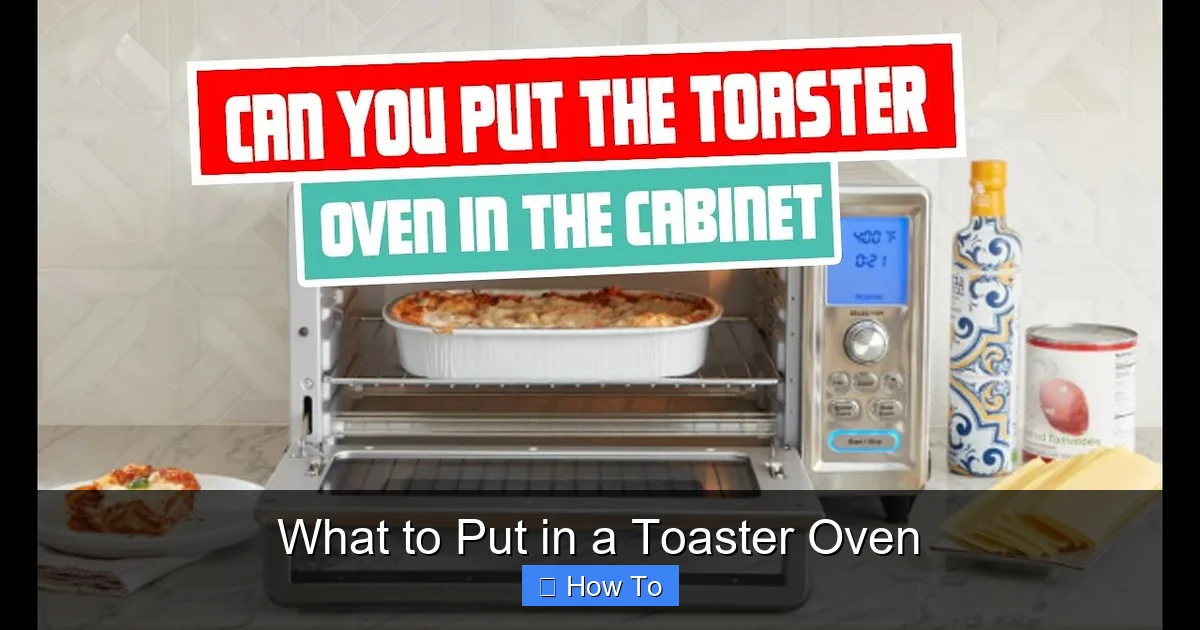
This is where your toaster oven really shines. The enclosed chamber creates consistent dry heat, making it perfect for everything from single-layer cakes to roasted chicken thighs. Try baking almond flour muffins, which have a tender crumb that stays moist longer than traditional muffin tins. For savory options, place salmon fillets on a parchment-lined tray — the gentle heat cooks them through evenly while keeping the flesh flaky. Root vegetables like sweet potatoes or Brussels sprouts also roast beautifully with their edges caramelized and interiors tender.
Visual guide about What to Put in a Toaster Oven
Image source: i.ytimg.com
Reheating Leftovers
A common complaint about other appliances is that reheated food tastes sad and mushy. The toaster oven solves this problem beautifully. Place leftover pasta directly on the rack and set it to 325°F for 10 minutes. The low temperature prevents drying out while the residual steam from the food revives it perfectly. Similarly, pizza slices stay crisp when reheated in the toaster oven rather than sitting in a microwave, which tends to soggy up the crust. This method is especially useful for families who eat weeknight dinners leftovers from dinner-a-week plans.
Small-Space Culinary Wonders
Because of its compact design, the toaster oven excels at preparing small batches. Single servings of scrambled eggs become creamy when cooked in a shallow pan covered with a lid. Meals for two or three can be fully enjoyed together without crowding the oven. Even things like quinoa or farro get a nice toasted flavor when cooked in this appliance, turning humble ingredients into restaurant-quality dishes. The versatility extends to desserts too — chocolate mug cakes, baked apples, and even churros all shine in a toaster oven setting.
Cooking Methods Beyond Baking
Convection vs. Traditional Heating
The type of heating technology matters immensely. Traditional toaster ovens rely on radiant hot air, giving them excellent evenness but slower overall cooking speeds. Convection toaster ovens add a small fan that circulates the heated air throughout the cavity, reducing cooking time by up to half. If you’re preparing multiple items simultaneously or need quicker results, reach for the convection model. Many modern units offer both modes, letting you switch depending on the recipe.

Visual guide about What to Put in a Toaster Oven
Image source: acadiahouseprovisions.com
Broil and Turbo Functions
Most toaster ovens come equipped with a broil setting that blasts high heat from below — think searing steaks, crisping cheese on burgers, or getting that golden-brown char on sliced mushrooms. The turbo function, when available, boosts output further during last-minute adjustments. For instance, after sautéing meat in a skillet, throw it onto the top rack and crank turbo for rapid browning before finishing in the oven. These features turn your toaster oven into a true all-in-one kitchen tool.
Tips for Perfect Results
Temperature Settings
Never guess temperatures — always refer to your recipe’s guidelines. A lasagna takes around 350°F, while a delicate souffle might need 300°F. If your recipe calls for a specific temperature but your oven runs cool, increase the heat by 25°F. Conversely, if it’s running hot, lower the setting. Don’t forget to preheat: even though the appliance heats quickly, reaching the proper temperature before cooking ensures even cooking from start to finish.
Cleaning Between Uses
A dirty interior leads to uneven cooking and lingering odors. After each use, remove racks and wipe them down immediately. Sticky residue builds up fast, especially with saucy dishes. A simple mixture of water and white vinegar works wonders — let the solution sit for ten minutes, then scrub with a non-abrasive sponge. Once cleaned, reassemble and run the oven empty for five minutes to purge any trapped moisture before your first real meal. Regular upkeep preserves performance and prolongs the appliance’s lifespan.
Measuring Ingredients Accurately
Since your toaster oven doesn’t have the precise temperature control of a professional convection oven, follow recipe measurements closely. Overfilling a pan with batter or filling too generously in a dish can cause overflow and uneven cooking. When reheating, measure leftovers precisely — half a cup of rice reheats differently than a full serving. Using standard measuring cups and spoons instead of estimating helps achieve consistent results, whether you’re making a light breakfast or a hearty lunch.
Conclusion
Your toaster oven is more than just a convenient gadget — it’s a capable chef’s companion for everyday cooking and occasional experimentation. By understanding what to put in your toaster oven and mastering the right techniques, you can enjoy consistently great results without needing a full-size oven. From cozy morning pastries to satisfying weekend roasts, the possibilities are truly endless. So fire up that appliance, experiment with new recipes, and watch how quickly your cooking skills—and your appreciation for this handy machine—grow.
Frequently Asked Questions
Question?
What kind of foods can I safely cook in my toaster oven?
Almost anything! You can bake cakes, brownies, and gluten-free breads. Roast meats, vegetables, and whole chickens work wonderfully. Reheating leftovers becomes effortless thanks to even heat distribution. The toaster oven is also perfect for grilling mini meatballs, melting buttery desserts, and even defrosting frozen items quickly.
Question?
Is my toaster oven good for baking bread?
Yes, absolutely. Many users successfully bake whole loaves of baguettes, focaccia, and sourdough in a toaster oven. Just preheat the oven properly and place the bread on a parchment-lined tray. Baking time is typically shorter than with a conventional oven due to efficient heat circulation. If you prefer a crustier bottom, try placing the bread directly on the rack.
Question?
How do I clean a toaster oven myself?
Start by removing removable racks and washing them with warm, soapy water. For stubborn stains, combine equal parts water and white vinegar in a bowl, soak the interior walls for fifteen minutes, then scrub gently. Dry thoroughly before replacing. Running the empty oven with a teaspoon of baking soda can also help eliminate odors in older units.
Question?
Can I use my toaster oven for large families’ meals?
While not designed for massive batches like a commercial kitchen oven, you can definitely feed several people. Large family-style dishes such as casseroles, roasts, and holiday meals all benefit from the toaster oven’s even heat. Just adjust cooking times based on the number of servings. It’s particularly useful for portion-controlled meals where guests can collect their own plates easily.
Question?
What’s the difference between a regular toaster oven and a convection toaster oven?
The main distinction is heating efficiency. Regular models rely solely on radiant heat, creating a steady but potentially slow warming process. Convection models add a fan that circulates hot air throughout the entire chamber, reducing cooking time and promoting more uniform browning. If you cook frequently, a convection unit saves time and energy over the long term.
Question?
How can I store leftovers in my toaster oven?
Optimize storage by choosing containers that fit snugly. Glass or ceramic dishes retain heat better than metal ones, helping maintain temperature during storage. Avoid stacking bowls in a pyramid pattern — arrange them in rows for easier access later. When reheating, remove the container from the oven first to prevent splattering, then return it to warm through the finished cycle.
=== END OF ARTICLE ===