Where to Place Toaster Oven in Kitchen
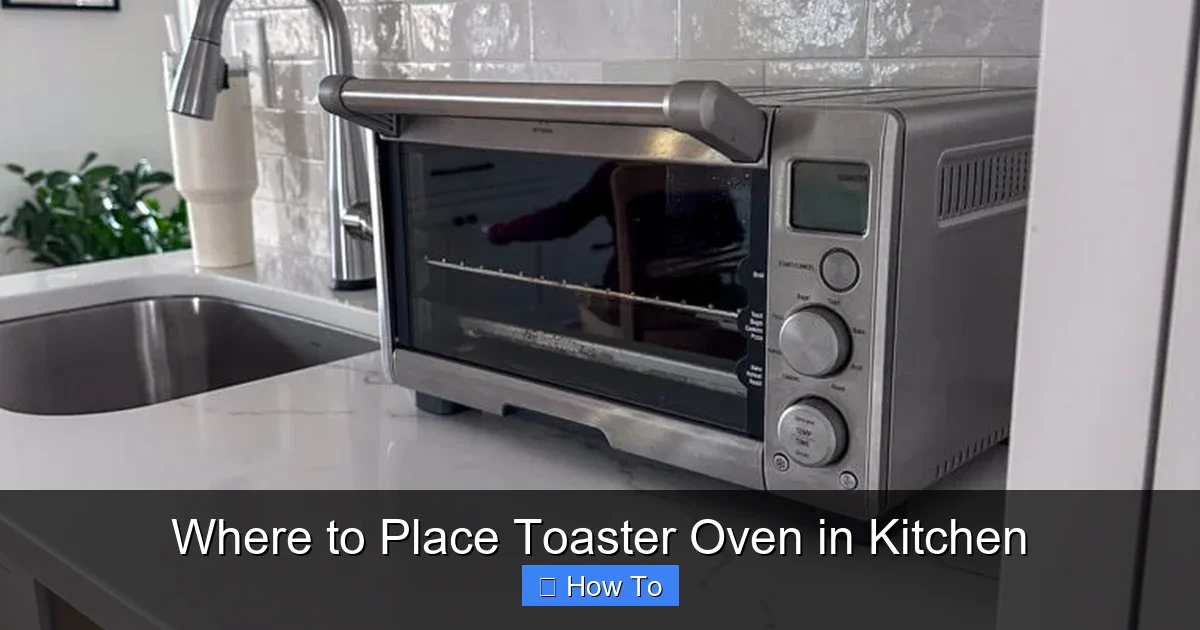
The ideal location for a toaster oven is a stable, heat‑resistant countertop near an outlet, kept away from sinks and high‑traffic zones. If counter space is scarce, a sturdy shelf or appliance cart that meets the same safety standards works well.
Where to Place Toaster Oven in Kitchen
Finding the perfect spot for your toaster oven can feel like a small puzzle, especially when you want it handy for quick snacks but also out of the way during big meal prep. I’ve moved my own toaster oven around more times than I can count, learning each time what works and what doesn’t. In this guide I’ll share the lessons I’ve gathered, so you can decide where to place toaster oven in kitchen without the trial‑and‑error frustration.
Whether you have a compact apartment kitchen or a spacious family hub, the principles are the same: accessibility, safety, ventilation, and style. By the end of this post you’ll have a clear picture of the best locations, practical tips for each, and a few tricks to keep your countertop looking tidy. Let’s dive in and make that toaster oven work for you, not against you.
User Safety: safe
📑 Table of Contents
Understanding Your Kitchen Layout
Before you start moving appliances, take a moment to map out your kitchen’s workflow. Think about the triangle formed by the sink, stove, and refrigerator – the classic work zone. Placing your toaster oven near this triangle can save steps when you’re reheating leftovers or making a quick breakfast. Ask yourself: where to place toaster oven in kitchen so it complements, not disrupts, that flow?
Consider the height of your counters. If you’re tall, a higher shelf might be comfortable; if you’re shorter, keeping it at waist level reduces strain. Also note where power outlets are located. You’ll want to avoid stretching cords across walkways, which can be a tripping hazard. A quick sketch on paper or even a photo with notes can help you visualize the best spot.
Finally, think about traffic patterns. Does your family tend to gather around the island for homework? Is there a busy hallway that leads to the pantry? Positioning the toaster oven away from high‑traffic zones keeps it safe from accidental bumps and lets you use it without feeling crowded.
Assessing Countertop Space
Measure the available countertop length and depth. A standard toaster oven needs roughly 12‑15 inches of width and 10‑12 inches of depth, plus a few inches of clearance on each side for ventilation. If your counter is cluttered, consider decluttering first – maybe relocate a fruit bowl or a spice rack to free up space.
When you’ve identified a clear strip, place a piece of cardboard the size of your oven on the counter. Walk around it, open the door, and see if it feels natural. This simple test can save you from regretting a permanent placement later.
Evaluating Cabinet Height
If your countertop is already full, look upward. Cabinets above the counter often have unused space. Measure the interior height; most toaster ovens fit under a standard 12‑inch cabinet if you leave at least 2 inches of clearance above the unit for heat dissipation.
Remember to check the cabinet door swing. You’ll need enough room to open the oven door fully without hitting the cabinet frame. A quick test with the oven door open can reveal whether the cabinet is a viable option.
Countertop Placement Options
The countertop remains the most popular choice for many home cooks because it offers instant access. When deciding where to place toaster oven in kitchen on the counter, think about proximity to your prep area and the location of your most‑used utensils.
One of my favorite spots is just to the right of the stove, assuming you’re right‑handed. This lets you slide a baking sheet from the stove to the oven without crossing over the hot burner. If you’re left‑handed, mirror that layout to the left side.
Another practical option is near the sink, especially if you often reheat foods that might splatter. Having the oven close means you can quickly rinse a pan or wipe down a tray without trekking across the kitchen.
Below are a few countertop arrangements that work well in different kitchen sizes.
Small Kitchens: The Corner Solution
In a galley or compact kitchen, every inch counts. Placing the toaster oven in a corner can free up the main counter stretch for chopping and assembling. Use a small, heat‑resistant mat to protect the countertop and ensure there’s at least 2 inches of space behind the unit for airflow.
If the corner is tight, consider a slim‑profile model. Some newer toaster ovens are designed to be less than 10 inches deep, making them perfect for narrow corners.
Medium Kitchens: The Island Edge
If you have a kitchen island, the outer edge can be an ideal home for your toaster oven. It keeps the appliance visible and accessible while keeping the main workspace clear for meal prep. Make sure the island has an overhang or a built‑in outlet; otherwise, you’ll need to run a cord safely along the side.
I like to place a decorative tray underneath the oven on the island to catch crumbs and add a touch of style. This also makes cleaning a breeze – just lift the tray and shake it out.
Large Kitchens: Dedicated Appliance Garage
In a spacious kitchen, you might opt for an appliance garage – a cabinet with a roll‑up or lift‑up door that hides small appliances when not in use. This keeps the countertop immaculate and still gives you quick access when you need it.
When installing an appliance garage, verify that the interior dimensions accommodate your toaster oven with clearance for ventilation. Add a small fan or vent if the cabinet is fully enclosed, to prevent heat buildup.
Cabinet and Shelf Solutions
When countertop real estate is scarce, looking upward or inside cabinets can unlock new possibilities. The key is to maintain safety and ease of use while answering the question where to place toaster oven in kitchen without sacrificing convenience.
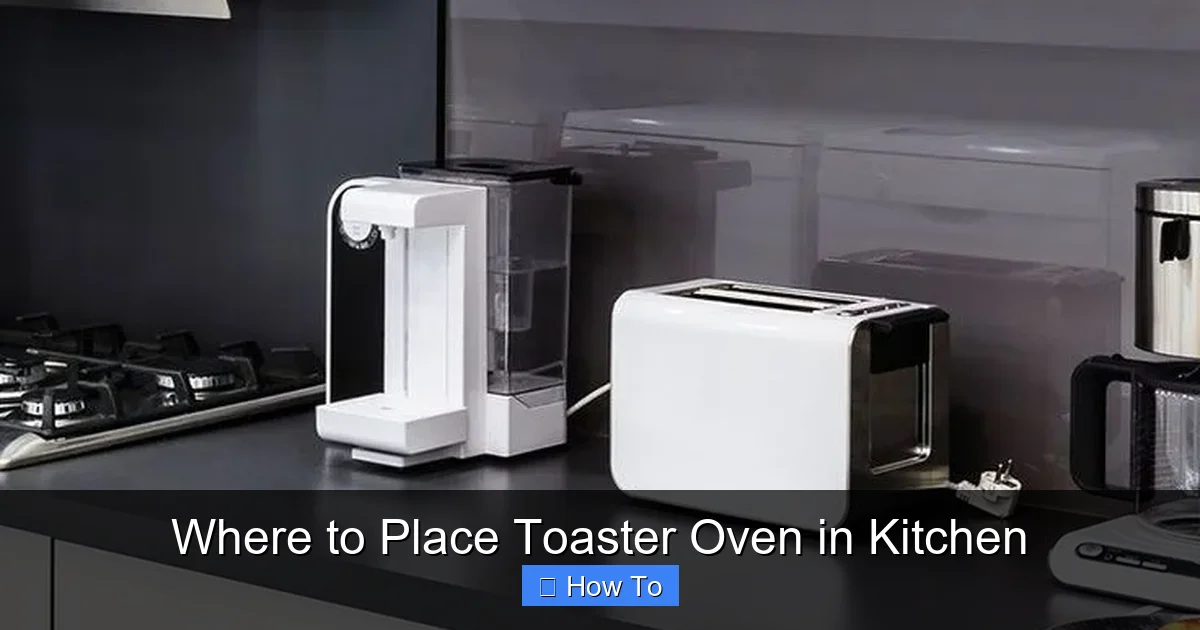
Visual guide about Where to Place Toaster Oven in Kitchen
Image source: i.pinimg.com
Open shelving is trendy and functional. A sturdy shelf installed at eye level lets you see the oven’s contents and monitor cooking without bending. Choose a shelf made of wood or metal that can support the oven’s weight (usually 15‑25 pounds) and has a lip or edge to prevent accidental sliding.
If you prefer a concealed look, a pull‑out shelf inside a lower cabinet works well. Install heavy‑duty glides that can handle the oven’s weight, and make sure the shelf extends far enough for you to open the oven door fully.
Wall‑Mounted Brackets
Some homeowners opt for a wall‑mounted bracket that holds the toaster oven like a microwave. This solution frees up counter space entirely and can be positioned at a comfortable height. Look for brackets rated for the oven’s weight and with a tilt‑forward design so you can easily slide the oven out for use.
Before drilling, locate studs in the wall to ensure a secure mount. Use a level to keep the bracket perfectly horizontal; an uneven mount can cause the oven door to swing unevenly.
Inside a Pantry Cabinet
A deep pantry cabinet with adjustable shelves can become a hidden home for your toaster oven. Place the oven on a middle shelf, leaving at least 3 inches of space above and behind for heat to escape. Keep the pantry door slightly ajar when the oven is in use, or install a vent grille to allow airflow.
This approach works especially well if you use the toaster oven primarily for baking or reheating and don’t need it constantly at your fingertips.
Safety and Ventilation Considerations
No matter where you decide to place your toaster oven, safety should never be an afterthought. These appliances generate significant heat, and improper placement can lead to scorched cabinets, melted countertops, or even fire hazards. Let’s cover the essentials so you can confidently answer where to place toaster oven in kitchen while keeping your home safe.
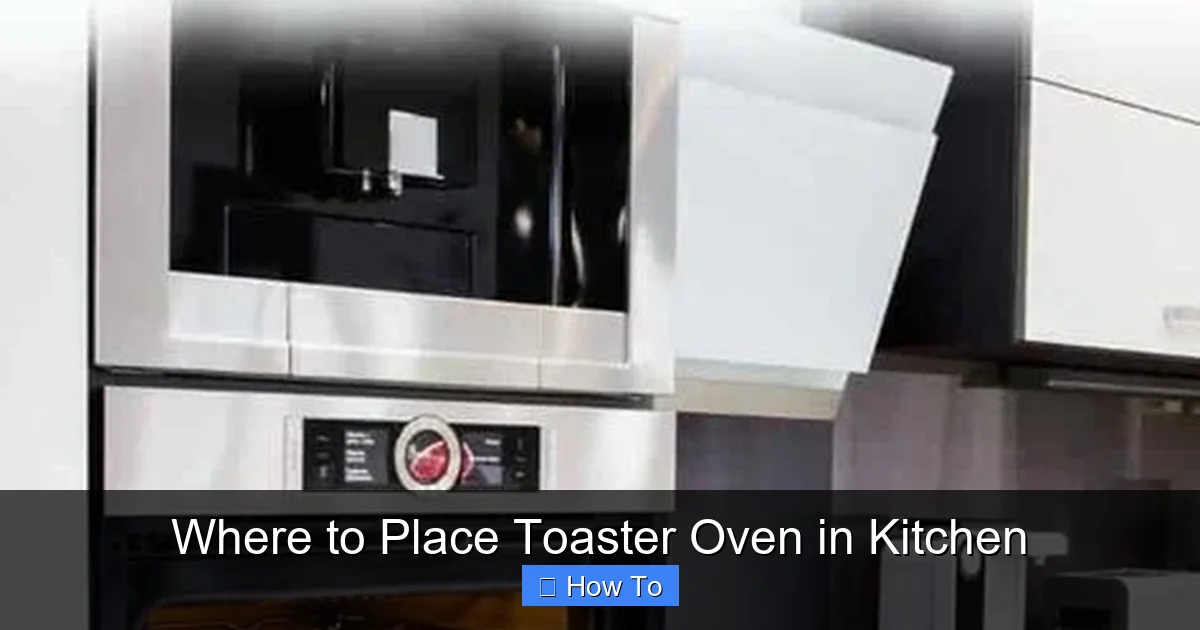
Visual guide about Where to Place Toaster Oven in Kitchen
Image source: i.pinimg.com
First, always maintain a minimum clearance of 2 inches on all sides and at least 4 inches above the unit. This allows hot air to circulate and prevents heat from building up against nearby surfaces. If your chosen spot is tight, consider adding a small, battery‑operated fan to improve airflow.
Second, keep flammable items – such as dish towels, paper plates, or plastic containers – at least a foot away from the oven. I’ve seen a towel catch fire simply because it draped over the oven’s vent.
Third, use a surge protector with an on/off switch. This lets you cut power completely when the oven isn’t in use, reducing the risk of electrical faults.
Heat‑Resistant Mats and Trivets
Place a silicone or ceramic mat under the toaster oven to protect your countertop from heat stains and scratches. These mats are easy to clean and can withstand temperatures up to 500°F. If you opt for a wooden countertop, a mat is especially important to prevent discoloration.
When you remove hot trays or pans, set them on a trivet or cooling rack rather than directly on the mat. This spreads the heat and protects both the mat and the countertop surface.
Ventilation Solutions for Enclosed Spaces
If you’re placing the oven inside a cabinet or appliance garage, consider adding a passive vent. A simple vent grille cut into the cabinet door or side panel lets hot air escape. For tighter enclosures, a small, low‑voltage exhaust fan can be wired to turn on when the oven door opens.
Always test the temperature inside the enclosure after a 15‑minute bake session. If it feels uncomfortably warm to the touch, increase ventilation or reconsider the location.
Styling and Aesthetic Tips
Functionality is crucial, but you also want your kitchen to look inviting. The toaster oven doesn’t have to be an eyesore; with a few styling tricks it can blend seamlessly into your décor while still answering where to place toaster oven in kitchen.
Choose a finish that matches your other appliances. Stainless steel, black stainless, or retro pastel colors can tie the look together. If your oven is a contrasting color, use it as a deliberate accent piece – place it on a colorful tray or beside a matching canister set.
Keep the area around the oven tidy. A small basket for baking accessories, a roll of parchment paper, and a silicone spatula can be stored neatly on a nearby shelf or in a drawer. This reduces visual clutter and makes the oven feel like a purposeful part of your kitchen workflow.
Using Decorative Trays
A decorative tray not only catches crumbs but also adds a layer of style. Opt for a tray made of marble, wood, or metal that complements your countertop material. Place the toaster oven in the center of the tray, leaving a small border for easy cleaning.
I like to switch out trays with the seasons – a bright citrus‑colored tray in summer and a deep, earthy tone in winter. It’s a simple way to refresh the look without buying new appliances.
Integrating with Open Shelving
If you have open shelves, consider placing the toaster oven on the shelf and flanking it with matching jars or cookbooks. This creates a cohesive vignette that feels intentional rather than haphazard. Use shelf risers to vary heights and add visual interest.
Remember to keep the shelf sturdy. Check the weight rating and install brackets if needed, especially if you plan to store heavy cookware nearby.
Quick Reference Table: Placement Pros and Cons
| Placement Option | Pros | Cons |
|---|---|---|
| Countertop (near stove) | Easy access, efficient workflow | Uses valuable prep space |
| Countertop (corner) | Frees up main counter, good for small kitchens | May require awkward reaching |
| Island edge | Keeps appliance visible, social cooking | Needs nearby outlet, may obstruct island seating |
| Open shelf | Eye‑level monitoring, modern look | Exposed to grease, needs regular cleaning |
| Cabinet pull‑out shelf | Concealed when not in use, protects from splatters | Installation effort, limited ventilation |
| Appliance garage | Clutter‑free countertop, protects appliance | Requires ventilation, door mechanism |
Use this table as a starting point when you weigh your options. The best spot will balance your cooking habits, kitchen size, and design preferences.
Final Thoughts on Where to Place Toaster Oven in Kitchen
Choosing where to place toaster oven in kitchen isn’t just about finding a free inch of counter; it’s about creating a spot that feels natural, safe, and enjoyable to use. Take the time to test a few locations, measure clearances, and think about how the oven fits into your daily routine.
Remember that your kitchen evolves. As you acquire new gadgets or change your cooking habits, you can always revisit the placement. Keep the core principles in mind – accessibility, ventilation, safety, and style – and you’ll end up with a solution that works today and can adapt tomorrow.
I hope this guide has given you the confidence to decide where to place toaster oven in kitchen without second‑guessing. Happy cooking, and may your toast always be perfectly golden!
Frequently Asked Questions
Where should I place my toaster oven in the kitchen for best airflow?
Position the toaster oven on a flat, heat‑resistant surface with at least 4 inches of clearance on all sides, especially the back and top, to allow hot air to escape. Avoid placing it directly against walls or cabinets that can trap heat. Good airflow helps prevent overheating and extends the appliance’s lifespan.
Is it safe to put a toaster oven on the countertop near the stove?
It’s generally safe as long as you maintain a minimum distance of 6 inches from the stove burners to avoid accidental splatters or flare‑ups. Ensure the toaster oven’s cord is away from any open flames or hot surfaces. Using a heat‑resistant mat underneath adds extra protection.
What is the ideal height for a toaster oven on a kitchen island?
The toaster oven should sit at a comfortable working height, typically between 36 and 42 inches from the floor, aligning with standard countertop height. This makes loading and unloading easy without straining your back. If the island has overhang, leave enough space for the door to open fully.
Can I install a toaster oven under cabinets, and what clearance is needed?
Yes, you can mount a toaster oven under cabinets if you provide at least 2 inches of clearance above the unit and 1 inch on each side for ventilation. Verify that the cabinet material can withstand the heat; using a heat shield or insulating pad is recommended. Always follow the manufacturer’s specific clearance guidelines.
Where to place toaster oven in kitchen if I have limited counter space?
Consider using a rolling cart or a sturdy shelving unit that can be moved when needed, keeping the toaster oven off the main countertop. An appliance garage or a pull‑out drawer designed for small appliances also works well. Just ensure the chosen spot still meets ventilation and safety requirements.
Should I consider a dedicated appliance garage for my toaster oven?
A dedicated appliance garage keeps the toaster oven concealed when not in use, preserving countertop aesthetics and reducing clutter. Make sure the garage has adequate ventilation or a vented back panel to prevent heat buildup. This solution is especially useful in open‑plan kitchens where appliances are visible.