Is Gotham Steel Cookware Oven Safe
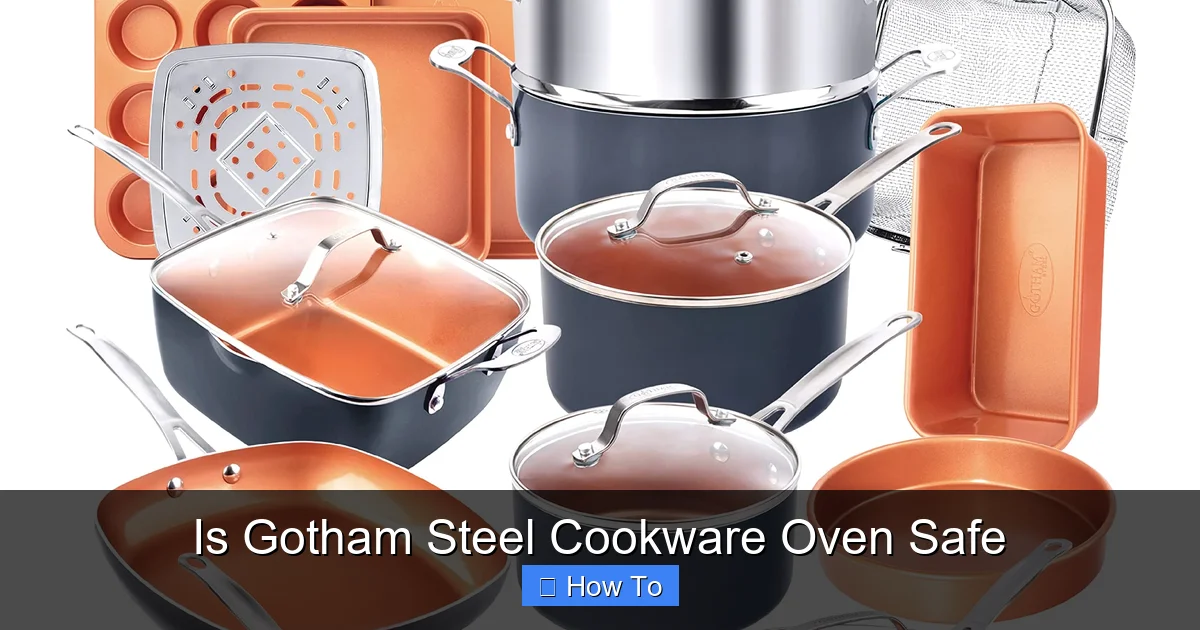
Yes, many Gotham Steel pans can go in the oven, often up to 500°F, but the exact limit depends on the pan, handle, and lid. Always check the model’s manual, respect lower-rated lids, and never use the broiler unless the product specifically allows it.
Is Gotham Steel Cookware Oven Safe
You may want to start a dish on the stove, then finish it under melted cheese. Or you may need to keep a pan warm during brunch. This is where the question “Is Gotham Steel Cookware Oven Safe” comes up.
The short answer is yes for many pans. A large number of Gotham Steel nonstick pans are rated for oven use up to 500°F. That does not mean every pan, lid, or handle in the line has the same limit.
Cookware limits depend on the exact model and its parts. A safe body can be paired with a lower-rated lid. A useful handle on the stove can also become too hot to touch in the oven. The model guide is the final word.
Before you move a pan, pause for one quick check. The answer can change between a skillet, saucepan, and lid. That small pause can protect the pan, the coating, and your oven.
Key Takeaways
- Many pieces are oven safe: Many Gotham Steel pans are rated for oven use, often up to 500°F.
- The exact model matters: Do not apply one product’s temperature rating to another item in the collection.
- Lids may have lower limits: Glass lids and knobs are often rated below the pan body.
- Handles can get hot: Even oven-safe handles may need a dry mitt.
- Avoid empty preheating: Add food or oil before placing a coated pan in a hot oven.
- Broiling is different: Do not use the broiler unless the product guide explicitly permits it.
- Compact appliances need extra checks: Fit, clearance, and airflow matter in toaster ovens and air fryers.
📑 Table of Contents
Is Gotham Steel Cookware Oven Safe for Every Piece?
When a Gotham Steel product is listed as oven safe, it means the tested parts can handle dry oven heat within a stated range. Many frying pans and skillets carry a 500°F, or about 260°C, rating. Some pots, sets, and older pieces may differ. Never move a rating from one product page to another.
Oven heat reaches more than the base
On the stove, heat starts at the base. In an oven, hot air surrounds the pan. The handle, rim, lid, and coating all warm up. A pan can pass one test and fail another if a part is changed. This is why a set should not be judged by one skillet.
The limit is a ceiling
An oven-safe label is not a promise that every use is safe at 500°F. The oven setting, cooking time, lid, and food all matter. Nonstick surfaces also do best at low or medium heat. The upper limit is a safety ceiling, not a target for daily cooking. Going above it may damage the pan or affect its warranty.
Think of the cookware as four parts
- Pan body: Aluminum or metal may tolerate high heat well.
- Coating: The nonstick layer sets a heat limit and needs care.
- Handles: Stainless steel, silicone, or plastic parts may have different limits.
- Lid: Glass and knob materials often lower the safe temperature.
Suppose a skillet is rated to 500°F, but its glass lid is rated to 350°F. You can bake an open frittata at 425°F. Do not cover it at that heat unless the lid guide permits. Remove the lid or use another oven-safe cover.
If you are using a set, check each item before you cook. A lid from one pan may not share the rating of another. The safest habit is to match the pan and lid that came together, then confirm both limits.
How to Check the Limit for Your Exact Piece
When you search for “Is Gotham Steel Cookware Oven Safe,” the most useful answer is model specific. Start with the guide for your exact pan, not a rating you saw for a different set. Look for a model name or number on the base, box, receipt, or product page. If the guide says 500°F, treat that as the highest safe oven setting, not a normal cooking level.
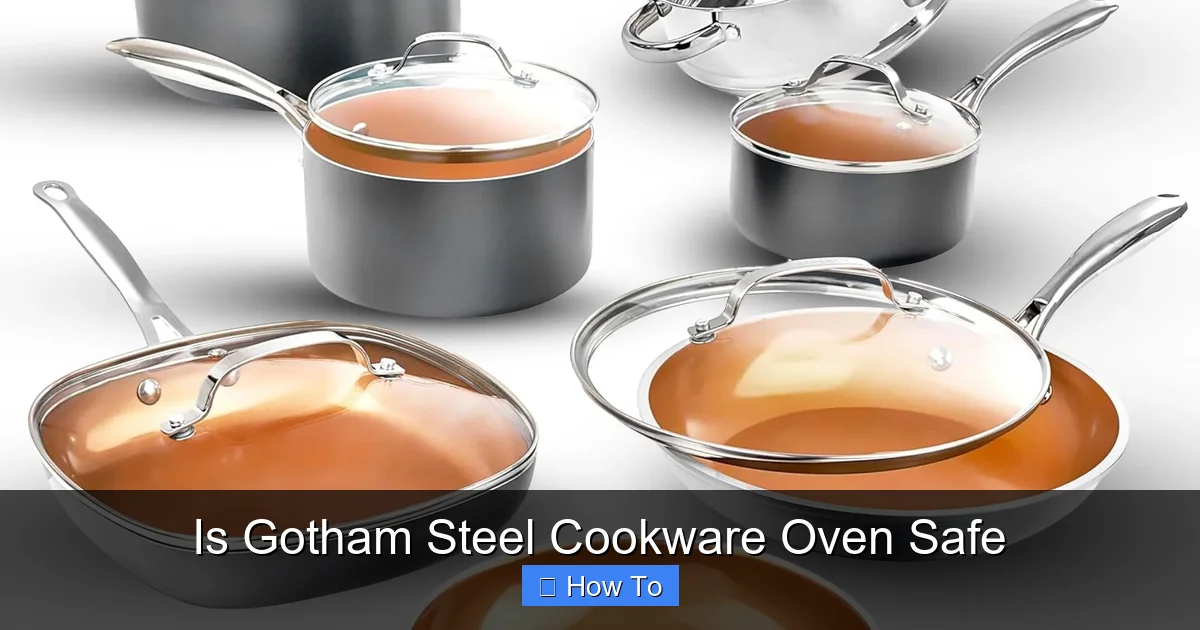
Visual guide about Is Gotham Steel Cookware Oven Safe
Image source: m.media-amazon.com
Find the model and official guide
Search the model name with the words oven safe. Use an official Gotham Steel page or the printed manual when possible. Retail listings can mix similar products. If the page and manual disagree, follow the more cautious limit or ask the company.
Read the symbols correctly
- Oven icon: The body may be approved for oven use.
- Temperature number: This gives the top limit for that part.
- Lid icon: The symbol applies only to the lid.
- Crossed-out oven: Do not place that part in an oven.
- Handle symbol: The handle may have a separate limit.
If you also wonder what the coating and metal mean for daily use, read this guide to whether Gotham Steel cookware is safe. It covers the broader safety picture, while this article focuses on oven heat.
Check sets piece by piece
Sets often include several pan sizes and one or two lids. Each item may have its own rating. A large skillet may be rated to 500°F while a glass lid is rated to 350°F. Write the limit on the box, not on the pan.
If the information is missing
If you cannot find the model guide, contact the maker before using the pan in an oven. Give the model name, base marking, and a photo if needed. Do not guess based on color or shape. When the limit is unknown, choose another pan rather than risk the coating or handle.
For example, a recipe may call for 375°F. That is below 500°F, but it is above a common 350°F lid limit. You can remove the lid, use a different cover, or select a pan with a confirmed rating.
Parts That Can Lower the Safe Temperature
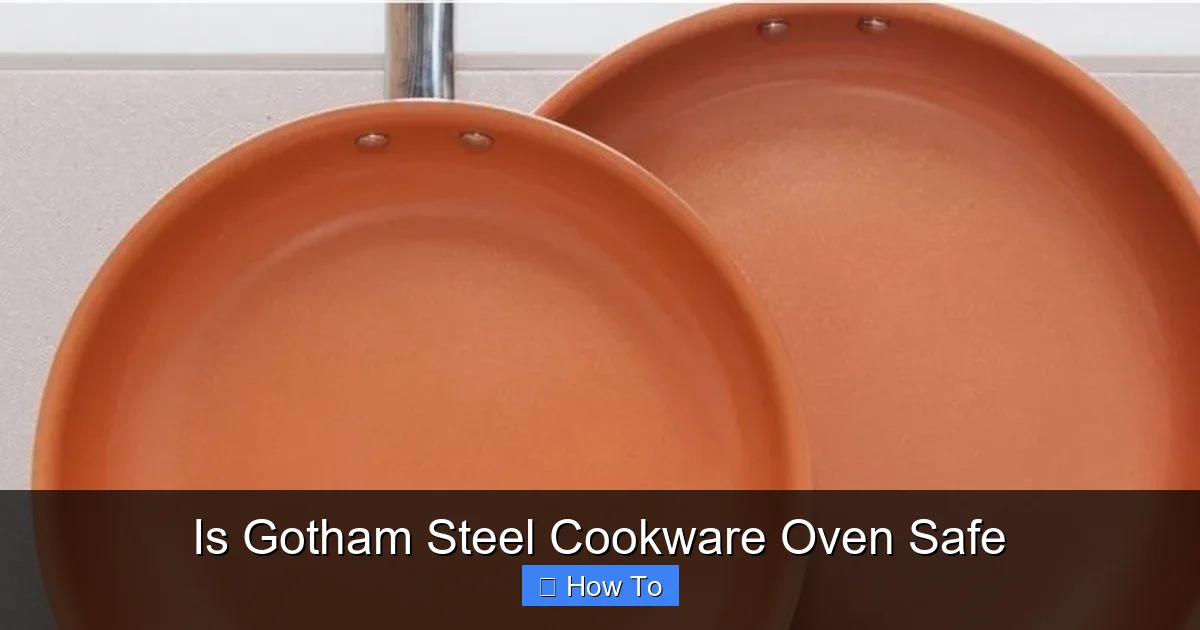
The body may be the strongest part. Heat limits often come from the smaller parts attached to it. This is why a pan can be oven safe while its lid is not.
Visual guide about Is Gotham Steel Cookware Oven Safe
Image source: panmastery.com
Glass lids and knobs
Glass lids are useful, but glass and the knob may have a lower limit than the pan. Many lids are rated near 350°F, while the pan may handle 500°F. Check the lid on its own. If its limit is unclear, leave it out of the oven.
Handles and inserts
Handle material matters too. Stainless steel can tolerate heat, but it can become very hot. Silicone, plastic, and other synthetic parts may have lower limits. A handle can also contain screws or inserts that heat at a different rate.
Nonstick coating
The nonstick surface needs gentle heat. Do not preheat an empty coated pan in the oven. Do not use it above its stated limit. High heat can damage the surface and may shorten the pan’s useful life. Good room ventilation is also wise when heating any coated cookware.
Why an empty pan is a problem
Food and oil help spread heat. Without them, a thin pan can heat very quickly. An empty pan may also cool quickly when food is added, which creates stress. For best results, put the recipe ingredients in the pan before it goes into the oven. Never use an empty coated pan as a way to preheat it.
How to Use Gotham Steel Cookware in the Oven
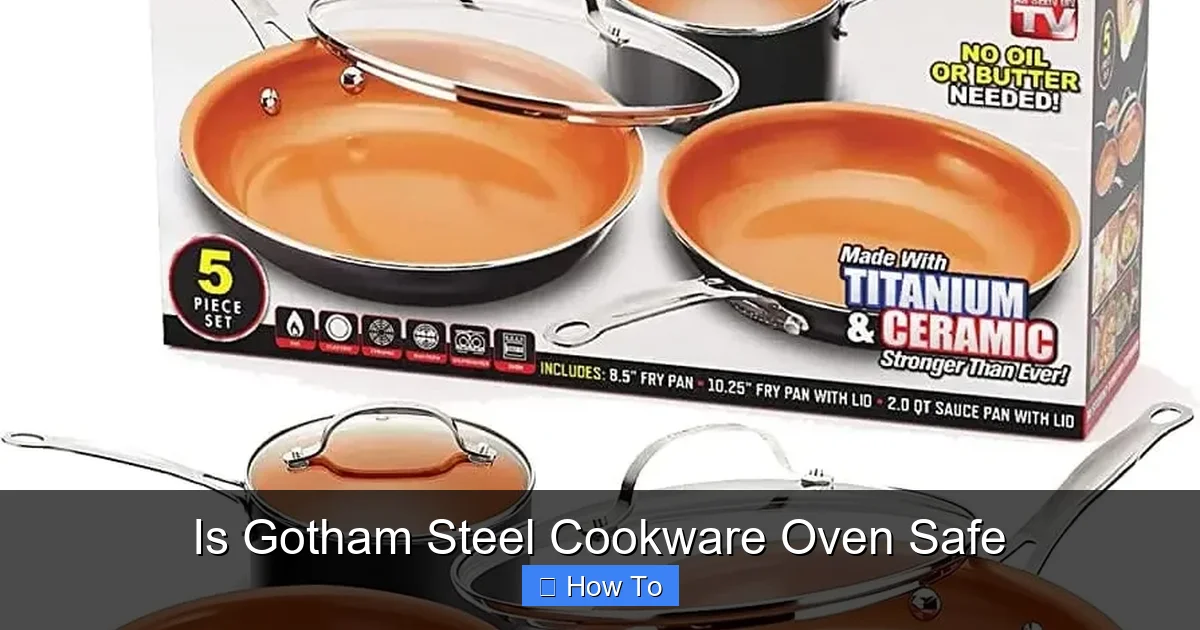
To answer “Is Gotham Steel Cookware Oven Safe” for a real recipe, check every part first. Once you know the limit, oven use can be simple. The main goal is to protect every part and avoid sudden heat.
Visual guide about Is Gotham Steel Cookware Oven Safe
Image source: thekitcheneye.com
A safe step-by-step routine
- Check ratings: Confirm the pan, lid, and handle limits before you start.
- Preheat the oven: Do not place an empty coated pan inside.
- Add ingredients: Put food or oil in the pan before heating it.
- Use the center rack: Keep the pan away from top heat.
- Position the handle: Point it inward without letting it touch the door.
- Use a dry mitt: Metal handles can burn your hand.
- Avoid exposed elements: Keep the pan away from direct heat sources.
- Cool safely: Let the pan rest on a rack before washing it.
Plan the transfer
Plan the move before the oven is hot. Clear a space near the oven and place a heat-safe trivet or dry towel on a cool counter. Make sure the handle will not hit the door. This prevents a rushed move with hot food.
Use the right rack and grip
Use the center rack for even heat. In a convection oven, make sure the handle and lid cannot rattle into the fan. Keep the pan away from exposed elements. This matters more in small ovens. Always use a dry mitt, even if the handle looks cool.
Cool before washing
Sudden changes can harm glass and may warp thin metal. Do not move a hot pan straight into cold water. Do not add cold liquid to a very hot, empty pan. Set a hot lid on a dry towel or rack, not a cold stone counter.
For a frittata, cook it on the stove at low or medium heat. Move it to a 400°F oven only if every part is rated for that heat. For baked pasta, transfer the filled pan, not an empty one. These small steps protect the nonstick layer.
Broilers, Toaster Ovens, and Air Fryers
Other ovens need extra care. Their heat can be closer, faster, or more direct.
Broiler: assume no unless stated
Treat the broiler as off-limits unless the guide says the exact pan is broiler safe. A broiler can send intense, direct heat onto the pan. Its surface temperature may exceed a normal 500°F oven setting. Even then, a glass lid may still need to stay out.
Toaster oven: check fit and distance
A toaster oven can work if the pan fits with room to spare. Yet its walls and heating elements sit close to the cookware. Use a lower setting than the pan’s top limit when needed. Learn how a toaster oven differs from a regular oven before testing a tight fit.
Air fryer: fit and airflow matter
An air fryer is another case. Oven-safe cookware may not fit its basket or allow enough airflow. The fan can also move a loose handle or light lid. Read why oven-safe does not always mean air-fryer-safe, then check the fryer and pan guides.
Before using any pan in a compact appliance, measure the inside space. The pan should sit flat without touching the walls. Leave room for air to circulate, and never force a lid into the basket. A good fit is part of heat safety.
Care Tips and Final Verdict
Good care makes repeated oven use safer. It also helps the coating last.
Protect the nonstick surface
- Use moderate heat: Low or medium heat is best for most stovetop cooking.
- Choose gentle tools: Wood or silicone tools are less likely to scratch the surface.
- Let it cool: Wait before washing, even if the pan is dishwasher safe.
- Wash gently: Use a soft sponge and mild soap unless the guide says more.
- Protect stacked pans: Place a cloth or liner between them.
- Follow product advice: Some cooking sprays and cleaners may leave residue.
Know when to stop using it
Stop using the pan if the coating chips, peels, or flakes. Replace it if the base warps, the handle loosens, or the lid knob cracks. Dark marks alone do not always mean danger, but blistered coating does. When in doubt, contact the maker.
The final answer
So, is Gotham Steel cookware oven safe? Yes, many pieces are, and many are rated up to 500°F. The safe answer for your kitchen is still model specific. Check the pan, lid, and handle. Stay below the stated limit, avoid an empty pan and the broiler, and use another pan when the guide is missing. With those checks, you can move from stove to oven with far more confidence. This is the simplest way to enjoy flexible cooking without taking avoidable risks.
Frequently Asked Questions
Is all Gotham Steel cookware oven safe?
No. Many pieces are rated for oven use, but limits vary by model, handle, and lid. Check the guide for the exact item before heating it.
What temperature can Gotham Steel cookware handle?
Many pans are advertised as safe up to 500°F, or about 260°C. Some lids and handles may be limited to 350°F or another temperature, so use the lowest confirmed limit.
Can I put a Gotham Steel lid in the oven?
Only if the lid’s own instructions say it is oven safe. Glass lids and knobs often have a lower limit than the pan, so remove the lid when its rating is uncertain.
Can I preheat an empty Gotham Steel pan?
It is best not to. An empty nonstick pan can heat too quickly, and the coating may be damaged above its safe limit. Add food or oil before placing it in a hot oven.
Is Gotham Steel cookware broiler safe?
Do not assume so. A broiler uses intense direct heat that can exceed normal oven limits, so use the broiler only when the exact product guide explicitly permits it.
Can I use it in a toaster oven or air fryer?
Maybe, but fit and airflow matter. Confirm the cookware and appliance limits, leave clearance around the pan, and remember that oven-safe does not automatically mean air-fryer-safe.