Is a Toaster Oven Like a Microwave
A toaster oven and a microwave work in completely different ways. A toaster oven uses radiant heat to brown and crisp food, while a microwave uses electromagnetic waves to heat water molecules from the inside out. They serve different cooking purposes and rarely substitute for each other perfectly.
You stand in your kitchen holding last night’s pizza. The microwave sits on the counter. The toaster oven sits beside it. You wonder: is a toaster oven like a microwave enough to pick just one? It’s a common question. Both appliances sit on countertops. Both heat food. Both save you from firing up the big oven. But they work on totally different principles. Understanding those differences helps you pick the right tool for the job. It also helps you decide if you need both, or if a hybrid unit makes sense.
Let’s break down the real differences. We’ll look at how each one heats food. We’ll compare cooking results. We’ll talk speed, energy use, and best uses. By the end, you’ll know exactly when to reach for which appliance. You might even discover a third option that solves the debate entirely.
Key Takeaways
- Different heating methods: Toaster ovens use radiant heat from elements; microwaves use electromagnetic radiation to excite water molecules.
- Texture matters: Toaster ovens crisp and brown food; microwaves steam food and leave it soft or soggy.
- Speed difference: Microwaves reheat faster; toaster ovens take longer but deliver better texture.
- Energy efficiency varies: Microwaves use less energy for quick tasks; toaster ovens are more efficient for small baking jobs than full ovens.
- Best uses differ: Use a microwave for reheating liquids and steaming; use a toaster oven for baking, broiling, toasting, and crisping.
- Hybrid options exist: Microwave toaster oven combos combine both technologies in one unit.
- Neither fully replaces the other: Most kitchens benefit from having both appliances for different tasks.
📑 Table of Contents
How They Heat Food Differently
The fundamental difference lies in physics. A toaster oven works like a miniature version of your big oven. It uses heating elements. These elements get hot. They radiate infrared heat. That heat surrounds your food. It cooks from the outside in. The air inside gets hot. That hot air transfers heat to the food surface. This is called convection and radiation heating.
Radiant Heat Creates Browning
Radiant heat does something special. It triggers the Maillard reaction. That’s the chemical process that browns food. It creates flavor. It makes crusts crispy. It gives you golden cheese on a casserole. It gives you crunchy edges on roasted vegetables. A toaster oven excels at this. The direct heat from the elements hits the food surface. Moisture evaporates. The surface dries out. Browning happens.
Microwaves Excite Water Molecules
A microwave works differently. It generates electromagnetic waves. These waves penetrate the food. They cause water molecules to vibrate rapidly. That vibration creates friction. Friction creates heat. The food heats from the inside out. Or rather, everywhere water exists simultaneously. There’s no hot air. No radiant heat on the surface. The air inside a microwave stays cool.
No Browning in a Standard Microwave
Because the air stays cool and there’s no direct radiant heat, microwaves don’t brown food well. The surface doesn’t get hot enough for the Maillard reaction. Food steams in its own moisture. That’s why microwaved pizza gets soggy. That’s why microwaved bread gets rubbery. The texture changes are dramatic. A toaster oven gives you crisp. A microwave gives you steam.
Cooking Results: Texture and Taste
Texture defines the eating experience. This is where the appliances diverge most. If you care about how food feels in your mouth, pay attention here.
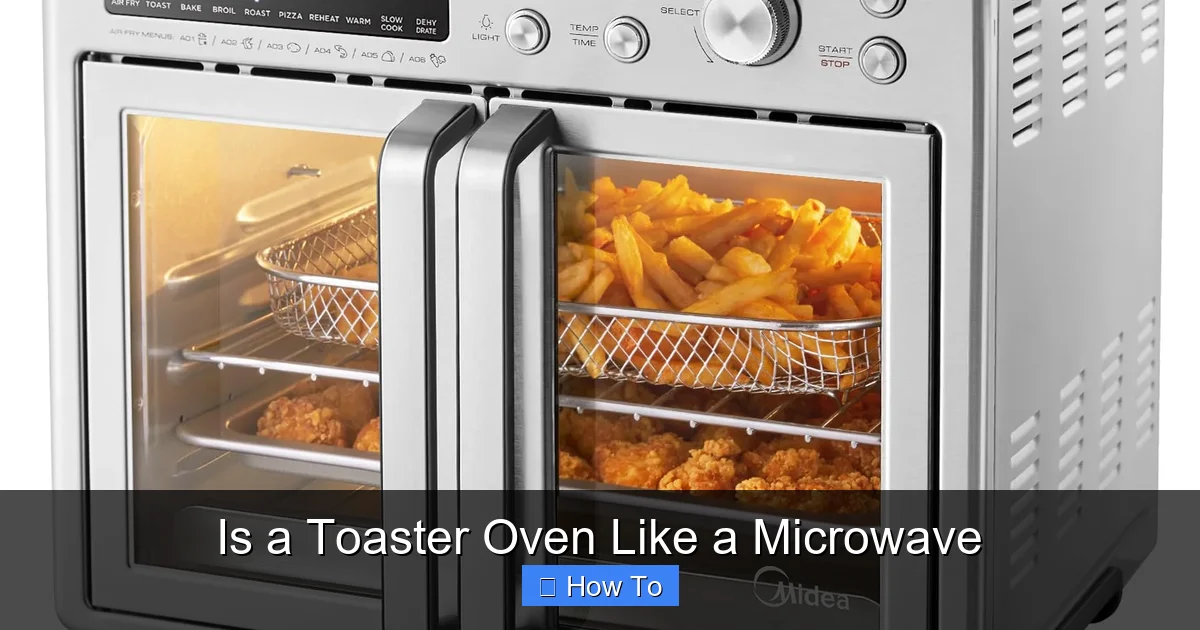
Visual guide about Is a Toaster Oven Like a Microwave
Image source: i.pinimg.com
Toaster Oven: Crisp, Crunch, Caramelization
A toaster oven shines at creating texture contrast. Think of a bagel. The outside gets crisp. The inside stays chewy. Think of a chicken thigh. The skin crackles. The meat stays juicy. Think of roasted broccoli. The edges char and sweeten. The stems stay tender. This happens because dry heat removes surface moisture. It concentrates flavor. It creates complexity.
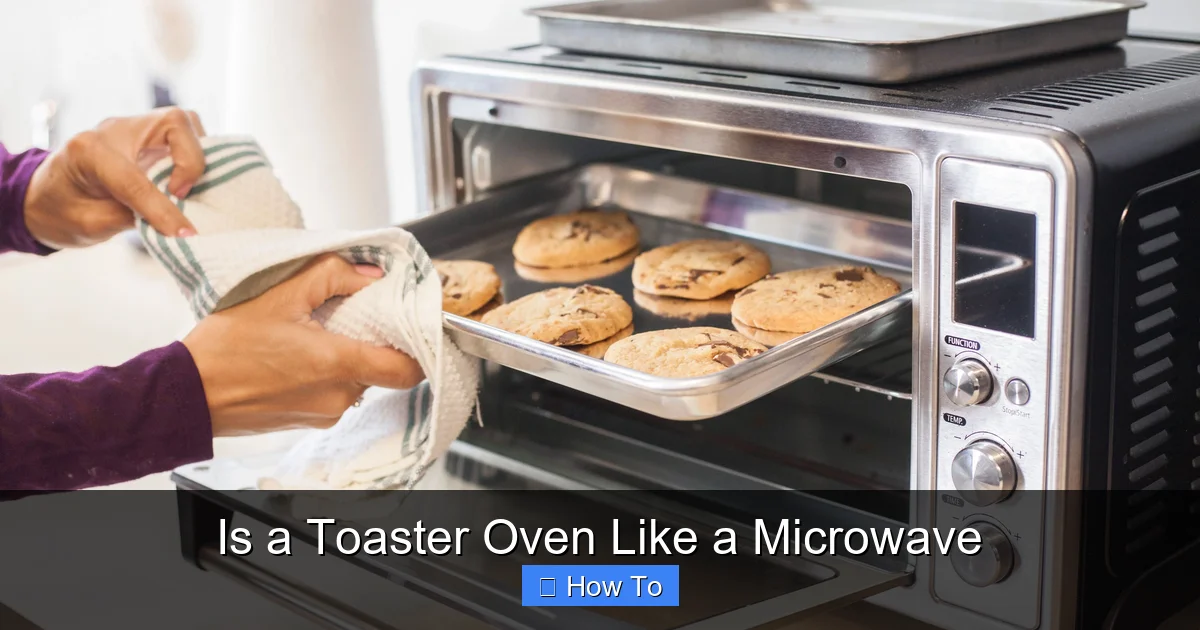
You can bake cookies in a toaster oven. They spread. They brown at the edges. The centers stay soft. You can broil a steak. You get a crust. You can toast nuts. They turn fragrant and crunchy. These results come from direct heat. From hot air circulation. From the same principles as a full-size oven.
Microwave: Soft, Steamed, Uniform
A microwave delivers uniform heat. No hot spots from elements. No cool spots from shadows. But the texture is one-note. Vegetables steam. They turn bright green then mushy. Meats cook gray. No sear. No crust. Sauces heat fast. But they can splatter. Eggs turn rubbery. Bread turns tough then stale-feeling as it cools.
There are tricks. Crisping sleeves for pizza. Susceptors in packaging. But these are workarounds. They don’t match true radiant heat. A microwave cannot replicate the texture of oven-baked food. It’s physics. Water boils at 212°F. Browning needs 300°F plus. Microwave surfaces rarely exceed boiling point.
Reheating: The Daily Test
Reheating is where most people compare them. Leftover fried chicken. In a microwave: soggy skin, hot meat. In a toaster oven: crisp skin, hot meat. Takes longer. Worth it. Leftover pasta. Microwave: hot throughout, sauce maybe splattered. Toaster oven: top gets cheesy and browned, edges crisp. Soup or coffee? Microwave wins. Liquid heats evenly. No surface to crisp.
Speed and Convenience Compared
Speed matters on busy weeknights. Convenience matters every day. Let’s look at real-world timing.
Microwave Speed Is Unbeatable for Small Tasks
A microwave heats a cup of water in 90 seconds. A plate of leftovers in two minutes. A baked potato in five minutes. No preheat. Instant on. Instant off. You press buttons. You walk away. It beeps. Done. For pure speed reheating liquids or single portions, nothing beats it.
Toaster Oven Needs Preheat Time
A toaster oven needs preheating. Five to ten minutes typically. Then cooking time. A frozen pizza takes 12-15 minutes after preheat. Toast takes 3-5 minutes. Chicken breast takes 20-25 minutes. It’s slower. But it’s still faster than a full oven. A full oven takes 15-20 minutes to preheat. A toaster oven takes half that. For small batches, it’s a time saver over the big oven.
Convenience Features Differ
Microwaves have sensor cooking. Popcorn buttons. Defrost by weight. One-touch reheat. They’re designed for push-button simplicity. Toaster ovens have dials or digital controls. Temperature settings. Timer. Toast shade selector. Bake, broil, toast, warm functions. Some have convection fans. Some have air fry settings. They require more decisions. But they offer more control.
Cleanup Considerations
Microwave cleanup: wipe the interior. Maybe wash the turntable. Splatter covers help. Toaster oven cleanup: crumb tray slides out. Wire rack washes. Interior wipes down. Baking pan washes. More parts. But both are manageable. Neither is a nightmare.
Energy Efficiency and Cost
Energy use affects your bill. It affects the planet. The numbers might surprise you.
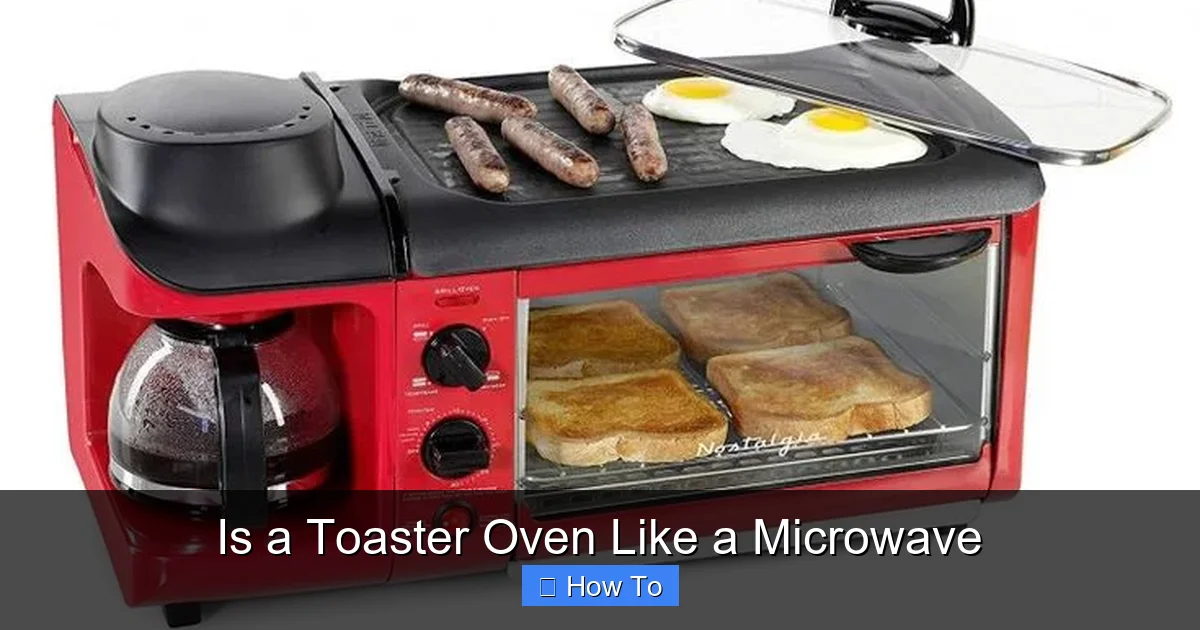
Visual guide about Is a Toaster Oven Like a Microwave
Image source: bhg.com
Microwave Wins for Quick Heating
A typical microwave uses 600-1200 watts. It runs for minutes. Total energy per task is low. Reheating coffee: 0.01 kWh. Cooking a potato: 0.1 kWh. At $0.15 per kWh, that’s pennies. For short tasks, it’s the most efficient kitchen appliance.
Toaster Oven Beats Full Oven for Small Jobs
A toaster oven uses 1200-1800 watts. It runs longer. Preheat plus cook. A 20-minute session uses 0.4-0.6 kWh. That’s 6-9 cents. A full oven uses 2400-5000 watts. Preheat alone uses 0.5-1 kWh. For a small meal, the toaster oven uses half the energy or less. is a toaster oven more efficient than a full oven? Yes, significantly for small portions.
Standby Power Matters
Both draw phantom power. Digital displays. Clocks. Microwaves often draw 2-4 watts standby. Toaster ovens with digital controls similar. Mechanical dial models draw near zero. Unplug if it bothers you. Or use a smart strip.
Annual Cost Comparison
Heavy microwave use: 15 minutes daily. ~30 kWh/year. ~$4.50. Heavy toaster oven use: 30 minutes daily. ~100 kWh/year. ~$15. Both are cheap compared to a full oven at ~$50-100/year for similar use. The difference is small in absolute dollars.
What Each Appliance Does Best
Play to their strengths. Stop fighting their nature. Here’s the cheat sheet.
Microwave Superpowers
- Reheating beverages: coffee, tea, soup, milk
- Steaming vegetables: broccoli, corn, spinach in minutes
- Defrosting meat: faster and safer than counter thawing
- Melting butter, chocolate, cheese: gentle, even heat
- Cooking grains: rice, quinoa, oatmeal in covered bowls
- Softening butter, cream cheese: 10-15 seconds
- Sanitizing sponges: wet sponge, 2 minutes
- Proofing dough: low power, warm environment
Toaster Oven Superpowers
- Toasting bread, bagels, English muffins: even browning
- Baking small batches: cookies, muffins, biscuits
- Roasting vegetables: crisp edges, caramelized flavor
- Broiling: fish, steak, chops, gratins
- Reheating fried foods: restores crunch
- Baking potatoes: crisp skin, fluffy interior
- Melting toppings: open-faced sandwiches, nachos
- Dehydrating: fruit leather, jerky at low temp
The Overlap Zone
Some tasks work in both. But results differ. Baked potato: microwave = steamed skin, toaster oven = crisp skin. Frozen burrito: microwave = soft, toaster oven = crisp ends. Leftovers: microwave = fast, toaster oven = better texture. Bacon: microwave = flat and chewy, toaster oven = flat and crisp (on a rack).
Know Your Limits
Don’t microwave: whole eggs in shell (explode), metal (sparks), some plastics (melt/leach), large roasts (uneven). Don’t toaster oven: liquids (spill/boil over), huge items (won’t fit), delicate custards (overcook edges), popcorn (fire risk).
Can One Replace the Other?
This is the million-dollar question. Can you live with just one?
If You Only Have a Microwave
You lose browning. You lose crisping. You lose baking. You lose roasting. You can’t make toast. You can’t bake cookies. You can’t roast a chicken breast with crispy skin. You can steam. You can reheat. You can defrost. You can cook grains. For a minimal kitchen, a microwave covers survival needs. But cooking joy? Limited.
If You Only Have a Toaster Oven
You lose speed. You lose easy liquid heating. You lose effortless defrosting. You lose popcorn. You gain toast. You gain cookies. You gain roasted veg. You gain crispy reheats. You gain real baking. For someone who cooks, a toaster oven covers more culinary ground. But reheating soup becomes a production. Defrosting takes planning.
The Hybrid Solution: Microwave Toaster Oven Combos
Enter the microwave toaster oven combo. One unit. Two technologies. Microwave mode for speed. Toaster oven mode for texture. Some add air fry. Some add convection. how does a microwave toaster oven work? It has a magnetron for microwave energy. It has heating elements for radiant heat. It has a fan for convection. You select the mode. Or use combination modes.
Combo Pros and Cons
Pros: One footprint. Two functions. Combination cooking (microwave speed + browning finish). Good for small kitchens. Cons: Compromise on both. Smaller cavity than dedicated units. Lower microwave wattage often. Less even toasting. More complex controls. Higher cost. Shorter lifespan potentially. But for many, the tradeoff works.
What About Air Fryer Toaster Ovens?
These are toaster ovens with powerful convection fans. They air fry. They toast. They bake. They broil. They don’t microwave. is air fryer a toaster oven? Essentially yes, the modern toaster oven often includes air fry. But it’s still not a microwave. Different physics. Different results.
Making the Right Choice for Your Kitchen
Your cooking style decides. Your space decides. Your budget decides.
Assess Your Daily Habits
Do you reheat coffee three times daily? Microwave essential. Do you bake cookies weekly? Toaster oven essential. Do you meal prep Sunday roasts? Toaster oven shines. Do you eat frozen dinners nightly? Microwave wins. Do you make toast every morning? Toaster oven wins. Do you steam veggies for baby food? Microwave wins.
Consider Your Space
Counter space is precious. A microwave needs ~18×14 inches plus clearance. A toaster oven needs ~16×12 inches plus clearance. A combo needs ~20×15 inches. Measure. Plan. If you have room for both, get both. They complement. They don’t compete.
Budget Reality
Basic microwave: $60-100. Basic toaster oven: $40-80. Combo unit: $150-400. High-end toaster oven with air fry: $200-400. Two basic units cost less than one good combo. But two units take more space. what is a toaster oven good for enough to justify the cost? For most cooks, yes.
The Ideal Setup
If space and budget allow: a microwave for liquids and speed. A toaster oven (ideally with convection/air fry) for cooking. This covers 95% of countertop cooking needs. The big oven handles turkeys and sheet-pan dinners. The stove handles sautéing and boiling. The microwave handles reheating and steaming. The toaster oven handles baking, roasting, toasting, crisping.
Conclusion
So, is a toaster oven like a microwave? No. They’re fundamentally different tools. One uses radiant heat to brown and crisp. One uses electromagnetic waves to vibrate water molecules. One gives you texture. One gives you speed. They overlap on reheating. But the results differ. Soggy versus crispy. Steamed versus roasted.
You don’t choose between a knife and a spoon. You use each for its purpose. Same here. A microwave is for heating. A toaster oven is for cooking. If you only have room for one, a toaster oven with air fry covers more cooking techniques. But you’ll miss the microwave’s instant heat for liquids. If you can, get both. Or explore a quality combo unit. Your leftovers deserve the right tool. Your toast deserves the right tool. Your cooking deserves the right tool.
Next time you face that pizza decision, you’ll know. Microwave for 60 seconds if you’re starving. Toaster oven for 10 minutes if you want it tasting fresh. Both have a place. Both earn their keep. Now go make something delicious.
Frequently Asked Questions
Can a toaster oven replace a microwave?
A toaster oven cannot fully replace a microwave because it cannot heat liquids quickly or defrost food evenly. It excels at browning and crisping but takes longer to reheat most foods. For tasks like warming coffee or steaming vegetables, a microwave remains superior.
Can a microwave replace a toaster oven?
A microwave cannot replace a toaster oven for baking, toasting, broiling, or creating crispy textures. It lacks heating elements for radiant heat, so it cannot brown food or create crusts. You cannot make toast, bake cookies, or roast vegetables properly in a standard microwave.
Is a microwave toaster oven combo worth it?
A microwave toaster oven combo saves counter space and handles both heating and browning tasks in one unit. However, it often compromises on capacity, microwave power, and toasting evenness compared to dedicated units. It’s worth it for small kitchens but may not satisfy heavy users of either function.
Which uses more electricity: toaster oven or microwave?
A toaster oven uses more electricity per cooking session because it runs longer at higher wattage (1200-1800W) and requires preheating. A microwave uses less total energy for quick tasks (600-1200W for minutes). However, a toaster oven uses far less energy than a full-size oven for small meals.
Why does food get soggy in the microwave but crispy in the toaster oven?
Microwaves heat by exciting water molecules, creating steam that softens food surfaces. Toaster ovens use dry radiant heat that evaporates surface moisture, enabling the Maillard reaction for browning and crisping. The physics of each heating method creates opposite texture results.
Can you put metal in a toaster oven like you can’t in a microwave?
Yes, you can use metal pans, foil, and baking sheets in a toaster oven safely. Metal reflects microwaves causing sparks in a microwave, but in a toaster oven, metal simply conducts heat like in a regular oven. Always check your toaster oven manual for specific guidelines.