How Does a Toaster Oven Air Fryer Work
A toaster oven air fryer combines the functions of a traditional toaster oven with a powerful convection fan, allowing you to cook crispy foods with little to no oil. It uses heated air circulated at high speed to create a crunchy exterior while keeping the inside tender. This versatile appliance can roast, bake, broil, and dehydrate, making it a valuable addition to any kitchen.
Imagine a kitchen appliance that can toast your bread in the morning, roast a whole chicken for dinner, and even fry your favorite snacks with a fraction of the oil. That appliance is the toaster oven air fryer, a versatile machine that combines the best of both worlds.
But how does a toaster oven air fryer actually work? By understanding its inner components, you can get the most out of your device and achieve perfectly crispy results every time.
Moreover, familiarizing yourself with the appliance’s operation can save time and reduce frustration. When you understand how quickly the temperature recovers after opening the door, you can plan your cooking steps accordingly, preventing interruptions that might affect the final texture. This knowledge also enables you to experiment with new recipes, confident that the device will respond predictably.
Key Takeaways
- How it works: The appliance uses a heating element and a fan to circulate hot air, mimicking deep‑frying without oil.
- Even cooking: The fan ensures uniform heat distribution, eliminating hot spots and reducing cooking time.
- Multiple functions: It can toast, bake, roast, broil, and dehydrate, replacing several kitchen gadgets.
- Energy efficient: Smaller cavity and faster preheat times save electricity compared to a full‑size oven.
- Easy cleanup: Many models have non‑stick interiors and removable crumb trays that simplify maintenance.
📑 Table of Contents
The Heating Element and Temperature Control
Types of Heating Elements
The heart of any toaster oven air fryer is its heating element. Most models use either a quartz tube or a metal coil that glows red when electricity passes through it. Quartz tubes heat up quickly and distribute heat evenly, while metal coils are durable but may take a few seconds longer to reach the set temperature. In some high‑end units, a combination of both is used to balance speed and longevity.
When you select a temperature, the appliance cycles the element on and off to maintain that setting. This pulsing action is similar to how a conventional oven works, but because the cavity is smaller, the temperature recovers faster after each door opening.
Temperature Regulation
Accurate temperature control is crucial for consistent results. Modern toaster oven air fryers include a thermostat that senses the internal air temperature and adjusts the power to the heating element accordingly. Many units also feature a digital display and programmable timers, allowing you to set exact cooking times and even delay start.
For delicate foods like pastries, a stable temperature prevents over‑browning, while for meats, a higher setting helps develop a flavorful crust. Understanding how the thermostat behaves can help you adjust recipes when switching between different modes.
Safety Features
Many toaster oven air fryers include thermal fuses and auto‑shutoff mechanisms that prevent overheating. If the internal temperature exceeds a safe limit, the appliance automatically powers down, protecting both the device and your kitchen. When purchasing a unit, look for certifications such as UL or ETL to ensure compliance with safety standards.
Maintaining the Heating Element
Over time, the heating element can accumulate food residue, which may cause smoke or affect performance. To clean it, unplug the appliance and allow it to cool completely, then gently wipe the element with a soft, damp cloth. Avoid using steel wool or abrasive pads that could scratch the surface.
The Convection Fan and Airflow
Fan Placement and Power
Beyond the heating element, the convection fan is what gives a toaster oven air fryer its “air fry” capability. The fan is typically located at the top or rear of the unit and forces hot air to circulate rapidly around the food. This high‑speed airflow mimics the effect of deep frying by removing moisture from the surface, resulting in a crispier texture.
The fan speed can often be adjusted, with higher speeds ideal for fries and chicken wings, while lower speeds work better for baked goods that need gentle heat. Some models include a “turbo” mode that increases fan power for faster cooking.
Airflow Patterns
The design of the interior influences how air moves. A smooth, unobstructed cavity allows for even circulation, whereas racks with tight spacing can block airflow and create hot spots. Many manufacturers solve this by using a perforated rack or a specially shaped baffle that directs air around the food.
When you place food in the oven, leave space between items so the air can flow freely. This simple tip ensures that each piece cooks uniformly, whether you’re preparing a single serving or a full batch of snacks.
For a closer look at how an air fryer works in an oven, see this guide.
Noise Level
The fan produces a gentle whirring sound, typically between 40 and 55 decibels, which is comparable to a quiet conversation. If you plan to use the appliance late at night, consider models with a low‑noise mode or a delay start feature that allows you to begin cooking after bedtime.
Multiple Cooking Functions
Air Fry Mode
The air fry mode is perhaps the most popular feature of a toaster oven air fryer. In this setting, the heating element and fan work together to create a powerful vortex of hot air that surrounds the food. The result is a crunchy exterior with minimal oil, making it a healthier alternative to traditional frying.
To use the air fry mode, simply place your food in the basket or on the rack, select the temperature and time, and let the appliance do the rest. For best results, avoid overcrowding the basket; a single layer allows the air to circulate efficiently.
Bake, Roast, and Broil
When the fan is turned off, the unit behaves like a conventional toaster oven. The bake setting uses gentle heat from the bottom element, perfect for cakes and casseroles. Roast mode combines top and bottom elements, ideal for meats and vegetables, while broil delivers intense top heat for browning.
Because the appliance can switch between these modes, it replaces several kitchen gadgets, from a toaster to a small convection oven. This versatility makes it a valuable addition to any kitchen, especially for those with limited counter space.
Dehydrate Function
Some toaster oven air fryers include a dehydrate setting that circulates warm air at a low temperature for several hours. This is ideal for making dried fruit, beef jerky, or herb blends, preserving food without the need for a separate dehydrator.
Using Accessories
Many toaster oven air fryers come with a variety of accessories, such as a baking pan, crumb tray, and air fry basket. These accessories are designed to fit the interior dimensions and promote even heat distribution. For example, the perforated basket allows air to flow through the food, while the solid pan is better for liquids and sauces.
Performance vs. Traditional Oven
Speed and Efficiency
One of the main advantages of a toaster oven air fryer is its ability to cook food faster than a full‑size oven. The smaller cavity heats up in minutes, and the convection fan accelerates heat transfer. For example, a batch of french fries can be ready in 15‑20 minutes, compared to 30‑40 minutes in a conventional oven.
This speed not only saves time but also reduces energy consumption. The appliance typically uses between 1200 and 1800 watts, depending on the model, which is lower than most standard ovens.
Texture and Crispiness
When comparing the texture achieved by a toaster oven air fryer to that of a traditional oven, the difference is noticeable. The high‑speed airflow creates a dry surface that promotes browning and crispiness, similar to deep‑frying. In contrast, a regular oven may produce a softer crust due to slower heat transfer.
For foods like chicken wings or onion rings, the air fry mode delivers a satisfying crunch without the need for excess oil. This makes it an excellent option for health‑conscious cooks who still want that “fried” taste.
To explore whether an air fryer can replace a toaster oven, read this comparison.
Preheat Comparison
Compared to a conventional oven, which may take 10 to 15 minutes to preheat, a toaster oven air fryer often reaches the desired temperature in just 3 to 5 minutes. This rapid preheat reduces overall cooking time and makes it more convenient for quick meals.
Energy Efficiency and Operating Costs
Power Consumption
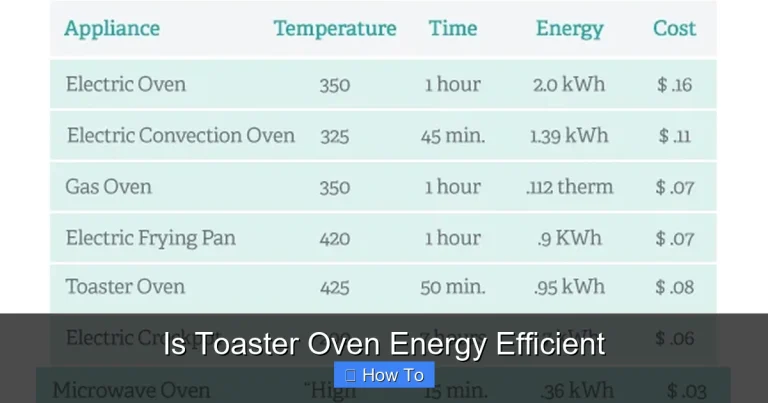
The toaster oven air fryer typically draws between 1200 and 1800 watts of electricity, depending on the model and the selected temperature. This is comparable to a standard microwave but far less than a full‑size electric oven, which can consume 2000 to 5000 watts during operation. Because the appliance heats a smaller volume, it reaches cooking temperature more quickly, reducing overall energy use.
Cost Savings
Using a toaster oven air fryer for everyday meals can lower your monthly electricity bill. For example, cooking a small batch of vegetables in the air fry mode for ten minutes uses roughly 0.2 kilowatt‑hours, while the same task in a conventional oven might take 30 minutes and consume over 1 kilowatt‑hour. Over time, these savings add up, especially if you frequently prepare single‑portion meals.
Environmental Impact
By using less energy and requiring smaller packaging, a toaster oven air fryer contributes to a reduced carbon footprint. Choosing to cook with this appliance instead of a full‑size oven for small portions can save kilowatt‑hours of electricity, which translates to lower greenhouse gas emissions over the year.
Tips for Perfect Results and Maintenance
Preheating and Placement
Preheating the unit for a few minutes before adding food helps maintain a consistent temperature and improves browning. Most recipes recommend preheating for 3‑5 minutes, depending on the desired cooking temperature.
When placing food inside, use the provided rack or basket and avoid covering it with foil unless specified by the manufacturer. Proper placement ensures that hot air can reach all surfaces, resulting in even cooking.
Checking Internal Temperature
For meats, using a quick‑read thermometer ensures that your food reaches a safe internal temperature without overcooking. Insert the probe into the thickest part of the item and aim for the recommended temperature for each type of protein.
Cleaning and Care
Regular cleaning extends the lifespan of your toaster oven air fryer. After each use, allow the appliance to cool, then remove the crumb tray and wash it with warm, soapy water. The interior can be wiped with a damp cloth; avoid abrasive cleaners that could damage the non‑stick coating.
For stubborn residue, soak the rack or basket in warm water for a few minutes before scrubbing. Some models have a self‑clean function that uses heat to loosen debris, but manual cleaning is still recommended for best results.
Troubleshooting Common Issues
If the appliance fails to heat, check that the power cord is securely plugged into a functioning outlet. Ensure the door is fully closed, as many models will not operate if the door is ajar. For uneven cooking, rearrange the food halfway through the cycle or clean the fan vents to restore proper airflow.
Proper Storage
If you won’t be using the appliance for an extended period, unplug it and store it in a dry place. Covering the unit with a breathable cloth can prevent dust accumulation while allowing airflow to avoid moisture buildup.
If you need help with setup, refer to how to use a toaster oven air fryer.
In summary, the toaster oven air fryer is a versatile appliance that brings together the convenience of a toaster oven with the power of a convection air fryer. By understanding its heating element, fan, and various cooking modes, you can unlock a world of crispy, healthy meals without the need for multiple gadgets. With proper preheating, placement, and cleaning, this single unit can become the workhorse of your kitchen, delivering consistent results day after day. With a little practice, you’ll find that this compact appliance can handle everything from weekday snacks to weekend feasts. Its versatility makes it a staple for busy households and a favorite among food enthusiasts.
Frequently Asked Questions
What is a toaster oven air fryer?
A toaster oven air fryer is a countertop appliance that combines the functions of a traditional toaster oven with a convection fan. It can toast, bake, roast, and broil while also providing an air fry mode for crispier results.
How does a toaster oven air fryer work?
The unit uses a heating element to generate heat and a fan to circulate hot air rapidly around the food. This convection airflow removes moisture from the surface, creating a crispy texture similar to deep‑frying with little or no oil.
Can you use a toaster oven air fryer without preheating?
While you can start cooking without preheating, preheating for a few minutes helps maintain a consistent temperature and improves browning. For most recipes, a brief preheat of 3‑5 minutes is recommended.
What foods are best cooked in a toaster oven air fryer?
Foods that benefit from a crispy exterior, such as fries, chicken wings, and onion rings, are ideal for the air fry mode. It also works well for roasted vegetables, baked goods, and even small batches of cookies.
How do you clean a toaster oven air fryer?
After the appliance cools, remove the crumb tray and wash it with warm, soapy water. Wipe the interior with a damp cloth and clean the rack or basket as needed, avoiding abrasive cleaners that could damage the coating.
Is a toaster oven air fryer worth the investment?
For those who want a versatile, space‑saving appliance that can produce crispy foods with minimal oil, it offers good value. Its ability to replace multiple kitchen gadgets and its energy efficiency make it a practical addition to many kitchens.