Is the Rock Cookware Oven Safe
Yes, most Rock cookware is oven safe — but only up to a point. The Rock by Starfrit aluminum pans with metal handles are generally rated for about 450°F (230°C), while glass lids and some coated handles drop that limit to roughly 350°F (180°C). Check your specific set’s label before you slide it in, skip the broiler, and never shock a hot pan with cold water.
You found a great deal on a Rock cookware set. Maybe it was the deep frying pan with the speckled, stone-look surface. Maybe it was a full 10-piece set that made your old pans look sad. Now you want to roast a chicken, finish a frittata, or bake a cookie cake in the skillet. So the big question hits: is the Rock cookware oven safe?
It’s a fair question, and the answer is mostly yes. But “mostly” is doing a lot of work in that sentence. The Rock cookware oven safe rating depends on which piece you’re holding, what the handle is made of, and how hot you plan to go. Get those details wrong and you can wreck a pan you liked.
So let’s break it all down in plain English. No confusing charts. No guesswork. By the end, you’ll know exactly what your Rock pan can take, what it can’t, and how to use it in the oven without worry.
Key Takeaways
- Most Rock pans handle about 450°F: The forged aluminum body and Rock.Tec nonstick surface are usually rated to 450°F (230°C) in the oven, which covers most everyday baking and roasting.
- Lids are the weak link: Tempered glass lids on Rock cookware are typically safe only to around 350°F (180°C), so lower the heat or leave the lid off.
- Handles decide the real limit: Stainless steel and riveted metal handles take more heat than plastic or soft-touch grips, which can warp or discolor.
- Never use Rock cookware under the broiler: Broiler heat spikes far past the coating’s rating and can ruin the nonstick surface for good.
- Avoid thermal shock: Let the pan cool before washing it, and never add cold liquid to a screaming hot pan.
- Always confirm with your own set: Starfrit has sold many Rock collections over the years, and heat ratings vary between them, so read the label or manual.
📑 Table of Contents
What Is The Rock Cookware Actually Made Of?
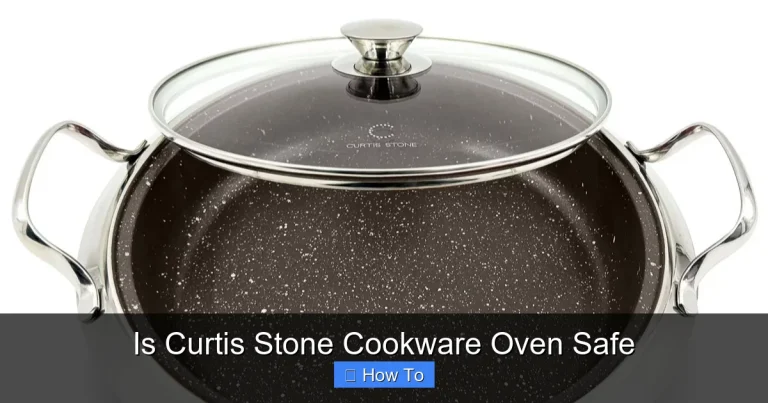
Before we talk heat limits, it helps to know what you’re working with. The Rock is a cookware line from Starfrit, a Canadian kitchen brand. Most pieces are made from forged aluminum with a coating the company calls Rock.Tec. The surface has a pebbly, stone-like texture, which is where the name comes from.
That build matters for oven use. Aluminum heats fast and evenly, and it handles oven temperatures well on its own. The part that limits you is the nonstick coating and the handle, not the metal underneath.
Why Forged Aluminum Is Good News
Forged aluminum is thicker and denser than thin stamped aluminum. That means less warping when the pan heats up and cools down. A warped pan rocks on your burner and cooks unevenly, so this is a real plus. It also means the pan heats through without hot spots, which makes it nice for baking.
Why The Coating Is The Catch
Nonstick coatings have a heat ceiling. Push past it and the surface can darken, blister, or start flaking. It can also give off fumes you don’t want in your kitchen. This is true for almost every nonstick pan on the market, not just The Rock. If you want the full picture on coated surfaces, our guide to whether ceramic cookware is safe for the oven explains the same idea in more depth.
Is The Rock Cookware Oven Safe? The Short Answer
Yes. Most Rock cookware is oven safe up to around 450°F (230°C). That’s the number Starfrit has used for many pieces in the line, and it’s plenty for most home cooking. Roasting vegetables at 425°F? Fine. Baking a frittata at 375°F? Easy. Finishing thick pork chops at 400°F? No problem.
But that 450°F figure is for the pan body. Other parts of the set have lower limits. Here’s how it usually shakes out.
Pans And Skillets
Fry pans, sauté pans, saucepans, and Dutch ovens in the Rock line are generally good to about 450°F. Some newer stainless-handled pieces are rated a bit higher, up to 500°F. The metal body is rarely the problem. It’s everything attached to it.
Glass Lids
Tempered glass lids are typically safe to about 350°F (180°C). That’s a big drop from the pan itself. So if your recipe calls for 425°F and a lid, you have two choices. Lower the oven to 350°F and add a few minutes of cook time, or leave the lid off. Most of the time, leaving it off works just fine.
Handles
This is where sets differ the most. Rock cookware has shipped with a few handle styles over the years. Riveted stainless steel handles take oven heat well. Molded plastic or soft-touch grips do not. They can warp, discolor, or get tacky. If your handle has any give to it when you squeeze, treat it as the limit for the whole pan.
How To Tell If Your Rock Pan Is Oven Safe
Don’t want to guess? Good. There are a few quick ways to check, and none of them take more than a minute.
Check The Bottom Of The Pan
Flip it over. Many pieces have the heat rating stamped or printed right on the base. You might see something like “Oven safe to 450°F” or a temperature in Celsius. If it’s there, that’s your answer, and it beats any general rule.
Read The Manual Or Box
Starfrit includes care sheets with most sets, and the product page usually lists the same info. Look for a line about oven use or maximum temperature. If the box is long gone, search the exact set name online. The full product name matters, because “The Rock” covers a lot of different collections.
Look At The Handle And Lid Closely
Your eyes will tell you a lot. All-metal handle? Higher heat tolerance. Plastic or rubber grip? Keep it low. Glass lid? Stay at or below 350°F. This habit works for any brand, and our full guide on how to tell if cookware is oven safe walks through the same checks in more detail.
When In Doubt, Go Low
If you can’t find any rating, use 350°F and keep the lid off. Low and slow rarely hurts a pan. High heat can hurt it a lot. This is the safest bet with any mystery cookware.
Safe Ways To Use Rock Cookware In The Oven
Knowing the limit is half the job. The other half is using the pan well. These habits will keep your Rock cookware oven safe for years.
Great Dishes To Make
Here are a few things this cookware handles beautifully. A skillet cookie at 350°F, baked right in the pan and served warm. A frittata started on the stovetop and finished at 375°F for a puffed top. Roasted chicken thighs at 425°F for crispy skin. Sheet-pan-style roasted sprouts and onions. Baked mac and cheese that gets a lightly browned top. All of these sit well under the limit.
Preheat With A Little Care
Don’t blast an empty nonstick pan on high for ten minutes. That’s how coatings wear out early. Add your oil or food, then heat. If you’re preheating for searing, keep it moderate and short.
Use The Right Oven Rack
Keep the pan on the center rack when you can. The top rack sits close to the broiler element, and that’s a lot of direct heat. Center rack heat is gentler and more even.
Protect Your Hands
A metal handle in a 450°F oven gets brutally hot. Use a dry, thick oven mitt. Damp cloths and thin towels transfer heat fast, and a dropped pan of hot food is no fun. Some cooks leave a mitt draped over the handle as a reminder that it’s hot.
Let It Cool Before Washing
This one matters more than people think. A hot pan plus cold water equals sudden shrinkage and possible warping. It can also stress the coating. Let the pan cool on the counter until it’s just warm, then wash it with warm water and a soft sponge.
Mistakes That Can Ruin Rock Cookware
Most damaged pans aren’t broken by normal oven use. They’re broken by one bad decision. Here are the big ones to avoid.
Using The Broiler
This is the number one killer. Broilers run at 500°F and up, and the heat blasts from a few inches away. That’s way past the coating’s limit. It can bubble, discolor, or ruin the nonstick for good. If a recipe says “broil until golden,” move the food to an oven-safe baking dish instead.
Going Over The Temperature Limit
It’s tempting to crank the oven to 475°F for faster roasted potatoes. Don’t. Stay at or below the rating for your set, even if the recipe asks for more. You can almost always add time instead of heat.
Adding Cold Liquid To A Hot Pan
Deglazing is great, but a cup of cold stock in a ripping hot pan can shock the metal. Add liquid off the heat, or let the pan cool for a minute first. Warm or room-temperature liquid is even better.
Stacking Wet Pans
Tossing a damp pan in the cupboard right on top of another traps moisture. That can lead to water spots and, over time, a dull coating. Dry the pan fully, then stack it with a soft cloth or paper towel between pieces.
Metal Utensils
Not an oven issue, but worth saying. Metal tools scratch nonstick. Use wood, silicone, or nylon. Scratched coating loses its release fast, and then everything sticks.
How Rock Cookware Compares To Other Nonstick Brands
Curiosity is natural. If The Rock handles 450°F, how does that stack up? Pretty well, actually. Most nonstick cookware lands in the 400°F to 500°F range, so The Rock sits right in the normal band.
Some stone-look and granite-style pans carry similar ratings, as we cover in our look at whether granite cookware is oven safe. And budget-friendly nonstick lines like the ones we discuss in whether Gotham Steel cookware is oven safe tend to fall in the same range too.
The real difference between brands isn’t the number on the box. It’s how well the coating holds up over time and how honest the labeling is. The Rock’s thick forged body is a genuine plus here. It resists warping better than thin pans, and warping is what usually kills oven performance first.
One more thing worth noting. If you own more than one brand, check each set separately. Ratings are not universal. A 450°F pan from one company and a 350°F pan from another can look almost identical on your counter.
Final Thoughts
So, is the Rock cookware oven safe? Yes, for most pieces and most recipes. The pans themselves are generally good to about 450°F (230°C). The glass lids want to stay at or below 350°F (180°C). The handle is the piece to watch, since plastic grips can’t take the heat that metal can.
Skip the broiler. Preheat with food in the pan, not empty. Let it cool before washing. Use silicone or wood tools. Do those five things and your cookware will last for years of good meals.
And if you ever lose the manual, flip the pan over and look at the base. That small stamped number is the most reliable answer you’ll find. It beats any blog, including this one, because it was written for your exact set.
Happy cooking, and enjoy that first baked frittata. Once you try it, you’ll wonder why you ever used a baking dish.
Frequently Asked Questions
Can I put The Rock cookware in the oven at 450°F?
Yes, most Rock pans and pots are rated for about 450°F (230°C), which covers the majority of roasting and baking recipes. The exception is the glass lid, which is usually limited to around 350°F. Always confirm the rating on the base of your specific piece or in the manual, since heat limits vary between collections.
Are the glass lids from Rock cookware oven safe?
Yes, but with a lower limit than the pans. Tempered glass lids are typically safe to about 350°F (180°C). If your recipe needs a higher temperature, either lower the oven and add cook time or leave the lid off entirely.
Can Rock cookware go under the broiler?
No. Broiler heat runs well past the rating of the nonstick coating and can cause blistering, discoloration, or permanent damage. If a recipe calls for broiling, transfer the food to an oven-safe baking dish instead.
Will the handles on Rock cookware get hot in the oven?
Yes. Any handle left in a hot oven gets hot, including stainless steel ones. Use a thick, dry oven mitt when removing the pan. If your set has plastic or soft-touch grips, keep the oven temperature low, since those materials can warp or discolor.
How do I know if my specific Rock set is oven safe?
Flip the pan over and look for a stamped or printed temperature on the base. You can also check the care sheet in the box or search the full product name on Starfrit’s website. If you find nothing, stay at or below 350°F and skip the lid to be safe.
Can I use metal utensils with Rock cookware?
It’s best to avoid them. Metal tools can scratch the Rock.Tec nonstick surface, which reduces its food release and shortens the pan’s life. Stick with wood, silicone, or nylon utensils, and wash the pan with a soft sponge rather than steel wool.