Can You Put Paper Plates in Toaster Oven
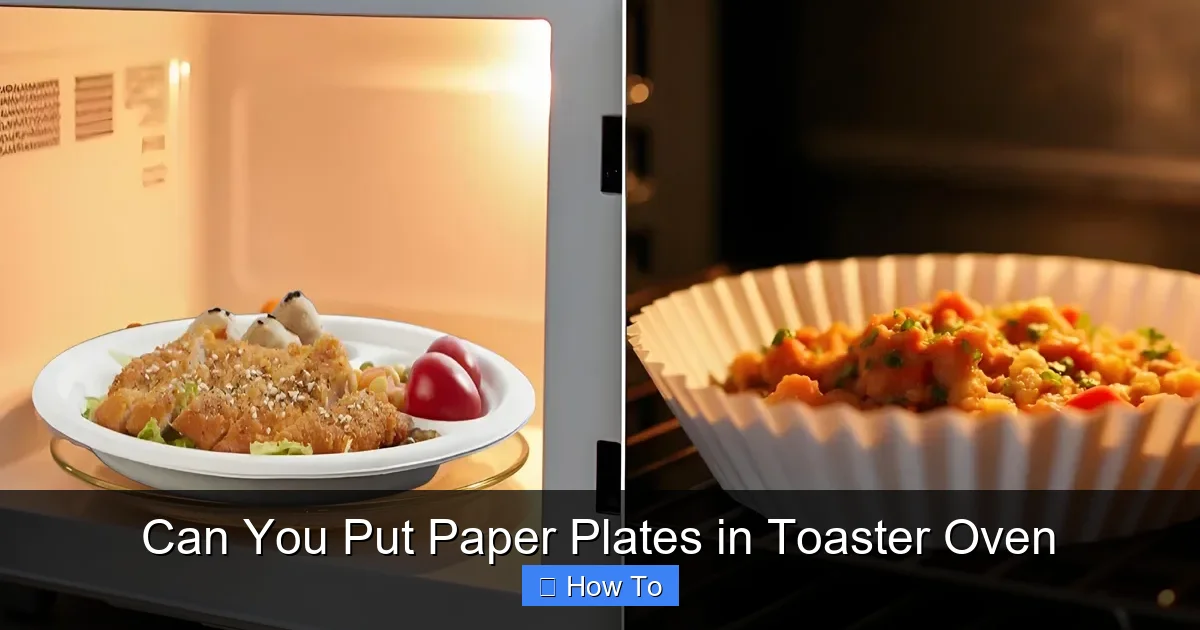
Paper plates are not designed for the high heat of a toaster oven and can melt, smoke, or even catch fire. Using them can damage your appliance and create unsafe conditions. Opt for oven‑safe materials like glass, ceramic, silicone, or parchment paper instead, and always monitor the cooking process closely.
Key Takeaways
- Heat Sensitivity: Paper plates melt or ignite at typical toaster oven temperatures, making them unsafe.
- Smoke & Toxins: Burning paper releases harmful fumes that can trigger smoke alarms and affect indoor air quality.
- Appliance Damage: Residue from melted paper can stick to heating elements, reducing performance and potentially causing fires.
- Better Alternatives: Silicone mats, glass or ceramic dishes, and parchment paper are safe and reusable options.
- If You Must Use Paper: Only low‑heat settings for very short periods, with constant supervision, are marginally acceptable.
- Best Practices: Preheat properly, place items centered, use the correct rack, and keep the door closed to ensure even cooking.
- Long‑Term Safety: Investing in microwave‑ and oven‑safe cookware eliminates risk and simplifies cleanup.
📑 Table of Contents
Introduction
Ever stared at a pile of disposable paper plates and thought, “Hey, why not pop that plate of leftovers into the toaster oven for a quick reheat?” It seems harmless—paper plates are cheap, easy to handle, and they disappear after a meal. But before you press that “Start” button, consider what happens when paper meets the intense, concentrated heat of a toaster oven. While a microwave gently warms food, a toaster oven can reach temperatures well above 500°F (260°C). Paper plates are designed for single‑use, low‑heat environments like microwaves or room‑temperature serving. When you expose them to the dry, focused heat inside a toaster oven, the results can be messy, dangerous, and even damaging to your appliance.
Understanding the risks helps you make safer kitchen choices. In this article we’ll explore why paper plates and toaster ovens are a bad mix, what safer alternatives exist, and how to get the best results when you need to reheat or cook quickly. By the end, you’ll know exactly what materials are safe, how to avoid common mistakes, and which internal resources can give you more detailed guidance.
Why Paper Plates Seem Like a Good Idea
Paper plates are convenient. They’re lightweight, disposable, and they eliminate the need for washing. For a quick snack or a last‑minute meal, they appear to be the perfect solution. Many people assume that because paper can handle a microwave (as long as there’s no metal or excessive fat), it should work in a toaster oven too. The truth is far different. The microwave heats food from the inside out using water molecules, while a toaster oven uses radiant heat that rapidly raises the surface temperature of whatever’s inside. Paper plates cannot withstand that level of heat, and that’s where the trouble begins.
The Hidden Dangers
When a paper plate is placed in a toaster oven, several things can happen almost simultaneously. First, the paper can begin to melt as the temperature climbs past its ignition point. This melting can cause the plate to stick to the food, the tray, or even the heating element. Second, the burning paper releases smoke and potentially toxic fumes, which can set off smoke alarms and cause eye or throat irritation. Third, the residue from the melted paper can coat the interior of the toaster oven, making future cooking less efficient and increasing the risk of a fire sparked by accumulated debris. In short, the convenience you’re looking for quickly turns into a safety hazard.
Safety Risks of Using Paper Plates
Before we dive into alternatives, let’s break down the specific dangers in clear, practical terms.
Visual guide about Can You Put Paper Plates in Toaster Oven
Image source: sarahscoopeats.com
Melting and Ignition
Paper plates are typically made from cellulose fibers coated with a thin layer of plastic to add moisture resistance. This coating is designed to hold up to the low heat of a microwave but not to the intense radiant heat of a toaster oven. At around 400°F (204°C), the plastic coating begins to soften, and the paper fibers start to break down. By the time the oven reaches its normal cooking temperature of 425–500°F (219–260°C), the plate may already be deformed. If the temperature continues to climb, the paper can ignite, creating an open flame that can spread quickly.
Smoke and Toxic Fumes
Burning paper releases carbon monoxide, particulate matter, and other harmful chemicals. These fumes are not only unpleasant but can be dangerous, especially in a small kitchen with limited ventilation. If you have asthma, allergies, or any respiratory condition, the smoke can be particularly irritating. Even without health issues, inhaling smoke can cause coughing, watery eyes, and a lingering smell that can permeate your home.
Appliance Damage
When paper melts, it can stick to the heating elements, the fan, or the interior walls of the toaster oven. This residue can create an uneven heating pattern, cause hot spots, and even short‑circuit the appliance’s thermostat. Over time, the buildup can lead to reduced efficiency, longer cooking times, and a higher risk of fire. Cleaning melted paper out of a toaster oven is a messy and sometimes hazardous task, often requiring the oven to be completely disassembled.
Safe Alternatives to Paper Plates
Fortunately, you don’t have to sacrifice convenience for safety. There are several oven‑safe options that work just as well—or better—than paper plates, and many of them are reusable, making them more eco‑friendly and cost‑effective in the long run.
Reusable Silicone Baking Mats
Silicone mats are thin, flexible sheets that can withstand temperatures up to 600°F (316°C). They’re ideal for reheating food in a toaster oven because they distribute heat evenly and prevent food from sticking. After use, you can simply wipe them clean with a damp cloth. Silicone mats are also lightweight, so they won’t add extra weight to your kitchen counter. For a deeper dive, see our guide on how paper behaves in a toaster oven—it helps illustrate why materials like silicone are superior.
Glass or Ceramic Dishes
Glass and ceramic plates are designed for both microwave and oven use. They conduct heat slowly and evenly, which means your food heats up without the risk of scorching. Look for dishes labeled “oven‑safe” or “microwave‑safe” and make sure they have no metallic paint or gold trimming. These materials can also retain heat, keeping your meal warm longer after it’s done cooking. If you’re curious about using actual plates, check out our detailed article on plates in toaster ovens for tips on selecting the right size and shape.
Parchment Paper and Aluminum Foil
Parchment paper is a lightweight, heat‑resistant paper that can handle temperatures up to 420°F (215°C). It’s perfect for lining a tray, preventing food from sticking, and making cleanup easy. Aluminum foil, on the other hand, is excellent for covering dishes to trap moisture and heat. Both materials are disposable (or at least recyclable) and can be used safely in a toaster oven. You can also explore the broader list of safe items at What Can You Put In Toaster Oven to see other options like parchment‑lined baking sheets or foil‑wrapped parcels.
When Paper Plates Might Be Acceptable (and How)
In some rare cases, you might find yourself with no other option and still need to reheat a small portion quickly. While it’s never ideal, there are limited circumstances where using a paper plate in a toaster oven could be marginally safe, provided you take extreme precautions.
Low‑Heat Settings Only
If your toaster oven has a “Toast” or “Dehydrate” setting that maxes out around 350°F (177°C), the risk is lower but still present. The paper plate may not ignite, but it can still melt and stick. Use this setting only for very brief reheating—30 seconds to a minute—and keep a close eye on the plate.
Brief Heating Only
Never leave a paper plate unattended. Set a timer for the shortest possible cooking time and check the plate frequently. If you see any signs of warping, discoloration, or smoke, immediately turn off the oven and remove the plate.
Monitoring
Keep the kitchen well‑ventilated. Open a window or turn on an exhaust fan to disperse any smoke that might escape. Have a fire extinguisher nearby—just in case. If the paper plate starts to smoke, remove it immediately and let the oven cool before attempting to clean up.
Best Practices for Toaster Oven Cooking
Even with safe materials, mastering a toaster oven takes a bit of know‑how. Follow these best practices to get consistent, delicious results every time.
Preheating and Placement
Always preheat your toaster oven for at least 5 minutes before placing food inside. This ensures the heating elements are fully heated and reduces cooking time. Position the dish or mat in the center rack to allow air to circulate evenly on all sides. Avoid placing items too close to the heating elements on the top or bottom, as this can cause hot spots and uneven cooking.
Temperature Control
Use the lowest temperature that will cook your food safely. For reheating, 350°F (177°C) is usually sufficient. If you’re baking something that requires a higher temperature, consult the recipe’s recommended range and adjust for the smaller cooking chamber of a toaster oven—often you’ll need to reduce the temperature by 25°F (14°C) compared to a full‑size oven.
Timing and Rotation
Toaster ovens cook faster than conventional ovens, but they also have less space for air circulation. If you’re cooking multiple items, rotate the trays halfway through the cooking time. This helps ensure even browning and prevents some items from overcooking while others remain underdone. Use the timer function if your model has one, and consider using an external thermometer to verify internal food temperature.
Conclusion
Paper plates are convenient, but they are not designed to withstand the high, dry heat of a toaster oven. The risks—melting, ignition, smoke, and appliance damage—far outweigh any temporary convenience. By switching to safer alternatives like silicone mats, glass or ceramic dishes, or parchment paper, you protect yourself, your kitchen, and your toaster oven. Even when you have no other choice, use the lowest heat, monitor constantly, and never leave the appliance unattended.
Remember, the goal is to enjoy quick, safe meals without compromising health or equipment. Explore our related articles for deeper insights into how different materials behave in toaster ovens, and always prioritize safety over speed. With the right tools and practices, you’ll find reheating and cooking in a toaster oven a breeze—without the paper plate worries.
Frequently Asked Questions
Can I use a paper plate in a toaster oven if I only heat it for a minute?
Even a brief heating can cause the paper to melt or smoke, especially at high temperatures. It’s safer to use an oven‑safe material like glass, ceramic, or silicone for any amount of time.
What happens if a paper plate catches fire in a toaster oven?
The fire can spread quickly, release toxic smoke, and potentially damage the appliance. Turn off the oven, unplug it, and use a Class ABC fire extinguisher or evacuate the area and call emergency services if the fire is large.
Are there any paper products that are safe for toaster ovens?
Parchment paper is safe up to about 420°F (215°C) and is designed for oven use. Wax paper, on the other hand, is not safe because the wax can melt and cause a fire hazard.
Can I line a toaster oven tray with parchment paper?
Yes, parchment paper works well for lining trays, preventing food from sticking, and making cleanup easy. Just ensure the parchment does not touch the heating elements and stays within the oven’s dimensions.
Is it safe to use aluminum foil in a toaster oven?
Aluminum foil is safe for cooking, but it should not touch the heating elements and should be used sparingly to avoid blocking airflow. Crinkled foil can also create hot spots, so flatten it carefully.
What is the best temperature for reheating food in a toaster oven?
350°F (177°C) is a good general-purpose temperature for reheating most foods. It’s hot enough to kill bacteria but low enough to prevent burning or drying out the food.